Author: Charlie Cauchi
Edited by Giulia Privitelli
Designed by Lisa Attard
Congratulations on the publication of Titles to Talkies. What first inspired you to undertake such an ambitious history of Maltese film culture?
I began studying film at Queen Mary University of London almost twenty years ago. During a first-year exploration of national cinemas, I found myself asking: why is there nothing on Malta? That question stayed with me.
Very quickly, I realised how little had been written about Maltese film culture, particularly when compared to the attention given to foreign productions shot on the island. The book grew from a desire to challenge the idea of "100 years of cinema in Malta" and to question what we really mean by film culture, labour and authorship, particularly through the lens of our colonial past. It aims to broaden the discussion and rethink the narrative beyond the familiar stories.
The subtitle describes the book as "an incomplete history". Do you intend continuing the research?
It's "incomplete" because so much material remains undocumented, dispersed or undiscovered. Without a dedicated film institute or national archive, researching Maltese cinema is challenging but also exciting because there is always something new to uncover. Since publication, other researchers have already found fresh information based on leads in the book, which was exactly my intention. History evolves as we discover more, and I would love to write a second volume, particularly as my university research focused on a later period that naturally follows this one.
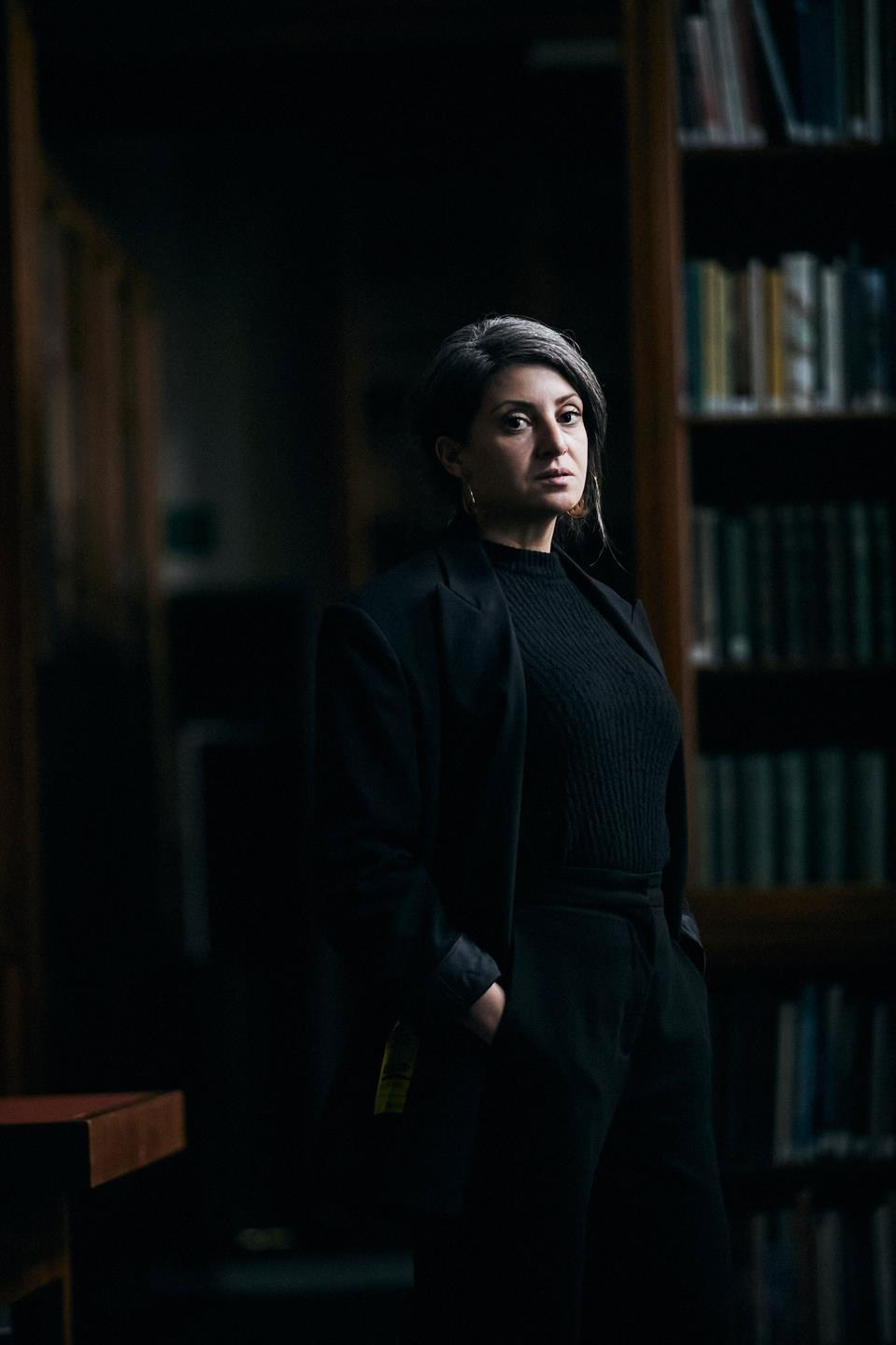
As an artist and filmmaker yourself, what drew you to historical research and archival work?
I don't separate my artistic practice from my research; they feed into one another. I'm driven by curiosity and by making connections across time, people and material culture.
I love working in archives and trawling through documents, but I'm equally drawn to interviewing people and hearing their stories. Research and creative practice are part of the same impulse: to listen, explore, uncover and find new ways of engaging with discoveries.
How long did the research process take, and what were some of the biggest challenges?
Years, and it's still ongoing. The biggest challenge is the fragmented nature of the research. There is no dedicated place for this kind of work, so piecing together histories across institutions, private collections and individuals can be rewarding but also slow.
For this early period, much remains missing or unknown. There are countless themes and stories I would have liked to pursue further, which is why I describe the book as incomplete.
What was the most surprising discovery you made?
There were many discoveries, but rather than "surprising," there was one area I genuinely loved tackling and discovering more about, and that is the magic lantern phenomenon. I didn't feel it was right to begin the book without considering moving‑image culture in its entirety, and this became a later part of my research, because I wasn't originally going to include such a prominent chapter. But, serendipitously, the University of Malta had only just begun examining new material related to magic lantern shows, so being able to look at some of the slides myself was a breathtaking moment.
It's an under‑researched part of our moving‑image history, yet it was such an important element of both leisure culture and education during the Victorian period. I would love to dig deeper into this area because it feels like a rich and largely unexplored chapter about Malta's early visual culture.
Were there any individuals from Malta's early film history who particularly captured your imagination?
Quite a few, but I became fascinated by Joseph Short, an early filmmaker I had never heard about before. One of his projects was linked to archaeology, much like work I am involved in today, and he was grappling with issues that still resonate. He became a kind of kindred spirit from the past.
Did you uncover any myths or assumptions about Maltese film history that turned out to be inaccurate?
The chapter on Etna Films and its links to Italy significantly shifted my understanding of the landscape. The possibility that a major Italian production may have been planned here, and that discussions took place between the British government and an Italian studio before the British productions usually cited, was a major discovery.
Another fascinating area was the use of language in silent-film intertitles and how this became a source of debate and contention.
The book focuses not only on film production but also on film culture. Why is it important to study audiences, cinemas and viewing habits?
Because film culture doesn't exist in a vacuum. Given how little has been published, I felt it was important to examine Maltese cinema on a broader scale rather than focusing solely on filmmaking.
Film culture isn't only about the people behind the camera. It's also about audiences, cinema-going habits, and what those habits reveal about larger social, political and cultural conditions.
How did cinema-going change Maltese society during those early decades?
What fascinates me most are the newspaper letters and correspondence that reveal how much anxiety surrounded the medium in its early years. Moral and educational concerns were constantly raised, and these debates influenced legislation, especially around censorship.
At the same time, cinema transformed leisure culture. It became accessible across social classes and offered a new way for people to encounter images, stories and the wider world.
To what extent were Maltese audiences influenced by British, Italian and American cinema?
The answer changes across the period covered by the book, and it's an area requiring further research. What we do see are commentators expressing anxieties about narrative films and their supposed influence on audiences.
One challenge was identifying exactly which films were screened. French films, for example, often arrived via Italy and may have been shown with Italian rather than English intertitles. There were even debates about translation accuracy. All this complicates our understanding of nationality, language, distribution and reception.
Why should a young filmmaker or film student in Malta read this book today?
I hope the book helps expand understanding of filmmaking on the island. Even though it discusses films made many years ago, there is still much we can learn from that history.
As a student, I remember feeling the absence of Malta in the literature we were reading. A gap like that shapes how you imagine your place within a field. I hope the book provides context, perspective and a stronger sense of the longer history that contemporary filmmakers are contributing to.
Do you see echoes of the challenges faced by the early film industry in today's Maltese film landscape?
Yes, particularly when we think about distribution networks and the relationship between local filmmakers and larger international productions shot in Malta.
Film has always been shaped by technological change. Whether we're talking about the arrival of sound or contemporary discussions around AI, these developments force us to reconsider the medium, labour and the future of filmmaking. In that sense, past and present challenges speak to one another.
Malta is often promoted as an international filming location. How does this history help us understand that reputation more critically?
It reminds us that Malta's role as a filming location didn't emerge only in recent decades. The island has attracted foreign productions since the earliest years of cinema.
The correspondence between Etna Film and government officials shows that interest extended beyond Britain. Understanding this longer history allows us to view today's conversations about government negotiations, film-induced tourism and Malta's cinematic identity in a more critical way. These are longstanding dynamics, not new ones.
What aspects of Malta's cinematic heritage remain neglected or at risk of being forgotten?
A great deal of Malta's moving-image culture remains neglected, particularly beyond film production itself. "Magic lantern" culture, for example, played an important role in visual education and leisure yet remains largely overlooked.
The preservation of silent-film heritage is also crucial, though much material is already unaccounted for. Without coordinated efforts to identify, preserve and digitise what survives, we risk losing entire chapters of our cinematic history.
Has your work as an interdisciplinary artist influenced the way you approached historical research?
I think the relationship works both ways. Research, collaboration and artistic practice constantly inform one another.
What I hope I bring to both is curiosity, openness and a willingness to let different disciplines speak to each other.
Did the research change the way you think about images, memory and visual culture?
Rather than changing my perspective, it reinforced the importance of these questions. The book gave me an opportunity to articulate ideas I've been thinking about for years and to open a wider conversation around them.
Are there connections between your artistic practice and the themes explored in the book?
Very much so. Much of my work centres on cinema and Malta. Projects such as Backlot at Spazju Kreattiv and Dolce, which forms part of the Malta Pavilion at the Venice Biennale, explore questions of representation, authorship and landscape.
The themes of the book and my artistic practice are deeply intertwined.
Do you regard this publication as a historical study, an artistic project, or something in between?
It's fundamentally a historical survey, although my artistic practice inevitably informs how I engage with the material.
I was fortunate to work with Lisa Attard on the visual design of the book, and together we wanted it to embrace the visual language of the period it explores. In that sense, it sits somewhere between historical research and an artistic way of seeing.
Are there archives, collections or films that you would particularly like to see preserved or digitised?
What I would most like to see is a national policy framework that recognises Malta's film history and culture as an important part of our heritage.
Preservation and digitisation become far more meaningful when supported by dedicated infrastructure, expertise and long-term commitment.
If you could bring one lost moment from Malta's cinematic past back to life, what would it be?
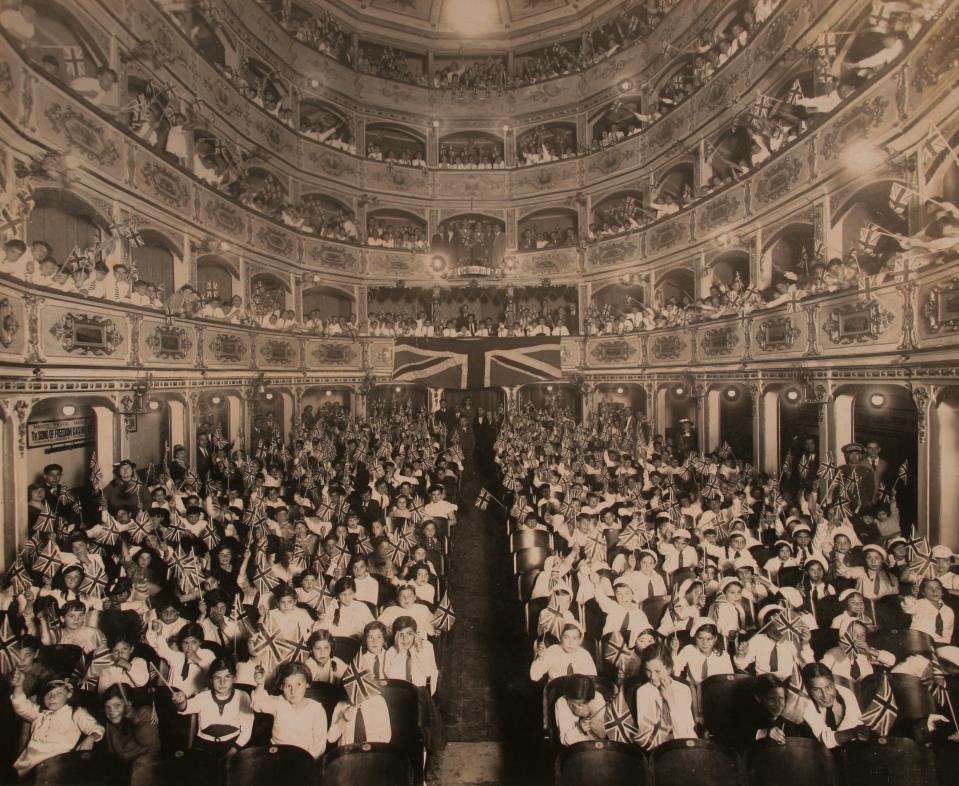
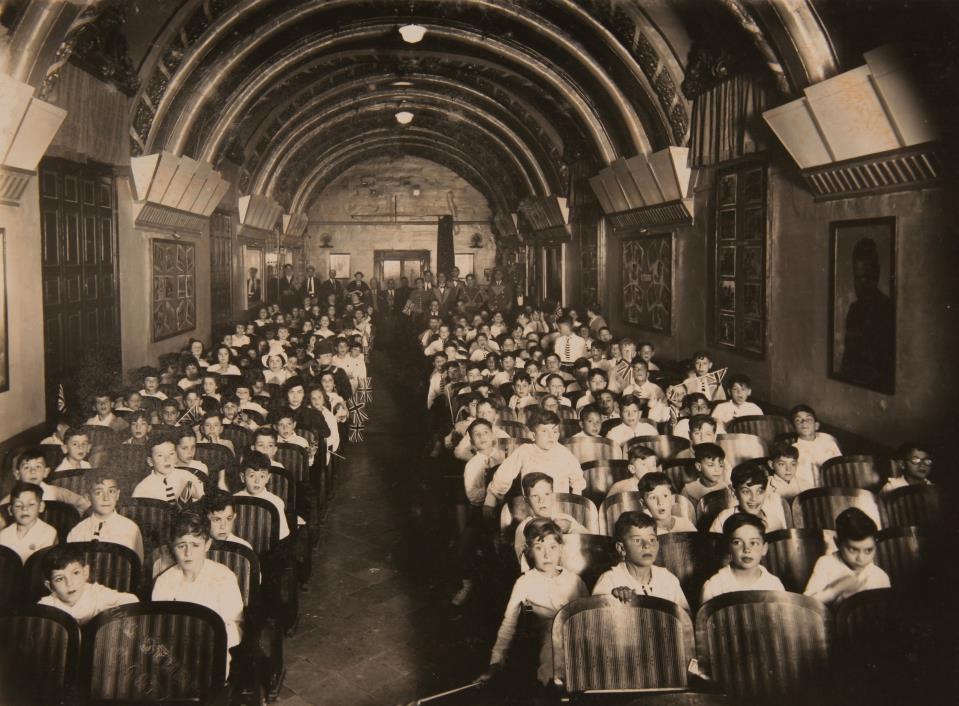
I would love to experience some of Malta's early cinemas firsthand, from the more opulent theatres to those serving working-class audiences.
Having completed this major project, what are you working on next?
It doesn't feel complete at all. I'd love to continue this research, although it's difficult to pursue independently.
My work is currently featured in the Malta Pavilion at the Venice Biennale, and ensuring that installation continues to engage local and international audiences remains a major focus. I'm also collaborating with Professor Eleanor Scerri and Professor Nicholas Vella on archaeological research, a strand of work that feels deeply connected to my practice.
After spending so much time immersed in the first fifty years of film culture in Malta, what do you hope readers will remember long after they have closed the book?
That there is so much more to discover.
History is messy; it evolves as we discover more."
Titles to Talkies can be purchased from the Victor Pasmore Gallery, St Paul's Street, Valetta, during the Gallery's opening hours. The book is also available from selected local bookstores.
This publication is sponsored and supported by the Central Bank of Malta. See www.patrimonju.org/books/titles-to-talkies for more information.