"...Jekk nieqaf nimbotta il-ġebla
x'jifdal?"
"...Jifdal biss il-ħerba -
ħerba mħabbra minn ħarba ta' ħolma mifnija..."
Creative and conceptual lethargy are contentious notions in today's contemporary culture. The issue poses a serious problem that inhibits a generation from thinking and creatively acting upon their dialectically established convictions. Culture is here the protagonist that nurtures nature or denatures it, depending on what is invested into it. If it is true that one gleans what one sows, then one must come to terms with the ramifications of a culture facing mass standardisation leading to sterilisation. This is arguably due to an algorithmic playpen which we have been willingly or unwillingly inhabiting for at least the past decade. Algorithms are great façades with commercial viability and predictability, training new minds out of critical expression in the hope of numbing the individual to their core. In doing so the importance shifts from the content to the container, mesmerising the public through colourful empty surfaces. Facing the troubled nature of current events, society at times seeks out such an escape. Algorithms have been programmed to oblige us with such notions, conditioning the public into repressive and regressive defensive states that prevent proper creative confrontation with reality. Here false nostalgia acts as an important diplomat that facilitates the escape. Through such repetitive patterns and desires, culture itself may tragically be reduced to an algorithm, transforming the only vector for sensitisation into a double agent that sustains the enemy. In doing so we edge closer to Aldous Huxley's "Soma"-induced unreality, producing a "new world" which is anything but "brave".
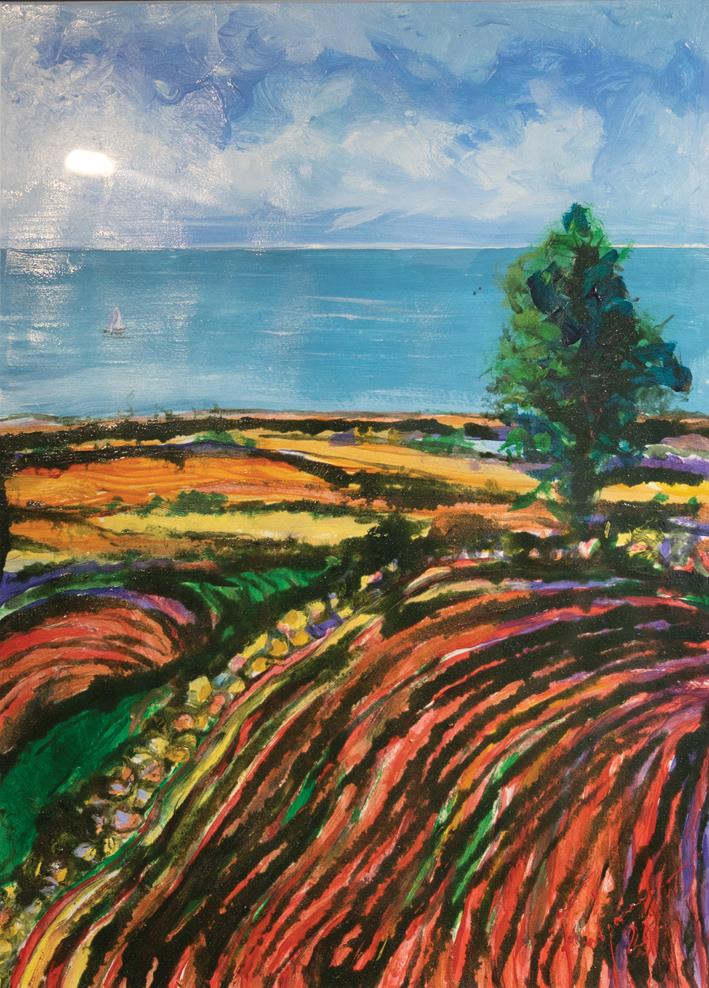
Such are the currents and conditions in which Wallace Falzon (b.1967) conceived his What remains.
Turning to art during the past decade, Falzon is now dedicating significant time to both painting and sculpture. Recently, he has obtained a Masters degree in Fine Art from the University of Malta. Falzon has also participated in several exhibitions and projects. In 2023, Falzon created Hornet tower, a sculptural installation erected on site at the University of Malta. In 2024, he held the solo exhibition Distinctiveness at Gemelli Gallery, Malta. More recently in 2025, he took part in Landscapes, seascapes and imaginary - (E)scapes, a collective exhibition held at the Grandmaster's Palace in Malta, and Tang Ping, a collective show at ArtHall Gallery in Gozo. During the same year, he presented I see colour, a solo exhibition at Gemelli Gallery in Malta. This year Falzon returns to Gemelli Gallery with his new solo exhibition entitled, What remains.
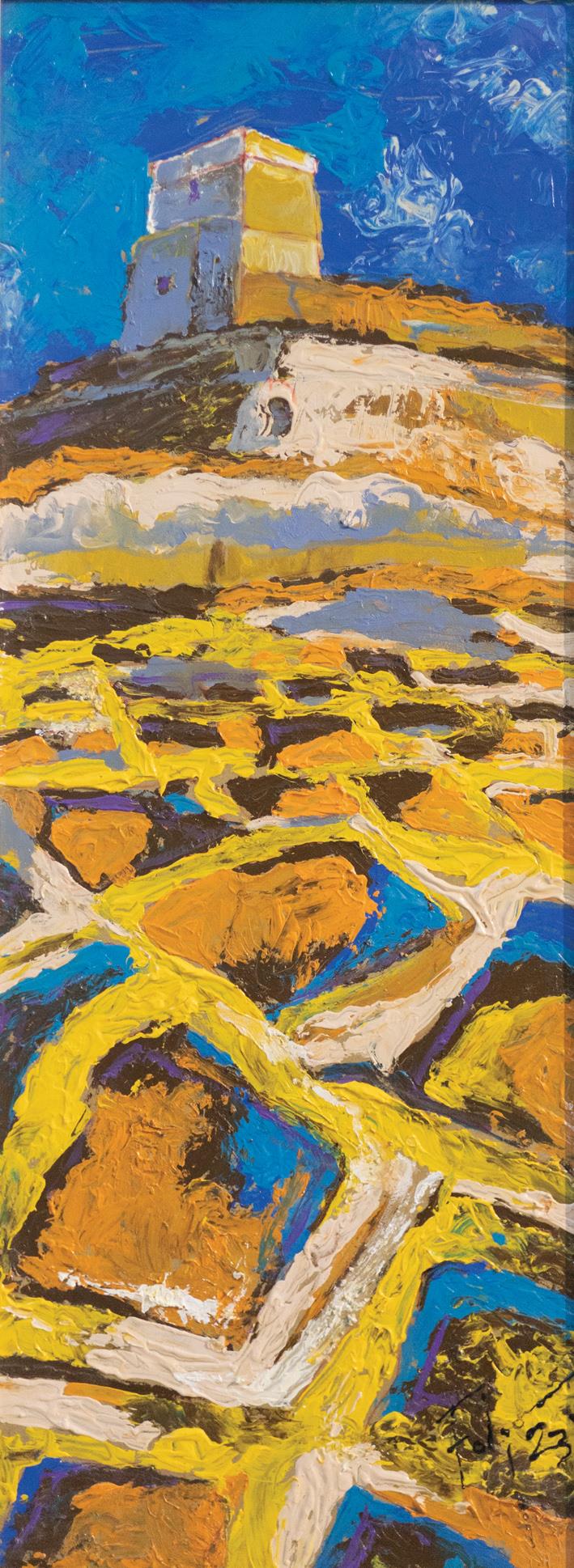
Unlike his usual monochromatic and stylised metal sculptures, nearly all the paintings presented in this exhibition display a figurative approach with a highly decorative palette. All but one fall within this description; a debatable exception entitled, cul-de-sac. This work assumes an almost monochromatic vision that starkly contrasts with the remaining corpus on display, arguably suggesting a relatively honest and mortal dread of dissolution. Such honesty betrays the colourful alternatives that seek to repress the didactic reality of a dead-end. Thus, an escape is provided through a kaleidoscope of bright colours drunk on false and unattainable nostalgic visions. The confident outburst of the chromatic spectrum dominant in nearly all of Falzon's works arguably remind one of a fauvist-like approach; one which, ignores content in favour of a blooming spectacle of colour.
According to Falzon "everything in Malta is intense", from the colours to the sentiments that society endures. Feeling almost like an outsider, he argues that he slowly drew upon his desire to engage with the "external" quality of his surroundings, as a culture-shocked stranger wondering the hallowed hollow streets of Malta's false nostalgic memory. According to Falzon, such visions are consciously or unconsciously conjured in the face of the threat of dissolution. Thus, the Maltese "paysage" represented assumes two possibilities: either it is a form of nostalgia due to ruin, or merely an excuse with the focus on colour reigning supreme. Arguably, the corpus of paintings presented demand nothing of the viewer except the time to be seen. There lies no content nor conceptual depth that seeks to anyway modestly confront the preconditioned notions of contemporary society and the threat of dissolution which it passively propagates. The works do not challenge nor provide an alternative source of beauty that oppose the cascading currents of contemporary culture. Rather, these paintings merely ride the empty waves of desires.
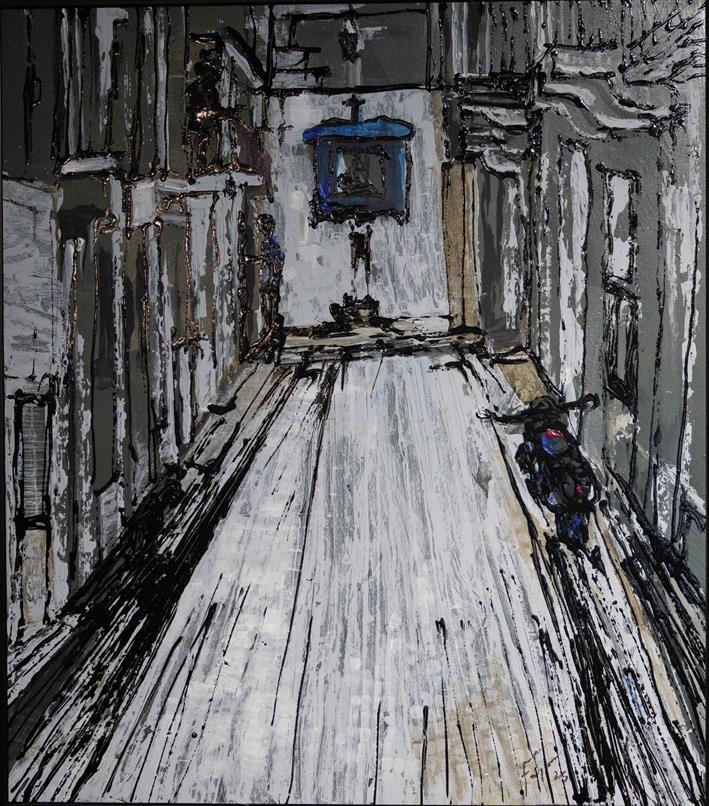
According to Falzon's own descriptions, these expressive works predominantly focus on the edifice and the modus operandi not the content represented. This in some way mirrors his unique outlook and voice which arguably resonate with his personal and professional disposition. Using cement, gypsum, industrial paint and wooden pellets, Falzon's intention was to rearticulate these construction materials in the hope of achieving some sort of idyllic vision. However, the resulting works assume long established motifs stripped of all palatable and visual emotional content leaving only an edifice of popular visual forms that still plague Malta's collective cultural regressive and repressive memory.
Faced with the current burial of Malta's scenic and cultural landscape, hinted at in cul-de-sac, Falzon turns to society's regressive and repressive tendencies. Trapped in an algorithmic labyrinth he explores the colourful façade of a now almost "archaic" nostalgic hollow vision filled with repetitive empty promises of times that never were and never will be. Tragically in the end, this is What remains.
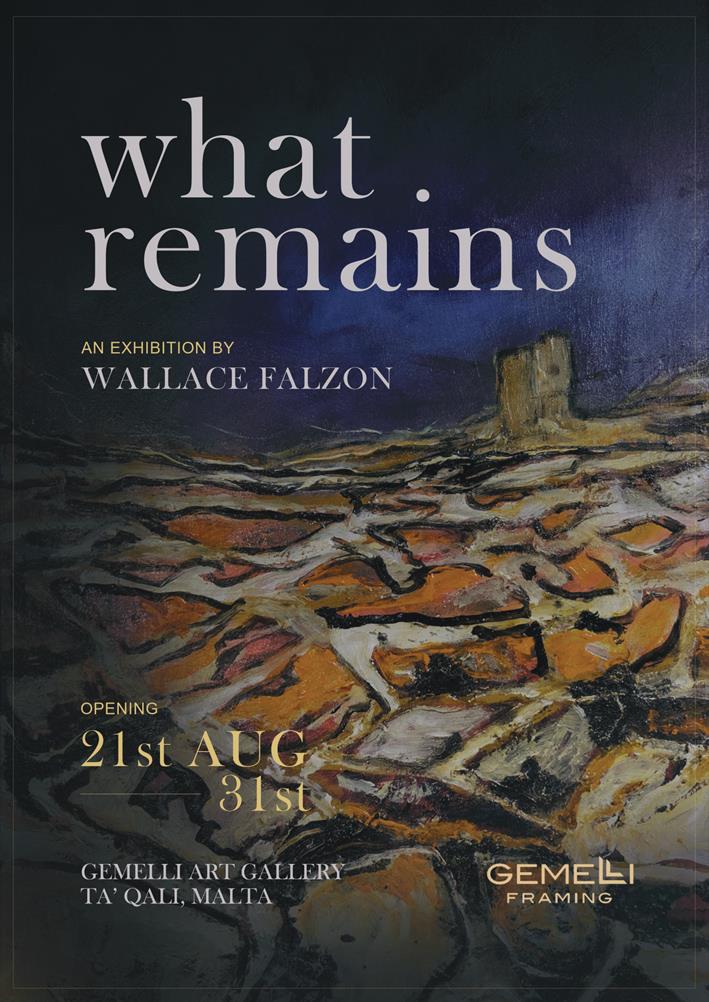
Falzon's exhibition is open at the Gemelli Gallery from 21 to 31 August.