Could you tell us about your journey into archives and heritage preservation?
I am first and foremost a historian, so I initially approached archives and heritage as a researcher. However, I gradually realised that research is only possible if these collections survive in the first place; they are the researcher's tools. That realisation transformed what began as an academic interest into a commitment to preserving one of Malta's most important documentary collections.
When did you first encounter the Notarial Archives, and what was your initial impression?
I first visited the Notarial Registers Archive in 2002 as a mature undergraduate history student while researching the records of the sixteenth-century notary Placido Abela. It was immediately obvious that both the building and the collection had suffered from years of neglect. Access was extremely difficult, the air was stale, the working spaces were cramped and poorly lit, and documents were covered in layers of dust, carelessly stacked on old wooden shelves and, in some cases, even left on the floor. My first impression was one of shock and disbelief. I could not understand how volumes that had survived for centuries and witnessed so much of our history could simply be left to decay. That experience stayed with me and profoundly shaped my commitment to preserving Malta's documentary heritage.
Was there a particular moment when you realised that saving these archives would become your life's mission?
I do not think there was a single defining moment. Rather, each visit reinforced the same contradiction: an archive of extraordinary historical importance, yet one suffering severe neglect and at great risk of being lost forever. Eventually, the sense of urgency outweighed the research purpose of my visits, and I felt compelled to act.
I think it is only fair to add that the Office of the Chief Notary genuinely wanted to improve the Archive and did what it could with the means at its disposal. The real difficulty was the lack of government investment and specialist conservation expertise.
From that point on, my mission became establishing a team of specialists capable of caring for the collection to the highest professional standards, ensuring every intervention respected both its physical integrity and historical significance.
Can you describe the history and significance of the original building that houses the archives?
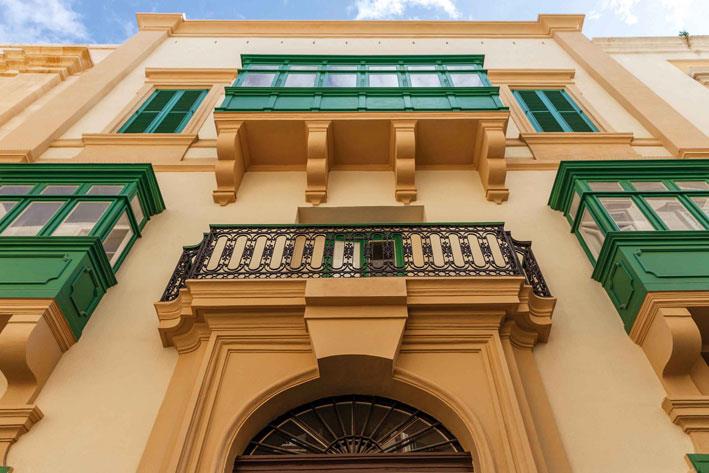
The original building at 24, St Christopher Street is a historic palazzo closely intertwined with the early development of Valletta under the Order of St John. The deed recording the purchase of its plot survives in the registers of Notary Placido Abela and dates to 1569, meaning the building preserves the documentary record of the very site it occupies. Although altered over the centuries, it remains a fine example of Baroque architecture.
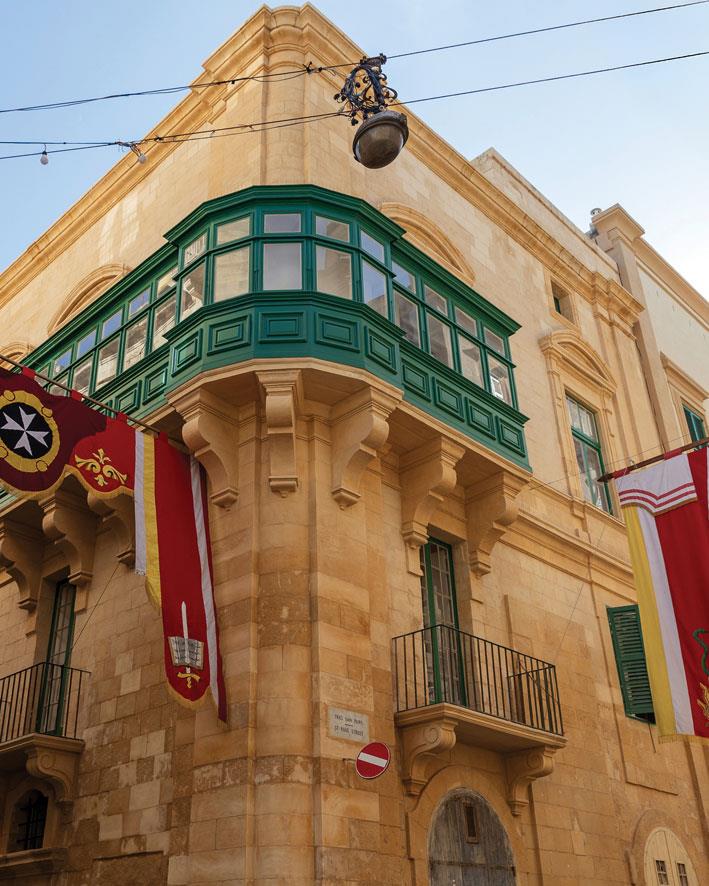
In addition to the original palazzo at 24 St Christopher Street, which houses the archival repositories, the Foundation also occupies the adjacent palazzo on 217, St Paul Street. The St Paul Street palazzo houses the Notarial Registers Archive Museum, as well as many of the Foundation's administrative, and public-facing functions and services.
What condition was the building in when restoration began?
The building was in a very poor state. Water infiltration, structural deterioration, outdated plumbing and electrical infrastructure, and inadequate environmental conditions had rendered it unfit both as a public building and as a repository for the collection. The condition of the building posed risks not only to the Archive itself, but also to those working in and visiting it. It was clear that comprehensive rehabilitation was essential.
What were the biggest architectural and conservation challenges during the restoration?
The scale of the project meant there were challenges at almost every level. Architecturally, the building had suffered decades of deterioration, requiring extensive structural intervention. Integrating the infrastructure needed for a modern archive into a centuries-old building, under the direction of the Restoration and Preservation Department and the Office of the Chief Notary to Government, was a significant challenge. At the same time, we had to ensure that the 25,000 volumes remained protected throughout the works.
How did you balance preserving the building's historic character while adapting it for modern archival standards?
We never saw these as competing priorities. From the very beginning, preserving the building's historic character and meeting modern archival standards had to go hand in hand. The objective was to preserve the building while equipping it with the infrastructure required of a twenty-first century archive. Every intervention was integrated as sympathetically and discreetly as possible. Where significant changes were necessary, we retained visible evidence of the building's history, including the restored staircase and balustrade, the vaults and arches, and small areas of the original paint layers. These features continue to preserve the building's character while informing future conservation work.
The archives were once reported to be in a very poor state. What exactly did you find when you first entered the repository?
I remember it as if it were yesterday. When I first entered the Notarial Archives in 2002, I was completely unprepared for what I found. The registers were covered in layers of dust, and the building was dark, damp and in a state of severe neglect. Volumes and loose folios were stacked on ageing wooden shelves or piled on the floor. It was deeply distressing to see a collection of such historical value kept in conditions that fell so far short of the care it deserved.
What I found most distressing, however, was returning one Tuesday a few years later - the Archive was only accessible on Tuesdays - to discover large rubbish bags filled with loose folios and documents mixed with remnants of mouldy food. Among them was the oldest known document in the collection, dating to 1431, which had been bagged during an attempt to clear the space.
Looking back, I have always preferred to speak about the significance of the collection rather than its deterioration. My intention has always been to help people understand what was at stake, not to cast the Archive in a negative light.
Which aspects of the collection were most at risk of being lost?
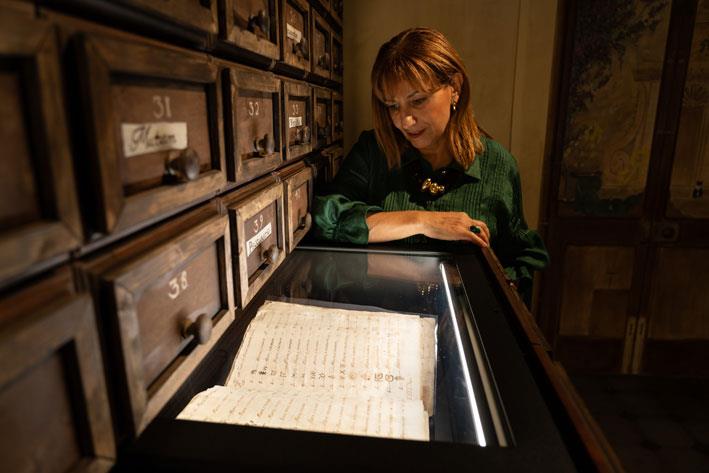
Different parts of the collection faced different risks. The loose folios and fragments were among the most vulnerable because they were not protected by bindings and many had become separated from their original context. We were equally concerned about the earliest documents, particularly those on parchment and other organic materials, which are especially vulnerable in Malta's warm, humid climate.
The war-damaged documents were also at great risk. Many had become so badly damaged that they could not be opened or read and were easily dismissed as beyond saving. Years later, they found a new purpose through photographer Alex Attard's Parallel Existences, which invited people to appreciate the tragic beauty of their condition. More importantly, by preserving them, we left open the possibility that future advances in imaging and scientific analysis may one day make them readable again.
How did you decide where to begin such an enormous conservation effort?
My first realisation was that I could not undertake such an effort alone. I understood the significance of the collection and the urgency of preserving it, but also recognised that conservation is a highly specialised profession. One of the earliest and most important steps was to involve Dr Theresa Zammit Lupi, whose expertise in book and paper conservation helped shape our approach. As with any conservation project, the first steps were to remove documents from immediate danger, assess their condition, establish priorities and develop a long-term conservation plan. From there, the effort grew into a multidisciplinary project involving specialists from a range of disciplines.
What were some of the most difficult moments during the rescue and restoration process?
The greatest challenge was probably the sheer scale and complexity of the process. Every stage of the building's restoration and extension had to be carefully planned to protect the collection. Perhaps the greatest realisation was accepting that, as much as we wanted to treat everything, conservation cannot be rushed. We soon realised it would never be possible to fully conserve every volume within our lifetimes. It was not something that was easy to come to terms with. Instead, we shifted our focus to stabilising the collection and equipping the next generation of conservators with the skills and passion to continue the work after us.
Were there times when you felt the task was simply too big to accomplish?
There were certainly moments when the challenge felt overwhelming. We were dealing with six centuries of documentary heritage that had suffered decades of neglect, but I never felt the task itself was too great to accomplish. I have always believed that, with commitment, expertise and the right support, even the greatest challenges can be overcome.
What I found much more difficult was indifference. The greatest disappointment was never the scale of the work, but knowing there were people who could have made a real difference yet failed to recognise the urgency of the situation.
From the beginning, we resolved to make the best use of the resources available to us and build the Archive step by step. Every document we conserved, every milestone we achieved, and every opportunity we secured reminded us that progress was possible. "These documents are irreplaceable. Once they are lost, they are lost forever." That conviction kept us moving forward.
How did you build support for the project among government, funders, volunteers, and the public?
In many ways, the strongest advocates for the project were the documents themselves. Every volume preserves the voices of ordinary people whose lives would otherwise be forgotten. Their diversity means there is something for everyone to connect with, so we brought those stories to light. Once shared, they became the most compelling argument for their own preservation. This inspired us to create the Adoption Scheme, which continues today with the generous support of private individuals and institutions sponsoring the conservation of selected items from the collection.
Support did not come easily. We often found ourselves competing for funding alongside many other worthwhile projects, so we had to be persistent, reapplying or knocking on another door whenever we were unsuccessful. I would also like to acknowledge Francesca Balzan for her unstinting support, particularly during the project's early years.
What leadership lessons did you learn from managing such a long-term project?
The biggest lesson I learned is that leadership is not about having all the answers, but about bringing people together around a shared vision and giving them the confidence to believe that the seemingly impossible can be achieved. Long-term projects also require patience. In heritage, you rarely see results overnight; you have to think beyond immediate results and keep your focus on the bigger picture.
No one can conserve six centuries of documentary heritage alone. The Foundation's achievements are the result of people with different expertise working towards the same goal.
I also learned that leadership is about resilience and service. There will always be setbacks, but you cannot allow temporary obstacles to distract you from the long-term vision. Leadership is about leaving an institution stronger than you found it and ensuring others are equipped to continue the work.
How important were volunteers and community engagement in the success of the archives?
Volunteers and community engagement were fundamental, and they still very much are. In the beginning, when resources were limited, we often depended on our own pockets, the generosity of volunteers, and professionals willing to give their time because they believed in what we were trying to achieve. Our volunteers enabled us to accomplish far more than would otherwise have been possible. Just as importantly, they became ambassadors for the Archive within their families, workplaces and communities, helping spread awareness and encouraging others to get involved.
The collection belongs to everyone because it preserves the stories of everyone. Once people see themselves and their ancestors reflected in the documents, they realise the Archive is not simply a repository for academics and historians. It is part of our shared heritage. That is why involving the public has always been central to our work. Community engagement and volunteering remain central to our identity, even now that the Foundation is in a much stronger position and has a dedicated team of full-time staff. I myself hold the post of Director of Operations on a totally voluntary basis.
Once the archives were stabilised, how did you begin the process of making them accessible to researchers and the wider public?
Stabilising the collection was never the final goal; preserving an archive that no one can access or engage with is only half the job. Once the collection was sufficiently stabilised, we could begin the equally important task of making it accessible and relevant.
That meant organising and cataloguing the collection, involving the right specialists, and creating better spaces for research. We quickly realised that opening the doors was not enough. We also had to take the Archive to the people.
We therefore reached people through exhibitions, lectures, publications, educational initiatives, and collaborations with other institutions and artists.
More recently, digitisation, artificial intelligence, and our dedicated professional staff have made the collection far more accessible.
What role has digitisation played in opening these collections to the world?
Digitisation is one of the Archive's most significant recent investments and marks a new chapter in our work. It is already helping us build collaborations with international institutions while making Malta's documentary heritage more visible to the global research community. It also lays the foundation for new forms of research by enabling scholars to engage with the collection in new ways.
I believe we are only beginning to appreciate what will be possible in the years ahead. Projects such as Notarypedia demonstrate how digitisation, combined with emerging technologies, can unlock new ways of discovering, interpreting and engaging with archival collections.
How do you balance accessibility with the need to protect fragile original documents?
We take it on a case-by-case basis. Part of our cataloguing and conservation work is to assess the condition of each manuscript and document it. This allows us to assess the risks associated with handling the original document. Where handling would pose too much of a risk, the document might first require conservation treatment before it can be made available. In some cases, we may instead provide access through digitisation.
Digitisation also reduces wear on the collection by limiting handling of the original documents. Part of our digitisation strategy is to prioritise the most heavily used records, particularly the indexes, as they are consulted repeatedly to locate individual contracts.
Ultimately, good access must also be long-term access. Part of achieving that balance is ensuring that the access today does not compromise access for future generations.
Have there been any discoveries in the archives that particularly surprised or moved you?
Absolutely. One of the greatest privileges of working at the Notarial Archives is that almost every day you come across something that surprises you. The collection is so vast and so rich that there is always another story waiting to be discovered.
The Archive has shaped my academic career, from my undergraduate studies through to my doctoral research. The extraordinary wealth of information preserved in these records has influenced both my research and the way I think about history and the importance of preserving primary sources.
What has always moved me most is not necessarily a single spectacular document, but the countless personal stories preserved in the records. Through notarial deeds you encounter ordinary people at some of the most important moments of their lives: drawing up a marriage contract, making a will, buying their first home, freeing a slave, settling a dispute or trying to provide for their children. These documents remind us that history is ultimately about people, not just dates and events.
Why are these archives important not only for Malta but also for international researchers?
For centuries Malta has stood at the crossroads of civilisations of the Mediterranean, and the records reflect the constant movement of people, goods and ideas across the region.
Researchers will find countless connections with Sicily, but also with many other parts of the Mediterranean. The collection spans different periods of rule and languages, documenting merchants, sailors, pilgrims, enslaved people, and the movement of goods and luxury items to and from Malta.
These archives therefore offer a window into the interconnected nature of the Mediterranean and are valuable to international researchers working across a wide range of disciplines. Our collaboration with the Archivio di Stato di Palermo, including last year's Inter Insulas seminar, is one example of how these shared histories continue to bring researchers and archival institutions together across borders.
What does it mean to you to see the archives transformed from a neglected repository into a respected heritage institution?
It is incredibly rewarding because it shows that so many years of hard work, perseverance and belief have truly made a difference. When I first walked into the Archive in 2002, I never imagined it would one day become recognised as a leading heritage institution. There were many challenges along the way, but we never lost sight of our goal. Seeing researchers, students, conservators and members of the public using and appreciating the Archive makes all those years of effort worthwhile.
Perhaps the greatest satisfaction comes from knowing that we have not only rescued a collection of documents but also changed the way people think about archives. They are no longer seen simply as repositories of old papers, but as living cultural institutions that preserve collective memory, inspire research and connect people with their past. That, to me, is the real transformation.
What are your ambitions for the archives over the next decade?
When I think about the future of the Notarial Registers Archive, I don't simply see an archive. I see a place where preservation, research, education and community come together. Over the past two decades we have transformed a collection that was once at risk into a centre of excellence, but I genuinely believe we are only at the beginning of what the Foundation can achieve.
One of my ambitions is to continue making the Archive and its collections more accessible through research, interpretation and publication, including expanding De Scripto into an international peer-reviewed journal that brings together scholars from different countries and disciplines.
We also have a number of exciting projects in the pipeline. A new reading room and expanded conservation laboratory will improve access for researchers, strengthen our conservation work and provide opportunities for specialist training. I would also like to see the Archive become an even more welcoming cultural space where researchers, artists, students and members of the public can meet, exchange ideas and engage with our documentary heritage.
Projects such as Notarypedia, developed in collaboration with the University of Malta and the Ministry for Culture, reflect this vision by combining historical research with artificial intelligence and digital technologies to make notarial knowledge more accessible. Ġilduża, developed in collaboration with the Public Abattoir, focuses on safeguarding the endangered craft of parchment making by bringing together international experts, researchers and practitioners to revive and pass on this specialised knowledge.
Another priority is ensuring that the knowledge and expertise we have built continue to be passed on to the next generation. Conservation is not only about preserving documents, but also about training the people who will care for, research and share them in the future. We have a responsibility to ensure that the expertise we have developed does not stop with us but continues to grow long after we are gone.
Finally, I would like to see the Foundation continue supporting other libraries and archives facing similar challenges. We are increasingly being approached by institutions responsible for endangered collections that lack the resources or specialist expertise needed to preserve them properly. If we can share what we have learned and help strengthen other institutions, then our impact will extend far beyond the walls of the Notarial Registers Archive.
What advice would you give to other heritage professionals facing similarly daunting conservation challenges?
Never be discouraged by the scale of the challenge. Start with what you have, make the best use of the resources available and build partnerships with people who share your vision. Avoid cosmetic solutions that simply create the impression of progress. If the resources are not yet available, it is often better to wait and invest in interventions that genuinely safeguard the collection for the long term: heritage conservation is a marathon, not a sprint. Above all, remember that what we preserve today is not ours; it belongs to future generations.
Looking back on this remarkable journey, what achievement makes you most proud?
Looking back, I think what makes me most proud is not one single achievement but the lasting impact of what we have built. I believe we have helped raise the standard for archival preservation and accessibility in Malta, demonstrating what can be achieved through vision, professionalism and perseverance.
I am also proud that the Foundation has created opportunities for students and young professionals in fields such as conservation, palaeography, archival studies and historical research. Investing in people has been just as important as investing in the collections themselves.
Above all, I am proud of the legacy we have created. Institutions should never depend on one individual. We have built a dedicated team, developed expertise and created opportunities that will ensure this work continues. For me, that is the greatest achievement: not what we have accomplished today, but the confidence that Malta's documentary heritage will continue to be preserved for generations to come.
When you first walked into the archives and saw their condition, did you ever imagine that one day they would become a centre of excellence and a resource for researchers around the world? What made you believe it was possible?
To be honest, no. But from a very early stage we set ourselves that ambition. The collection itself convinced us that it deserved nothing less. Its value extends far beyond Malta, with the potential to contribute to international scholarship and attract researchers from around the world.
When you walk through the building today, is there a particular room, staircase, or shelf that reminds you of how far the archives have come?
Without a doubt, it is the state-of-the-art repository. Every time I walk into that space, I remember where we started. I remember a collection stored in conditions that threatened its long-term survival. Today, seeing thousands of manuscripts preserved in a climate-controlled repository is a powerful reminder of how far we have come.
Was there a moment during the restoration when you realised that success was genuinely possible?
For me, that belief was there from the very beginning, even before the restoration started. The condition of the Archive was undoubtedly challenging, but I never doubted the value of the collection or its potential. The documents themselves gave me optimism. They had survived wars, natural deterioration, and centuries of use; they deserved the opportunity to survive for many centuries more.
What changed over time was not my belief that success was possible, but seeing that vision gradually become reality. Every conserved manuscript, every partnership, every trained professional and every completed project confirmed we were moving in the right direction. Success came through a series of milestones that transformed the Archive into what it is today.
What did the archives teach you about Malta that you did not know before you started working with the collection?
The archives changed my understanding of Malta's history. They taught me that our past is not only shaped by grand political events but also by the lives of ordinary people. Every notarial deed tells a human story, and together they reveal a society that was far more dynamic, interconnected and cosmopolitan than I had imagined.
Among the thousands of documents you've encountered, is there one that has stayed with you personally?
There are many, and choosing just one is almost impossible. What has stayed with me most are the human stories behind the documents. Among the most moving are the records relating to slavery and human trafficking, including the sale and ransom of infants and young children. Whenever I read those documents, I cannot help but imagine the fear, uncertainty and loss endured by those children and their families.
These stories are not just part of the past - they remain relevant today. They remind us that human trafficking and forced displacement still exist in different forms, and that we can easily become insensitive to the hardships endured by those caught up in them. That is one of the reasons these archives continue to speak so powerfully to the present.
What misconceptions do visitors often have about archives, and what do you wish they understood better?
One of the biggest misconceptions is that archives are quiet spaces relevant only to researchers and academics. While supporting research is one of our core functions, archives are much more. They preserve the stories of people from every walk of life, which means there is something for everyone to connect with.
This is precisely why we have worked so hard to engage the wider public. Through lectures, exhibitions, educational initiatives, artistic collaborations and community events, we have encouraged people to see the Archive as a living cultural space rather than simply a place to consult historical records. I believe we are already beginning to see that change. Today, the Archive is increasingly recognised not only as a centre for research, but also as a place for learning, creativity, collaboration and community engagement.
I also think many people underestimate the work that happens behind the scenes and the resources required to sustain an archive. Conservation, cataloguing, digitisation, research, public engagement and the day-to-day care of the collection all require considerable dedication and resources. Equally important is the ongoing work involved in maintaining an archive to modern professional standards, from environmental monitoring and specialist storage to building maintenance, security and the infrastructure needed to safeguard the collection over the long term. Much of this work goes unnoticed, yet it is essential if the Archive is to continue serving future generations.
If the archives could speak, what story would they tell about the people who fought to preserve them?
I think they would tell a story of perseverance, dedication and quiet determination. They would speak of people who believed our documentary heritage was worth every sacrifice, not for personal recognition, but because they understood these records belong to the nation and to future generations.