Some places leave an impression upon us. Others become part of who we are.
For Maltese multidisciplinary artist Maria Bella Fenech, professionally known as Bella Mulè, the Sicilian Baroque city of Noto belongs firmly to the latter. It is a place where family history, cultural identity, and artistic inspiration converge, giving rise to a body of work that is both deeply personal and visually captivating.
This September, Bella Mulè invites audiences to share in that journey through Noto è Bella, a solo exhibition to be held at the historic Bassi di Palazzo Ducezio, in the heart of Noto, from 6 to 13 September, with the official inauguration taking place on Sunday, 6 September. Curated by Prof. Louis Laganà and Dott.ssa Valentina Capizzi, and presented with the support of the Municipality of Noto, the exhibition celebrates heritage, belonging, and the enduring cultural dialogue between Malta and Sicily.
For Maltese visitors, the timing could hardly be more appealing. September remains one of the most popular months for travel to Sicily, attracting countless Maltese travellers seeking a late-summer escape. Those planning a visit to south-eastern Sicily will have the opportunity to include this remarkable exhibition in their itinerary, discovering not only one of Europe's most celebrated Baroque cities, but also an artist whose work reflects the profound historical and cultural ties that have linked Malta and Sicily for centuries.
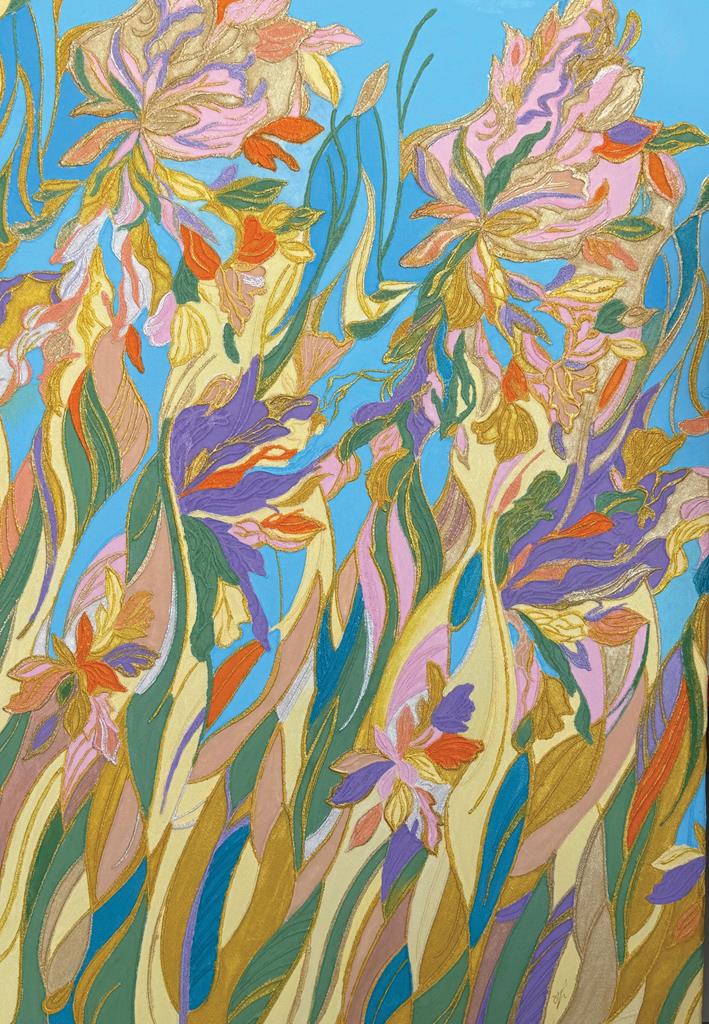
A homecoming through art
Although Bella Mulè was born and raised in Malta, her roots run deep in Sicilian soil. Her relationship with Noto is not simply genealogical; it is profoundly emotional and woven into her sense of identity.
Her grandfather, Francesco Mulè, shared close family ties with another Francesco Mulè, the celebrated maestro who composed Noto's official anthem. Today, the city's distinguished Orchestra di Fiati Francesco Mulè continues to honour that musical legacy, ensuring that the family name remains an integral part of Noto's cultural fabric.
Visits to the city have therefore never felt like ordinary holidays. They have been returns to family, memory, and belonging, particularly through the warmth and hospitality of her beloved uncle, Rosario, whose home has become inseparable from Bella's experience of Sicily. Every walk through Noto's honey-coloured streets, every encounter with its luminous limestone architecture, and every sunset by the sea has gradually formed a visual vocabulary that now finds expression through her art.
"Every journey begins with a doorway," Bella reflects. "For me, Porta Reale is the gateway not only to Noto, but also to memory, heritage, and belonging."
That sentiment lies at the heart of Noto è Bella. Rather than documenting the city's landmarks with photographic precision, the exhibition transforms personal memory into artistic experience, inviting visitors to see Noto through the eyes of someone rediscovering her ancestry and reconnecting with her roots.
Where architecture becomes emotion
Bella Mulè's multidisciplinary practice allows her to move seamlessly between painting, photography, digital media, and mixed-media experimentation. Her works frequently blur the boundaries between realism and abstraction, creating compositions that resonate emotionally rather than merely represent visually.
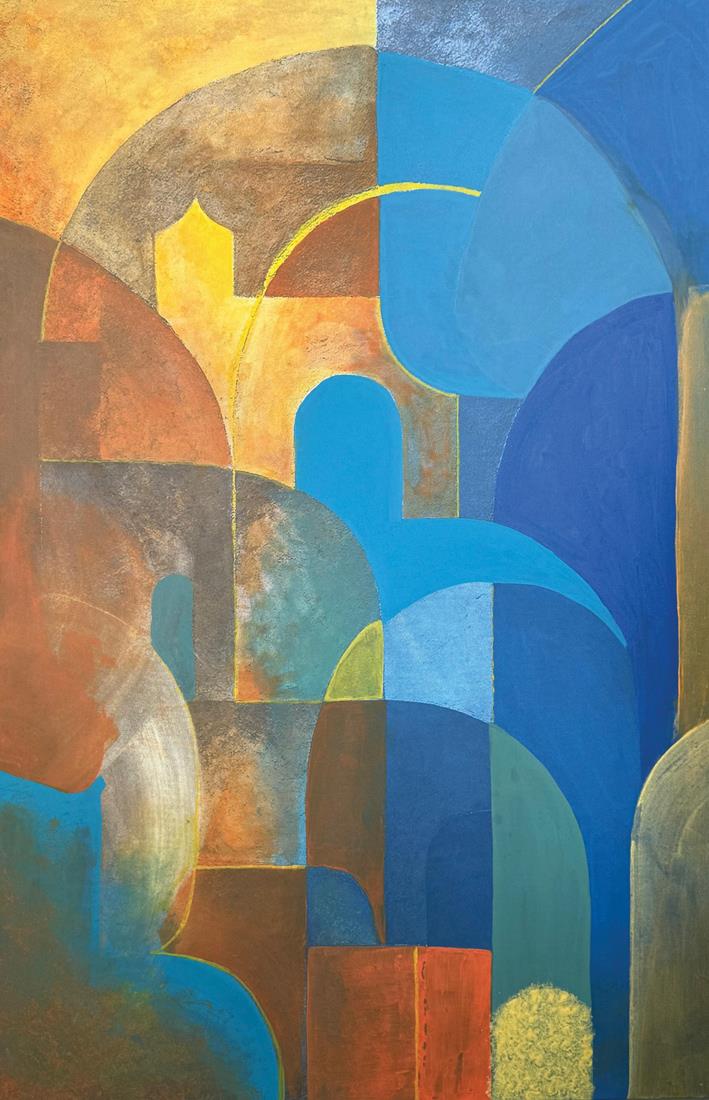
One of the exhibition's most compelling works, Mediterranean Soul, perfectly encapsulates this approach. The large-scale abstract composition evokes the architectural rhythms of southern Italy through overlapping arches, geometric forms, and luminous transitions between warm ochres and rich Mediterranean blues. Rather than depicting a specific building, the painting distils the spirit of Noto into colour, texture, and movement.
The golden sandstone palette recalls the city's celebrated Baroque façades, while deep cobalt and turquoise tones evoke the sea that has connected Sicily and Malta for millennia. Delicate golden lines weave through the composition like invisible threads, suggesting family connections that span generations and transcend geography. The work feels simultaneously architectural and deeply human, balancing strength with fluidity. It becomes not merely a landscape, but an emotional cartography of memory itself.
A gateway between past and present
Another centrepiece of the exhibition, Porta Reale, takes inspiration from Noto's monumental entrance arch. Combining photography with painterly interventions in acrylic, oil, and touches of gold leaf, Bella transforms an iconic architectural landmark into a powerful symbolic threshold.
Rather than simply recording the monument, the work elevates it into metaphor. The arch becomes a passage between past and present, between visitor and family member, between observation and belonging. A dramatic Sicilian sky frames the structure with striking atmosphere, while subtle applications of gold enhance the warm tones of the limestone, lending the piece an almost sacred luminosity.
The work beautifully demonstrates Bella's ability to unite traditional artistic craftsmanship with contemporary mixed-media techniques. Photography provides structure and reference, while painting infuses the image with emotion and personal meaning.
The poetry of the Mediterranean
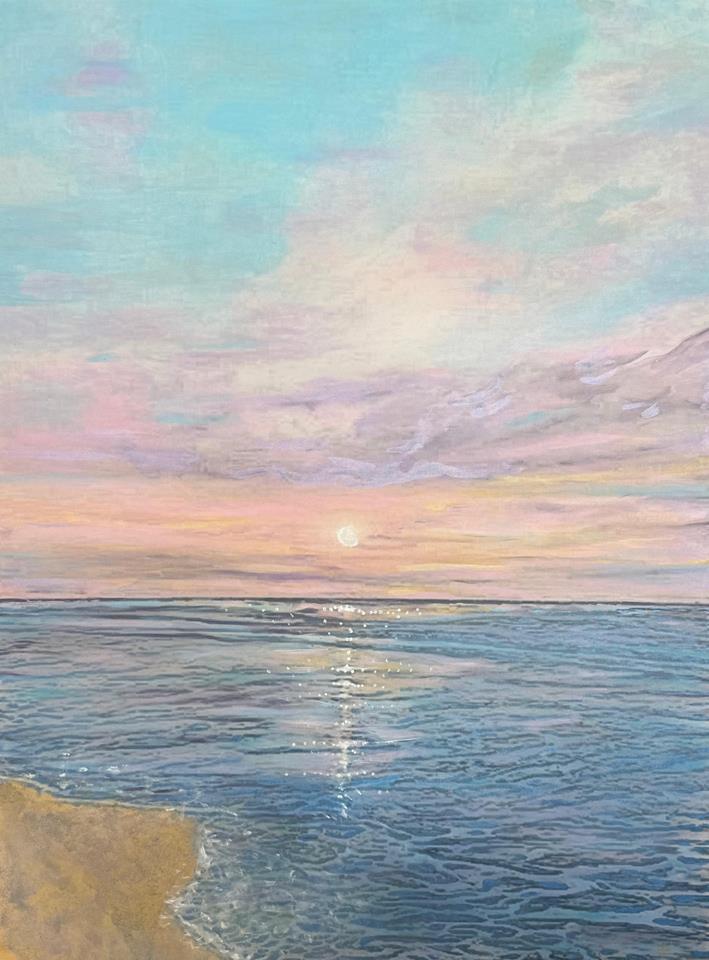
If Porta Reale celebrates arrival, Lido di Noto offers a quieter moment of reflection.
Rendered in delicate pastel tones, the seascape captures the serenity of an evening along Sicily's eastern coast. Soft pink clouds dissolve into pale turquoise skies while the sea mirrors the fading light with remarkable sensitivity and grace. In contrast to the bold geometry of Mediterranean Soul, this painting embraces openness, stillness, and contemplation.
Inspired by peaceful walks near Uncle Rosario's seaside home, the work possesses an almost meditative quality. The shimmering path of reflected light gently draws the viewer towards the horizon, suggesting both physical distance and emotional continuity. It is ultimately a painting about gratitude, family, and those seemingly ordinary moments that become treasured lifelong memories.
The restrained palette further demonstrates Bella's versatility as an artist. While capable of creating vibrant and energetic abstractions, she is equally skilled at crafting atmospheric landscapes where subtle tonal variations carry profound emotional weight.
Symbols of faith and identity
Beyond landscapes and architecture, Noto è Bella also embraces the city's spiritual and botanical heritage.
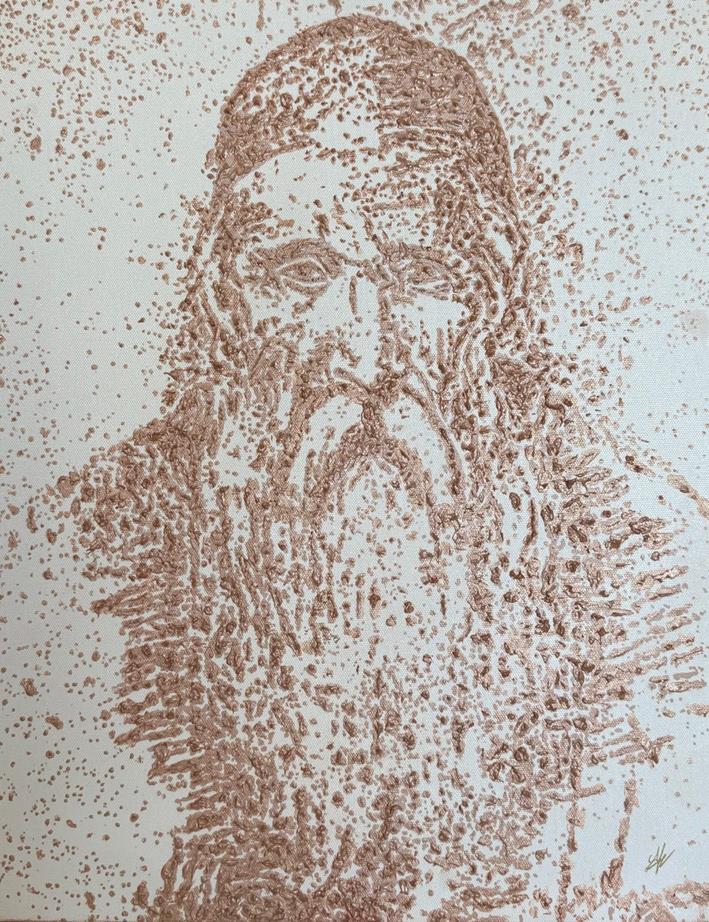
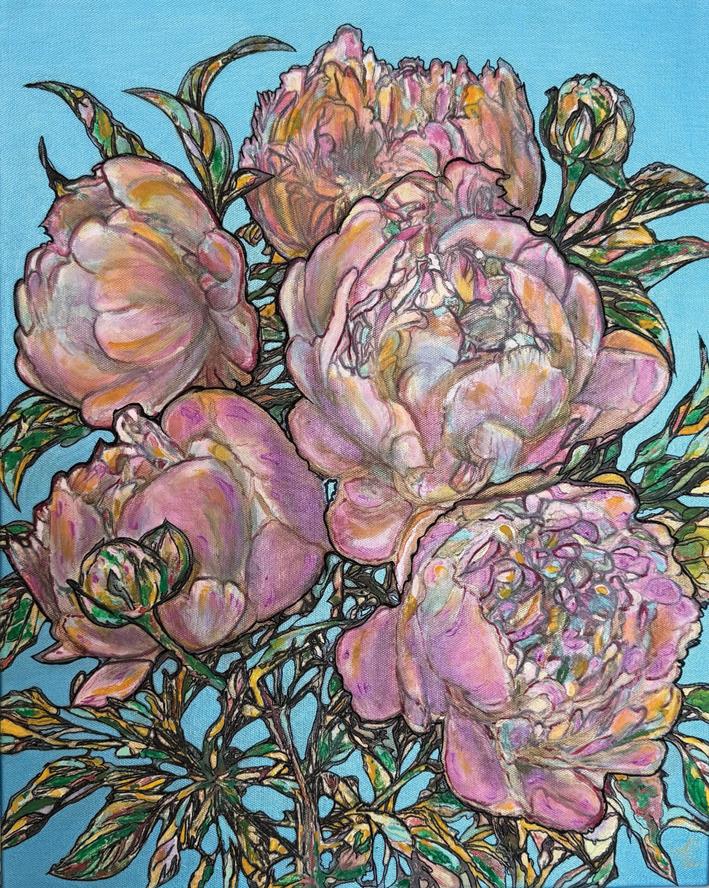
Among the exhibited works are textured interpretations of San Corrado, Noto's patron saint, rendered through expressive impasto techniques that invite viewers to engage with both visual and tactile dimensions. Alongside these appears a luminous representation of the Peony, the city's official flower, symbolising renewal, beauty, resilience, and local tradition.
These works expand the exhibition beyond autobiography, paying tribute not only to personal heritage but also to the collective cultural identity of Noto itself.
Bridging two islands
Bella Mulè's artistic practice reflects a distinctive synthesis of creative disciplines. Alongside her career as an exhibiting artist, she is also a certified ICT educator, photographer, creative tutor, and digital media specialist. Her experience across both traditional and contemporary media enables her to work confidently with acrylics, watercolour, photography, texture pastes, digital layering, and gold leaf, selecting each medium according to the emotional language of the subject.
This versatility is evident throughout Noto è Bella. While every artwork reveals technical mastery and thoughtful material exploration, none feels driven by technique alone. Instead, craftsmanship serves memory and meaning, allowing deeply personal experiences to resonate with universal themes of home, heritage, identity, and belonging.
For Maltese audiences, these themes hold particular significance. Malta and Sicily have shared centuries of exchange through migration, commerce, language, and culture. Many Maltese families can trace ancestral connections across the Sicilian Channel, making Bella's personal story immediately familiar and relatable. In this sense, the exhibition becomes more than a celebration of one family's history; it becomes a reflection on the enduring relationship between two neighbouring Mediterranean islands.
As thousands of Maltese travellers make their way to Sicily this September, Noto è Bella offers a compelling cultural destination beyond the beaches and restaurants. Set within the magnificent surroundings of Palazzo Ducezio, the exhibition provides a rare opportunity to experience Noto through the eyes of an artist whose affection for the city has been nurtured by generations of family history.
It is, ultimately, a celebration of place, memory, and artistic excellence, demonstrating how the search for our roots can become a source of creativity capable of speaking across cultures, generations, and borders.
Prof. Louis Laganà PhD (Lough) is an academic, curator and practising artist