Last week I introduced you to the Summer issue of Treasures of Malta, concentrating on the Cottonera photographer Giuseppe Fenech whose work fascinated me. But there is so much more to this issue. Allow me to give you a few highlights - a taste of what you can expect.
Treasures of Malta continues to balance scholarly research with strong visual appeal, bringing together art, conservation, maritime history, biography, and heritage.
Art and portraiture: such as the study of Fra' Giorgio Giuseppe Valperga di Masino and the portrait of Peter III of Portugal.
Fra Giorgio was a knight in a technical role in the service of the Order of St John. Anna Bertolino, recently graduated as an architect spent five months researching in Malta. In this article she highlights the overlooked role of a technically skilled aristocratic knight whose administrative, logistical and defensive work was essential to the everyday functioning and stability of the Order of St John in the late eighteenth century. A very well illustrated and documented article.
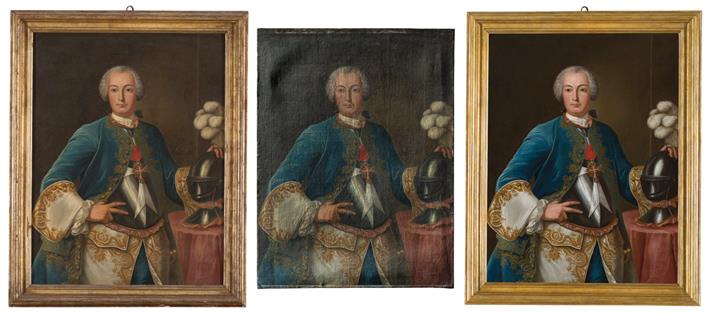
The Portrait of Peter III of Portugal (1717-1786) at Casa Manresa, Floriana is written by Michael Pace Ross and Amy Sciberras. This portrait, pictured here, is located in the office of the administrative secretary in the Archbishop's Curia (Casa Manresa) in Floriana. The king had a close association with the Jesuits, particularly through his support for the Manresa retreat home built by Francesco Rosignoli. This is the detailed story of how this portrait was restored. Conservation treatments were carried out by Amy Sciberras and her team.
Malta's maritime and visual heritage is represented by the article on Edwin Augustus Porcher's watercolours. It is written by independent researcher Emanuel Chetcuti. In it he explores a series of nineteenth century watercolours of Malta, which serve as both artistic works and historical records, capturing the island's landscapes, architecture, and its role within the British naval and cultural sphere. According to the author Porcher was a prolific artist. It appears that he executed watercolours of most of the places he visited during his naval career.
Equally engaging is the examination of the watercolour depicting HMS Hibernia in Dockyard Creek, a visual record that illuminates Malta's close association with British naval power during the Victorian period.
His work is scattered in several libraries and archives including private collections.
Social and cultural history is rarely missing in TOM. In this issue there is Rebecca Delia's article Faces of the 'Other': Slavery, Orientalism and Visual Culture in Baroque Malta. In it, the author bases her study on the bronze door-knockers of St Paul's Cathedral in Mdina. She examines how visual and material culture was used to reinforce social hierarchies and racialised identities of enslaved individuals in 17th century Malta. Another most interesting study.
Kenneth Zammit Tabona has written an appreciation of Alaine Apap Bologna who passed away earlier this year. I miss her and Peter, too. They came to live down the road after they closed their art gallery in Lija. I was often invited to delicious lunches. Eventually Peter wrote a cookery book which I use regularly.
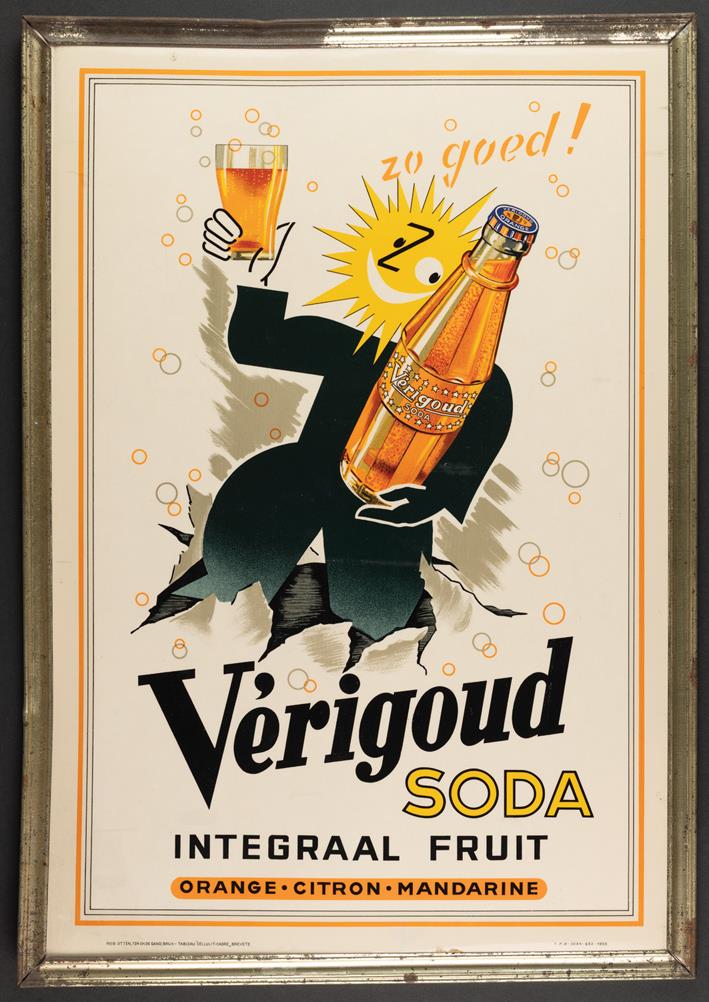
In this issue in the series My Favourite Object David Fabri writes about his Verigoud collection C'est si bonne! Dr Fabri has an interesting CV. He also plays football, is an avid rock music fan, and is a collector "mostly related to Malta." But this article is about Verigoud, a foreign soft drinks brand. He has memories of this drink from his childhood summers spent in Birzebbugia. His family used to have wooden crates delivered weekly. Like Proust and his madeleine he recalls the taste of Verigoud. His collection started when he came across a bottle of Verigoud at an SPCA car boot sale in Marsalforn which he bought for 40p. His collection of soft drink bottles today nears 500 units. I enjoyed reading Dr Fabri's article and looking at pictures from his collection. I read with great interest that Verigoud together with Orangina, which I remember so well, came from Boufarik in Algeria.
One more article is by Rev. Professor Martin Micallef: An Arab Artifact and the Circulation of Antiquarian Knowledge in 18th century Malta.
"This study examines a copper vessel attributed to the Arab period, discovered in 1749, as a case study through which to reconstruct patterns of intellectual exchange linking de Soldanis, the Capuchins, and wider European scholarly circles. By analysing the documentation, transmission, and interpretation of this artifact, the article highlights the intersection of antiquarian inquiry, linguistic curiosity and artistic documentation. More broadly it demonstrates how a single object may illuminate the collaborative frameworks and methodological limitations that shaped early Maltese historiography."
The author writes that unfortunately the fate of the copper vessel remains unknown. Archaeological artefacts from Arab period discovered in the Maltese islands are relatively scarce.
How did these marvellous researchers manage all this without the internet, mobile phones, emails and so on.
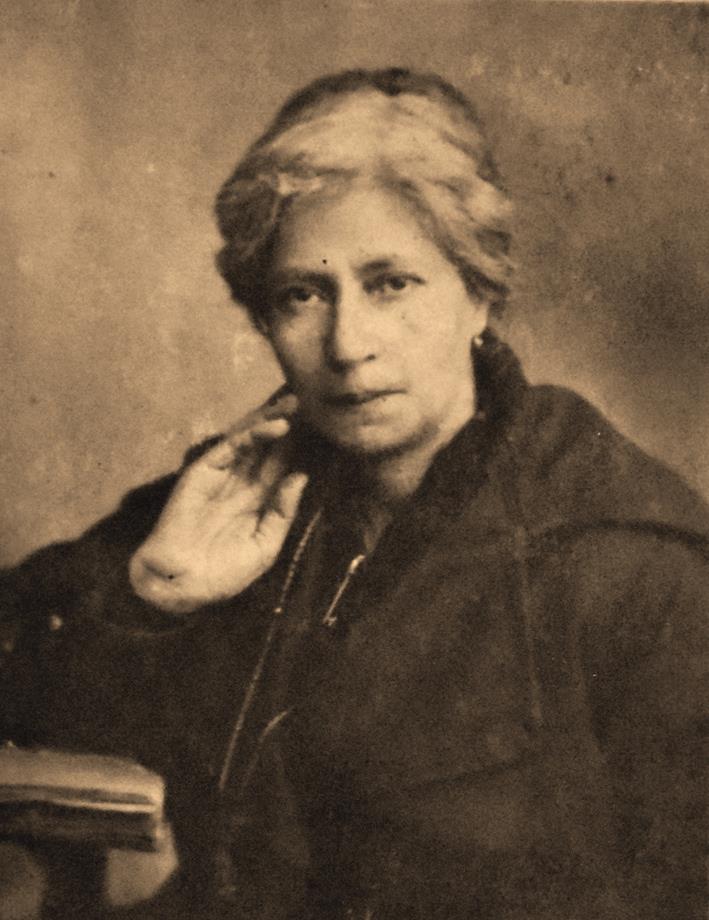
One more article is by Adrian Grima, Associate Professor and Head of the Department of Maltese at the University of Malta, and so much more. I was fascinated by the story of Concetta Brincat, born in 1870, in the area of Laqxija, Birkirkara to parents who were unable to read and write. "Concetta Brincat became the first known female novelist writing in Maltese...her first novel eventually came out in October 2025, almost 100 years after she had written it, in Sliema..."
The family left Malta and went to live in Constantine, Tunis. They were to return to Malta and Concetta eventually married the stone mason Vincenzo Brincat and went on to have ten children, but they lost their twins. I found this story beyond interesting.
It is followed by the Bookshelf section and Cecilia Xuereb's Cultural Review and Calendar Highlights. This is a most satisfying issue of 'Treasures of Malta', one that I enjoyed immensely.
Sometimes a week spent largely indoors can feel uneventful, yet good writing has a way of expanding one's horizons. Through these pages I encountered knights, artists, collectors, restorers, scholars and forgotten pioneers. Not a bad way at all to spend a hot summer week. Thank God for airconditioners.