How can a colour, static and material by its nature, be imbued with experience? Within abstraction, colour can become more than a visual element, carrying emotion, memory and the traces of the marks and gestures through which it was brought into being. What appears still on the surface can therefore hold something far more dynamic: a record of feeling, movement and personal experience.
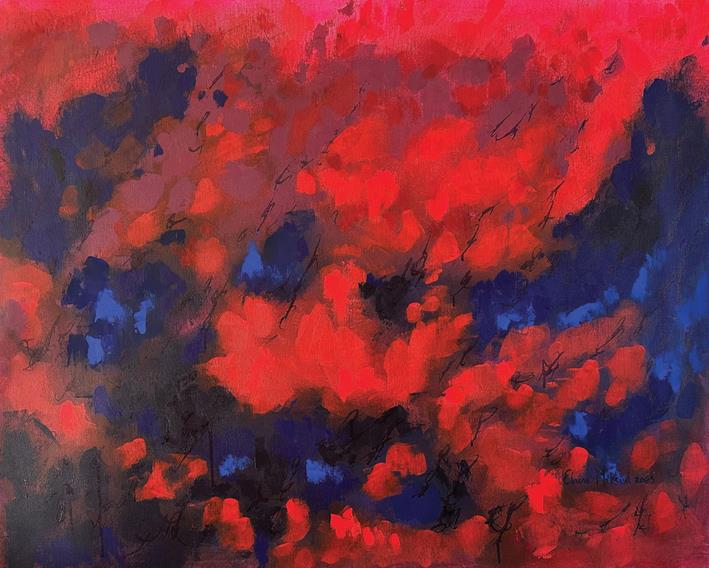
Reflections of two souls, curated by Rudy Buhler at Rudy Buhler Art, presents a developing body of serene and vibrant paintings by Elaine Mifsud and Michelle Mahoney. The two abstract artists' practices occupy markedly different visual and psychological areas yet they remain connected through their shared engagement with the inner experience of painting. Their complementary, yet juxtaposing, qualities are brought into direct dialogue, creating an encounter that moves between states of calm and energy, as well as introspection and expression.
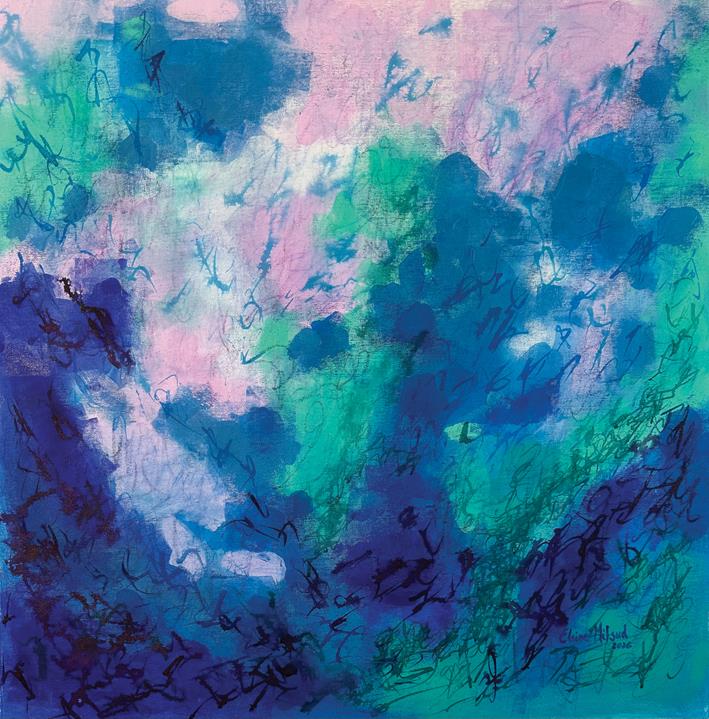
Mifsud brings uniformity with her broad brushstrokes and limited palette. Colour here is not merely treated as a tool for the artist to express herself but is imbued with experience. This is particularly evident in And for an instant my world stopped turning, where, comparatively to her other works, it is clearly evident that something which warranted a visceral reaction occurred. Had the title not be stated, the depth and contrast of her colours and disorientation of their placement, while still compositionally balanced, would have still stated the bold release of the artist's tension. While the use of dark marks adds another dimension to the pictorial layer, their inclusion could have had a grander impact if taken further.
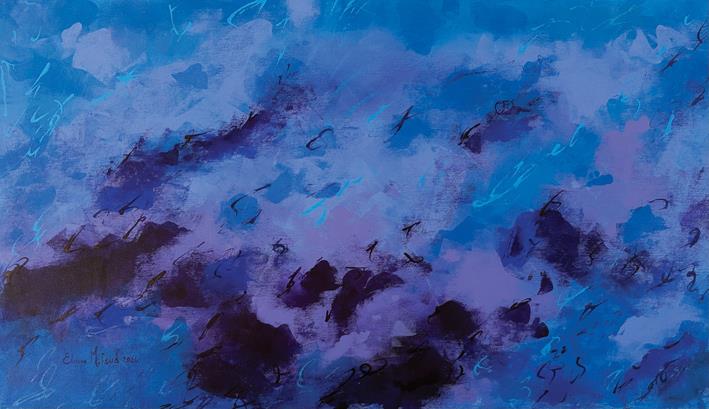
The interplay of marks and how they elevate colour is most successful in two particular paintings, Chasing dreams and Will to keep going. Seen as perhaps the next step in her artistic journey, this process disrupts that initial calmness while retaining a sense of harmony. The ink simultaneously captures the frantic nature of the artist's hand through sharp, distinct lines and diffuses into the surrounding colours when made to bleed out.
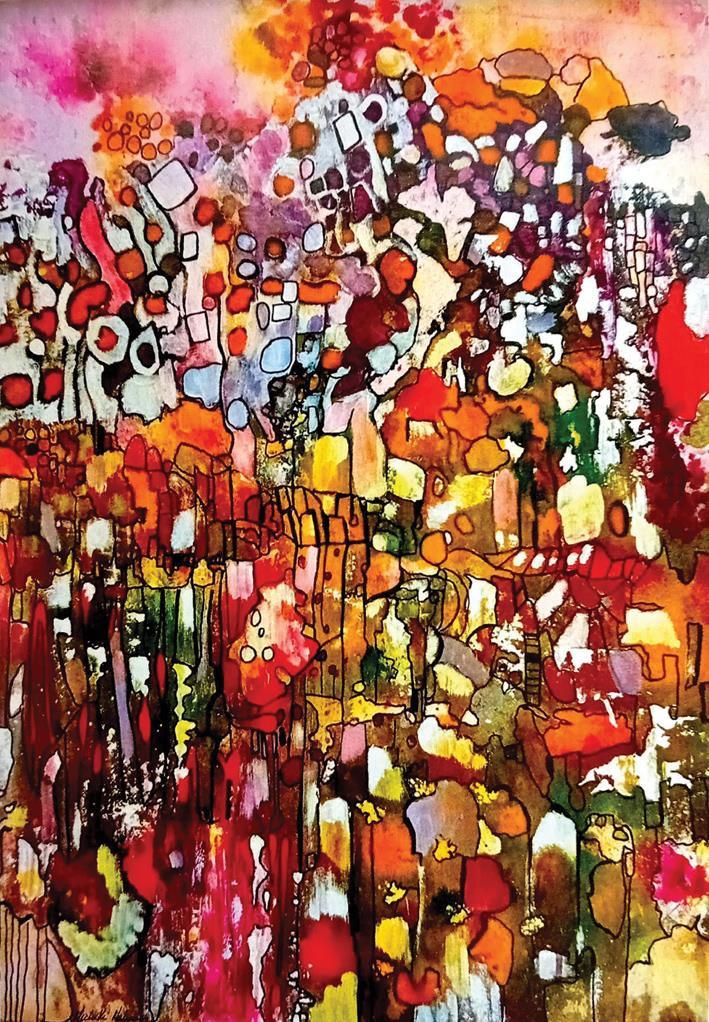
By contrast, the paintings by Mahoney provide a more agitated presence, even when restricting her colour palette. The emphasis on movement following the artist's hand is similarly present with paintings such as In the spotlight. The raw quality in their application and dynamism is elevated by the vibrancy in colour. This is powerful in its own right, but a standout work by her combines and encloses this vibrancy within dark marks. The root and the blossom, brilliantly balances out what could have been a chaotic surface. This idea is also seen in In nature's embrace yet the intricate fragmentation does not possess the same level of harmony that the previously mentioned painting does.
These two visuals, enclosing colour to highlight different hues with dark boundaries and letting their vibrancy clash, reveal a compelling tension between structure and freedom within her paintings.
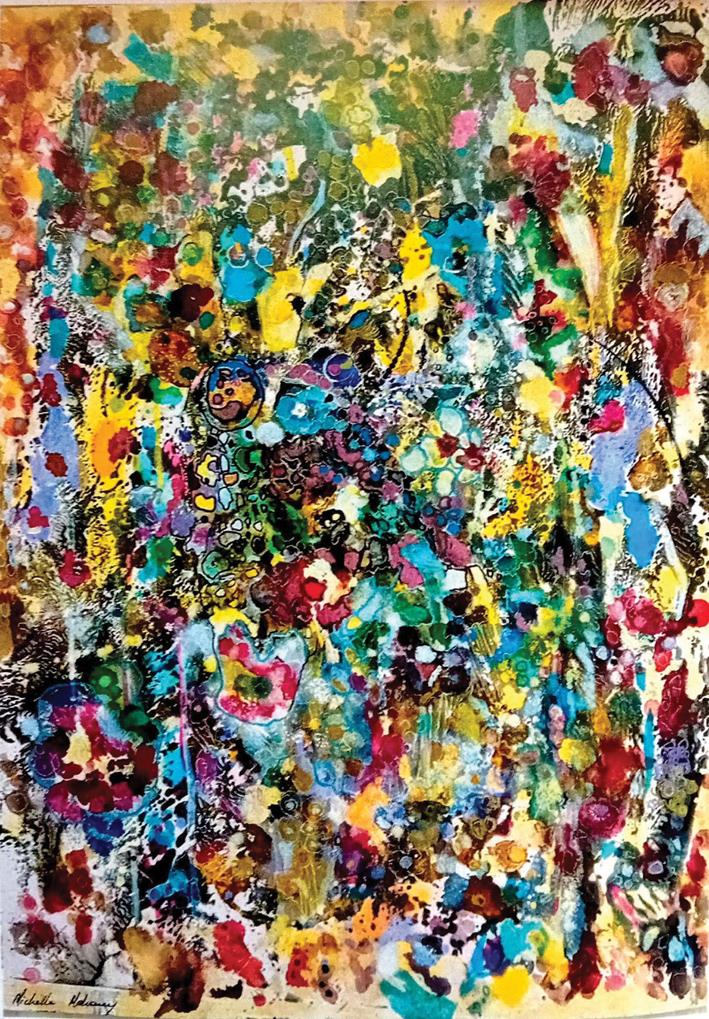
Mahoney shifts between defined forms and more spontaneous marks, allowing colour to break beyond its boundaries and animate the surface.
With both these artists, and when it comes to abstract art in general, the aesthetic quality is the first to take into account. Yet just as important, and at times more so, is the process behind the works and the mentality infused within them, aided in this case by the use of titles as another form of immediate reflection on the artist's mentality. Both artists describe this process as a gradual engagement with their inner selves: Mahoney notes how "the starting point is intuition, I tap into my subconscious to create the framework of my creation", while Mifsud similarly reflects that "with time you become more conscious of what you need to express".
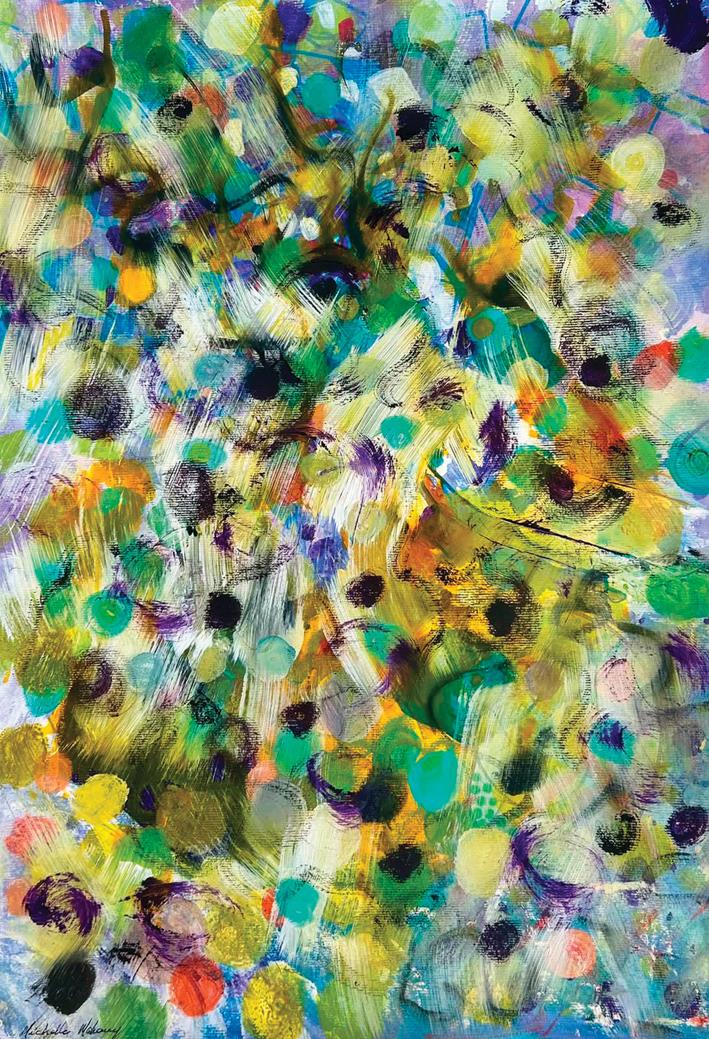
Experience is a keyword with both of these artists but what they choose to take from it is also another juxtaposing position that complements their visuals. Both exploring the emotional properties of colour and contemplating the process, Mifsud depicts her internal landscape while Mahoney reinterprets the external one. Mahoney turns her attention to nature as it is affected by human presence and, in turn, how this reshapes her internal experience. Her response is to reintroduce nature into her work, combining it with fantasy and unpredictability to transform the external landscape into a dreamlike world.
Reflections of two souls finds its strength in the meeting of two distinctly different sensibilities, where what initially appears opposed becomes complementary. As Buhler reflects, it was this contrast in styles and approaches that drew him to presenting the artists together. Together, these perspectives demonstrate how different sources of inspiration can lead to deeply personal forms of abstraction, offering a glimpse into the otherwise intangible landscapes of human experience.
Reflections of two souls is open to the public until 27 September at Rudy Buhler Art, Marsaskala