On 4th September, I attended the opening concert of the Malta Philharmonic Orchestra at the Mediterranean Conference Centre.
The programme was cleverly designed. It began with elegance and ceremony, Tchaikovsky's magnificent Polonaise from Eugene Onegin, based on Pushkin's famous novel in verse, setting a festive and celebratory tone for the evening. I have enjoyed so many Russian writers, in translation, but have never even tried to read Eugene Onegin. Always sounded as if it was too difficult.
Tchaikovsky's majestic opening fanfare and its sweeping melodies were a delight. It is a wonderful curtain-raiser because it immediately captures attention and fills the hall with energy.
The programme then moved to intimacy and lyricism in Robert Schumann's Piano Concerto in A minor, one of the most beloved piano concertos ever written, performed by the distinguished Italian pianist Roberto Cominati. In this concerto Schumann explores the emotions and inner workings of the human heart.
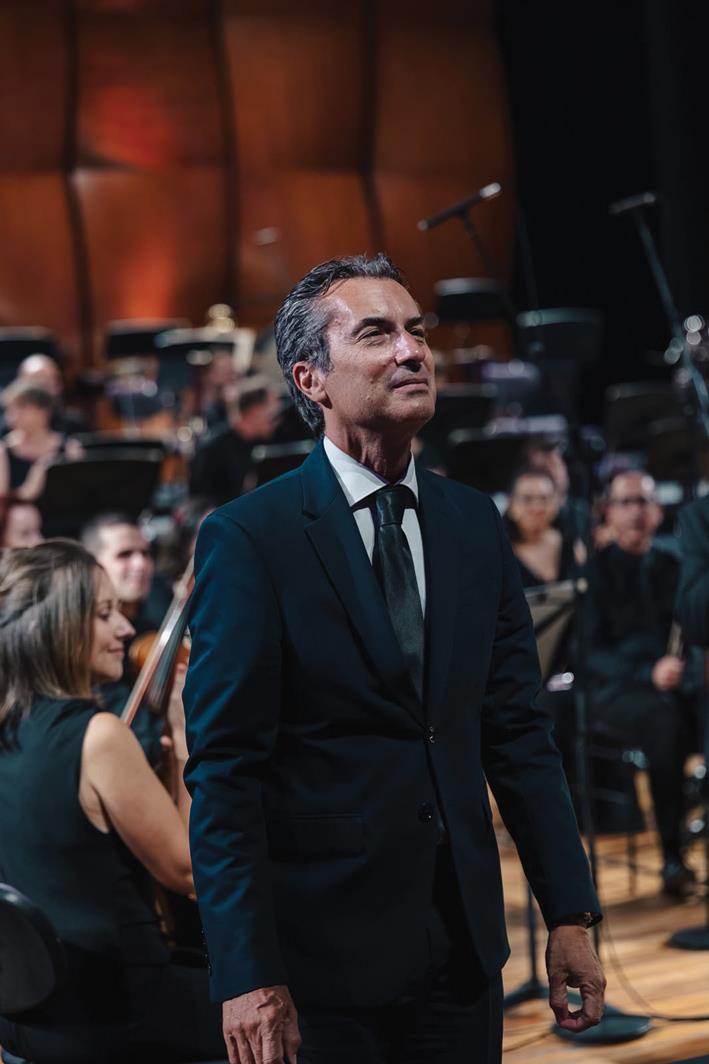
I first heard Cominati play at the Manoel when he was in his twenties. I was delighted when his name turned up again on the programme of An Evening with De Falla with the MPO, a recital held at the Grand Master's suite, Hilton Malta last July. However, I was disappointed because he only played one piece. So I was very happy to see that at the opening concert he was going to play Schumann's Piano Concerto in A Minor, with its three interconnected movements. It was rendered with elegance, lyricism and technical brilliance. Cominati's sensitive interpretation was warmly received by the audience, who rewarded him with enthusiastic applause. In response, he delighted listeners with an encore: Somewhere Over the Rainbow in the celebrated transcription by Keith Jarrett.
After the interval, the orchestra turned to Richard Strauss's tone poem Don Juan, a work demanding both virtuosity and expressive power from the players. As always, musical preferences are personal, but this was the work I enjoyed least.
 The concert concluded with Ottorino Respighi's spectacular Pini di Roma (Pines of Rome), a symphonic poem in four movements that vividly depicts scenes of Rome through rich orchestral colours and evocative imagery.
One particularly striking feature occurred during the performance of Pini di Roma. To create Respighi's spatial effects, six brass instruments were playing on the left-hand balcony while a lone trumpeter appeared on the right. This imaginative placement added a remarkable sense of distance and atmosphere, enhancing the immersive experience and demonstrating the composer's innovative use of orchestral space. Apart from the orchestra, musicians seemed to be everywhere.
Overall, the concert offered a splendid combination of lyricism, drama and orchestral brilliance, making it a fitting and impressive opening event for the Malta Philharmonic Orchestra's season.
A musical observation: Joanna Camilleri, the pianist and harpist, was playing the organ and the celesta, a demanding role at least in my view. The musicians I am about to mention, were not on the stage. The grand piano had been rolled to one side to make way for the harp, the organ and the celesta.
The celesta adds the shimmering, bell-like sonorities that give parts of Pini di Roma their magical quality, while the organ provides the immense sonorous foundation heard in the climactic passages, especially towards the end of I Pini della Via Appia. I am indebted for most of these details to Joanne Camilleri.
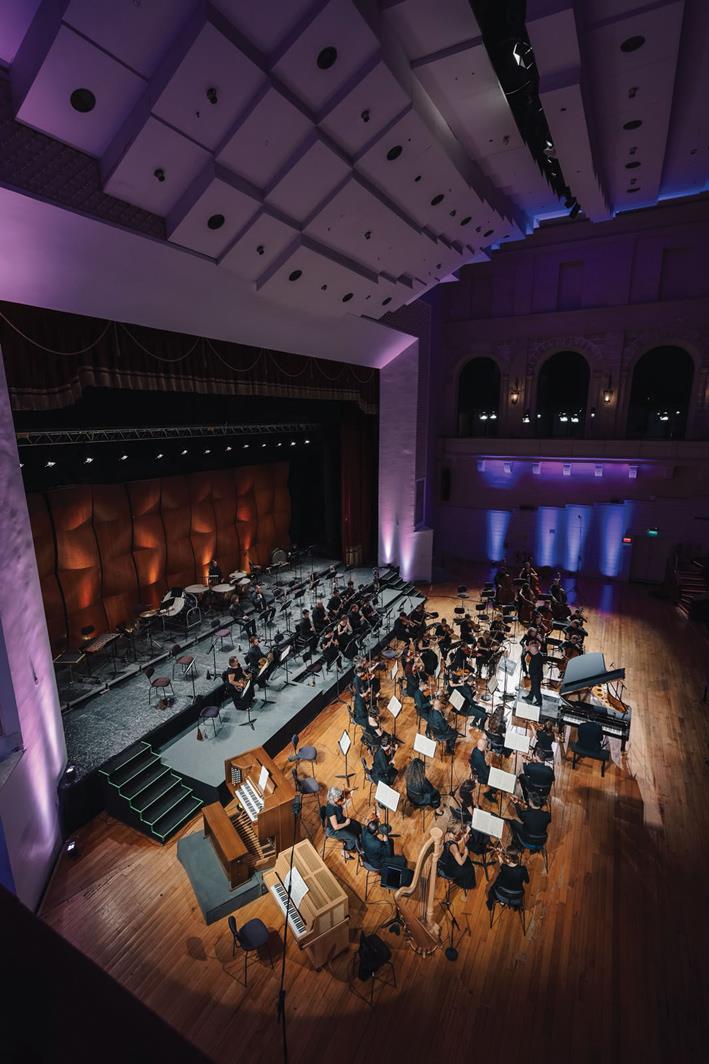
Respighi was a master of spatial effects, and the placement of musicians in the balconies would have enhanced the sense of distance and atmosphere, making the final work feel even more immersive. Combined with the organ, celesta, harp (played by Caroline Muscat who is also a pianist and harpist), it demonstrates how carefully the MPO sought to recreate the composer's spectacular sound world.
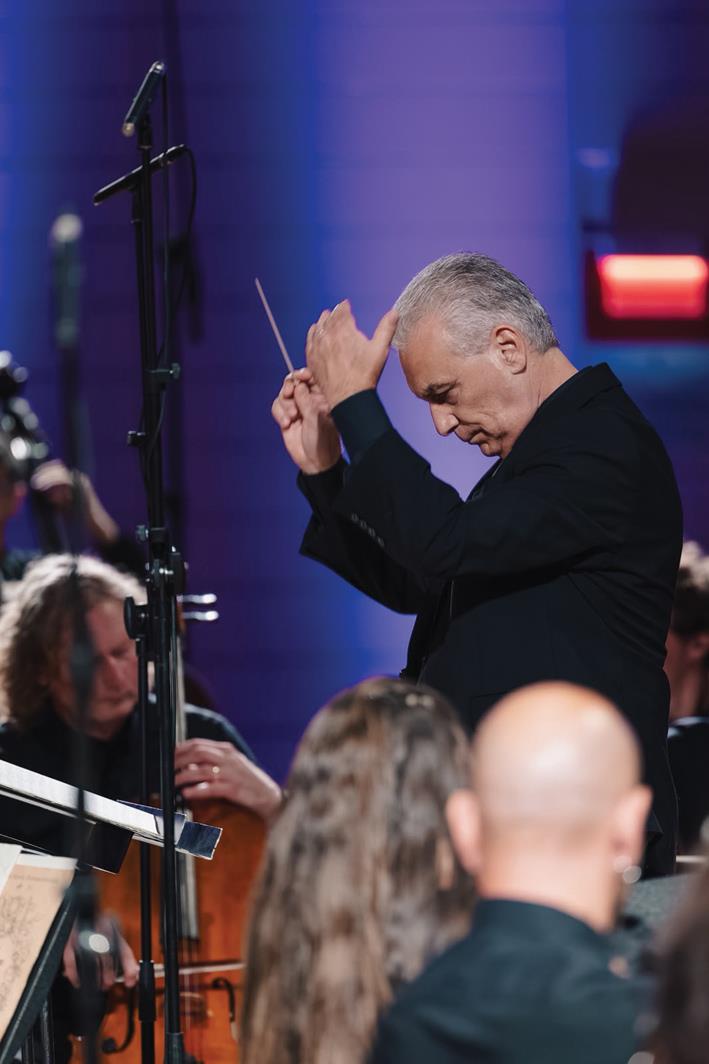
Maestro Michael Laus, the MPO and other musicians were given a standing ovation of at least five minutes. Thank you for the splendour.
They must have been worn out but still, they gave us an encore by repeating I pini della Via Appia.
Under Maestro Michael Laus, the Malta Philharmonic Orchestra essentially took the audience on a journey from the ballroom, to the soul, to the heroic adventure, and finally to the Eternal City.
One of the joys of classical music is that a concert does not end when the last note is played. We often continue hearing it in our minds, reflecting on a melody, an orchestral colour, or a moment on stage that caught our attention.