How can an artist encompass such a breadth of approaches to human experience? Moving between contrasting styles, subjects and methods raises questions of coherence and continuity. The question is not simply one of variety, but of what binds these differences together.
Ray Piscopo began his artistic journey in the early 1970s, studying under leading Maltese artists, including Antoine Camilleri, before pursuing further artistic studies abroad, including master classes in Austria and Italy. His artistic career has taken him from Malta to exhibitions internationally, with his work forming part of private collections around the world. Working across various mediums, both two-dimensional and three-dimensional, his practice reflects a continued exploration of technique, material and expression. For decades, Piscopo also worked in engineering and microelectronics, bringing a structured, analytical perspective to his art, balancing precision and experimentation with intuition and expression.
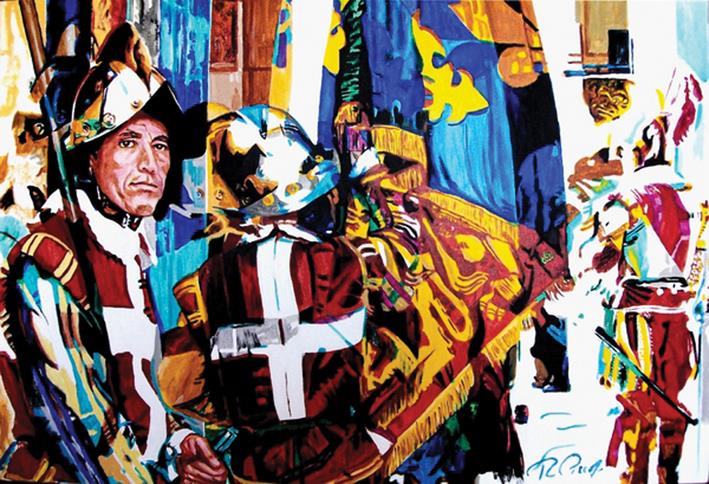
Chromatic journeys through humanity and myth is Piscopo's latest exhibition, held at the chapel of the Holy Spirit at the National Archives in Rabat on 19 and 20 September, as part of Rabat Sacrum 2026. The exhibition brings together more than 30 paintings spanning a wide range of styles and subject matters, from humanity and Maltese identity to nature, narrative, colour and observation, alongside classical, mythology and contemporary sources of inspiration. Yet despite the breadth of paintings presented, reflecting not only his artistic nature but also how his engineering background informs his work, Piscopo states that this is not intended as a retrospective. He explains that as long as he is alive he will continue to invent, experiment and seek to create something new.
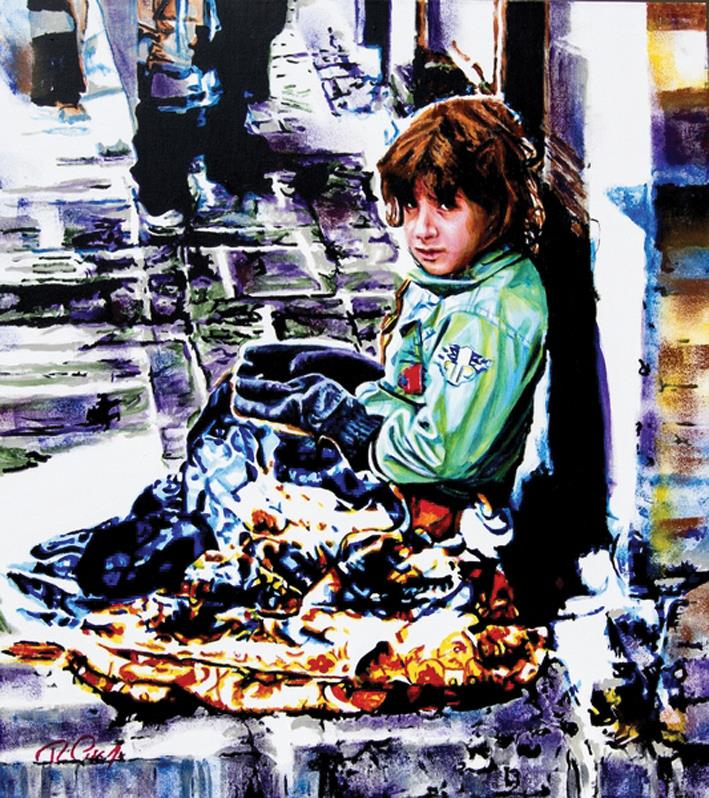
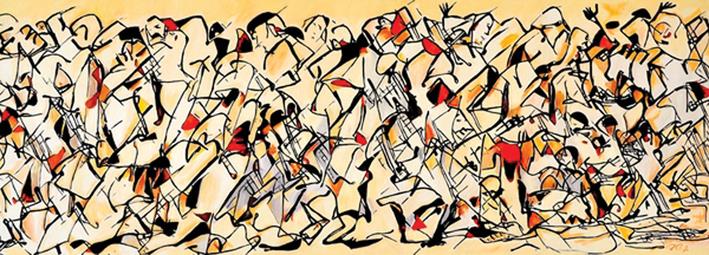
Throughout his work, whether figurative or abstract, there is a clear concern with humanity, empathy and the experiences of others. This is particularly evident in paintings such as The beggar boy and Let my people go, where the subject is placed at the centre of the composition. Many of his works engage with social and environmental issues, reflecting his interest in "the life of the population that stays quiet". This concern is conveyed through the physical presence of his figures, but particularly through their facial expressions, where emotion and vulnerability is emphasised. Yet this engagement with humanity is not confined to his figurative work. In Refugees, for example, individual figures are reduced to fragmented lines and forms, making them increasingly difficult to distinguish from one another. This loss of individuality becomes significant within a painting concerned with displacement, shifting attention away from the individual subject and towards a collective experience of uncertainty and dislocation.
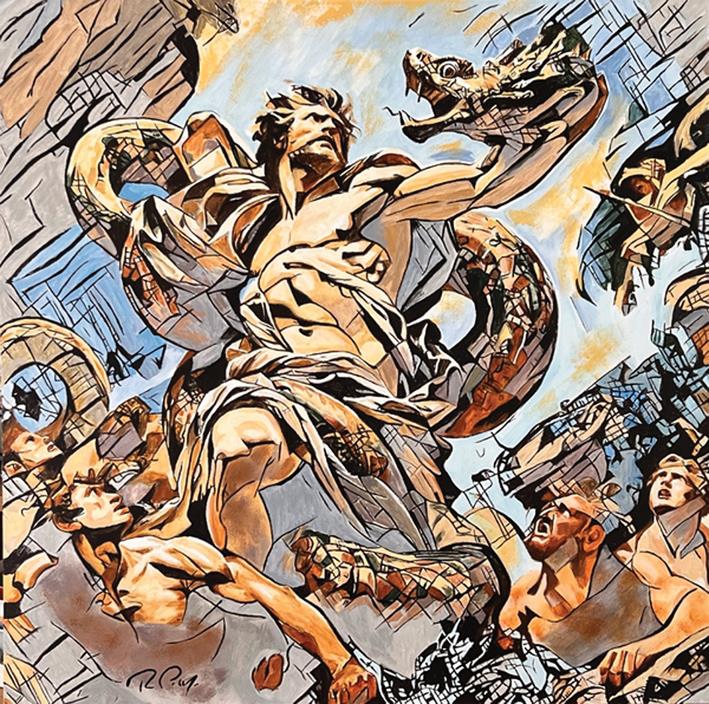
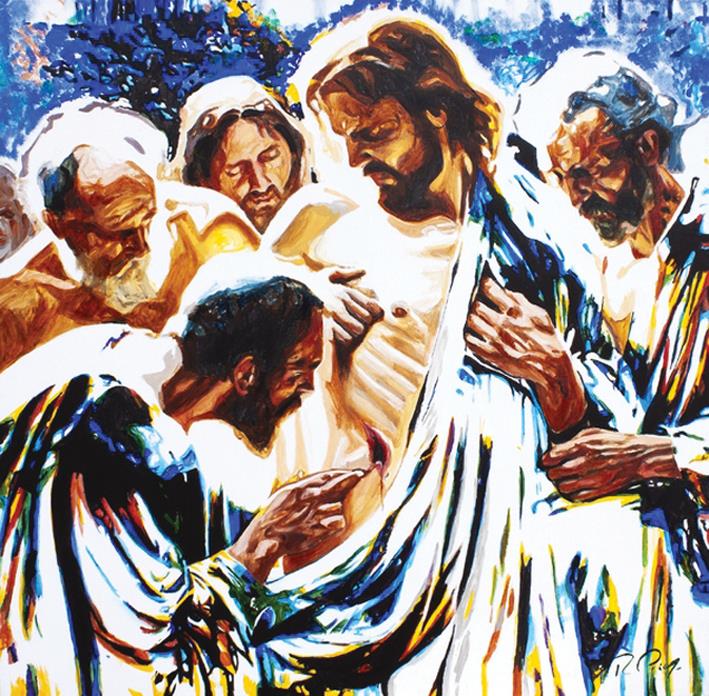
While Piscopo's work is strongly shaped by the contemporary human condition, he also draws from staged forms of representation such as cinema and theatre, alongside more classical sources including religion, mythology and art history. Looking to artists such as Raphael, Manet and Rodin, he engages with established artistic traditions while developing colour as a principal means of emotional expression. His intense use of colour is central to this approach, reflecting his belief that "white and black are the extremes of life and death, joy and sorrow, but vivid colours in between represent the different nuances and intensities of human experience". This understanding of colour extends into his engagement with religious and mythological imagery, which he reinterprets as enduring references through which to explore themes of life and transformation. Colour also carries a spiritual dimension within his practice, with Piscopo suggesting that it can bring the viewer closer to the divine, while mythological narratives can prompt further enquiry into the meanings, associations and human experiences embedded within them.
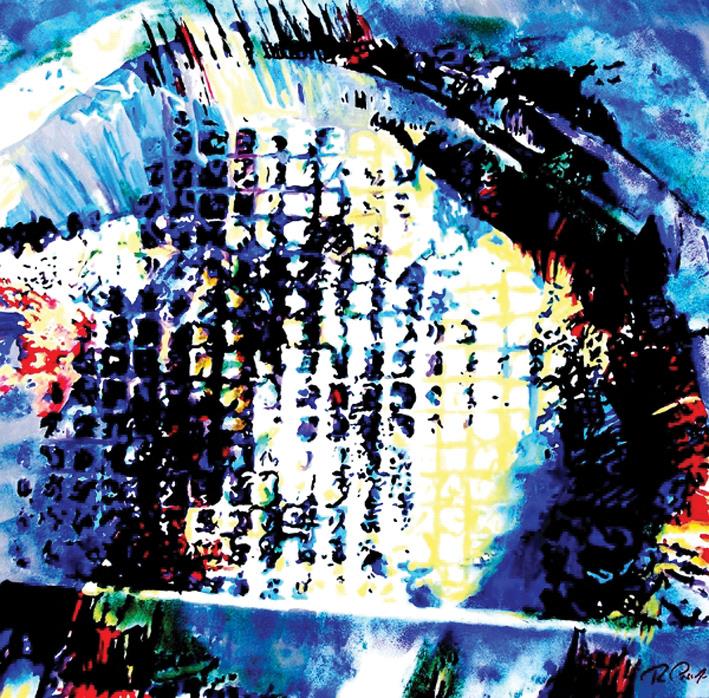
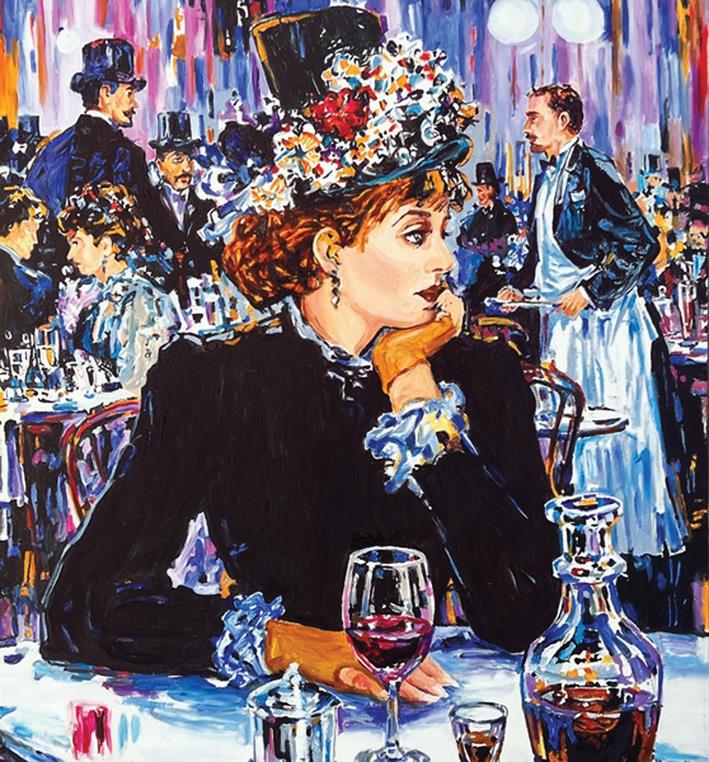
Another area emphasised in this exhibition is his attention to the female figure, through which ideas of femininity, grace and presence are explored with a markedly different sensibility. Rather than relying solely on narrative, these works often draw attention to posture, gesture and the physical presence of the figure, allowing the body itself to become a means of expression. There is a quietness to this aspect of his practice that contrasts with the intensity of his use of colour elsewhere in the exhibition, with femininity conveyed not simply through the subjects depicted but through their manner of occupying their surrounding space. In these paintings, presence becomes less about action or narrative and more about the act of being seen, giving the figure a contemplative quality that resonates throughout Piscopo's works.
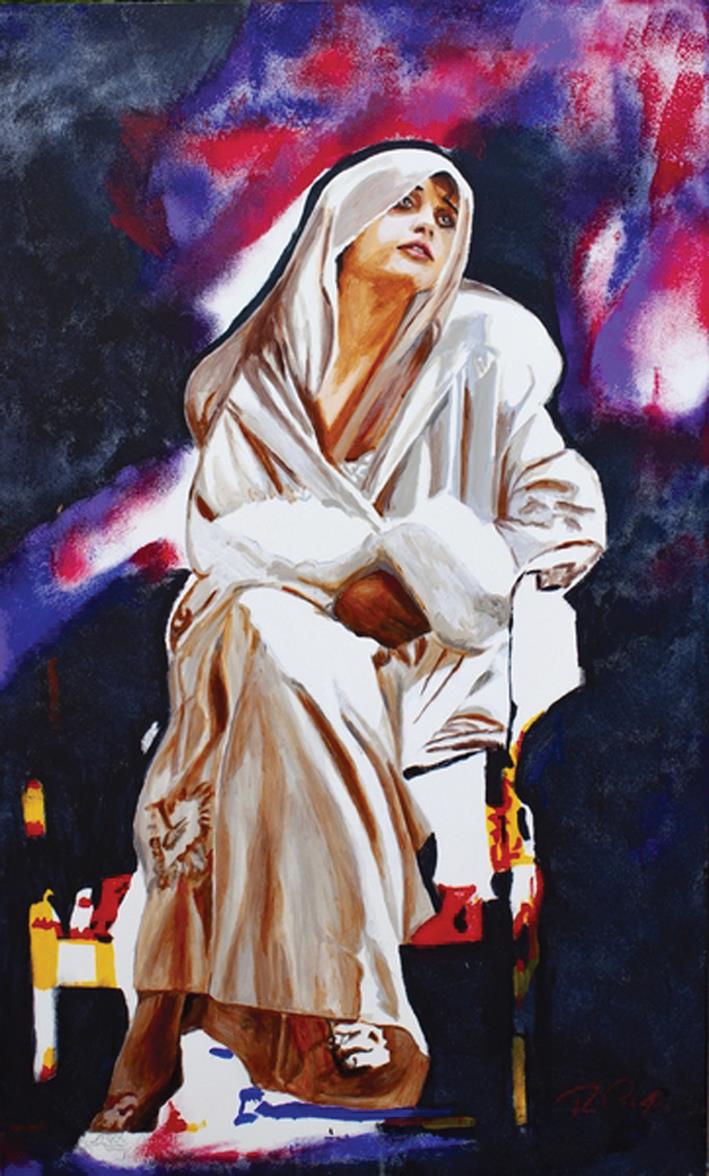
The breadth of this exhibition reflects an artist continually negotiating between the specific and the universal. His engagement with Maltese identity provides a cultural grounding, while his attention to the human condition extends towards experiences that transcend place. Across figurative and abstract approaches, line and colour, structure and intuition, his paintings demonstrates how different visual languages can serve the same underlying concern with human experience. His background in engineering further strengthens this relationship, bringing analytical precision into dialogue with emotional and intuitive expression. Rather than defining a fixed artistic identity, Piscopo's work remains open to experimentation, making continual evolution itself one of its defining characteristics.
Chromatic journeys through humanity and myth will be open to the public on 19 and 20 September at the chapel of the Holy Spirit, National Archives in Rabat.