I have known Alexia and her better half, Julian, for a few years now, always in relation to art, whether as exhibition visitors or through our arty social networks, and, however we meet, it is always a lovely and intellectually stimulating encounter. Following her first solo exhibition, titled Synaesthesia - The scent of beauty [1], held at Art by the Seaside, we immediately agreed that her next exhibition should take place at il-Kamra ta' Fuq.
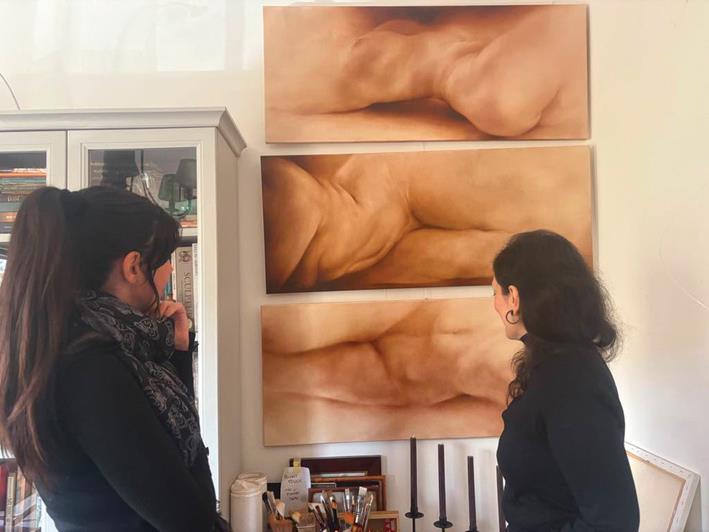
Alexia's work requires time, owing to her meticulous approach, which one could describe as distinctly Leonardesque, both in execution and style, as visitors will soon observe. So yes, you will notice that the image from a studio visit dates back to 12 February 2025! And that is no mistake. Her works require numerous layers, each needing its own time to dry, among other things. And yes, researched, thematic exhibitions do require time; they are not created at a moment's whim.
Here's some more information about Baldacchino, for those who have not yet had the pleasure of meeting this beautiful soul. A lifelong creative, Alexia explored photography, songwriting, poetry, singing and design before rediscovering her roots in painting more than 20 years later. Her paintings are a way of expressing her appreciation for the beauty she sees in the world, as well as her own vision of aesthetics.
She is intrigued by that often elusive and difficult-to-describe quality we call atmosphere, that which is not composed of matter, but rather of sensations. It is precisely this intangible essence that she strives to capture and convey through her work.
Over the years, we have also collaborated on several collective exhibitions, including two exhibitions for MCCF, an exhibition at Mani Centre, and a pop-up show at il-Kamra ta' Fuq. And believe me, it's always a pleasure!
But let's focus on this exhibition, titled The nectar of sleep. It was originally meant to happen in May, but, much to Alexia's dismay, it happened to coincide with the general election, so we had to postpone it to September. Well, more time for the excitement and hype to build, I guess! And build it did!
The nectar of sleep stems from Baldacchino's deeply personal relationship with sleep. Inspired by her own lifelong struggle with insomnia, as well as her mother's similar experience, the exhibition is the culmination of more than a year of research into that elusive space between wakefulness and dreams.
Drawing on the atmospheric qualities of Renaissance art, and particularly Leonardo da Vinci's La Scapigliata, Baldacchino embraces softness over precision. Her paintings are filled with diffused light, gentle clouds and hazy forms, creating dreamlike spaces where nothing feels entirely resolved. Much like the unfinished masterpiece that has lingered in the artist's imagination, these works remain intentionally open, reflecting the fluid, shifting nature of dreams and memory.
But there is also a distinctly contemporary layer to the exhibition. Baldacchino's fascination with modern sleep culture led her to look at the data we now collect while we sleep. The visual wave patterns and fragmented records generated by a sleep-monitoring app became an unexpected source of inspiration. At the same time, the exhibition quietly questions our increasingly complicated relationship with rest: how sleep has become something to measure, optimise and even sell, through wellness trends, influencers and routines promising us the elusive "perfect" night's sleep.
The rather large-scale works, executed in oils, focus primarily on facial expressions, each capturing a different moment or state connected to sleep: the before, the almost, the during, the contemplation, and the restless overthinking that comes with a lack of sleep.
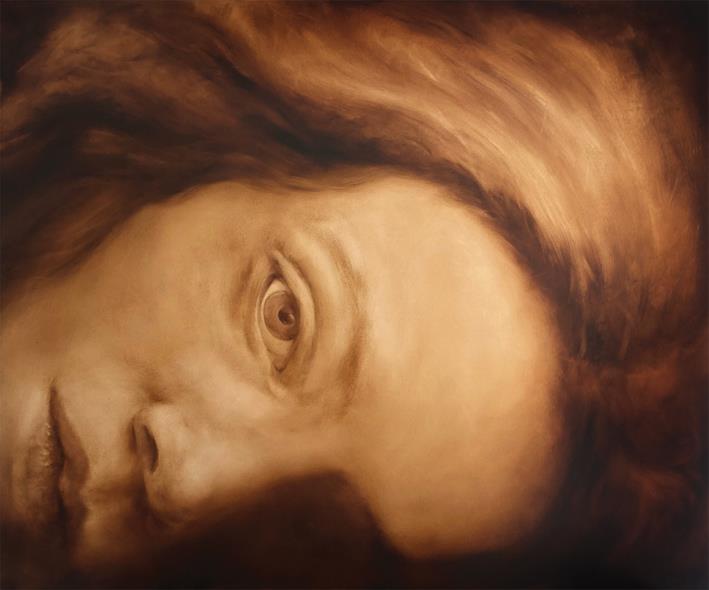
The sleepless nights when the brain is simply too tired to think, yet the body continues to fight against sleep, are perfectly captured in Forbidden nectar. The face is portrayed resting on its side, with one eye wide open, staring directly into the viewer's eyes. The other eye is beautifully cast in shadow, barely visible - a striking play between night and day, light and darkness.
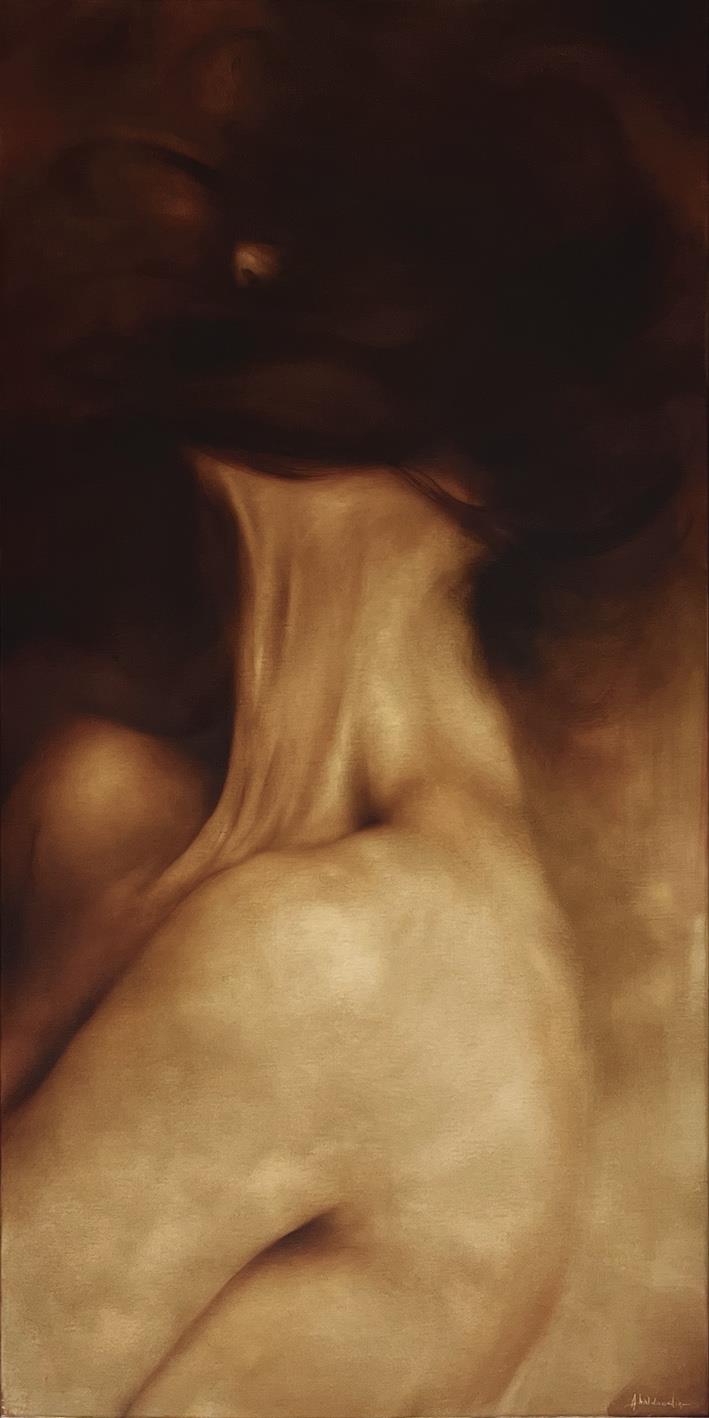
One of my favourite works is Parasomnia dreamin'. Parasomnia refers to a group of sleep disorders involving abnormal behaviours or experiences, such as night terrors and sleepwalking, which can occur during sleep or in the transitions between sleep and wakefulness. Baldacchino translates this unsettling state into an equally unsettling image: an unnaturally elongated neck, with the face almost engulfed by flying, entangling strands of dark hair. There is something wonderfully eerie about it, as if the figure is caught somewhere between dreaming and being unable to escape the dream.
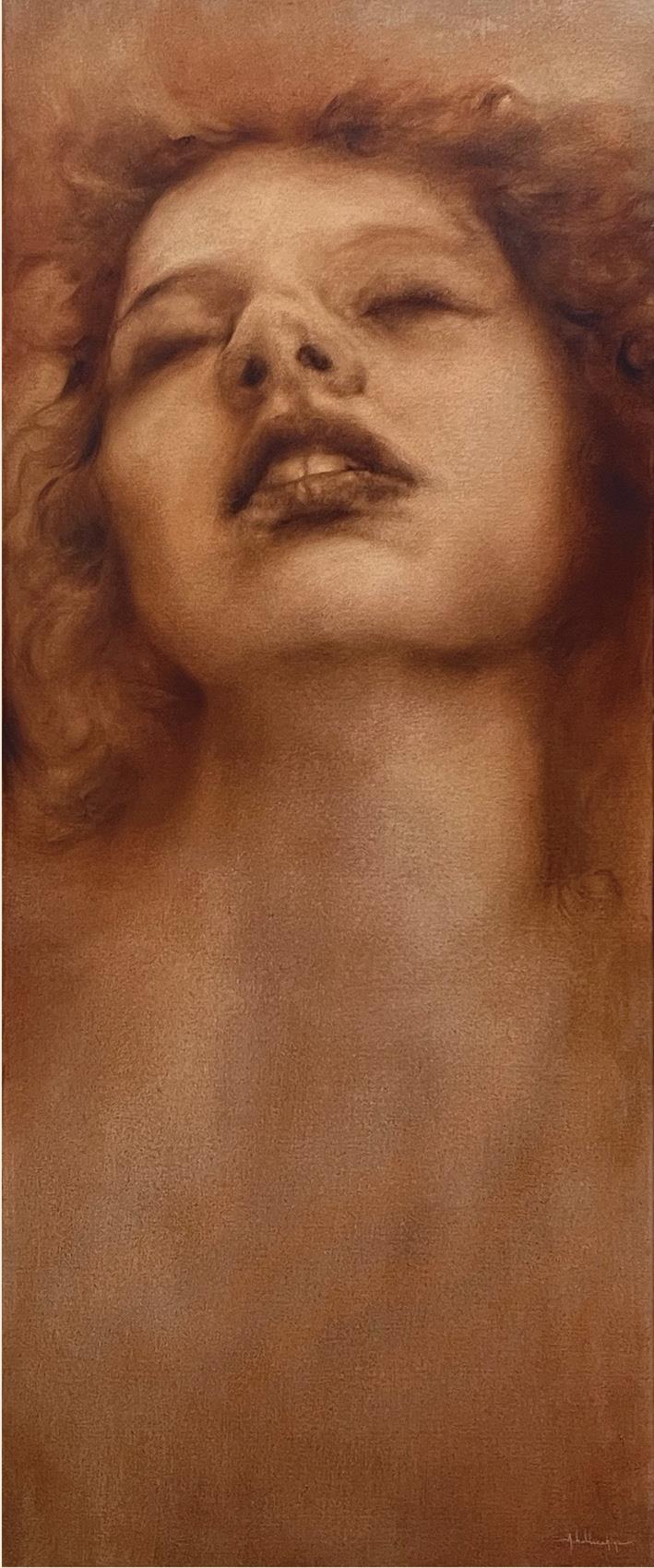
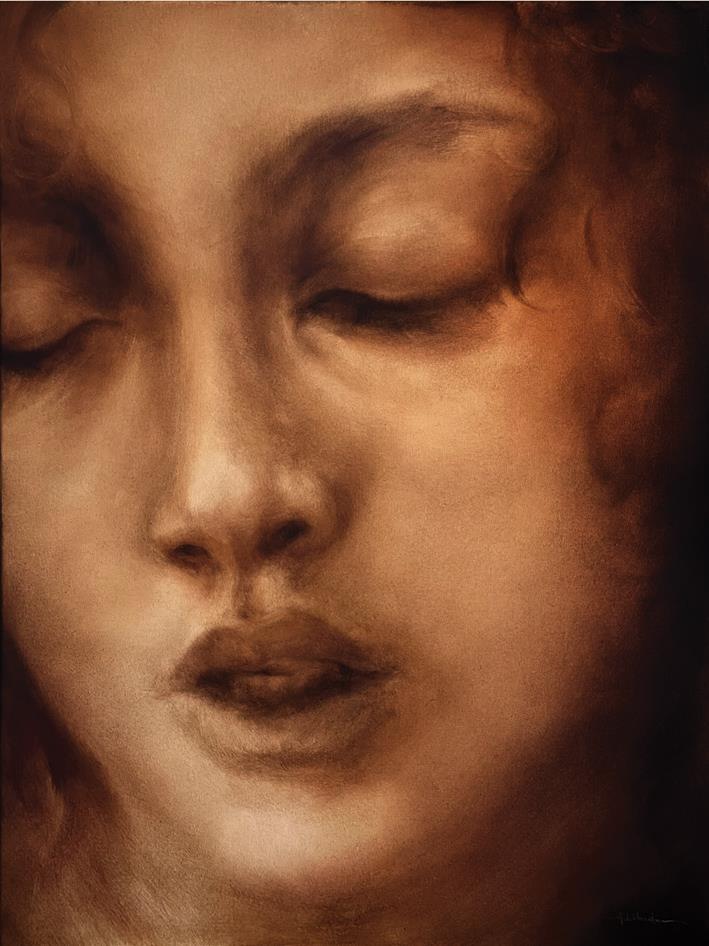
Clavicula nox, meaning "Key of night", refers to a magical symbol associated with transforming the unconscious into conscious awareness and exploring the darker aspects of the self. Baldacchino chooses to portray this idea through a face caught in a moment of apparent ecstasy: the head slightly tilted back, eyes softly closed and lips gently parted. There is an ambiguity to the expression. Is it pleasure, surrender, sleep, or perhaps something deeper taking place within?
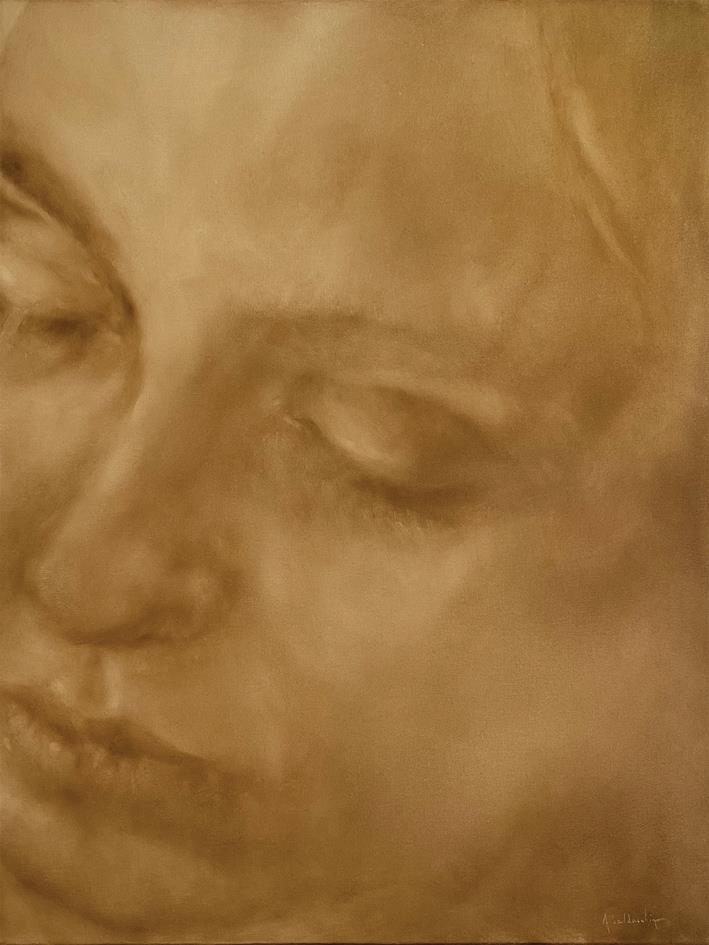
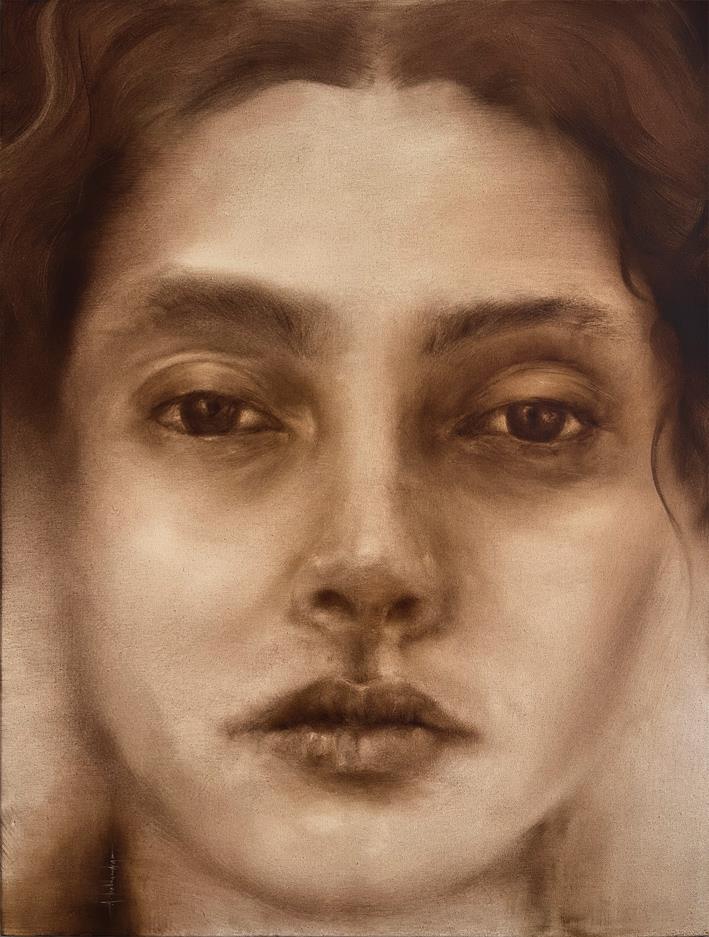
One of my favourite words, Hypnagogia, is also the title of one of the works. The term refers to the transitional state of consciousness between wakefulness and sleep, that strange in-between moment when reality begins to blur. Here, we are confronted by a sleepy female face, complete with dark circles beneath the eyes, staring directly at us while simultaneously looking utterly exhausted. It is a wonderfully contradictory image: she is looking at us, but seems almost elsewhere.
Three works titled The nectar of sleep I, II & III present more sleeping faces, with Baldacchino adopting a hazy, fog-like style in which no details are ever entirely clear, much like the fragmented images of a dream. Surreality and uncertainty seem to slowly dissolve away, fading into the darkness of sleep, only to disappear altogether by morning.
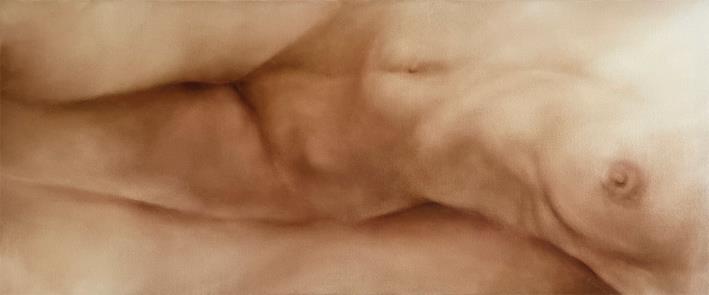
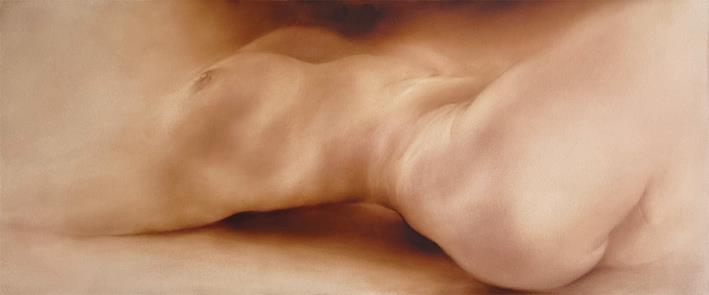
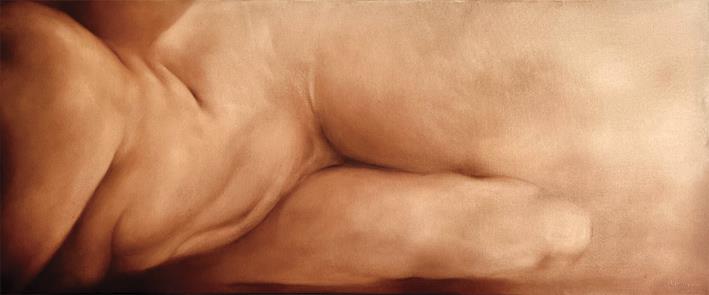
What I consider to be three masterpieces are a trio of large-scale nudes, depicted in contorted, reclining positions. Are these bodies experiencing nightmares, surrendering to ecstasy, or simply giving themselves over to the strange freedom of dreams? Perhaps they are all three. Baldacchino executes these works in a sort of non-finito style, allowing the bodies to merge almost seamlessly with the sepia and ochre tones of their backgrounds. Certain details emerge sharply, while others are deliberately left unfinished, leaving space for the viewer's imagination to complete the image.
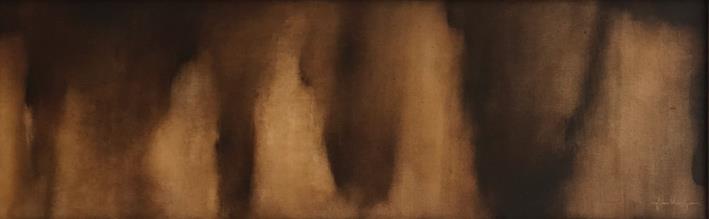
A particularly intriguing work is Perfect sleep. This is a rendition of the graph generated by the artist's sleep-monitoring app, showing what perhaps should constitute a night of "perfect" sleep through the gentle curves and fluctuations of the graph. Rendered in Baldacchino's signature ochre palette, the technological data is transformed into something almost organic. In fact, it is treated in exactly the same visual language as the sleeping faces and bodies, bringing the contemporary technology of sleep tracking into the same Leonardesque world.
Apart from the oil paintings, Alexia will be displaying numerous sketches related to this body of work. I always find it fascinating to see these preparatory works, as they offer a glimpse into the amount of thought, experimentation and sheer work that goes into each finished painting. What may appear effortless on the wall is, in reality, the result of a long and meticulous process.
And finally, the title of this article comes from one of those epic tracks I really love: Faithless' Insomnia. It seems particularly fitting here, of course! We should also remember that Alexia is not only a painter, but a musician too. Together with Julian, who not only supports her throughout her artistic journey but quite literally supports the artworks themselves, having produced the beautiful frames for the exhibition, the two have also created a track especially for the exhibition.
Accompanied by a soundscape inspired by Renaissance and medieval music, The nectar of sleep creates an immersive environment where historical influences meet contemporary reflections on sleep and wellbeing.
Rather than offering definitive interpretations, the exhibition is a poetic threshold between the seen and the unseen, suggesting that within sleep lies a profound capacity for healing, creativity and self-discovery.
The nectar of sleep is on view until 4 October at il-Kamra ta' Fuq. For more information, follow on their social media channels