What happens when someone unfamiliar with a place begins to look closely at what those who live there have learned to overlook? What might appear ordinary to those who encounter it every day can, from another perspective, reveal details, memories and meanings that might otherwise remain unnoticed, allowing the familiar to be encountered anew.
Studio 87 officially launched its artistic residency programme over the summer, establishing a long-term initiative designed to support both local and international artists in the development of their practices. The programme provides artists with time and space for uninterrupted experimentation, offering a dedicated setting designed to inform and evolve their work. Through this immersive engagement, the residency encourages artists to draw inspiration directly on the physical and cultural context of Malta as a creative resource.
Florence Champ was the inaugural artist-in-residence, spending a few weeks in Malta, which resulted in the exhibition A Summer Wander, curated by Justine Balzan Demajo, which features 20 oil paintings on canvas and panel. Raised in southern France and currently working between Provence and Lisbon, Champ trained in painting and drawing in Florence before pursuing further studies at London's Royal Drawing School, and has recently received recognition including the BTA First Prize, a place on the Jackson's Art Prize longlist, and features in Faire and SLIMI magazines. Her practice has developed across these different European contexts, bringing together experiences of place, observation and painting that became the basis for her residency in Malta.
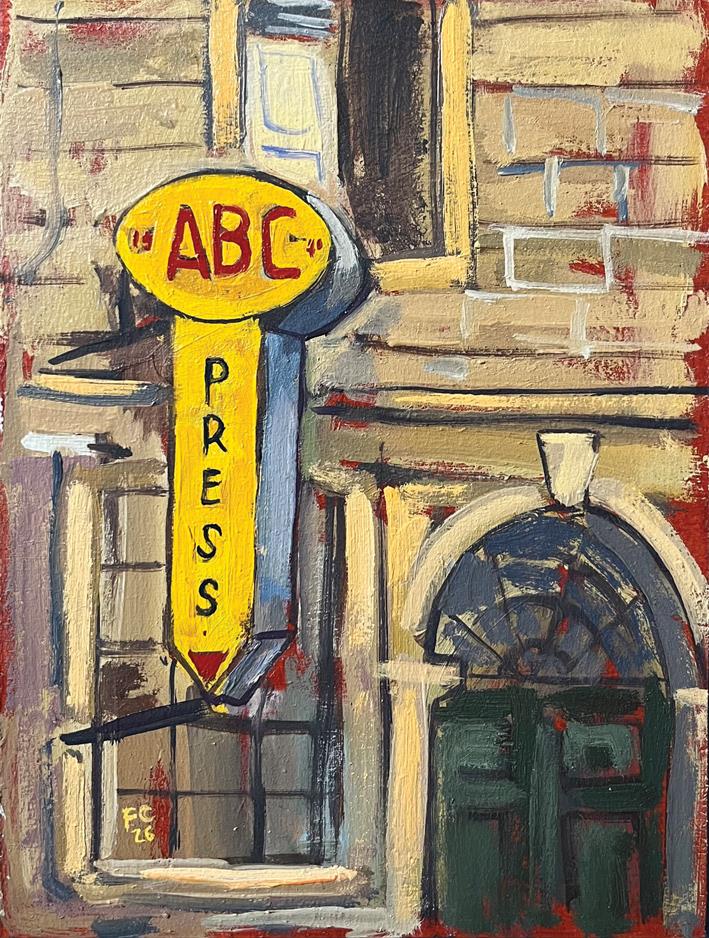
Rooted in observation, Champ documented not only Maltese spaces and local traditions, but also the quieter details through which everyday life becomes attached to a place. She describes the process as similar to her experience when she first moved to Lisbon 10 years ago, when she sought to capture fleeting aspects of the city that have since disappeared. From shop signs and architectural details to the particular character of local limestone and infrastructure, Champ looked closely at what might otherwise go unnoticed, finding value in something as overlooked as the utilitarian beauty of a drainpipe. She framed these minor details as carriers of lived experience, observing that, "what's beautiful is that all these little treasures are engulfed in daily life".
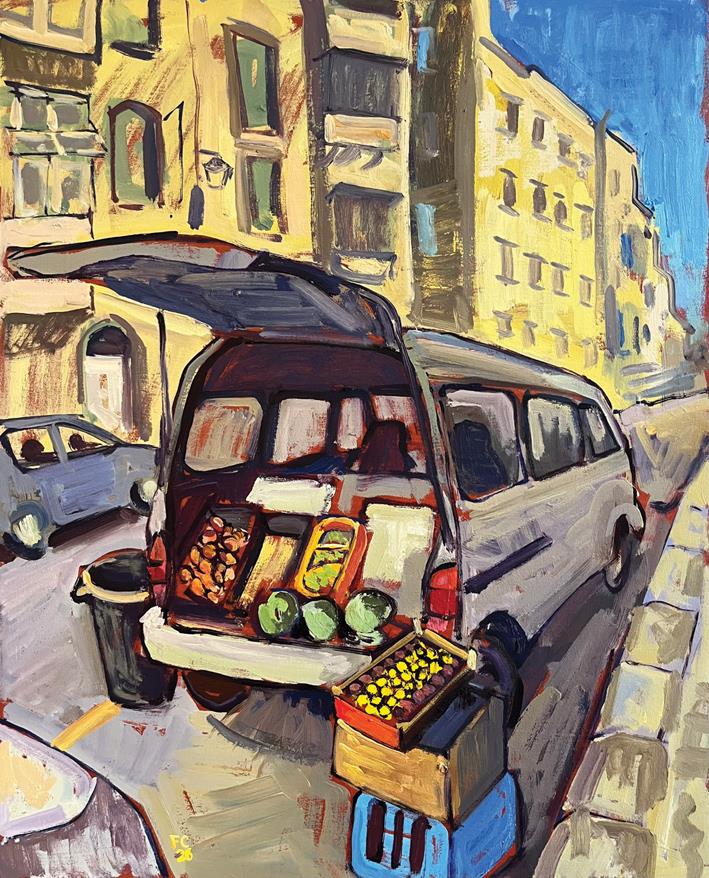
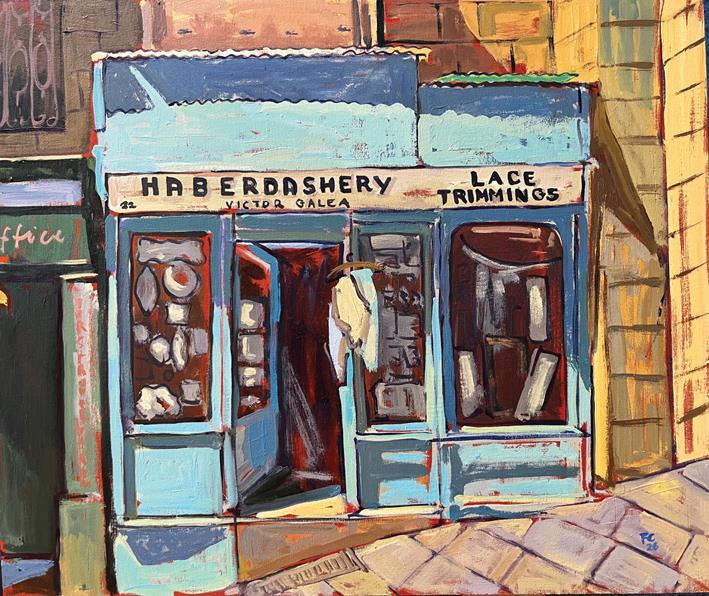
This connection to local narratives grounds the paintings in a sense of intimacy. Specific visual details capture experiences such as visiting Victor Galea Haberdashery with a grandmother to buy buttons, or purchasing fruit directly from someone who has cultivated it for decades. Her nostalgia is therefore not one of personal recollection, but develops through attentive observation and human connection, allowing her paintings to engage with both individual memories and a broader sense of collective cultural nostalgia. For Champ, who remarked that "it's incredible to transport people through images", painting became a way to honour the quiet routines of daily life and preserve their significance before they are altered, forgotten or lost.
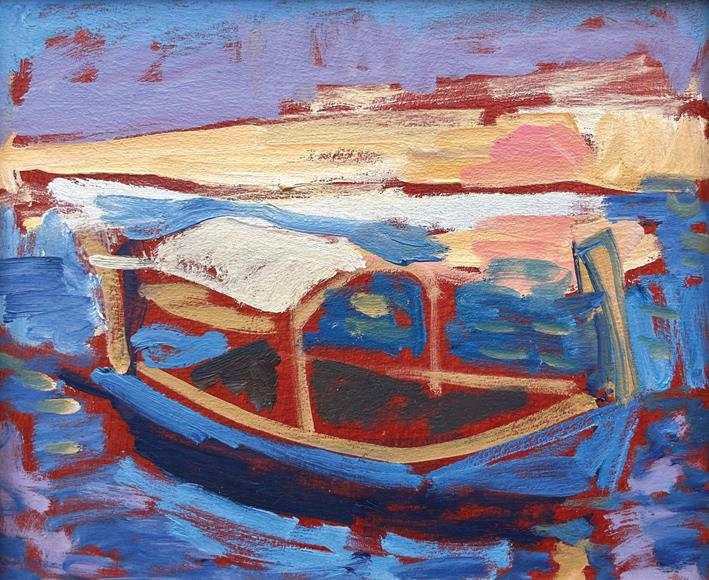
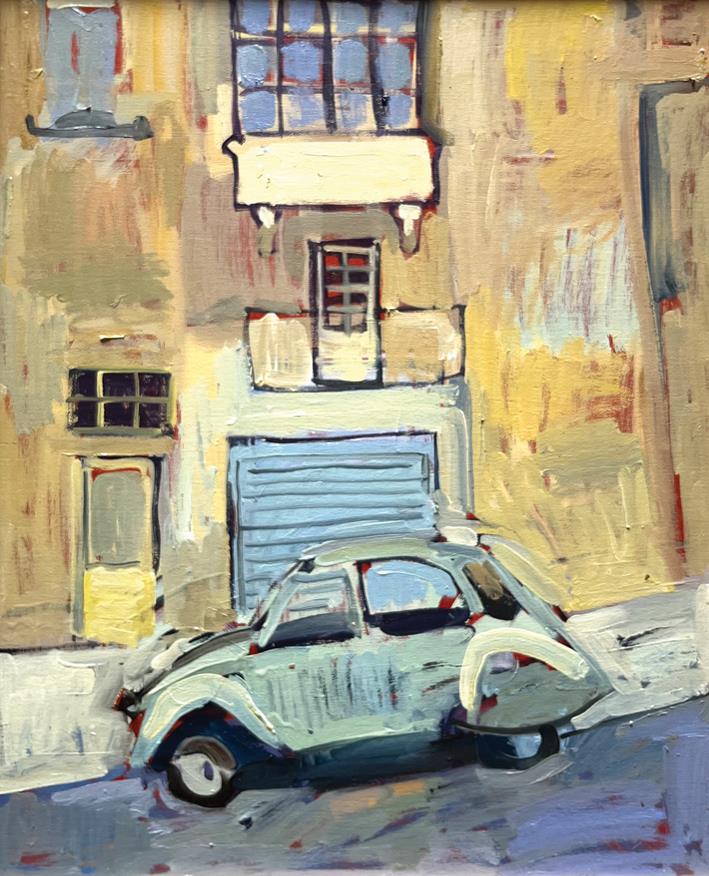
Yet the significance of these subjects is shaped not only by what Champ chooses to paint, but by how she translates her observations. Her paintings retain open brushstrokes and a visible handling of oil that prevents the surfaces from becoming overly resolved. As she explains: "I always try to keep the tactility of the oil paint and the brushstrokes alive. As long as you can get a sense of the impressions and essence of the place... I hope that comes through." This material focus extends to her physical process, as she cuts her own panels and stretches her own canvases, which allows the physical qualities of each surface to directly inform and alter her handling of the paint. It is this interaction between surface and medium that supports a balance between recognisable detail and painterly freedom, ensuring her subjects remain specific without becoming rigid. While the initial inanimate objects or facades ground the composition, their loose execution allows colour and gesture to evoke the fleeting feeling of the moment itself.
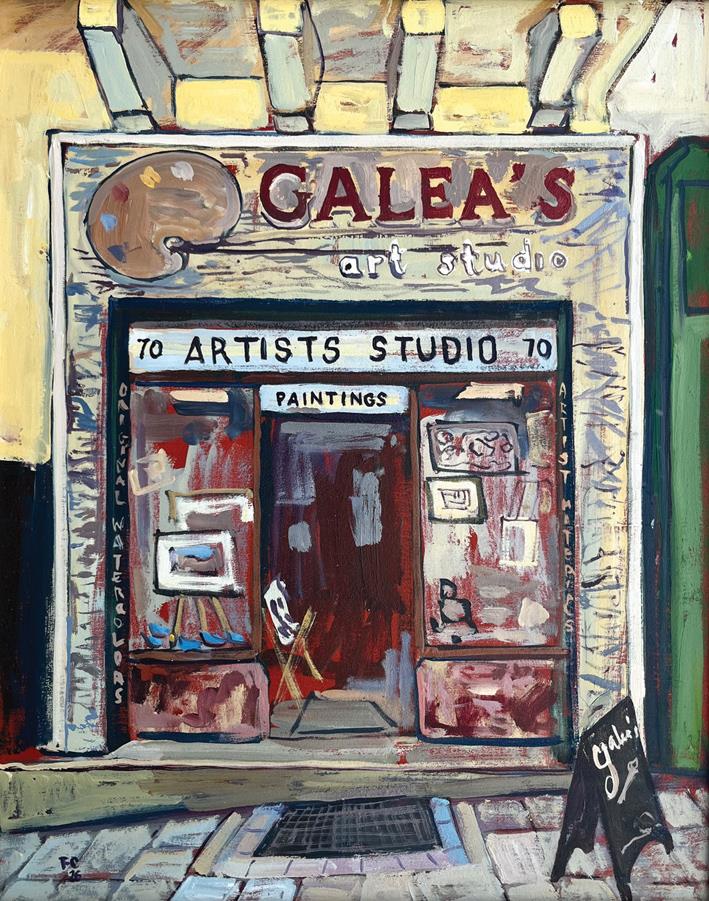
Colour plays a central role in establishing the paintings' atmosphere. Her reddish underpaintings lend warmth beneath the finished surface, while her sensitivity to light gives even relatively evenly illuminated scenes a persistent luminosity. This sensitivity to colour reflects the influence of Van Gogh, whose work she encountered while living nearby, while her time in Florence brought her into contact with the Macchiaioli and their use of patches of colour to articulate light and form. Bonnard provides another point of connection for Champ, particularly in the relationship between colour, space and geometry. These experiences across different places have therefore become part of how Champ approaches colour, allowing it to do more than describe what she sees and instead shape the paintings' atmosphere.
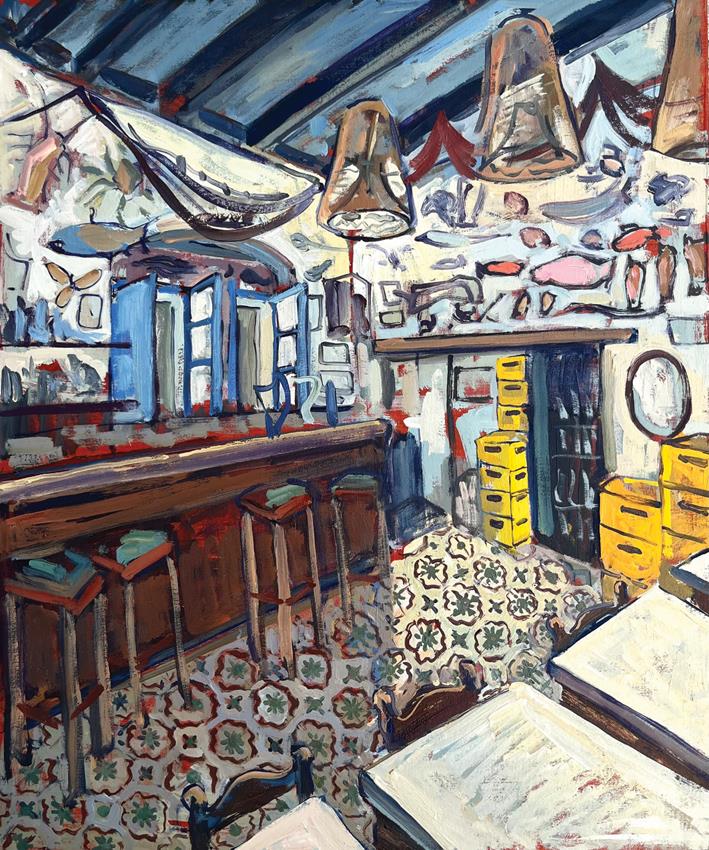
By looking closely at details that might otherwise go unnoticed, Champ offers a perspective on Malta that can be read both by those who know these places intimately and by those encountering them from elsewhere. The significance of her subjects often extends beyond their appearance, resting in the families who have lived there, the people who have worked there, and the histories built through years of everyday life. Even the seemingly unremarkable can become worth honouring, as Champ describes her small paintings as "a little love letter" to their subjects. Yet for all that a few weeks in Malta have revealed, Champ acknowledges that there is still more to discover, remarking, "I need more time to get lost in Malta".
A Summer Wander, curated by Justin Balzan Demajo, is open to the public until 2 October at Studio 87, Valletta