How do you exhibit an artistic practice concerned with what lies beyond the visible? In Beyond the Visible: The metaphysical worlds of Olaug Vethal, the question extends beyond the paintings themselves to the ways they are selected, arranged and encountered.
When Norwegian artist Olaug Vethal (1946-2007) came to Malta in 1988, her paintings began to take on a different character. Previously marked by the darker sensibility of German Expressionism, her work became increasingly vibrant as colour emerged as a more prominent part of her practice. This transformation was not isolated to her own practice, but also informed her approach to teaching. In 1996, Vethal began teaching A Level students at De La Salle Sixth Form, alongside giving private lessons, and continued to do so until her death. She taught not only through theory but by painting alongside her students, encouraging them to look closely and recognise the potential of colour even in a seemingly white still life. Among her students, during her first year, there was Christine Xuereb Seidu, who later opened her own gallery in 2004. Vethal wished for Xuereb Seidu to manage her collection after her death, a wish her son honoured by bequeathing the collection to her.
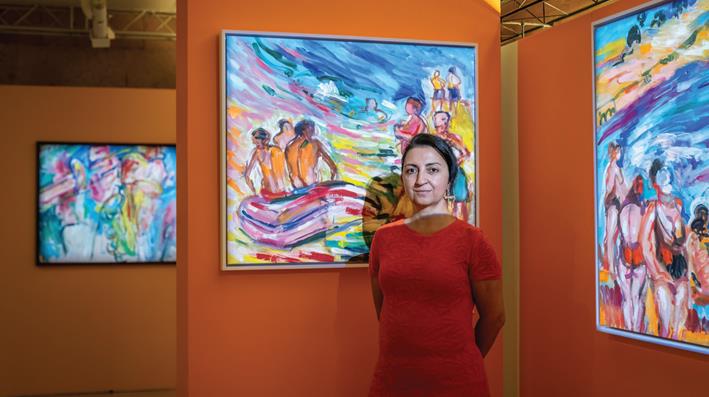
It is from this collection that the retrospective exhibition Beyond the Visible: The metaphysical worlds of Olaug Vethal, curated by Xuereb Seidu, brings Vethal's work back into view, reconnecting it with those who knew her while opening it to those encountering her work for the first time. Vethal's wish to move beyond the immediately visible was central to how she understood her own practice. As Xuereb Seidu explains, "She always wanted to be called a metaphysical artist because in a way she was spiritual and always wanted to go beyond." Her work is presented across three sections, beginning with landscapes before moving into figurative works and concluding with jazz, one of Vethal's principal subjects.
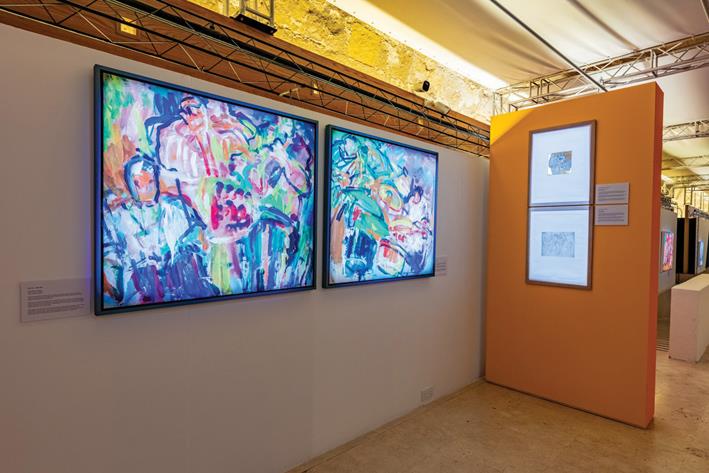
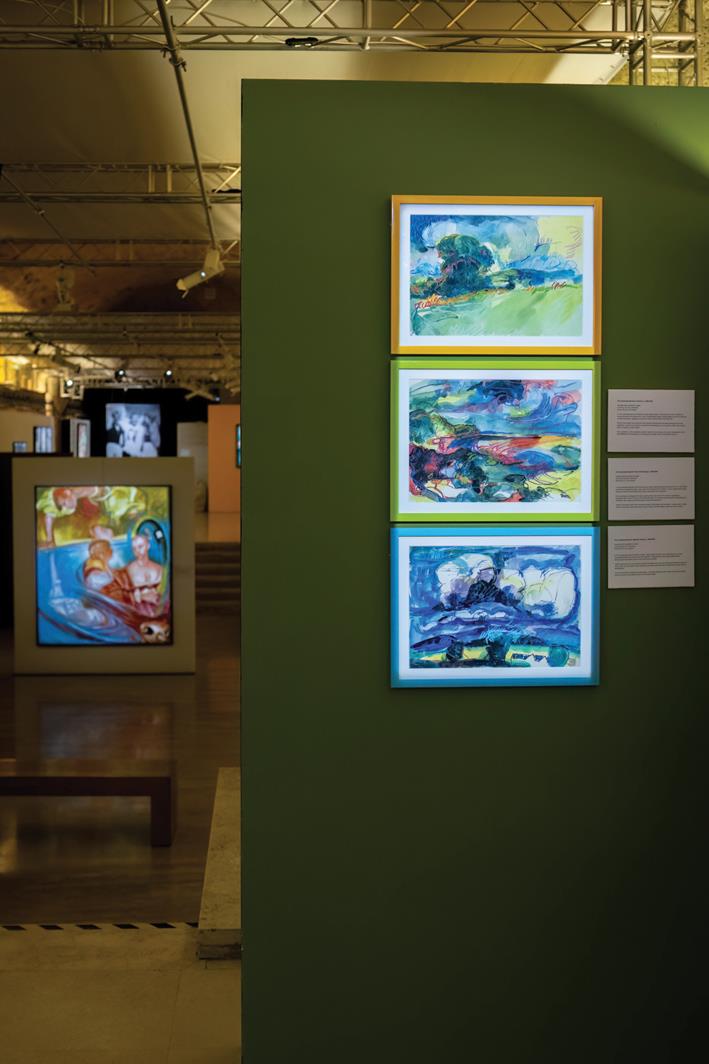
Between trying to capture a fleeting moment and wanting to reflect something grander, her practice was shaped by a wide range of artistic and cultural influences. Her visual interests ranged widely, from the work of Caravaggio to Japanese and African art and culture, while the Maltese landscape became a recurring subject in its own right. She painted both its prehistoric temples and its contemporary surroundings, often working en plein air and sometimes producing three paintings in succession as she responded to the changing scene before her. This immediacy carried into her handling of paint, where accidental drips and marks were not necessarily corrected, but left visible and embraced as part of the process. Rather than seeking to conceal the act of painting, Vethal allowed the finished work to retain traces of its making, reflecting the sense of freedom and fluidity that characterised her approach.
That freedom is also evident in the sheer versatility of her material practice. She worked across different mediums, surfaces and scales, making use of whatever materials were available to her. When working on linen, she would buy, cut and sew pieces together herself before priming them, leaving the seams of these joins visible in many of her works. She also worked on other materials, such as cloth, demonstrating the resourcefulness that came from being constantly engaged in creating. This resourcefulness extended to scale, with smaller works revealing the same confidence in her brushwork, their individual strokes often appearing as single, assured movements. As Xuereb Seidu recalls, "She was always painting and she made use of whatever she had. She took the initiative to teach herself and was not only confident in her own process but she was very good at teaching us [her students] the same confidence in our own work."
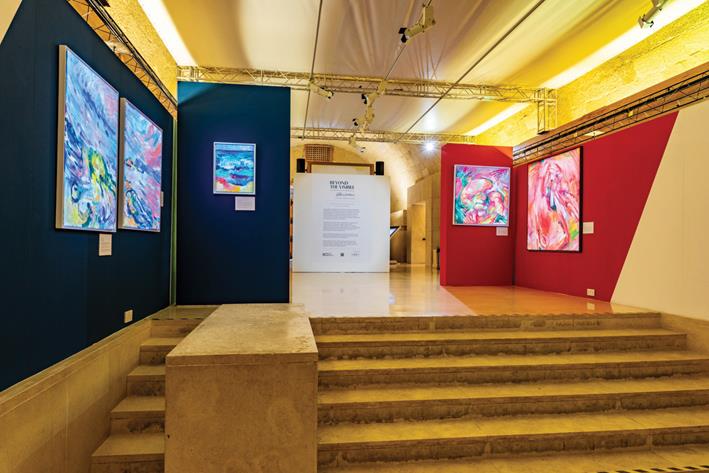
That confidence becomes immediately apparent in the visual force of Vethal's works. Her bright, vivid palette gives the paintings an immediate presence, with saturated colours and bold contrasts drawing the eye across their surfaces. This intensity is heightened by the exhibition lighting, which illuminates the works in a way that brings out the vibrancy of their colours while reinforcing the energy of their brushwork. With such visual intensity across the works, the exhibition is a prime example of the power of exhibition design. It would have been very easy for this abundance of colour and movement to overwhelm the viewer, yet it is clear that the curator kept two principles at the forefront of the exhibition: balance and rhythm. This attention to balance is evident in details as small as the coordination of the frames with the works, while structural barriers prevent the viewer from seeing everything at once. The diagonally painted walls further create movement between the different sections of the exhibition, guiding the viewer through the space while introducing a sense of calm amid the density of the works.
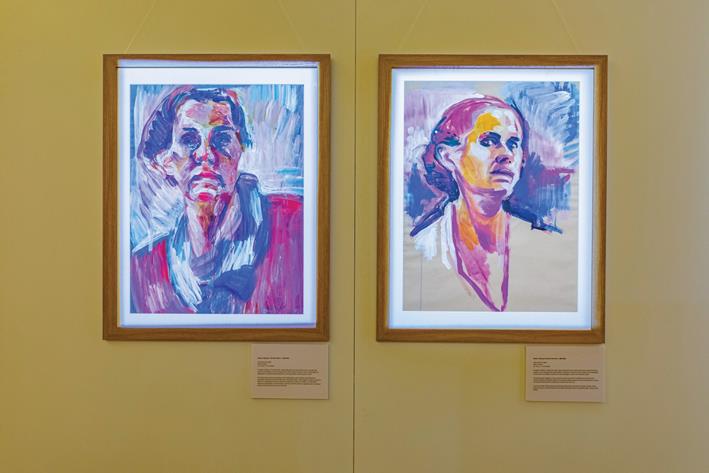
Beyond these spatial decisions, the black-and-white photographs of a young Vethal at the beginning of the exhibition, alongside the later photograph of her with Jeni Caruana and Ebba von Fersen Balzan in the Jazz section, further balance the bright surrounding visuals. The selection of works also allows the exhibition to move between different forms and materials. One aspect that could have been developed further, however, is the inclusion of two intaglio prints in the Jazz section, created before Vethal's arrival in Malta. While their inclusion adds another dimension to the section, presenting at least four prints might have integrated them more fully, giving them a more distinct and equal presence within the works on display. The relationship between placement and viewing is perhaps most effective in the grouping of three self-portraits. Positioned closely together in an almost secluded space, their direct gazes create a moving point between the painted selves and the visitor, with the space between them becoming an intermediary area of encounter. Rather than simply looking at Vethal, the visitor finds themselves being looked at in return.
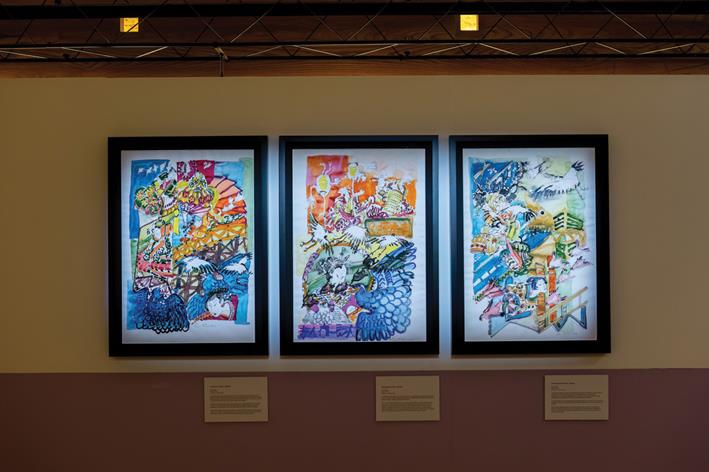
Vethal's resourcefulness, freedom and versatility ultimately speak to a practice defined by an unceasing impulse to create, something Xuereb Seidu came to recognise through her own experience of Vethal and her work: "I didn't understand her right away but now I get her. I got influenced by her. If there was anyone prolific on the island, it was her for sure."
Beyond the Visible: The metaphysical worlds of Olaug Vethal, curated by Christine Xuereb Seidu, is open to the public until 25 October at Spazju Krettiv, Space A.