An artwork's philosophy is inseparable from the material and visual language through which it takes form. In Mark Sagona's Crossings, philosophy, visuals and perception come together through an intuitive approach to abstraction, where the physical qualities of the works become inseparable from the ideas they seek to express. His ideas about the sublime, the subconscious and the unknown find expression within the physical processes of making.
Mark Sagona (b. 1976) is a Maltese visual artist, art historian, academic and curator. He is head of the Department of Art and Art History at the University of Malta, where he specialises in the decorative arts in Malta, particularly within their 19th and 20th century European and Mediterranean contexts. Alongside his academic work, his artistic practice - exhibited in Malta, Paris, Rome and Brussels - explores abstraction, mixed media and materiality while examining the relationship between visible and intangible experience.
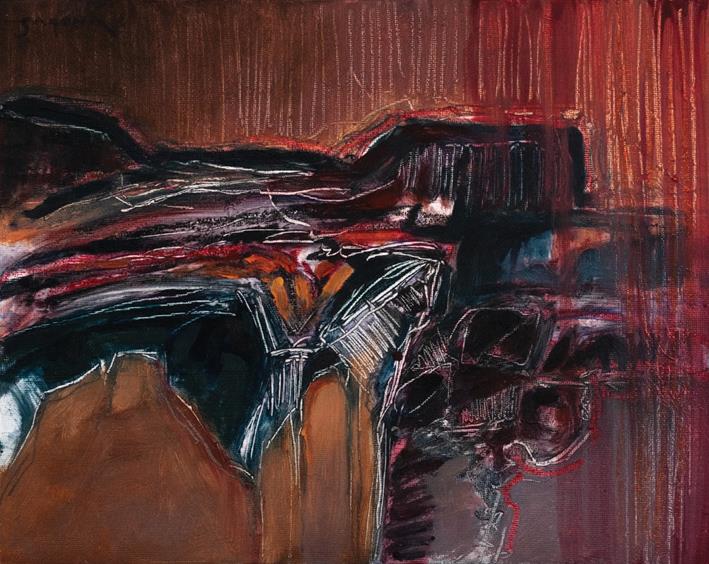
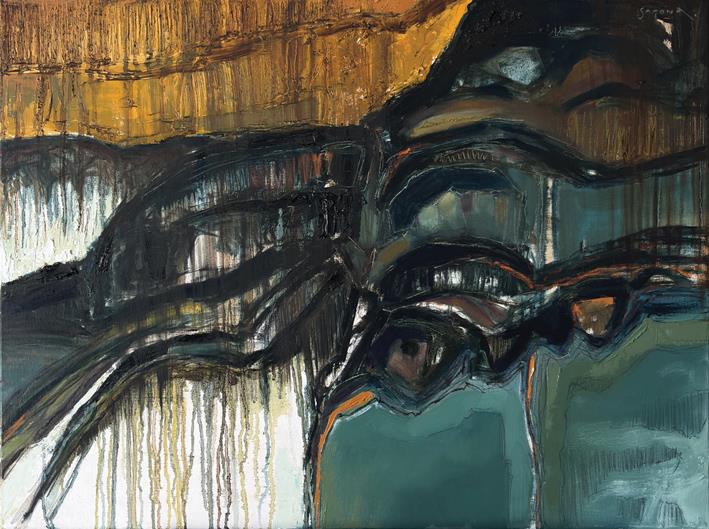
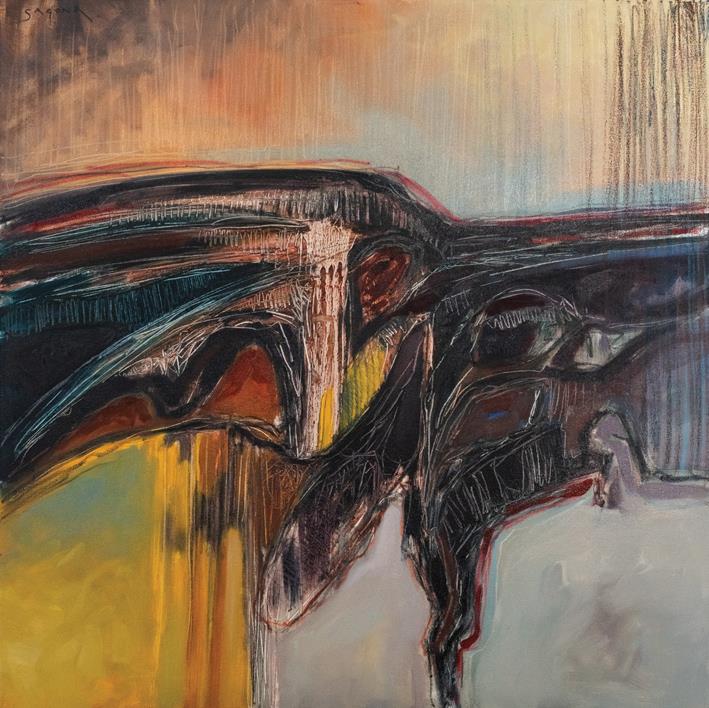
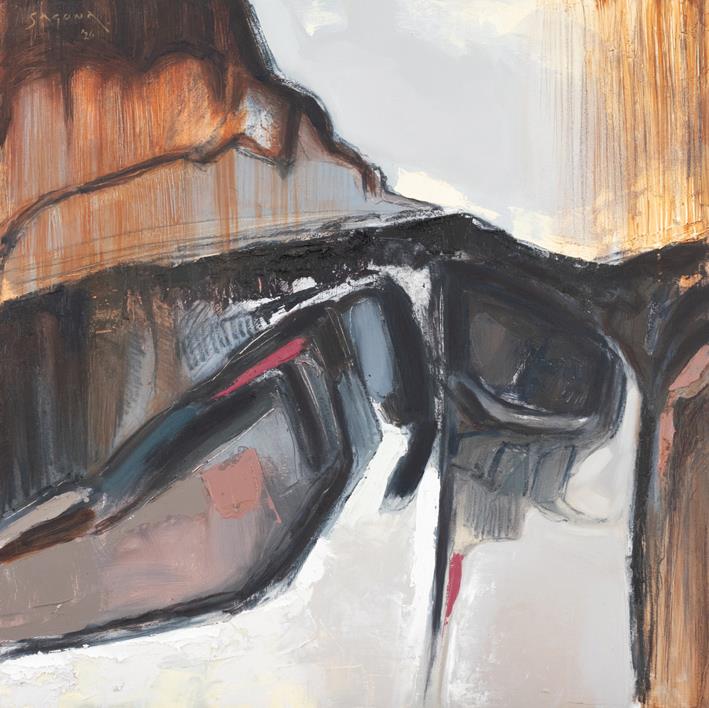
Sagona's latest exhibition, Crossings, curated by Francois Zammit at Gemelli Art Gallery, brings together a selection from a body of 32 mixed-media works on different supports produced over various months since last December. The exhibition marks a shift from Sagona's more familiar approach, with these works appearing more organic, spontaneous and materially exploratory. This change is not incidental, but reflects a different way of thinking about the creative process.
The abstracted nature of the works becomes a means of moving beyond material appearances to give form to inner landscapes, allowing thoughts, sensations and experiences to emerge through an intuitive and meditative process. By making this act of creation visible through the accumulation of layers, the works engage with the subconscious and the spiritual, opening abstraction to a more transcendental understanding. Zammit relates this approach to Ralph Waldo Emerson's 1842 essay The Transcendentalist, where thought, intuition and inspiration are privileged over material fact. As Zammit explains: "The transcendental aspect of abstraction is not accidental in this manner. It allows for the message to become more universal while leaving space for the subjectivity of each individual."
Sagona similarly describes this as "crossing into another understanding and another state of mind", while characterising abstraction as "the release of all that we subconsciously absorb through our lived experience". His persistent search for what lies beyond the visible is closely tied to his emphasis on the sublime, which informs both his theoretical thinking and artistic practice. He also describes his works as possessing a strong mysterious element, reflecting his interest in the unknown. This connects with his engagement with the Symbolists, particularly Gustave Moreau and Paul Gauguin, whose work similarly explored realities beyond the visible through suggestion, symbolism and the evocative potential of the image. In Crossings, these ideas are not merely expressed through the visuals of abstraction, but through the raw quality of the material processes left exposed.
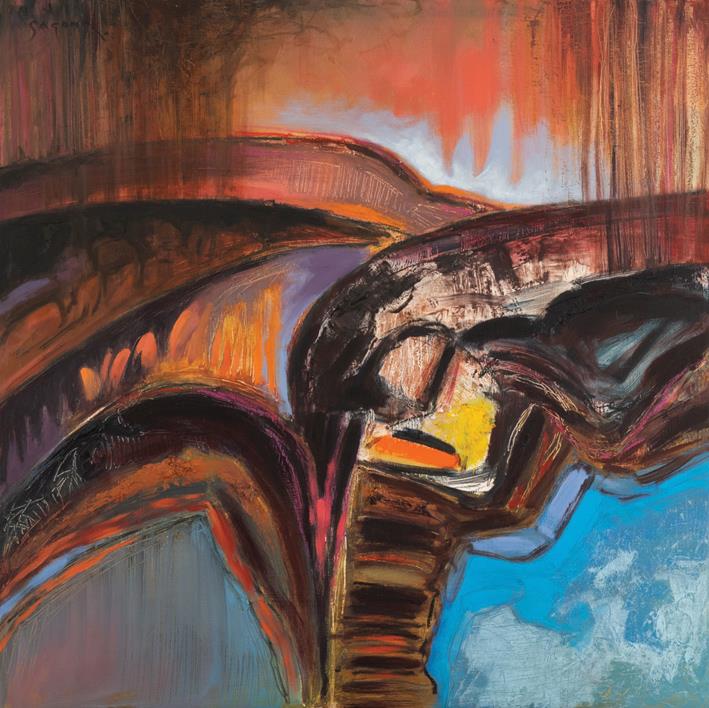
This intuitive approach is particularly evident in Sagona's physical engagement with his materials. Working across multiple pieces at once on both canvas and panel, he finds the latter allows for a rougher and more spontaneous approach, giving him the freedom to work more viscerally without the fear of tearing the surface. Paint, ink, pencil and pastel accumulate across these supports, each layer responding to the one beneath it and contributing to the increasingly textured surface. As Sagona describes it, his practice exists "somewhere between the act of drawing, mark making and the act of painting", a position that keeps the process open to the possibilities that emerge through their combination. The resulting works retain this physicality, with their accumulated marks and textures registering the changing moods and intensities of the moments in which they were made.
Most of the works adopt an earth-based palette, yet the accumulation, blending and application of colour can feel muddy across numerous pieces. At times, the palette lacks the distinction needed to allow individual elements to emerge, although this is offset in several works by the different properties of the mediums used, sections of dense, bold colour, and the introduction of white, whether through its addition or through the exposure of the surface beneath. Its effect becomes particularly striking where Sagona scratches into the surface or builds up these dense white areas, creating a different kind of dialogue within the works. This creates a sense of visual openness without producing a truly empty space, as subtle traces of texture remain visible on or beneath the white surface. Moments stop while others seem to fall, producing an intermediary state between movement and stillness as areas of density hold the composition against elements that appear to dissolve or descend across the surface.
The visual tensions created through these interventions also shape how the works are encountered, moving beyond their material effects towards the questions they might generate. The mysterious element that Sagona identifies as a strong aspect of his works does not always translate in the encounter with them. While acknowledging that mystery is a vast and subjective term, it is not the response that these works most readily provoke. Rather, they leave elements unresolved, allowing ambiguity to take precedence over mystery and opening the works to dialogue and reflection. What emerges is less a sense of the unknown than an invitation to ask questions that the works themselves do not resolve.
What connects these different aspects of Sagona's practice is a series of crossings between philosophy, material and perception, where one continually informs and reshapes the other. Through this movement, the works remain open-ended, encouraging the viewer to move between what is present, what is suggested and what remains unresolved.
Crossings, curated by Francois Zammit, is open to the public until 26 October, at Gemelli Art Gallery.