What first inspired you to choose the clarinet?
My parents used to take me to the Manoel Theatre in Malta, and I fell in love with the clarinet after listening to Mozart's Clarinet Concerto. The beautiful sound of the instrument inspired me to start playing it myself.
Were there any teachers or mentors who had a particularly significant influence on your development as a musician?
Yes, I have been fortunate to have several teachers who have had a significant influence on my development as a musician. My first teacher, Godfrey Mifsud, gave me a strong foundation and helped nurture my love for the clarinet. Later, when I moved to London, I studied with David Campbell, who played an important role in developing my technique and musicality. On returning to Malta, I continued my studies with Giuseppe Rechia, whose guidance further shaped me as a musician and clarinettist. I am very grateful to all three for their influence and support throughout my musical journey.
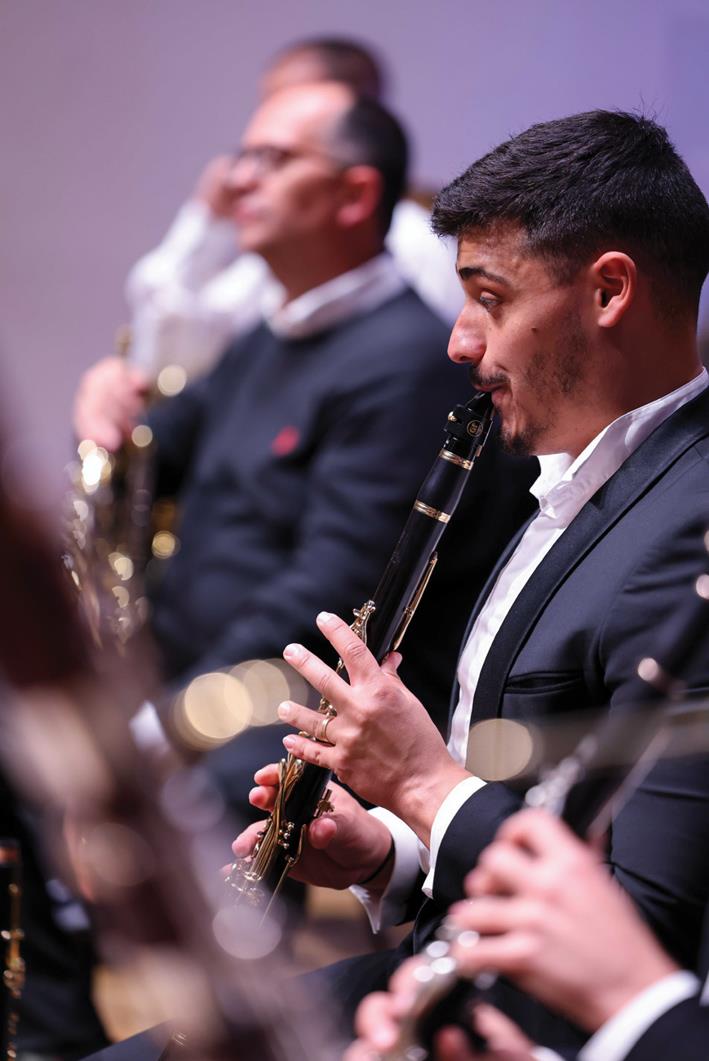
If you could introduce one clarinet work to someone completely new to classical music, what would it be and why?
I would choose either Mozart's Clarinet Concerto or Artie Shaw's Clarinet Concerto, for two very different reasons. Mozart's concerto beautifully showcases the warm and expressive sound of the clarinet through the music of one of the great composers. Artie Shaw's concerto, on the other hand, brings out the playful and energetic side of the instrument, showing just how versatile and engaging the clarinet can be.
You have studied and performed in Malta, the United Kingdom, and elsewhere in Europe. How have these experiences shaped your musical outlook?
Studying and performing in Malta, the United Kingdom, and elsewhere in Europe has given me the opportunity to experience different musical cultures and approaches to music. Each place has taught me something different and has helped me become a more open-minded and versatile musician.
Malta gave me my musical foundation and my love for the clarinet, while studying in the United Kingdom exposed me to a wider international musical environment and different ways of approaching performance. Performing and travelling elsewhere in Europe has allowed me to meet musicians from different backgrounds and experience a variety of musical traditions and styles.
All these experiences have shaped the way I approach music today. They have taught me to remain curious, adaptable, and open to new ideas, while also helping me develop my own musical voice and identity.
Your orchestral journey began with the Malta Youth Orchestra and has led to your current role as Sub-Principal Clarinettist of the Malta Philharmonic Orchestra. How do you reflect on that journey today?
Looking back, I feel very grateful for how my orchestral journey has developed. It all started with the Malta Youth Orchestra, which gave me my first real experience of playing in an orchestra and taught me so much about listening, teamwork, discipline, and performing alongside other musicians.
To now be the Sub-Principal Clarinettist of the Malta Philharmonic Orchestra is something I feel very proud of. It has been a journey of continuous learning, with many challenges, experiences, and people along the way who have helped me grow both as a musician and as a person.
What makes it particularly special is being able to perform professionally in my own country, in an orchestra that represents Malta internationally. When I look back at where I started with the Malta Youth Orchestra, it reminds me of how far I have come and how important those early experiences were in shaping the musician I am today.
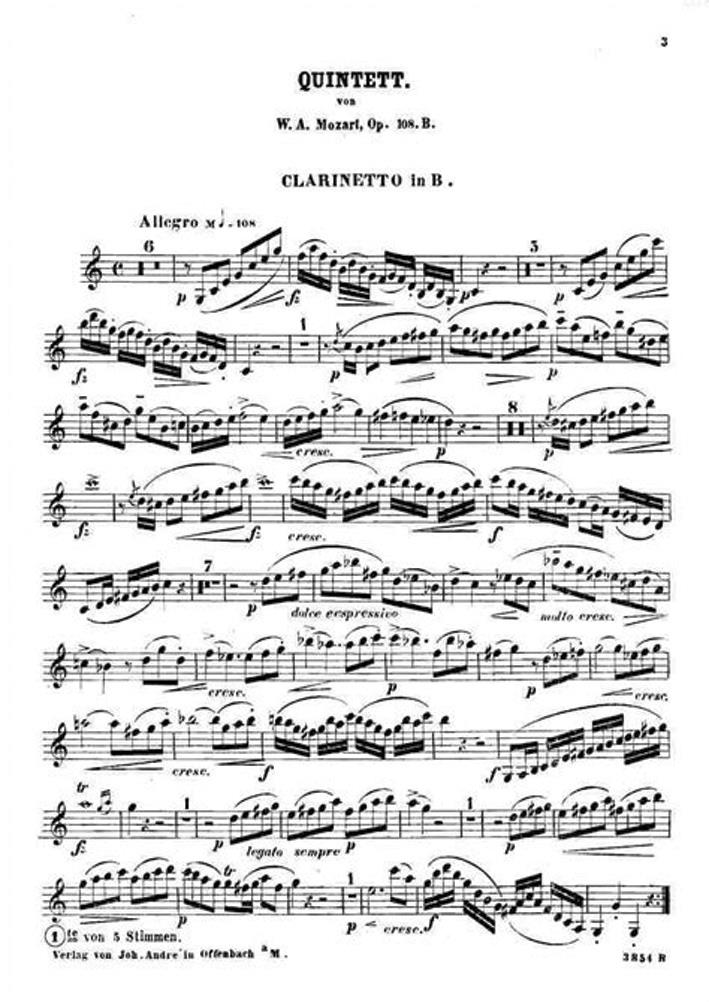
What attracted you to pairing Mozart's Clarinet Quintet with Weber's Clarinet Quintet in the forthcoming concert at the Corinthia?
What attracted me to pairing Mozart's Clarinet Quintet with Weber's Clarinet Quintet is the contrast between the two works, while at the same time showing the incredible versatility of the clarinet.
Mozart's Quintet has such a beautiful, intimate and vocal quality to it. The clarinet is allowed to sing and blend naturally with the strings, and there is a sense of elegance and warmth throughout the music. Weber, on the other hand, brings a completely different energy. His writing is more virtuosic and playful, showcasing the agility, colour and technical possibilities of the clarinet.
I find it fascinating to put these two works side by side because they demonstrate two very different approaches to the instrument. It allows the audience to hear the clarinet not only as a beautiful lyrical voice, but also as an incredibly expressive and virtuosic instrument.
How do these two works differ in their demands on the performer and in their emotional character?
The two works are very different in what they demand from the performer, both technically and emotionally. Mozart requires a great deal of sensitivity and control. The challenge is often in the simplicity of the writing - you have to allow the music to breathe, phrase naturally, and create a beautiful, singing sound without overplaying. There is a real sense of intimacy and conversation between the clarinet and the strings.
Weber is much more demanding from a technical point of view, with greater virtuosity, agility and energy required from the clarinettist. At the same time, it has a very playful and theatrical character, so there is a certain freedom and excitement that the performer can bring to it.
For me, the beauty of performing both works together is that they require two different sides of the musician. Mozart asks you to be subtle, expressive and refined, while Weber challenges you to be energetic, daring and technically confident. Finding that balance is what makes the pairing so interesting.
Mozart's quintet is often described as one of the most beautiful chamber works ever written. What does this piece mean to you personally?
Mozart's Clarinet Quintet has a very special meaning to me because it is connected to an important moment in my development as a musician. I first played the piece in Wales during a masterclass with David Campbell, and that experience had a profound effect on me. Hearing and playing such beautiful music in that setting made me realise even more deeply what the clarinet was capable of expressing.
I remember that experience as a moment when my love for the instrument was truly cemented. It gave me even more motivation to work hard and pursue my goal of making a career and, eventually, working full-time as a clarinettist.
For me, the piece therefore represents much more than just one of the great works in the clarinet repertoire. It reminds me of why I chose the clarinet in the first place and of the journey I have taken to get to where I am today. Every time I perform it, I think back to that experience in Wales and the inspiration it gave me. There is something very special about a piece of music that can stay with you throughout your life and continue to remind you why you fell in love with your instrument.
Weber's Quintet is considerably more virtuosic. How do you approach its technical and dramatic challenges?
Weber's Quintet is certainly much more virtuosic, and that is part of what makes it so exciting to perform. I try not to approach the technical challenges as something separate from the music. For me, the technique has to serve the expression and the character of the piece.
A lot of preparation goes into making the difficult passages feel natural and effortless. I work on the technical aspects slowly and carefully, making sure that the articulation, intonation, rhythm and phrasing are secure before bringing everything up to performance tempo. Once that foundation is there, I can focus more on the dramatic side of the music and allow myself to take risks and enjoy the energy of the piece.
What I particularly enjoy about Weber is the playful and almost theatrical character he gives the clarinet. There are moments of incredible brilliance and excitement, but also moments that require warmth and sensitivity. The challenge is to move naturally between those different characters while keeping the music alive.
Ultimately, I want the audience to feel the excitement of the music rather than think about how technically difficult it is. If the technique becomes invisible and the character of the music comes through, then I feel I have achieved what I set out to do.
You have performed with a number of chamber ensembles over the years. What is it about chamber music that particularly appeals to you?
What I particularly love about chamber music is the freedom it gives you as a musician. Unlike playing in a large ensemble, there is much more opportunity for interaction and communication between the musicians. You are constantly listening to each other, responding to each other, and shaping the music together in the moment.
I find that interplay incredibly exciting because every musician has a voice and a role within the ensemble. There is a certain spontaneity and freedom that allows you to take the music in different directions while still working towards a common interpretation.
For me, that close communication between the musicians elevates the music to another level. You can really feel when an ensemble is breathing and thinking together, and that connection can create very special moments both for the performers and for the audience.
How does playing in a chamber ensemble differ from performing within a full symphony orchestra?
Playing in a chamber ensemble and performing in a full symphony orchestra are very different experiences, and I enjoy both for different reasons. In chamber music, there is much more individual responsibility. You are one of only a few musicians, so every voice is exposed, and you have a much greater role in shaping the interpretation. There is also more freedom to react to the other musicians and make decisions together in the moment.
In an orchestra, there is a different kind of energy. You become part of a much larger musical sound, and there is something incredibly powerful about creating that sound together with so many musicians. At the same time, you have to be very aware of the conductor, the section, and the balance of the whole orchestra.
I think playing both has made me a more complete musician. Chamber music has taught me to listen more closely and take greater responsibility for my individual part, while orchestral playing has taught me how to contribute to a larger musical picture and understand my role within the ensemble. The two experiences complement each other and continue to influence the way I approach music.
As a young Maltese musician who has built an international career, what advice would you offer aspiring clarinettists?
I wouldn't necessarily describe myself as having built an international career, but I have been fortunate to have had the opportunity to study and perform abroad, while also establishing myself professionally here in Malta with the Malta Philharmonic Orchestra.
My advice to young clarinettists would be to stay curious and never stop learning. Take every opportunity to study with different teachers, perform with different musicians, and experience different musical environments. Going abroad can be extremely valuable because it exposes you to new ideas and approaches, but I also believe it is important to appreciate and make the most of the opportunities available at home.
Most importantly, be patient and consistent. Building a career in music takes time, and there will inevitably be setbacks along the way. Work hard, stay true to yourself as a musician, and remember why you started playing in the first place. If you have a genuine love for the instrument and are willing to keep working towards your goals, that passion will continue to guide you.
What projects or performances are you most excited about after this concert?
There are some really exciting projects coming up that I'm looking forward to. We have Bruckner's Seventh Symphony, which is a wonderful piece to experience as part of a full orchestra, as well as Beethoven's First and Third Symphonies. Beethoven is always incredibly rewarding to perform because of the energy and precision his music demands from the orchestra.
I'm also particularly looking forward to Mahler's Ninth Symphony. It is such a profound and emotional work, and I think performing it will be a very special experience.
I'm excited about the variety of these programmes because each composer brings something completely different, and as a musician it is always rewarding to be challenged by new repertoire and to discover something new within music that you may have performed before.
When the audience leaves the Corinthia Palace on Sunday, 8 November, after hearing these two masterpieces, what would you like them to take away from the experience?
More than anything, I would hope that the audience leaves the Corinthia Palace having experienced the incredible versatility and beauty of the clarinet. Mozart and Weber show two very different sides of the instrument: Mozart allows us to hear its warmth, beauty and singing quality, while Weber brings out its playful, energetic and virtuosic character.
I would also like them to feel that they have experienced something personal and meaningful, rather than simply heard two great pieces of music. These works have a special place in my own musical journey, particularly Mozart's Quintet, so being able to share them with an audience makes the experience even more special for me.
Ultimately, if someone leaves the concert with a renewed appreciation for the clarinet, or perhaps discovers something about the instrument that they didn't know before, then I would feel we have achieved something very special. And hopefully, they leave simply having enjoyed the music and the experience of sharing it with us.
Next Sunday 8th November at 5.3Opm leading clarinettist Michael Pantalleresco will be performing at Villa Corinthia with a distinguished string quartet. The concert is followed by free-flowing wines and drinks and a specially curated buffet by renowned chef Francesco Mazzei. Tickets from Showshappening.