Janas's has organised more than 300 cultural events in just over three years. What first inspired the creation of Janas's and what need did you feel it was addressing in Maltese society?
Janas's was born from the vision of its Co-founder and Artistic Director, Massimo Musa: to give culture a tangible place in everyday life by creating opportunities for people to meet, express themselves and participate.
This vision takes shape through the work of the organisation and the people who contribute to it. In Malta, where very different languages, backgrounds and experiences coexist, we feel the need to create spaces where these differences can come into contact with one another.
For us, organising events means ensuring that this possibility continues. The more than three hundred events we have held reflect an ongoing commitment: to make culture an experience that people can take part in and see themselves reflected in.
You describe literature not simply as an art form but as a tool for reflection, dialogue and emotional wellbeing. How did you arrive at this unusual approach?
This approach is deeply connected to the work and personal experience of Massimo Musa. In his writing, childhood wounds, illness, migration and loss become narrative material and an opportunity to reflect on the human condition.
Many of his texts were written specifically to give shape to Janas's journey and express its mission.
As an organisation, we have recognised in this work an opportunity for people to connect. A story can raise questions that linger long after reading it; reading it together allows space for what each person recognises in it.
Our approach is to create the conditions for this transition to take place: from the page to personal reflection, and from reflection to dialogue.
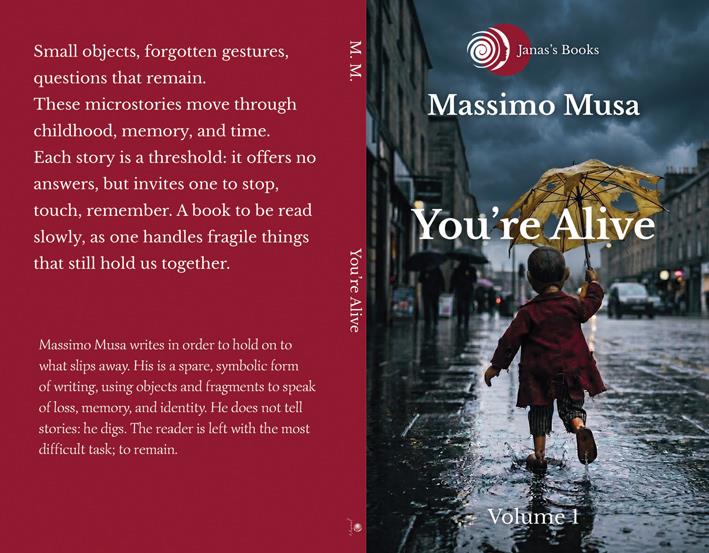
The Emotional Survival Journey is described as "a journey into words to learn how to stay alive and aware." What lies behind this evocative phrase?
The phrase expresses the essence of the Journey conceived by the author: maintaining a conscious connection with what we feel and the way we live.
We can go through our days fulfilling all our commitments while becoming increasingly less aware of ourselves. Words can help us break this habit, recognise an emotion and ask a question we have been putting off.
At Janas's, we give this exploration a shared dimension. We offer a time and space in which to pause, read, listen and try to understand what is happening to us.
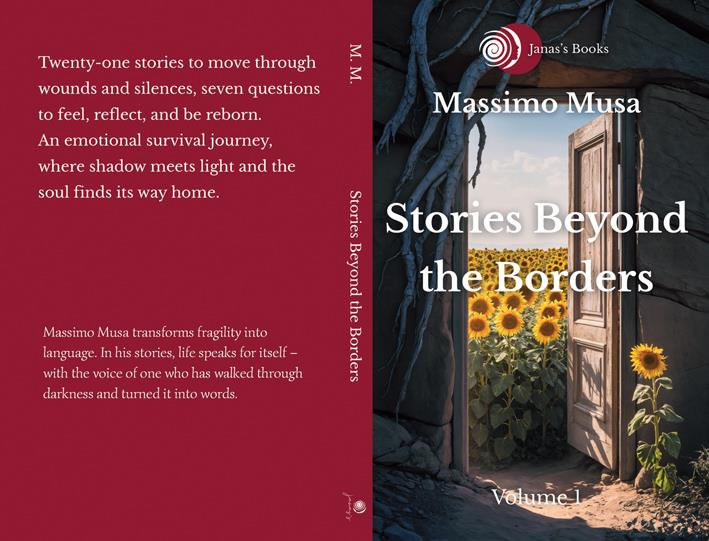
The programme is based on reading stories about loss, guilt, courage and rebirth. Why can fiction and storytelling sometimes reach people more effectively than direct advice?
Short stories and poems give readers the space to engage with them at their own pace. Through a character, we can recognise a fear, a contradiction or a desire without having to reveal something about ourselves straight away.
In the Journey, this freedom is important. The story provides common ground from which to begin a conversation. Each person can choose to focus on the text or connect it to their own experience.
Advice suggests a direction. A story allows us to explore different directions and reflect on the consequences of our choices. For the kind of reflection we encourage, this open space is of great value.
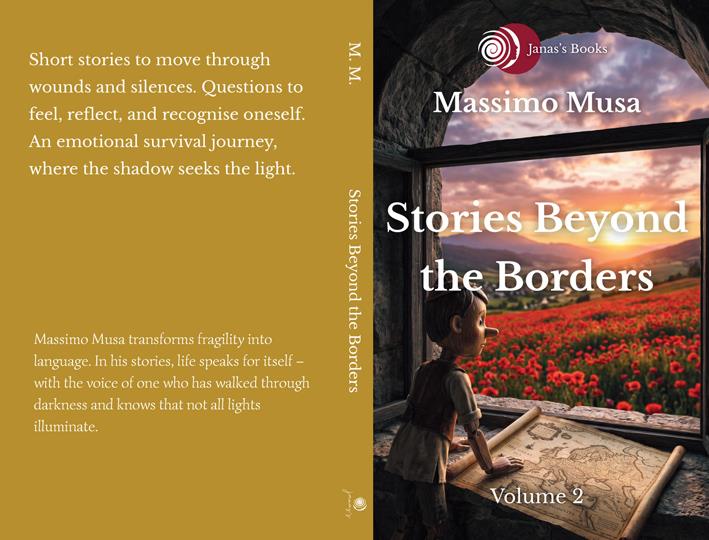
You emphasise that the Journey is neither therapy nor a traditional course. How would you explain the distinction to someone considering taking part?
Although a professional could use these texts in their own work, we do not provide diagnoses or treatments, and the Journey is not a substitute for psychological support.
We offer a cultural experience structured around reading, reflection and sharing.
There are no exams, right answers or performance standards to meet.
Participants can speak, listen, choose not to share or pause. This freedom is part of the experience. Our role is to support reflection while respecting each person's boundaries.
Much of the programme is built around the stories of Massimo Musa. What makes storytelling such a powerful vehicle for emotional exploration and personal growth?
Massimo Musa's stories place at their centre people experiencing conflicts, vulnerabilities and difficult choices. The characters retain their contradictions, leaving readers free to identify with them, distance themselves from them or change their perspective.
The Journey stems from this narrative world and the questions that run through it. Massimo's contribution is therefore central, both as an author and as its creator.
During the sessions, however, the text opens itself up to other people's interpretations. The author disappears or remains in the background. For us, it is essential to welcome a plurality of readings: what a participant finds in a story may be different from what its author put into it.
Participants are encouraged to confront themes such as grief, inner chaos, resilience and human connection. Are there particular subjects that consistently resonate most strongly with participants?
The words of participants and the feedback we have gathered highlight, above all, loneliness, loss, guilt, the need to be recognised and connections with others. These themes feature prominently in the texts we use.
In this sense, our attention remains focused on individual differences. The same story may bring back a distant memory or make a present difficulty more apparent. Both interpretations deserve space.
The Journey unfolds over seven sessions, each with its own theme. Was there a deliberate narrative progression in the way those modules were designed?
Yes, the Journey follows a progression structured around seven movements: recognising, moving through, integrating, resisting, preserving, choosing and connecting.
The seven sessions are designed as a continuous experience, in which the questions raised during one session can be revisited and explored in greater depth through subsequent readings.
The structure remains recognisable: reading, questions and sharing. This continuity provides a point of reference, while the different themes allow participants to explore different aspects of their own experience.
Our approach leaves each person complete freedom to follow their own personal journey. By the end of the seven sessions, participants may have followed different connections. What matters to us is that they have had the time to recognise and reflect on them.
The programme is built around shared reading and discussion. What role does the group experience play in helping people better understand themselves?
The group provides an opportunity to encounter different interpretations of the same story. A sentence may evoke abandonment for one person and freedom for another. Listening to these differences can also broaden our understanding of our own experience.
There is also the possibility of recognising ourselves in other people's words: someone may manage to express something that we struggle to put into words.
This is why we place importance on the quality of listening and the freedom to participate. Dialogue becomes valuable when people can find their own words without feeling obliged to reveal something about themselves or judged for what they share.
In an increasingly digital and fast-moving world, do you think people are searching once again for slower, more reflective forms of engagement?
In our experience, there are still relatively few people seeking opportunities for shared reading and reflection, and they are predominantly aged thirty and above. Engaging younger people is more difficult. This also leads us to question how we present ourselves, the language we use and the opportunities for people to come together that we are able to offer.
We have initiated contact with secondary schools and universities to explore possible collaborations. We believe it is necessary to return to shared reading, which requires simple gestures: following a voice, allowing a thought to reach its conclusion, embracing a silence. We feel it is important to offer a space in which these gestures can have value.
At the same time, digital tools can also contribute to our mission by bringing people closer together and helping texts and initiatives reach a wider audience. The question that guides us concerns the quality of the relationships we are able to build through these different opportunities to come together.
The Journey speaks of transforming pain into awareness and resilience. Have you witnessed particular moments of transformation among participants that have stayed with you?
Yes, although what comes to mind most readily are many small things. One person had made it clear that they would not talk about matters relating to their family. During the Journey, however, they chose to open up about that very subject.
For us, this is significant because it concerns the freedom to choose whether and when to share something personal. The possibility of remaining silent is equally important: everyone must be able to decide how much they wish to share.
Some participants have also chosen to provide video and written testimonials about the Journey.
We regard these as accounts of individual experiences, to be listened to without assigning them the same meaning for everyone. Reflection can continue after the sessions and take on a significance that only the person concerned can convey.
Janas's has also established its own publishing house, Janas's Books. How does publishing complement the organisation's wider cultural and social mission?
Janas's Books provides continuity to our cultural work. A book is a tangible record of an experience. It can accompany someone beyond the duration of an event, be reread, shared and become the starting point for further conversations.
Our editorial vision is closely linked to the idea that understanding ourselves can also come through reading, workshops and journeys of reflection. We are also constantly looking for local and international talent to collaborate and exchange ideas with.
As an organisation, we are interested in nurturing the relationship between publishing and participation, and encouraging interaction between different disciplines. A book of short stories accompanied by the visual interpretations of a Maltese painter will be published soon.
The texts and images retain their respective literary and artistic value while also creating opportunities for people to come together and opening up new possibilities for reading and interpretation.
What has surprised you most about people's responses to the Emotional Survival Journey since its launch?
What surprised us was the emotional response and the ability of many participants to interpret the texts.
We pay particular attention to unexpected interpretations: a detail that stays with someone, a question that keeps coming back, a character that provokes a reaction different from the one the author had imagined.
Welcoming these responses and understanding their significance also means allowing those who participate in the project to question it. For Janas's, listening means understanding what works, recognising difficulties and improving what we offer without losing its original meaning.
There is much discussion today about mental health, yet less about emotional literacy. Do you think society is learning how to talk about emotions, or is there still a long way to go?
We believe there is a greater willingness to talk about it, but that there is still much work to be done. Knowing the name of an emotion and being able to recognise it in our own experience are two different steps.
Emotional literacy also concerns the way we listen to others, our ability to acknowledge what they feel and our willingness to withhold immediate judgement.
It is in this area that we see our cultural contribution. Stories allow us to engage with experiences different from our own and to practise a kind of attentiveness that can continue beyond reading.
Finally, if someone walks into the first session carrying uncertainty, pain, or simply curiosity, what do you hope they will take away at the end of the seven-week journey?
We hope that each person finds some words they previously lacked, pays greater attention to what they feel and retains the memory of having been listened to.
We would like the Journey to leave them with questions that can accompany them even after the sessions, and a greater willingness to seek dialogue or help when they feel the need.
Seven sessions are limited in time; what each person takes away from them belongs to their own life. At Janas's, we wish to offer a carefully designed and respectful experience in which literature can become an opportunity to get to know oneself and feel part of a human connection.
* Note: "The choice of the name of the Association fell, at the suggestion of the Artistic Director on the work "Janas" which embodies history, magic, art, discovery and tradition linked to the wonderful popular culture of the people of Sardinia" (Janas's mission statement on its website)
(If you wish to contact Janas's please call 7921 6912; [email protected]; www.janass.eu