A site assessment study for a marine hatchery in the south of Malta which was quoted by Prime Minister Joseph Muscat in a bid to justify the university project in Marsascala in fact concluded that Zonqor was not a suitable site for the project.
Last Thursday, during a press conference on the revised American University of Malta plans, and two days later during a visit to Marsascala, Dr Muscat repeatedly said that the area had been “earmarked” for a marine hatchery under the previous administration but the current administration wanted an educational project instead.
The press was, probably inadvertently, given a copy of the study, entitled “Alternative Site Assessment Bluefin Tuna spawning faculty and marine hatchery, which contradicts the PM’s claims. The 2011 study looked at four sites as possible locations for the facility: Zonqor Point, Ras il-Gold in the limits of Xghajra, the area near the San Lucjan tower in Marsaxlokk and Xrobb l-Ghagin.
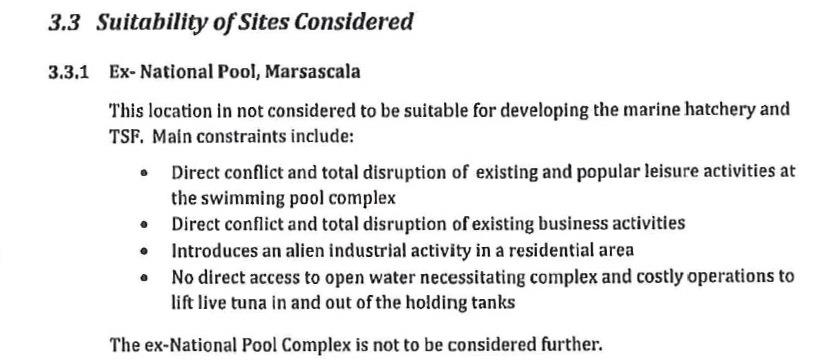
It found that Zonqor was not considered to be suitable for development because the project would totally disrupt leisure activities at the pool as well as business activities in the area and introduce alien activity to the site, which has no direct access to the sea.
No building allowed on the foreshore
The marine hatchery theory was not the only instance where Dr Muscat “misled” the public in Thursday’s press conference.
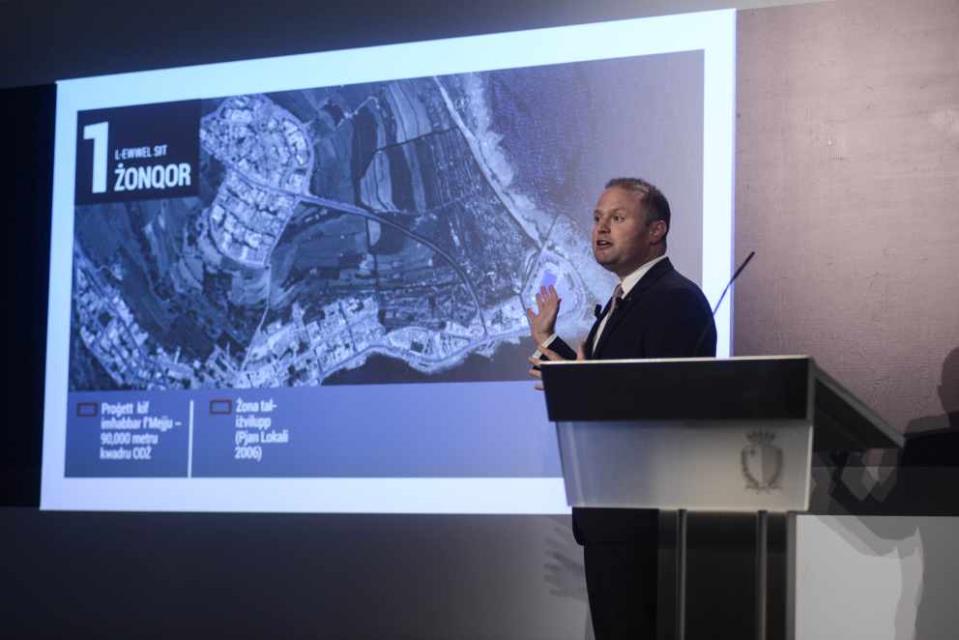
He also mentioned plans, hatched during past legislatures, for a tall building in the Zonqor area. While no records of such plans could be found, AD Vice Chairman Carmel Cacopardo insisted that just because studies are carried out does not mean that there were (government) plans to develop such projects in the area. “Environmental and Social Impact Assessments are commissioned by the developers, who would obviously have an interest in presenting their projects in the best possible light. But just because a study is carried out does not mean that it would be accepted by MEPA or endorsed by the green lobby,” Mr Cacopardo said. “The Prime Minister is twisting the conclusions of the developer-commissioned reports to justify the AUM project.”
Another Muscat claim that is being ‘debunked’ is the one that the government could have built part of the campus on the foreshore. Dr Muscat said the government had steered clear of this option after heeding the advice of marine biologists. He explained that no ODZ land at all would have been used had the foreshore been included in the university footprint but, choosing the lesser of two evils, the government had opted to use 18,000 square meters of ODZ land, which he described as abandoned garigue land, instead of the rocky coastal area.
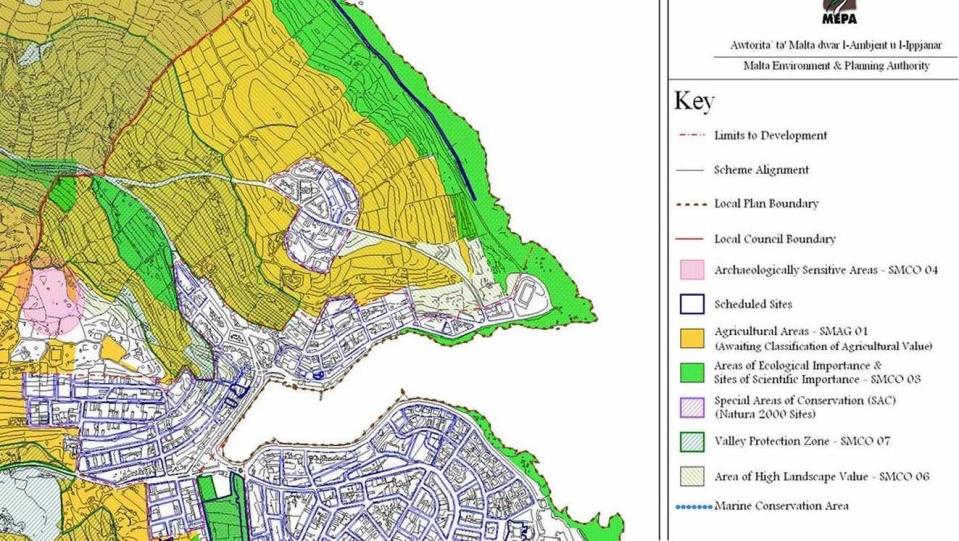
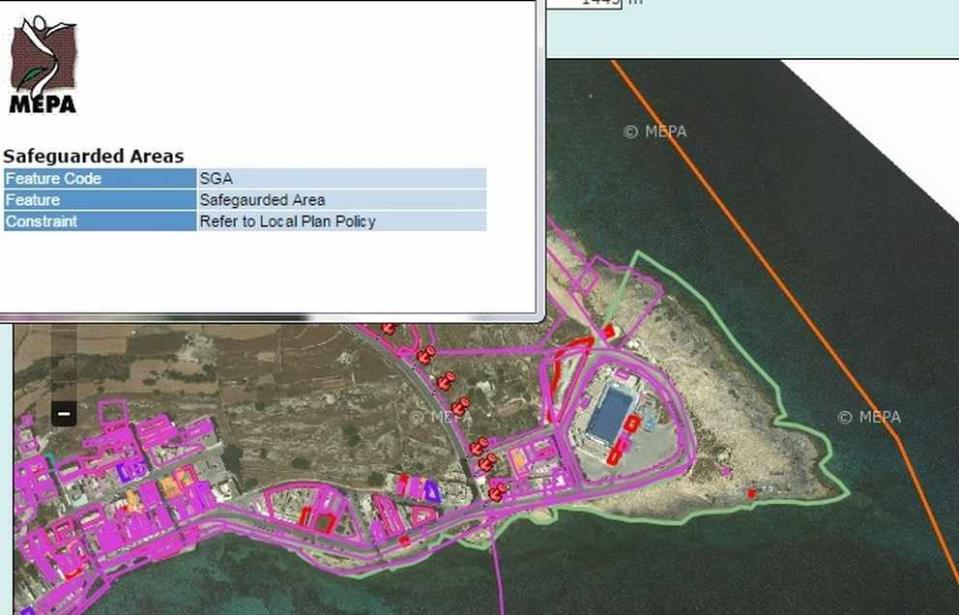
However, a look at the Marsascala Local Plan shows that the area in question, right at the tip of Zonqor, is designated as a green area, which means that it is an Area of Ecological Importance and a Site of Scientific Importance. Could part of the university possibly be built on the foreshore? “Definitely not,” Mr Cacopardo insisted. “The government has been misleading the public at every possible turn during the whole Zonqor Point saga.” The Prime Minister, he said, had gotten used to throwing ideas out there and then resorting to damage control when public outcry ensued. “The public consultation exercise should have been carried out before, not after the site was selected.”
Studies left out important factors
Mr Cacopardo said the government would “use every possible loophole” to push the project ahead. “When interpreting the Local Plans there is always an element of discretion but one would assume that discretion is used in a good and consistent way and not serve as a key for the government to do whatever it wants.”
He also insisted that the Social Impact Assessments commissioned by the developers left out a number of important factors, including the impact that the young student population could have on Marsascala. “As far as I know only one study of the sort exists, for Swieqi, and we all know what issues residents of the area have to put up with.” The SIAs for Marsascala and Cospicua, in fact, seem to have overlooked this factor. It noted, however, that some residents were concerned that the development of the university could lead to an increase in traffic and an increase in bars and clubs, turning the locality into a “Paceville of the South.”
Four floors or more?
Another pertinent question that arose after Thursday’s press conference is about the height of the campus. Dr Muscat said that the Floor Area Ratio Mechanism allowed for a 40 metre high building but said the highest structure on the campus would not exceed 24.8 metres. He also said that the campus would not exceed four floors from street level. A reader pointed out, however, that the average floor height is 3.2 metres, which means that more than seven floors could fit in that height.
Furthermore, the Marsascala Local Plan states that any development on the site of the ex-national swimming pool cannot exceed three floors. It also states that the area is designated for the provision of sports facilities and encourages any development to be sports related.
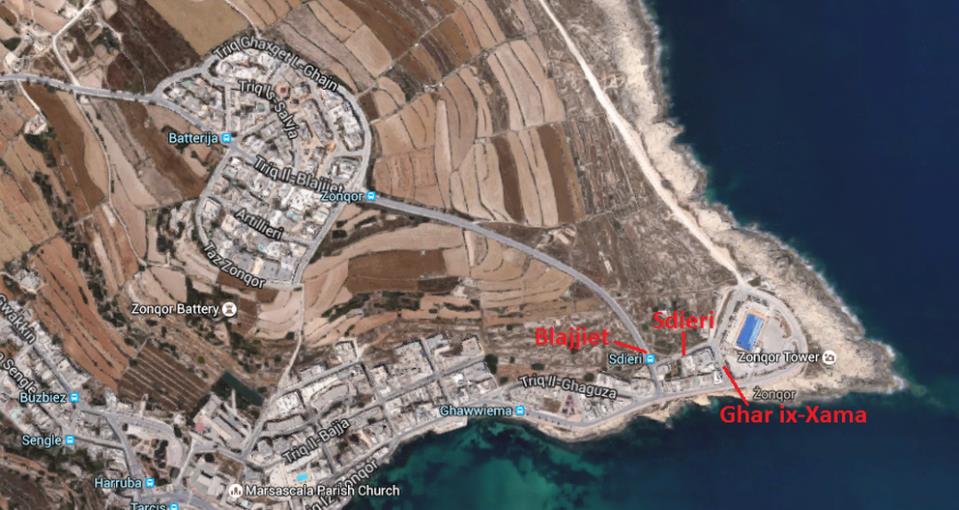
Dr Muscat said on Saturday that residents of Triq Ghaxqet l-Ghajn would not lose their sea views. The fact is that Triq Ghaxqet l-Ghajn is situated almost a kilometre away from the swimming pool and sits atop a hill. Residents would most likely not have been affected by the original plans, let alone the scaled down version. On the other hand, residents of Triq is-Sdieri, Triq Ghar ix-Xama and some residents of Triq il-Blajjiet are set to lose their views. The artistic impressions provided show that that campus will be built right across the road from them, with the university building being at least the same height as their apartments.