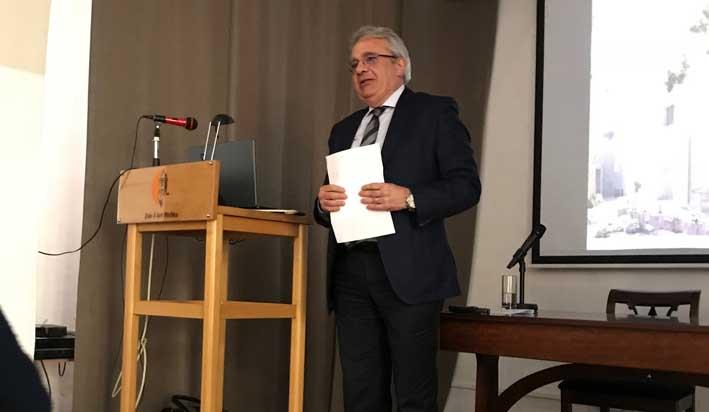
During the recent presentation of the XIII edition of the Din l-Art Helwa Awards for best Architectural Heritage, Professor Alex Torpiano, dean of the Faculty of the Built Environment at the University of Malta and president of the Kamra Tal-Periti, did not mince his words when expressing his concern about the future of the built environment in Malta. He questioned the planning policies that were allowing full scale demolition of the islands' historic and traditional built heritage. In his key note address, after presenting the winning awards, Professor Torpiano praised the successful projects and congratulated the winners. He stated that they were outstanding examples of developments, which through sensitive and clever interventions succeeded in adapting historic or traditional buildings to new use without sacrificing their architectural fabric or surrounding context. Professor Torpiano expressed serious concern about the alarming rate at which Malta's unique built heritage was being lost to new development which was not respectful of the past and stressed the need to encourage the appreciation of the historical fabric of Malta's built urban environment. He questioned planning policies and charged architects to use higher skills so as to leave future generations "new built heritage" which is sympathetic to that which already exists.
The winners were announced by Maria Grazia Cassar, executive president of Din l-Art Helwa, who chaired this year's judging panel composed of Dr Conrad Thake representing the Kamra tal-Periti, Dr Antonio Mollicone from the University of Malta, Din l-Art Helwa Council member Perit Joanna Spiteri Staines and Perit David Pace.
The raison d'etre of this annual competition, said Maria Grazia Cassar, is to highlight and reward projects which make an outstanding and significant contribution to architectural excellence in a Maltese context, with a focus on regeneration, re-use and conservation. She also expressed satisfaction at having witnessed great strides in the achievement of such objectives in the varied projects that have won the award over the years, and that this competition has contributed to the positive appreciation of the value of Malta's built heritage.
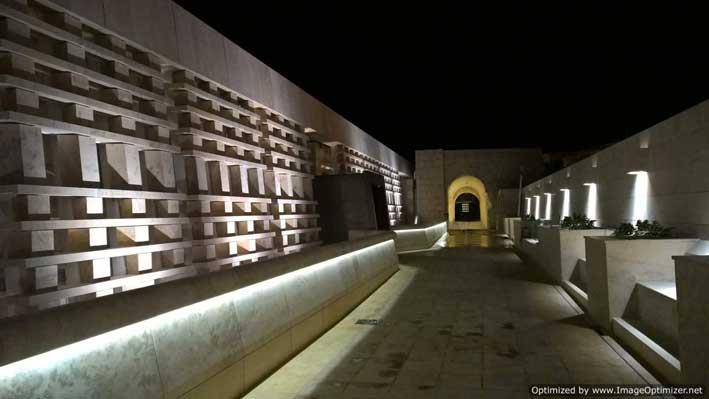
The jury was unanimous in its decision to award the Prix d'Honneur for Category A - a Major Regeneration Project, to Binja Laparelli by Bezzina & Cole Architects & Civil Engineers. The judges felt that this new building has successfully achieved its scope within the brief, while at the same time respecting the context of the fortifications. Of particular note was the discreet rational approach, yet imaginative design, in the stone screen created on the bank's façade and the integration of the design elements to complement the exterior walkway and the historical structures.
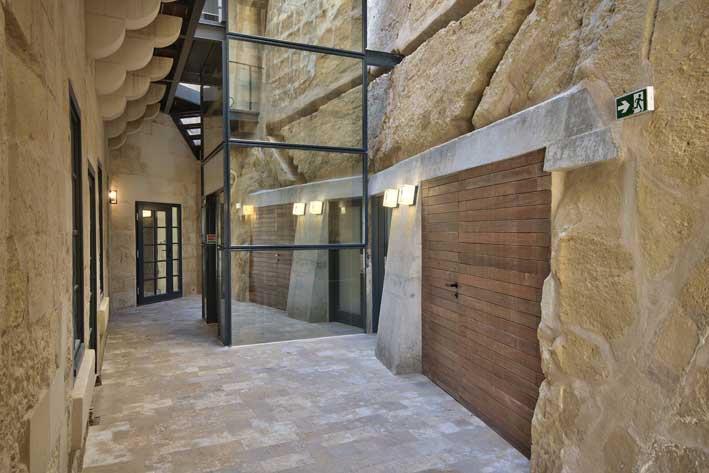
The prize for Category B - The Rehabilitation and Re-Use of Buildings was awarded to Edwin Mintoff Architects for the Macina project, which the judges felt was setting an example in the rehabilitation and re-use of military buildings. This project achieved the necessary luxury for its new use as a high-end guest house, while the overall design concept retained the military functional feel of the building's previous use, especially in the staircase and the courtyard.
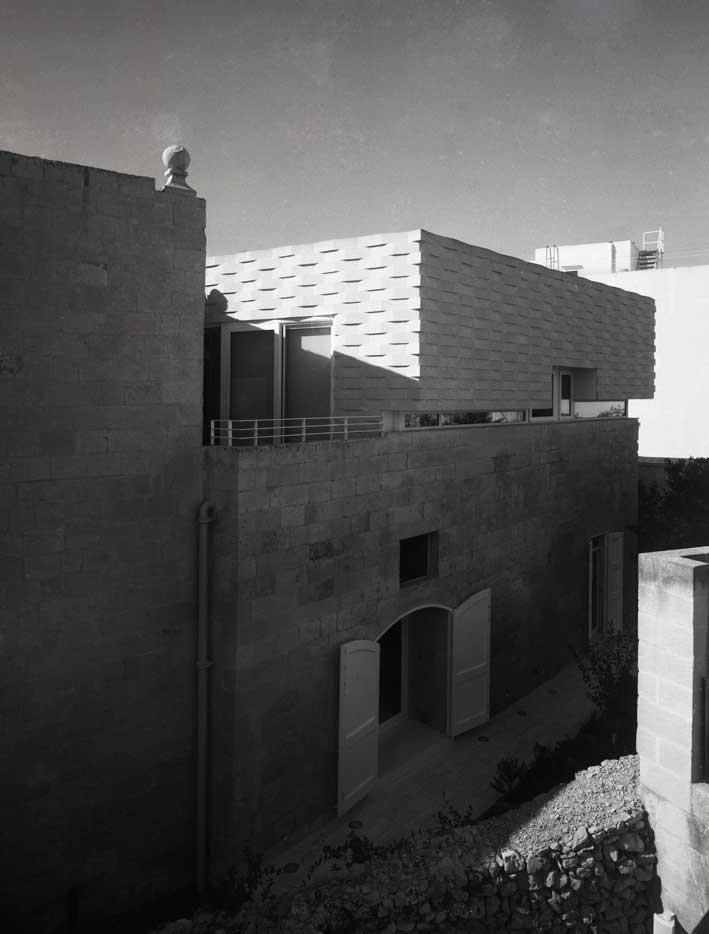
In Category C - A Restoration and Conservation Project the prize was awarded to The Coach House by Perit David Drago of Architecture Project. The intervention and extension upon the existing building consisted of a stone volume above the existing fabric. The limestone façade, detailed to mimic a weaved pattern, created a surface of changing shadows echoing the irregular surfaces of the historical walls below. The Coach House was also found worthy of winning the Silver Medal Award, signifying the best overall in all categories, because of the success of this project in creating a harmonious intervention with the simple historical fabric of the existing farmhouse. The message the jury wanted to stress was that it is indeed possible to introduce an architectural vocabulary that unites the fragments of historic buildings thus creating a pleasing ensemble, rather than resort to the demolition of these simple, vernacular structures.
Cassar brought the awards to a close, conveyed her thanks to the panel of judges for their meticulous work and the Kamra Tal-Periti for their collaboration and also to Professor Torpiano for his important message for the preservation of Malta's built heritage.