For a Salesian school, education is a matter of the heart, a process of accompaniment, extended to families as primary partners through formal and informal teaching of a student. This is achieved and maintained through a jovial family spirit. When founding his first educational setup in Turin, Don Bosco's priority was to create a family atmosphere and an authentic experience of Church. One can find several definition of this "salesian family spirit". Rossano Sala (2017), a renowned expert in Salesian pedagogy and the mind behind the recent Synod of Bishops about youth and discernment states: "the (salesian) family spirit (...) is a style of life that permeates every aspect of the very existence and concrete manner of carrying out the daily reality of the entire Salesian work. Family Spirit, therefore, is not an optional element of our style of education; it is a dimension that weaves transversally across every aspect of the Salesian youth ministry".
Education means creating processes with families
Educating means creating processes leading to the mature living of freedom and the fostering of holistic development. Promoting the ethical formation of children is also the task of parents. The family cannot withdraw from being the best place for the support, accompaniment and guidance of children.
For the Salesians 'education' is not simply the imparting of knowledge but particularly of accompanying the students. There seems to be a crisis in the partnership between society and the family, and in such a situation schools are concerned more than ever to collaborate with parents in their mission of education. More often than not, many of today's parents are recipients of services before they can be partners in the education of their children.
The Church is often like that of a "field hospital", to use Pope Francis' words, referring to families who need more support and accompaniment than others.
Particularly in our current fluid society, the Salesians of Don Bosco are called to safeguard family life with love. In spite of the crises with which the family nowadays is faced the new generations still see it as the safest place for them in which they can find unconditional acceptance. The family, no matter how contradictory and controversial nowadays it is seen to be, continues to be the structure of origin of human culture. For this reason the family ought to be the focus of attention in the Church's mission.
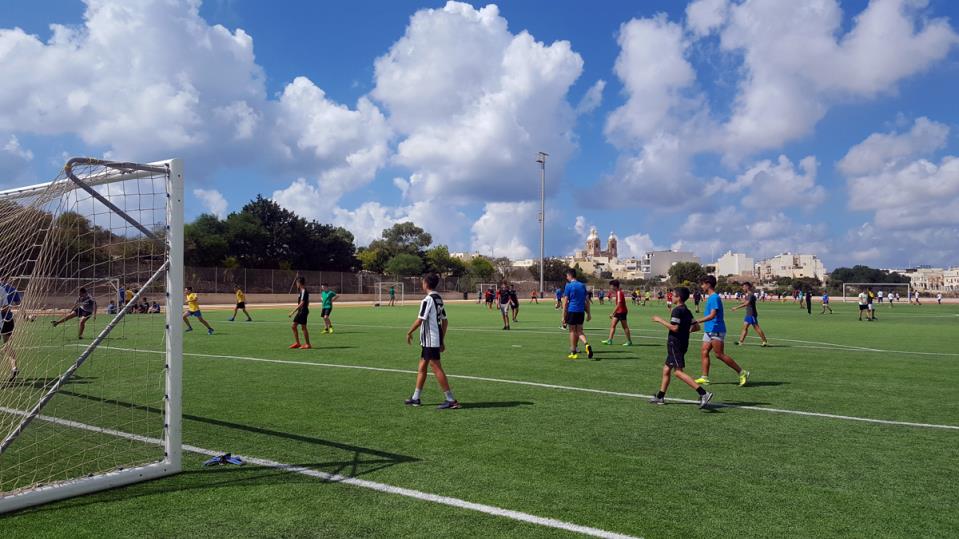
The Salesians and Catholic ethos in schools
The success of Church schools arises from the distinctive ethos or value system which permeates the whole school. The promotion of certain values and practices and the sense of religious purpose is in contrast with a 'secular' setup. Catholic schools are the privileged environment in which Christian education is carried out. "The ecclesial [Church-related] nature of the Catholic school, therefore, is written in the very heart of its identity as a teaching institution" ( Congregation for Catholic education, The Catholic School on the Threshold of the Third Millennium,1997, no. 11).
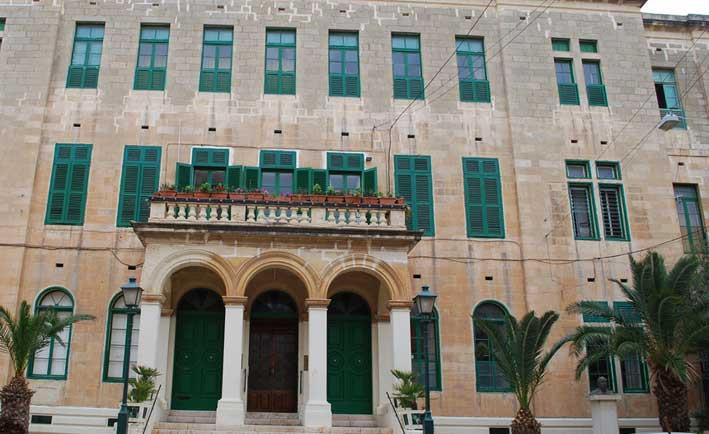
Salesian schools: a space for openness and familiarity
Students, together with their families, have the right to experience the ability of educators to understand, to empathise and to appreciate their feelings through a deep and attractive family spirit. This family spirit was fundamental and a guiding principle for Don Bosco and it inspired him while he was beginning his work, dreaming about it, planning and sustaining it. In this sense, Catholic Salesian schools emphasise an atmosphere of openness and familiarity for a person to feel loved.
Salesian schools: communities of love and life
A feature of this family spirit should also be the qualities of genuine brotherhood, affection, open-hearted friendliness, accompanied by a simple, cordial and welcoming human approach. Students and their families need to experience Salesian schools as the places were life is cared for; places where one can expect that the doors are always open. They ought to feel that they are always well received and never judged with the greatest respect for the dignity of the individuals and with a sense of fairness and justice. This is one of the observations that families and guardians who come in contact with our Salesian schools in Malta, namely Savio College and St. Patrick's School, talk about.
For Don Bosco and the Salesians, families are communities of love and of life. A first contribution to be offered to families will be that of helping them to become aware that they really are the "patrimony of humanity" ( Document of the Latin American Assembly of Bishops at Aparecida, nos. 302 and 402). The first and shared school of humanity is the family, in which the vocation to love grows and is cultivated, since it is in families, at least as long as they have not been too deeply damaged, that things are considered not so much in terms of the advantage to the individual but as being to the benefit of all.

Church schools and religious communitarianism
A study carried out by Bryk et al., (1993) found that one of the strengths of Catholic schools is their 'inspirational ideology'. The ethos of the school encourages students to become more active citizens in an emerging context of diversity.
Another research, carried out in Church schools in Australia indicated that a fusion of (a) high-quality academics combined with (b) the inculcation of quality moral and religious values is needed for a Church school. This was the respondents' perception, namely "that schools that combine high quality academic and moral/religious education prepare students better for high quality lives". This is true of several past pupils of the Salesian school in Malta.
Criticism against Church schools
Inevitably Church schools have to dialogue with opposing epistemologies. This is a delicate and arduous task. On one hand it requires professional people able to voice and defend the principles underpinning Church schools. On the other hand, it keeps Church schools' leaders on the outlook for improvement. There are three ways in which the opposition to Church schools manifests itself.
Church schools' critics fail to understand that faith understanding is manifest not so much in propositions but in forms of practice and relationships, reaching deeper into philosophical traditions.
A huge onus lies on the leadership of Church schools. Already twenty eight years ago Beare, Caldwell and Millikan (1989) stated that: "Outstanding leadership has invariably emerged as a key characteristic of outstanding schools. There can no longer be doubt that those seeking quality in education must ensure its presence and that the development of potential leaders must be given high priority." The link between leadership and the overall success of a Church school deserves more reflection.
School Leadership: building communities
Bush and Glover (2003) differentiate between school leadership and school management. They suggest that: "Leadership is a process (which) ... involves inspiring and supporting others towards the achievement of a vision for the school which is based on clear personal and professional values. Management is the implementation of school policies and the efficient and effective maintenance of the school's current activities."
The role of the Head of School along with the Managament Team is seen as a communal leader, "building community". Viewing themselves as agents of change committed to communal aims, these leaders rarely describe their work as a "career opportunity". Bush and Glover (2003) identify a number of factors as particularly important to understanding the cultural and contextual nature of schools. From a faith perspective, key considerations are likely to centre on the school culture, including the values, beliefs, customs and rituals of the school. Governance and parental expectations are also likely to be important criteria in considering the specific context of a church school.
There is some evidence that for leaders of Church schools this dimension of moral leadership is often underpinned by strong religious beliefs. For example, Gurr et al (2005) found that Gospel values were strongly evident in the leadership approaches in the Catholic schools in their study. Public school principals were much more likely than their Catholic school counterparts to report a desire to further their careers and to move up to a higher post. In contrast, Catholic school leaders expressed more interest in being able to influence school policy. This perspective on leadership is also recognized by teachers in Catholic schools who describe their principals as encouraging, supportive, and reinforcing. Catholic school leaders are seen as professional colleagues rather than evaluators.
Aspects of Leadership in Church Schools
School leadership in Church school settings considers its schools to resemble large families rather than academic organizations. This is why Salesians in Malta opt not to enlarge the school population. Leaders work harder than ever (with fewer supports) to sustain healthy atmospheres in a context of constant change. It is precisely in this context of social flux, where the family, in Pope John Paul's words, is to be seen: "as the fundamental and essential educating community, the privileged means for transmitting the religious and cultural values which help the person to acquire his or her own identity. Founded on love and open to the gift of life, the family contains in itself the very future of society."
Church schools complement families and accompany them as direct transmitters of values and "in the evangelizing mission of the Church. It is the privileged environment in which Christian education is carried out. The Church-related nature of the catholic school, therefore, is written in the very heart of its identity as a teaching institution." (Congregation for Catholic Education, The Catholic School on the Threshold of the Third Millennium,1997, 11). In other words the school leadership must not overlook the involvement of families as a privileged agent of collaboration and change. If Catholic schools are to not simply survive but thrive, they must find ways to reach out to families with a counter-cultural vision of the human person living in communion with others.
Catholic identity than religious practice
The importance of maximizing such networks is especially important during transition from primary to secondary Catholic education at this life cycle sees an increased interaction with others through the forming and reforming of friendship networks. The presence of a Catholic school does not automatically infer the presence of a faith community. In the development of such a community, the maintenance of an authentic Catholic identity is noted by the Congregation of Catholic Education as"the greatest educational challenge" (The Holy See's Teaching on Catholic Schools, 2007). Pope John Paul II suggested growing the relational dimension within the content of authentic Catholic identity seems to be best established through inviting young people into situations of vibrant faith life.
Challenges in learning associated with adolescents comes in the form of relational isolation (Dowson, 2002; Dowson, Ross, Donovan, Richards, & Johnson, 2005). Early adolescents need to form identity while remaining vitally connected to their peer groups. Hence, relevant curriculum experiences need to connect peers, with teachers and with significant others as for belonging and connection to take place. A family spirit is a value added bonus as it breeds trust and familiarity. This is more so for extra curricular events. This family spirit enables a warm and informal interaction which leads towards a strong sense of stability and affection, different from the impersonal and bureaucratic routines that characterise public secondary schools. The approach through in/formal setups and family spirit encounters, seek to shape the "character building."
Conclusion
To see an educational institution as embodying a set of faith values and beliefs, it requires to be shown that the distinctive form of education is based upon a deeper philosophical tradition which has both withstood the critical scrutiny of others and has evolved as a result of an ongoing process. It must privilege openness to alternative understandings of other traditions, religious and secular.
Fr Eric Cachia sdb, currently rector and headmaster at St. Patrick's School and Residential Care in tas-Sliema. Fr. Eric served as Headmaster of Savio College, Dingli for 5 years, as Assistant Coordinator for the Church Schools Association in Malta and for 2 years was on the Steering Committee for 'Eduction for All' as established by Hon. Evarist Bartolo, Minister for Education.