I came to Malta for the first time at the age of five. This was the 1980s. My father, an international journalist, was assigned to the island by the USSR to work in a region that also included Gibraltar.
Originally, we supposed to go to London, but plans changed so fast that when we landed in Malta I was still asking my parents why we had left our boots and umbrellas at home.
Later, my father worked on preparations for the summit meeting between Reagan and Gorbachev.
Years later, he became a businessperson.
My family thought of the island as our home and loved it fondly. Arriving from a country that did not exist anymore, we, an elite family by the standards of our country, were experiencing a truly delightful time in Malta.
There were a lot of reasons for this: from the abundance of goods in bright wrappers to the caressing sea, and, of course, the joy of automatic windows in our brand-new Mazda. We were surprised, however, to find ourselves out of fuel on the weekend, since gas stations did not open on Sundays.
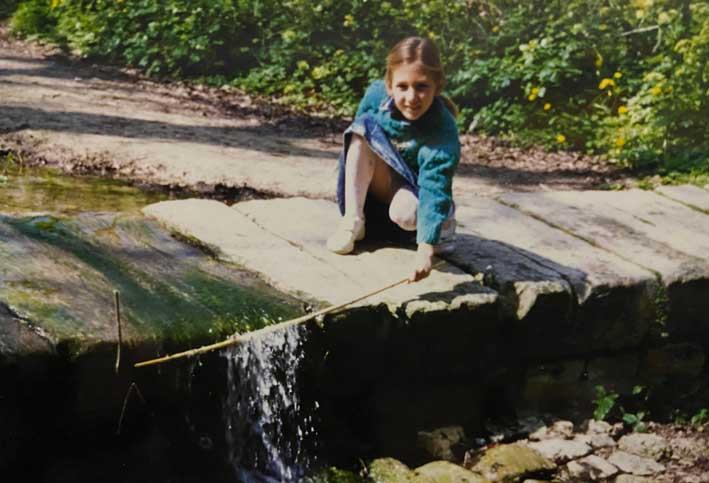
I went to the first grade there, although I brought my Soviet school uniform with me. I attended the Russian school at the embassy to write and read in my native language, as well as St Michael's in Attard, where I used to freely communicate with Maltese children and adored our Miss Jill.
Having blonde hair and blue eyes, the other children understood that I was a foreigner but had no idea what Russia was. At that time, people had a very limited idea of where it is located.
I was even jealous of brothers Tony and Terry, my classmates from England. They received a lot of attention and were often asked about their homeland and their reasons for coming to Malta.
Despite all the activity and ambiguity of the Soviet Union, there was no labeling of people then. There were no clichés yet.
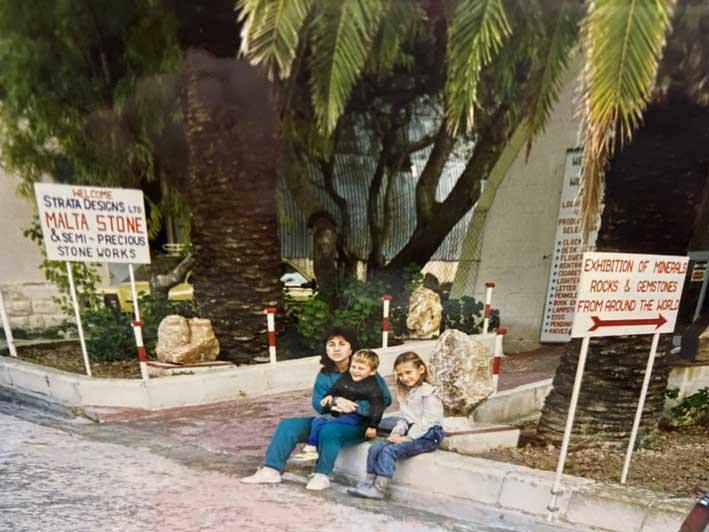
I was on the island in the '90s, and I also visited it in the 2000s. I saw how the attitude towards my compatriots was forming.
It was only towards the end of the first decade of the new century that I began to notice that relations between our countries had become, if not tense, political in nature.
Moreover, a few weeks back I heard I heard the whole palette of accents from the former Soviet Union while walking on the Sliema promenade. The number of Russian-speaking people there grows every year.
Today, I am a Russian journalist with a partial European background and mentality, collaborating with independent media. I specialize in politics, economics, and society. Several times a year, when I fly to Malta, I receive many questions about the motivation of the Russian authorities, the attitude of citizens towards political processes, and the social ambiance of Russians.
These questions and discussions led to the idea of writing a column about current events and their connection with the past and the future of Russia.
In the mid-90s, one of my favourite songs was 'I would do anything for love,' by Meatloaf. I used to listen to it over and over when sleeping over at my Kazakhstani frenemy Ira's maisonette.
This weird association, the name of the song, comes to mind whenever someone asks me to describe in a few words what is going on in Russian foreign policy today.
Let me explain why.
If you want to know something that will help you to understand the mentality of Russian people better, I suggest the following: we grow up in a state of "OR".
Do you want to be healthy or rich? Are you a mother or a professional? Are we following a diet or eating whatever we want? I cannot understand: are we friends or enemies? The opposing notions are often not mutually exclusive, which has been skillfully used by official propaganda for centuries.
Security or the Internet? Sharing oil revenues or strengthening an army? Do we not get our retirement pension or Crimea belongs to Ukraine? Do we host a football World Cup or do we have freedom of speech? Do we repair roads or allow independent deputies to be elected?
The problem is that even the answers to such strange questions are provided in advance.
There is a very famous proverb, which is usually interpreted as folk wisdom, in case of choice: you cannot both eat a fish and have sex. Probably, the mistake of Russian society is that we often cannot replace OR with AND.
In other words, we cannot stop opposing "water and air". The habit of "choosing" can be explained by the main paradoxes of modern Russia: expensive gasoline, the prices for which increase irrespective of whether the prices of raw materials go up or down; the sale of 11 square metres in new buildings in Moscow when the country covers a sixth of the earth's total land area, the decrease in retirement benefits of €231 million in one year while law enforcement funding increased by €259 million.
The same law enforcement system, as citizens sarcastically note, works well. The acquittal sentences in Russia are just 0.2% of the total. According to statistics, the innocent people are almost never being prosecuted here.
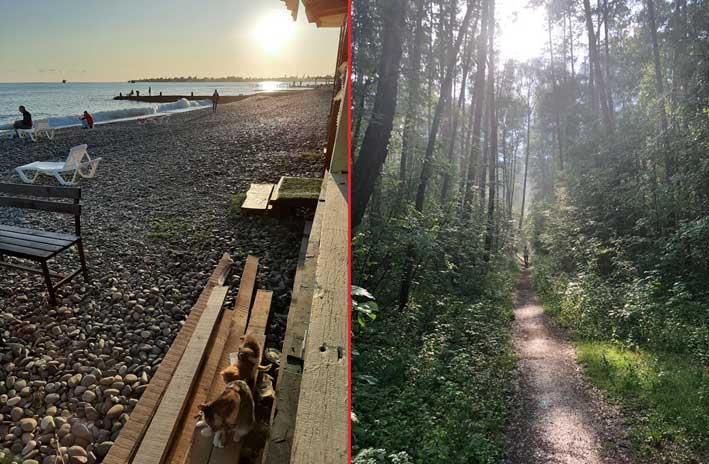
Russia has another characteristic. The Russian Federation sincerely wants to be liked.
Over the long years of the Soviet regime, it has developed a syndrome of dislike. Russia wants to be generous, good, even a little bit mysterious, which adds interest, yet it obviously wants to be important to the world. This national idea is what the government is proposing instead of economic prosperity.
Wealth and harmonious existence of the population seem to be small and too individualistic goals to become a dream. Unlike many Western societies, in Russia, the greatness of the state (in Russian there is a separate word for the concept of "a large and powerful country with a significant international position" - derzhava) is the main objective of citizens, and the welfare of citizens is a minor objective ... of citizens.
It is not acceptable to argue with this, although, at the same time such level of corruption makes the idea null and void. Russia wants to be kind and strong for everyone. Yet, this is exactly that rare case when it would be appropriate to use 'or' instead of 'and.'
Russia, which depends on the external approval, is trapped.
It is impossible to be good at the same time on the right and left sides. In this case, Russia is going to conquer the love that is so important to it. In other cases, buy it.
As with the case of the recently interrupted by Malta "shipment" for the Libyan leaders (if, of course, it can be proved that it was a Russian shipment). This desire explains the restless presence of Russia in any events.
A few weeks ago, I flew to Malta. As usual, I flew in via Istanbul. I was surprised to find myself to be the only white woman in a spacious business class.
One of the other passengers was a diplomat from Nairobi who had been to the Russia-Africa Summit in Sochi. Participants from Zambia, Nigeria, Uganda and other countries were quite cheerful: Vladimir Putin had just forgiven them a debt of $20 billion.
I have to mention that this made Russians feel sad. The African market can be a good sales channel for Russian weapons, aviation, and nuclear power plants. Russia and Africa have the same amount of trade turnover - $20 billion a year.
The European Union has $300 billion in trade turnover, so there is still room for improvement.
Was this gift so unacceptable? We have another proverb, "a fur coat from a noble shoulder", which means that from a rich person there should only be precious gifts.
However, for a country where the majority of the population spends all its money on food and has no savings (official statistics), this might not make so much sense.
Russia has a habit of forgiving debt; Syria, Iraq, Vietnam, Cuba, North Korea.
Some neighbors also receive financial support. I recently returned from a working visit to Abkhazia on the occasion of the presidential election. It is worth noting that the Russian authorities stated, even before the elections, that they would not interfere with the will of the Abkhazian people and are ready to work with any legitimate partner.
However, just before the election, Vladimir Putin met with the incumbent president, Raul Khajimba, who was running for a second term. Afterward, he won the election with a majority of under 1%.
Abkhazia is a beautiful subtropical resort on the Black Sea, one of the territories of the Soviet Union, the homeland of my mother. Abkhazia became part of the USSR as an independent state, however, at the request of the ethnic Georgian Joseph Stalin, the region was annexed to Georgia.
After the collapse of the Soviet Union, Abkhazians did not want to become a part of a foreign country. In 1992, a brutal war began. Most of the able-bodied male population died. In the '90s, the country was not recognized even by Russia, although after the conflict with Georgia in 2008, official subsidies began to flow.
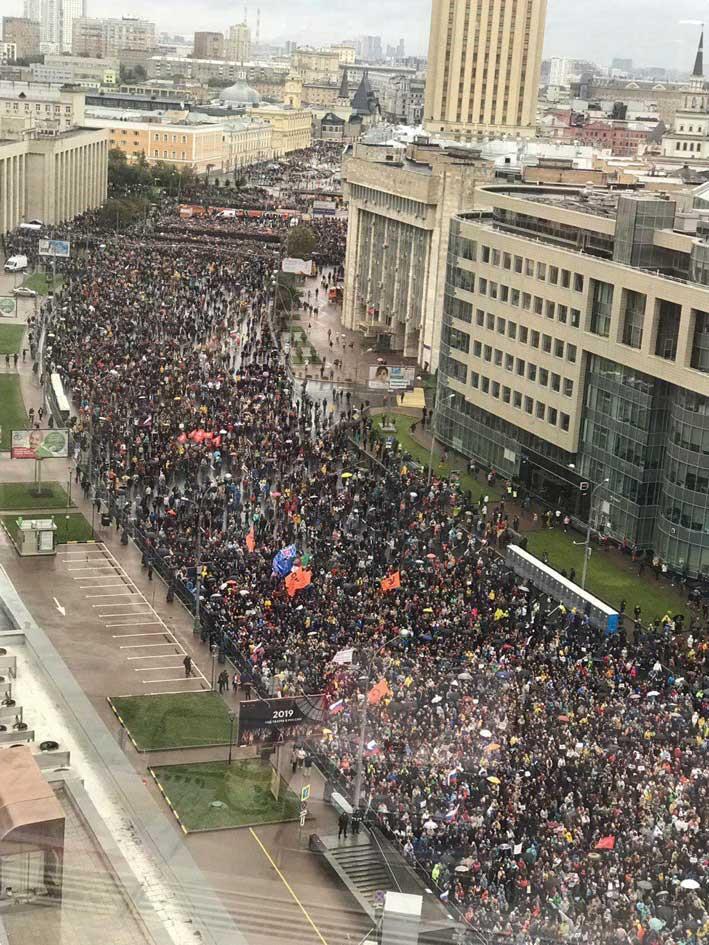
Russian peacekeepers are conducting exercises and maintaining regional security. Local children under the age of majority have the right to apply for a Russian passport. When going to Abkhazia, many Russians feel the same mixed feelings as in the case of forgiveness of debts: on the one hand, the pride that "we can do so", on the other hand - sadness for "its price".
As part of the trend, I would suggest that 2019 could be a turning point in Maltese-Russian relations.
A veto on the Maltese attempt to impose sanctions in the UN on smugglers, the ban on the use of Maltese airspace for the passage of Russian military aircraft, the recent detention by the Maltese authorities of cubic meters (interesting mean of measurement, huh?) of money, which were rumored to be intended for Libya.
Many Russians with dual citizenship are already hiding their new EU passports in safes with anxiety, fearing that Malta will risk taking the path of Cyprus and reconsidering the legality of previously issued documents.
Like in the case of 30 years ago, an ex-Soviet citizen may today need clarification on what Malta is.
"It is near Italy, right?"
However, I would strongly recommend that both politicians and ordinary citizens follow more closely the development of relations between the two seemingly different countries.
If before we were connected by history (Emperor Paul I was the Master of the Order of Malta - 221 years ago Paul I accepted the title of Grand Master of the Order of St. John of Jerusalem and planned the rapprochement of countries; however, he was killed by conspirators with the consent of his son Alexander), tourism, investment in real estate, and love of pizza on a thin crust, today Malta can become a significant counterpart for the Russian Federation on the world political scene through its political decisions.
The most interesting part is just beginning, so it is worth observing.