I meet Emma at her home studio - the work for her first solo show titled Conditioned comforts leans against the walls, and cupboards, some of it spills out into the adjacent rooms. They are currently showing at Spazju Kreattiv until the beginning of September.
Emma's work often deals with themes related to mental health, observing the way in which modern society and its expectations impact our day-to-day lives. These themes are at the forefront of this body of work.
The exhibition, curated by Margerita Pulè, explores the way manmade, or self-made, comforts are impacting the contemporary generation's quality of life, the way people seek comfort in the form of distractions which may not serve in the long run.
Conditioned comforts is the culmination of a long programme entitled Artivisti designed to guide young people with different creative backgrounds. The programme is held over a period of 18 months and pairs a creative with a mentor who supports them through their project. It also aims to create a community between the various participants, allowing them to learn from one another.
"I found the experience very interesting," Emma says. She was paired with artist and curator Margerita Pulè and confirms that Margerita's guidance was central in shaping her ideas. She tells me, "having a constant conversation going, to express my ideas and bounce things back and forth helped".
She had already explored the working concepts in the past, but never had the opportunity to dive deeper. Artivisti presented the perfect platform to revisit her thoughts. Emma began to question, "how can I explore this term of 'conditioned comforts', which still felt vague, further? And that's when the idea of holding conversations emerged".
Emma held a series of interviews with family members, friends and other creatives to uncover an individual understanding of the term, to define what their conditioned comfort is and how they relate to it. Emma says, "the initial research built a foundation for the work to then develop on".
The analysis of the interviews allowed Emma to observe the "recurring factors from one conversation to the other". She drew out themes which were common to people's relationships with their conditioned comfort, be it technology, overworking or seeking validation from their digital persona; participants felt they used their comfort in excess, as a distraction or as an act of avoidance.
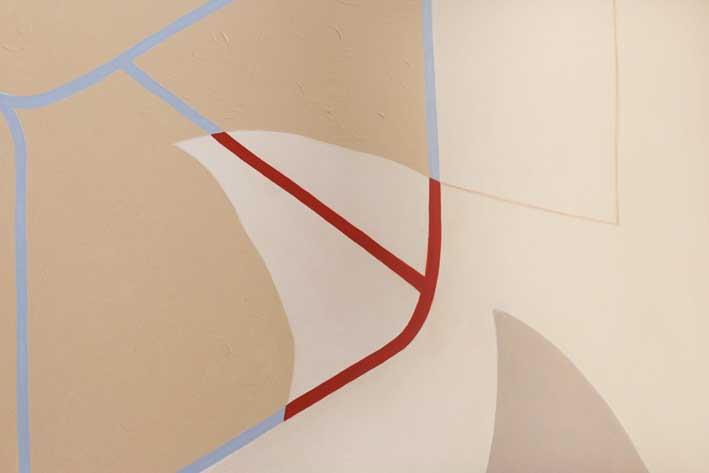
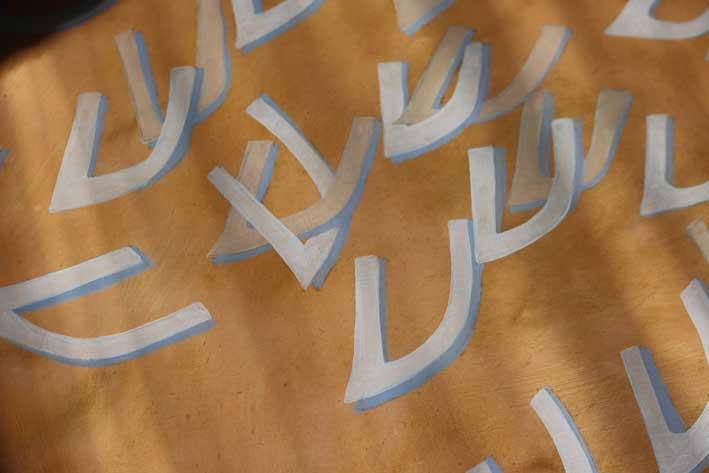
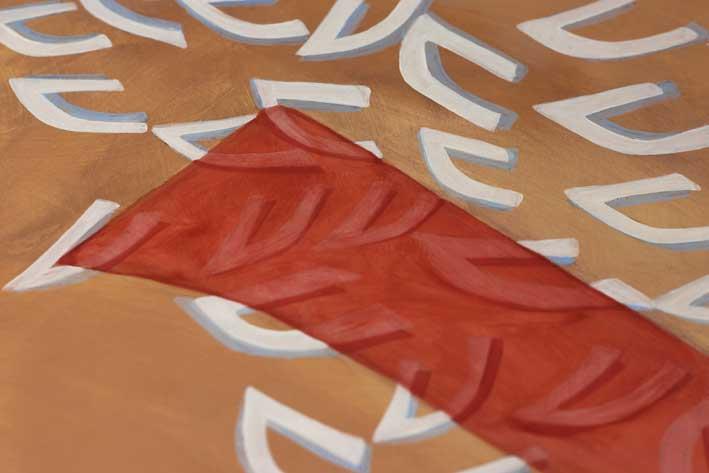
Emma explains, "I have given a formal language to certain forms, colours and texture". The exhibition visualises the journey of the relationship that she observed. The fear of living without it, the guilt associated with its destruction and whether it is possible to find a balance within its dependency. This journey is represented through various paintings and installations being exhibited, which came about through a collaborative effort between different creatives.
Emma's signature minimalist style is featured in her paintings, this time with the introduction of different textures and a calm, cool colour palette which translates the conversations she held during the research process.
The seemingly dauting nature of living without distractions is represented through a rocking chair, paired with a blindfold and waist-tie. In Emma's words, "I wanted viewers to challenge that uncertainty which I think is all about sitting with yourself or in this case rocking which adds that extra bit of instability, tying yourself into that instability, having that blindfold on and not having any conditioned comforts in reach and having to find that comfort from within.'
Photographer Justine Ellul complements the installation with a series of photos. Due to health and safety restrictions the chair cannot be used by visitors so Emma reached out to Justine to record the experience of Andrea Amato, a writer with an educational background in psychology, rocking on the chair.
The final installation, created in tandem with Emma's aunt, Anna Borg, a curtain-maker by profession, is titled Happy Medium. She expresses that this collaboration "is very special" and explains that "she was the hands behind the ideas" for the long sheer draperies. Emma adds, "I cut everything and was very involved in the materiality while Anna brought my vision to light through her sewing".
Happy Medium is visualised as a tent-like structure, an element which has firm roots in her childhood, Emma says "for me this is reminiscent of my childhood when I would make forts" from sofa cushions and sheets. She explains they felt "safe and fun". Some of the forms featured in the paintings are echoed in the tent, however, Emma unravels, and softens, the harsh shapes to create a safer space. She tells me, "You know that you can have that comfort, but you also know that you can be without it". She introduces the idea of approaching the comfort with compassion, rather than guilt.
As the visitor walks through the exhibition, they will enjoy the words of poet and writer Gabriel Lia, who interpreted Emma's process in prose. She explains, "I met Gabriel through Artivisti" and he helped expand her perspective further, through "his relatable and fresh metaphors upon the heavier theme at hand".
Sound installations produced by architect James Dingli guide the visitors from room to room, a light rocking reflects the concept of the chair and ultimately culminates in a meditative tune as the visitor stands beneath Happy Medium.
Emma hopes that viewers will leave the exhibition analysing their own behaviour, gain insight into themselves and ultimately approach distractions with a healthier mindset.
Conditioned comforts will run until 5 September at Spazju Kreattiv in Valletta. Artivisti was funded by Arts Council Malta and Aġenzija Żgħażagħ.