"I was very fond of diaries when I was young and had plenty of them. But at some point during my teens I stopped keeping one and started writing poetry instead. Strange, because I am more of a prose person. In fact I stopped writing poems when I was an undergrad. But then, lockdown changed the order of things: (1) I started a journal. It's really just a folder on my desktop, named Coronavirus. A double click reveals 39 separate word docs. But I haven't clicked on any of the 39 files since June 2020. I hope I will get back to them one day. (2) I wrote one long poem.
This poem in eleven and a half fragments speaks of isolation and stillness. While I understand that writers savour isolation - this is the space in which the act of writing usually unfolds -with these fragments I was trying to reach out to my friends and other poets and react to what they were writing during the lockdown. There's a fragment reacting to Franco Arminio's decalogue against fear, a fragment reacting to Leanne Ellul's White Poems, to Elizabeth Grech's poetry collection Bejn Baħar u Baħar and to Simone Inguanez's long-awaited poetry collection ... In the town where I live, there lives a poet who hadn't written any poems in a long time. But during her days of confinement, she garlanded her balcony with a multitude of verses that she drew from the very depths of her and they became a poem ...
This poem in fragments was chosen to be part of an anthology, Tgħanniq Ieħor, poeżiji mill-iżolament (Horizons). It's also been translated by Albert Gatt. The English version will be published later this year in Scintillas, New Maltese Writing by Praspar Press.
Xpatapumm! This is the sound that books make when they fall off my shelves. Should I blame the shelves? Lockdown days were not only for writing and reading poetry. There were other interesting and innovative things going on like for instance: Xpatapuuuuuuuuumm! But first, I would like to say something about Chris Gruppetta. He really is a unique figure among publishers. He is my publisher, my reader, and also one of my best friends. During the days of confinement we left each other voice messages on Whatsapp; some full of gossip, some full of tips on our latest reads, some with words of encouragement ... and then one day, he came up with this splendid idea of starting a series of podcasts for children who were confined at home. A brilliant idea. We chose the books we wanted to talk about, we chose the topics, we downloaded an app and just like that, we started our weekly podcast, Xpatapumm. We loved every minute of it and so did the children who eagerly waited week after week for readings and discussions on books old and new.
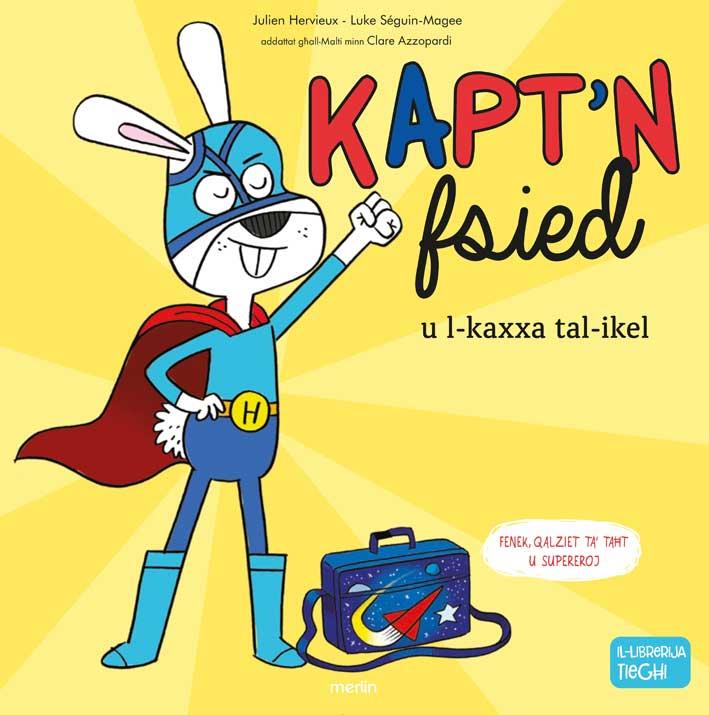
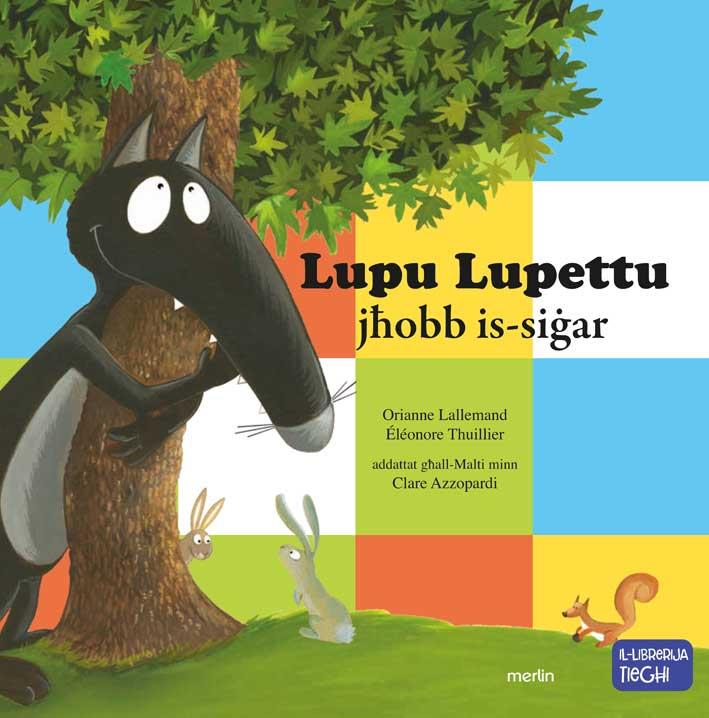
There are always books to translate with Merlin Publishers. I choose to translate children's picture books. First of all, they're really good fun, especially this Lupu character with all his bumbling good-heartedness and misbehaviour. I love him, children love him and the stories are amusing and witty. Secondly, translating these kind of books is challenging. These books push the boundaries of my imagination and feed into my own creative writing too. There are quite a few books about Lupu Lupettu and friends and I are very much looking forward to seeing my latest ones in print: Lupu Lupettu jħobb is-siġar and Kapt'n Fsied!
The one poem which I wrote during the lockdown of 2020, Sura, turned out to be a gateway to more poetry writing. I wrote a series of poems inspired by the dolls created by artists Glen Calleja and Lori Sauer ... tangled in our hair instead of leaves the remnants / of a tribe who carried / trees and / flowers to another place / my tongue grown heavy / my uterus dripping pitch / my womb a void / I fear it might have mouldered by now / so long it's stood / this stagnant water ... Sura is the name of the whole project, as well as the book that came out of that, featuring my own writing and photography by Giola Cassar. My role, as I worked with the artists, was to write about (or to) the dolls. Creating a doll means creating an object in our likeness. This led to several reflections on belonging, on the divide between 'us' and 'them', on the question of who is excluded and who is not, who is silenced and who is not. Ultimately, what my work on this project brought home to me is that the dolls were indeed talking back to me, often about myself."
This series is conceived and edited by Marie Benoît who contributes her own Diary occasionally. [email protected]