'If physical activity were a drug, we would refer to it as a miracle cure, due to the great many illnesses it can prevent and help treat' - UK chief medical officers
The recent discussions about the cost of obesity in Malta call for integrated approaches that address this urgent public health challenge. The rise in obesity in Malta may have been driven by multiple factors across a broad spectrum of settings, including an obesogenic environment and a sedentary lifestyle as a result of the rapid urbanization that the country has gone through over the past decades. Despite the increasing awareness on the adverse effects of contemporary sedentarism, to date, most local approaches have focused mainly on eating behaviours while the link between the built environment and obesity has received little attention. The human body is designed to move, yet the spaces we live in are becoming increasingly passive and while smarter cities, taller buildings and wider roads are being constructed, physical activity was pushed out of daily lives. This is of significant concern, given that the consequences for lack of physical activity not only include health-related implications. Obesity also diminishes the quality of life, life expectancy and may negatively impact academic performance and psychological wellbeing.
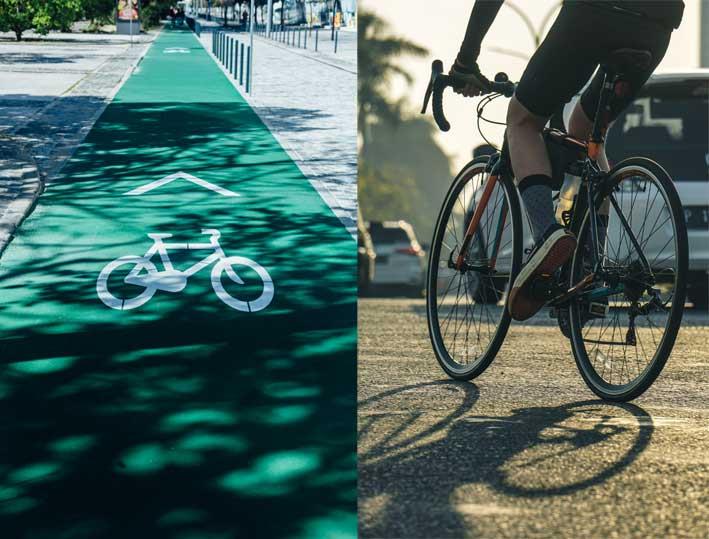
Growing evidence demonstrates that the built environment has a vital role in reversing the tide of inactivity. Promoting active behaviour through the design of the built environment by integrating habitual physical activity into everyday life environments has been proposed as a promising strategy in urban environments to overcome obesity issues. Active mobility, namely walking and cycling for transport solely or in combination with efficient public transport, is well suited for integrating health-promoting physical activity as part of daily routines such as travel to work or school. In contrast to sports or exercise, active mobility can be convenient in that it serves the dual purpose of being a mode of transport and physical activity, is economically affordable for most people and provides an equitable and accessible form of physical activity. As such, it has the potential to reach population groups that are unresponsive to the appeals and benefits of leisure-time physical activity. In addition to the direct health benefits of physical activity, active mobility is linked to higher levels of mental wellbeing and an increase in active mobility may lead to city-wide improvements in air quality and additional population health benefits.
Globally, cities are moving forward and implementing infrastructure for active mobility such as protected lanes for walking and cycling. Much of what is happening has also been emboldened by the pandemic. In contrast, active mobility is noticeably absent from the country's agenda. Instead, millions of euros are continuously invested in transport infrastructure to accommodate the large number of cars on the island, which is growing faster than the demographic growth and which in turn is making the present infrastructure unsustainable. Free public transport, mass transportation and slow streets alternatives are a step in the right direction. However, for the interventions to be effective, complementary infrastructure, including safe sidewalks to promote pedestrian activity, a combination of transit, good connectivity and efficient transport service must also be taken into consideration. If not, people would still otherwise choose to use private cars. Given the substantial economic burden caused by sedentarism and ecological issues, interventions that help people get active and stay active may be attractive options from a cost-benefit perspective. Perhaps, the roll-out of so-called pop-up bicycle lanes in Paris during the Covid-19 pandemic is a unique empirical context to estimate the pull effect of new walking and cycling infrastructure.
Adapting to the velocity of change and becoming more responsive to the current health and environmental challenges is a timely issue. In this day and age, communicable diseases such as Covid-19 and non-communicable diseases like obesity, cancer and diabetes, as well as the rapid urbanization and climate change issues, challenge us to rethink how we design our cities and invest in healthier environments that promote well-being. If a real, tangible and meaningful legacy is to be achieved, let's stop making excuses and walk the talk by prioritizing active mobility on the national agenda. Understanding the underlying barriers that are stopping people from moving and designing a realistic course of action to address the argument of inactivity towards a more balanced and sustainable approach is the way forward. This can be done by creating comprehensive multi-sectoral policies that reflect the true scale of the problem. Despite the complexities involved, it is evident that active mobility, alongside healthy eating behaviours and sports and exercise, has enormous potential to reverse the alarming rise in obesity. In addition, active mobility can help improve traffic congestion and significantly contribute to tackling the climate change emergency cheaper and faster than other proposed modes of transportation, including e-vehicles. I strongly believe that the public is willing to challenge the status quo and engage with different modes of transportation. This can only happen if and when the right infrastructure is in place.
[email protected]