What was the starting point for Spaces in Suspension? What was the idea or concept behind the exercise to start documenting these iconic hotels?
It was actually Therese who mooted the idea and since both artists have an affinity with this genre of photography, this exciting challenge was immediately taken up. The concept aims at capturing the decaying remnants of these once iconic structures of hospitality in a time when hospitality itself was at a standstill due to the Covid-19 pandemic.
How will the narrative of past-present-future be experienced through your works in this exhibition?
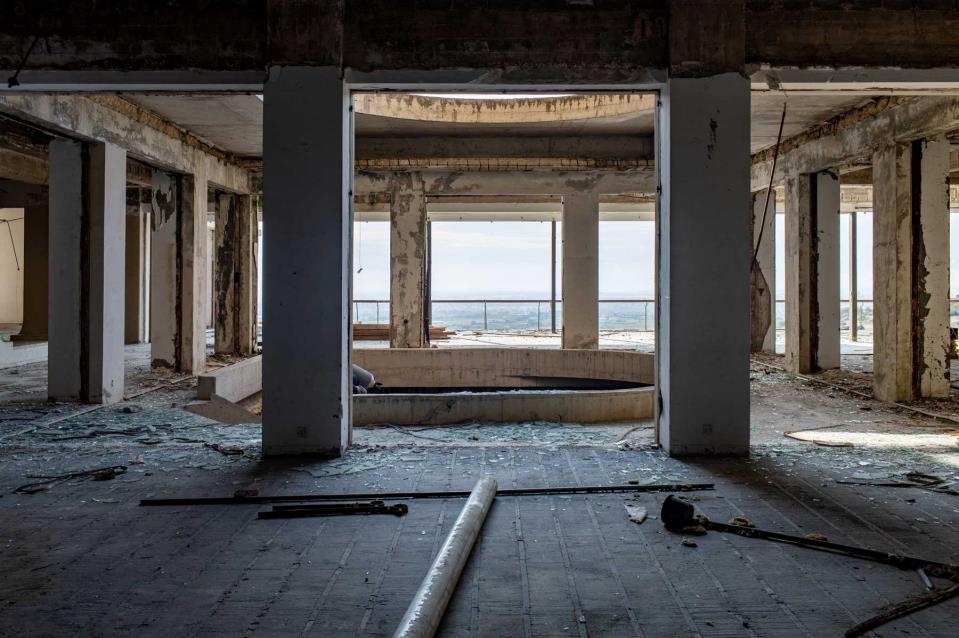
We took the role of contemporary archaeologists and documented these ruins through visuals in an attempt at preserving these sites before further development erases them from our landscape and collective memories. In the process we brought to the fore a narrative that imbues these places with their aesthetic value while making sensible connections with time and memory. The ravages of time, musty smells and impermanence of material things offered an uncanny aesthetic pleasure and an abundance of visual triggers which could be captured permanently via our independent and yet combined visual statements.
And, to continue on this, why Spaces in suspension? What was the thought behind choosing this title? Does it have to do with the ever so changing landscape of Malta and the desire to preserve part of the nation's collective memory?
The spaces are imbued with a feeling of the past, live in the present and yet have no future. They are suspended in time. Hence, the title of the project. The project therefore, uses our current concerns to piece together notions of memory in an unnatural way, one that only makes meaning today, in the hope of purging the abnormality of the isolation of lockdown.
Spaces in suspension will also interweave memories of those who worked in these hotels. How did this process influence your work when taking the portraits? Also, would you be willing to share a story or two from these ex-employees?
Yes, we thought that if we manage to trace a few ex-employees and photograph them on-site, it would add value to the overall narrative. It was so nostalgic to listen to their experiences and also heart-warming to see that, in a way, they are still loyal to the brand. We intend to have some of them relate their experiences during some days of the exhibition at SK.
What would you say were some of the things during your documentary expeditions that really left an impact on you? And, what are the most unique/iconic items that you found and/or documented?
The stillness envelopes you and the remaining artefacts act like props that morbidly adorn the now inhospitable space. We came across items that left a mark on us: keys to the rooms and suites, velvet armchairs, old computers, room cards showing the names of illustrious guests and even a clothes' rack with yellowing waiters' jackets dangling from rusting clothes hangers in what was once the laundry room.
How does it feel working as photography partners on this project? Would you say you inspire each other? Did you work together on some other past projects?
Joe was Therese's mentor at the start of her photographic journey and since then the artists have remained friends and colleagues. "We were both on the same cohort for the MFA in Digital Arts at the University of Malta where our camaraderie was strengthened due to our passion for the documentary genre in photography.
Working together offers an interesting dynamic - we share a similar vision in our work, yet we approach the situation with our own unique interpretation. We worked as a team throughout the project and share ideas to improve upon the work constantly."
As photographers, having seen change in how photography developed during the past few years (both in technology and artistic perspective), how would you say this affected your work ethic with particular attention to Spaces in suspension?
The changes happening on the island in recent years has really impacted our vision and ways of photographing. We somehow have this sense of urgency to document places like the one in this project, because we both know that soon enough, they will be pulled down and replaced with modern structures. As photographers we both believe that documentation is imperative during such a fast-paced change. On the other hand, even though technology has improved dramatically in terms of photography equipment and applications, the documentary genre calls for authenticity, therefore, post-production is limited in our work since we believe that such imagery should be as faithful to reality as possible. However, we did make use of a drone for some video footage which gave an extra dimension to the project.
Open until Sunday, 12 December at Spazju Kreattiv in Valletta, this exhibition will be complemented with a programme of events in the next couple of weeks including tours with the artists and much more.
For more information visit www.kreattivita.org