"For many people I know, time during the pandemic passed at a rate that seemed much slower than usual. The reason for that is that the measure of time is movement and change. Since most people's lives during the pandemic lacked movement, time seemed to move at a slower pace.
St Augustine writes in the Confessions, "What then is time?" If nobody asks me, I know well enough what it is; but if I am asked what it is and try to explain, I am baffled."
It has been shown scientifically that time appears to pass more quickly as one grows older. An hour appears much longer to a child or adolescent than to a mature adult. This perception, however, might have changed during the pandemic, especially for those, both young and old, who found themselves locked up and were unable to follow the usual ritual of events around which their life revolved.
Those who were not so badly affected by the pandemic managed to find new things to do, or to think of new ways of doing them. In Culture and Value Wittgenstein talks about a man who "will be imprisoned in a room with a door that is unlocked and opens inwards, as long as it does not occur to him to pull rather than push it." That point is made over and over again by Edward de Bono, who describes a wide range of situations similar to the one described by Wittgenstein and follows that up by suggesting strategies which would enable us to think creatively.
'Finding new ways of doing things' was what enabled teachers at all levels to go on teaching during the pandemic, by using Zoom or other virtual means of communication to replace face-to-face instruction in a class environment. In my case, I managed to produce a series of podcasts for students, which they could listen to at any time, not necessarily during their scheduled lecture slots. While it is true that nothing can be as rewarding from an educational point of view as teaching 'live', the new methods, when properly used, have some advantages.
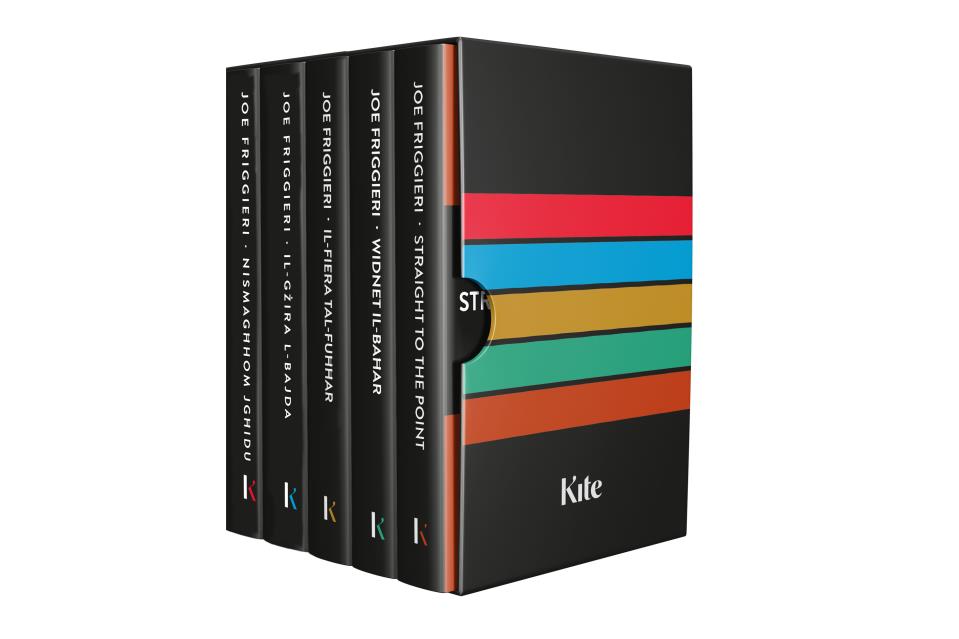
Though none of us can reverse the arrow of time or stop its flow, one can see the way it changes, speeding up, slowing down, and coming to a stand-still in the novels of Latin American 'magic realists' like Jorge Luis Borges and Gabriel Garcia Marquez, whose influence can be felt in my second collection of short stories, Ħrejjef għal Żmienna (Tales for Our Times). The stories were beautifully translated into English by Paul Xuereb, who described the tales as "drawing on the dream-world and waking reveries to suggest the ambiguity and often vaguely perceived reality of our lives." That kind of feeling became even more pronounced for many of us during the pandemic.
Closely associated with time is memory, the ability to store, retain and subsequently retrieve information. There is a sense in which it is true that only the present exists. The past is no more and the future has not happened yet. Still it is possible to relive the past in a way by 'playing it back', as it were, in the imagination. And that is what I found myself doing half-way through the pandemic, when Francesca Balzan asked me to record a podcast for Fondazzjoni Patrimonju Malti, which gave me the opportunity to recall specific persons, places and events from my past and reconstruct them in the present. So I spoke about Lija as I remember it, a quiet village known for its orange trees, the primary school I went to, the fireworks that painted the sky at festa time, and the games I played with my brothers and sister.
Like looking through a pair of old binoculars, it takes time for the mind to bring things into focus from the past. Still, by looking at the photos taken mostly by my wife Teresa over the years, I could recall the time we spent with our son David in Milan and Oxford, the plays I directed, my book launches, as well as the programmes I presented on radio and television.

Working from home during the pandemic meant that I could spend less time commuting to and from the University and dedicate more time to writing. Following on the publication of a selection of my philosophical essays, I translated eleven of Plato's most celebrated myths into Maltese, placing them in the context of the dialogues they come from.
Apart from being the first great philosopher in the history of Western philosophy, Plato was also a great story-teller, a master of narrative or dramatic fiction. Throughout my career as a writer and academic, I have always asked myself questions about the relation between Literature and Philosophy. Though readers and critics of my work have pointed out that I can't stop being a philosopher when I'm writing a short story or play, I do not necessarily set out to make a philosophical point in my output as a poet, short-story writer, or playwright.
In my literary works I deal with topics of common human interest, such as love or the lack of it, happiness, joy and sorrow, and the fragility of human relations. The language I use there is markedly different from the one normally associated with the philosophical analysis of such topics; but it can still contribute to that analysis by creating or imagining situations that are close to the experiences of real human beings. This is clearly true of novels and plays, but it is also true of poetry, which was always - and still is - my preferred form of creative writing."
This series is conceived and edited by Marie Benoît who contributes her own Diary occasionally. [email protected]