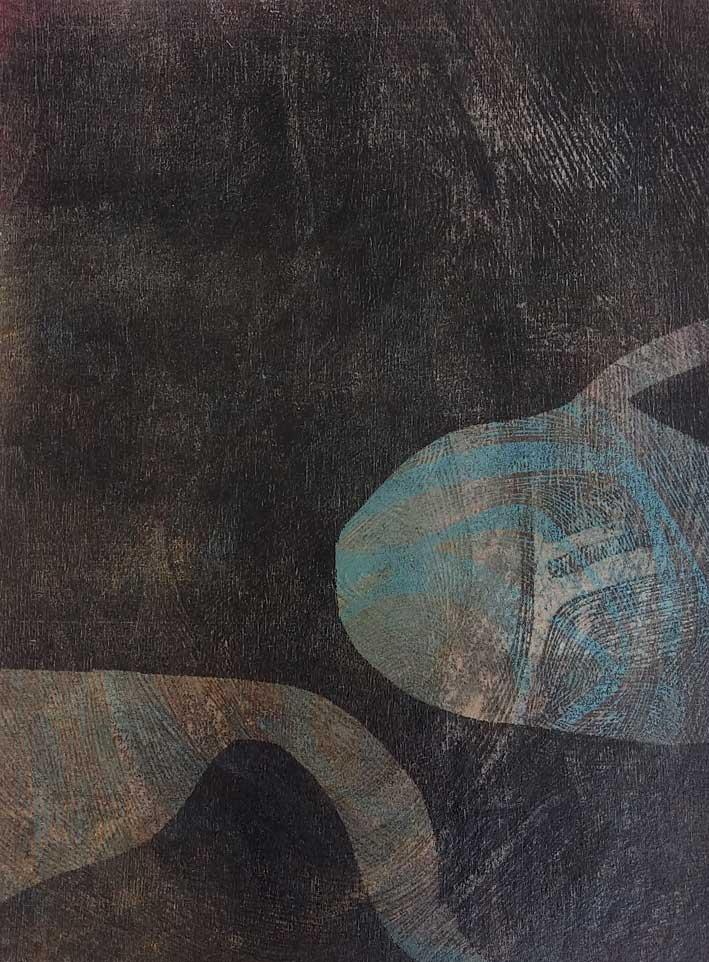
When Anabel Cordina finally announced she will have her first solo exhibition, it was great news. When she confirmed il-Kamra ta' Fuq as the space for her first solo exhibition, it was superb news (for me). She kept us waiting a year, but hey, the wait was seriously worth it.
For those of you who think that you have seen it all when it comes to woodcut printing, be prepared to be dazzled, because Anabel decided to play an intriguing and complex game of Noli (hide-and-seek).
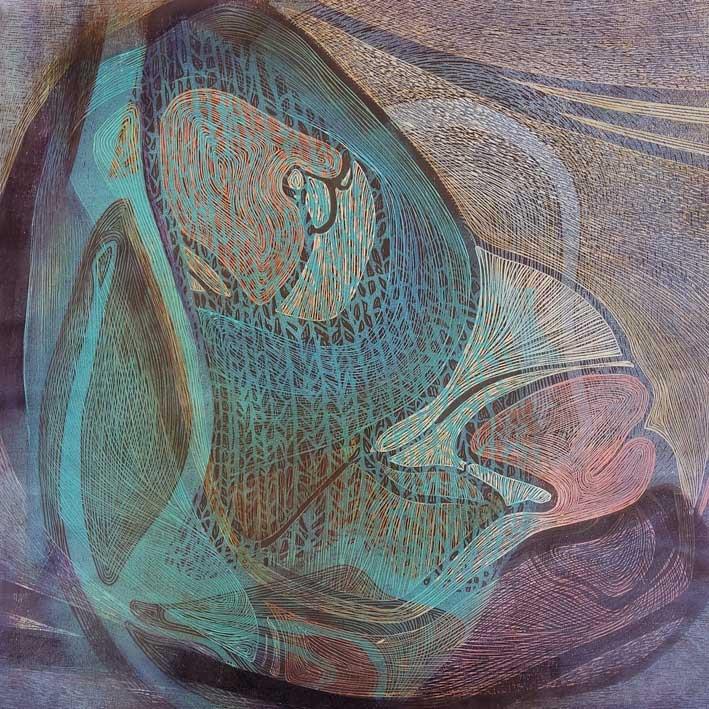
Bennen
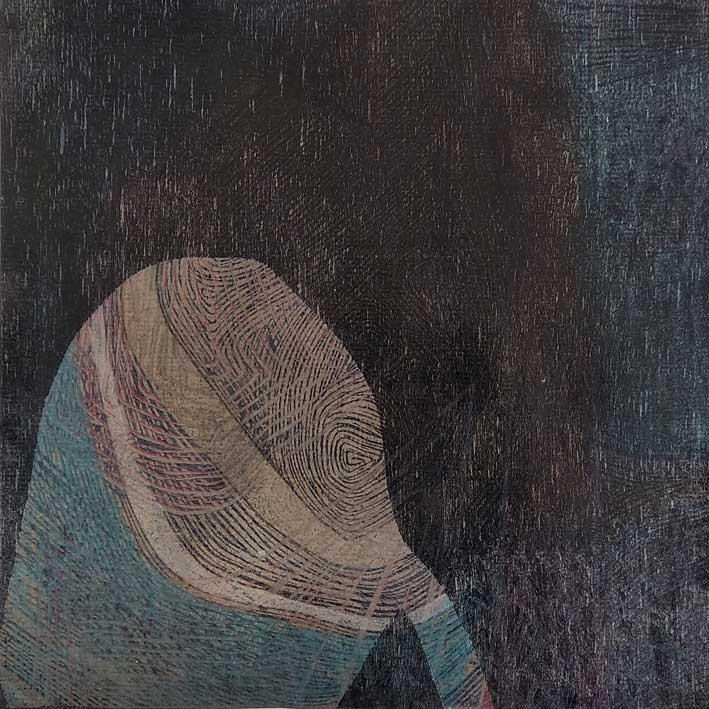
Kenn
Woodcut printing has a long history. The woodcut process involves drawing a design onto a piece of wood (called a matrice) and cutting the design using tools like knives and chisels. Printing ink is then spread onto the surface of the wood, paper is pressed on top and the image is transferred from the wood to the paper. This technique is normally associated with the printing of multiples (editions) of the same artwork. However, all the artworks forming part of the exhibition Noli are monoprints (unique pieces), as Cordina used multiple matrices in each artwork, creating complex compositions made up of multiple subtle layers and strata, where organic forms intertwine in a harmonious, almost glossy palette. Thanks to this notion of using multiple matrices and monoprinting techniques, each work can never be replicated. Employing this technique, the artist managed to hide and display snippets from various matrices, thus enticing us into this game of Noli. The matrices used for the series of works span over various years, some being over 10 years old. Snippets of various matrices have been applied to each artwork and hence one can consider each artwork as encapsulating, an abstract retrospective of the artist's artistic journey and woodcut calligraphy which developed and morphed along the years.
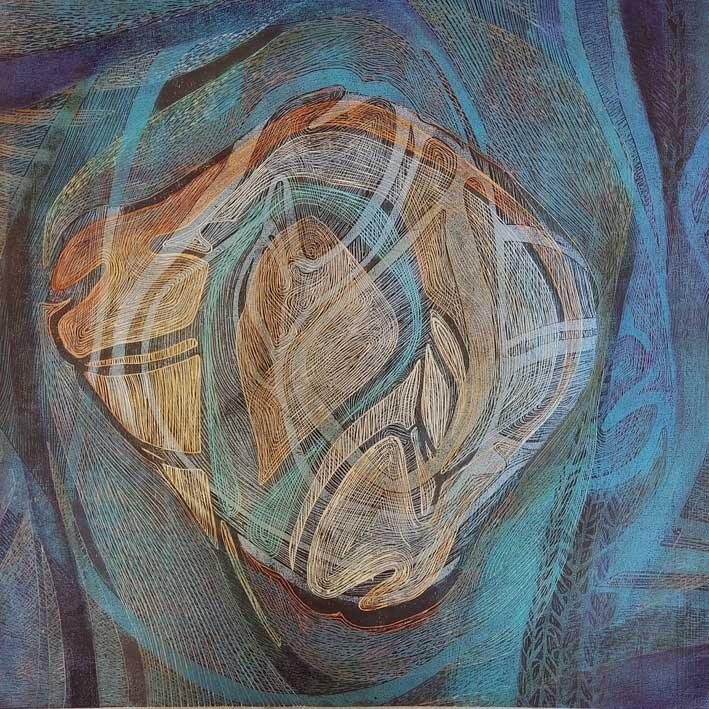
Labirint
All the exhibition artworks were created during the past two years - two years characterised by the Covid-19 pandemic and the Ukraine war in the last few months. The concept of hide-and-seek was being experienced every day during the pandemic with everyone hiding behind masks and sheltering in our homes. Some of the artworks, like Immrammti and Kenn were created around the beginning of the Ukraine war. The title for Immrammti comes from Malta's oldest known poem by Pietru Caxaro, Cantilena, where the word is describing a home and aspirations - the home that so many people who are living in a war environment are sheltering themselves in or escaping from. The Maltese titles chosen by the artist for these works are commonly related to the game of hide-and-seek, like Inkiss, Baxx baxx, Tinbixa, Sejba, Moħba and rather than being merely descriptive are meant to invite us to search and create a personal narrative.
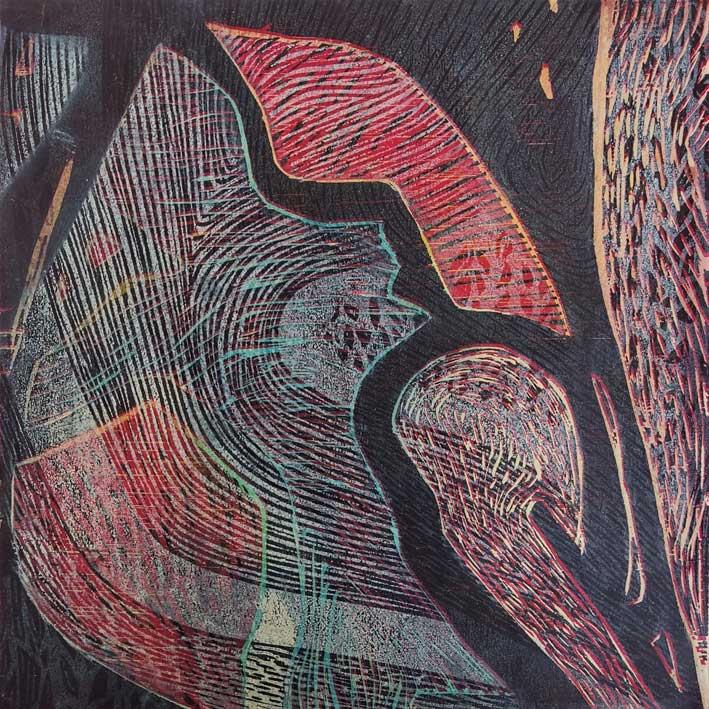
Mohba
What makes up the compositions of all these works are organic structures mainly inspired by botany and in particular seed pods. Seed pods are the receptacles of seeds which are eventually hidden under the soil waiting to be able to generate life later on. In the artwork titled Nistaħba, nittawwal, niddawwal, one can discern two stylized figures immersed and intertwined in a maze of lines within other organic forms and a kaleidoscope of colours.
Works created during the artist's pregnancy and soon after, show what can be deemed to be a womb, protecting and hiding precious life, whereas the other titled Bennen may represent abstract hints of arms protecting "something" hidden.
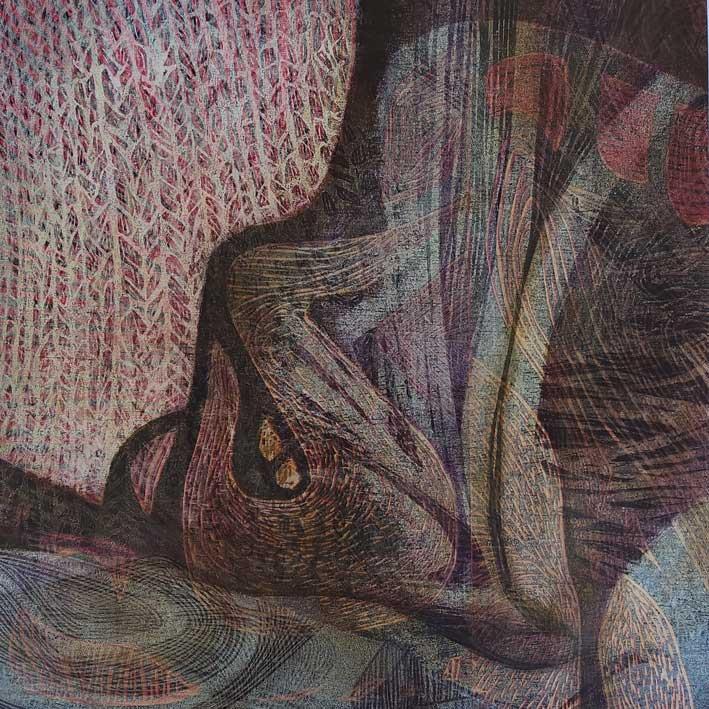
Nistahba, nittawwal, niddawwa
Cordina is a visiting lecturer at the Department of Visual Arts, Faculty for the Built Environment at the University of Malta and has exhibited in numerous collective exhibitions both locally and internationally. Drawing inspiration from organic structures, Cordina works predominantly in the printmaking medium, exploring the woodcut's graphical nature as well as its chromatic dialogues.
The exhibition is curated by Melanie Erixon for Art Sweven.
Noli is being held at il-Kamra ta' Fuq in Mqabba until 13 June.
Opening hours are Monday to Saturday from 6am to noon and Sunday from 7am to noon. Evening slots are announced weekly on FB: il-Kamra ta' Fuq