The magic of the megalithic temples of Ġgantija, declared of universal interest by Unesco, has made vibrate the artists and personalities who attended the new edition of Ambit that the creator Cristobal Gabarron (1945, Mula, Murcia. Spain) has displayed in the Maltese island of Gozo, in the middle of the Mediterranean.
The Archaeological Park of Ġgantija on the periphery of the town of Xagħra has become a space for experimentation and reflection on the safeguarding, preservation, revitalisation and enhancement of heritage, shedding light on the creative link between culture, art and innovation with heritage as a dynamic and cohesive force that unites them all.
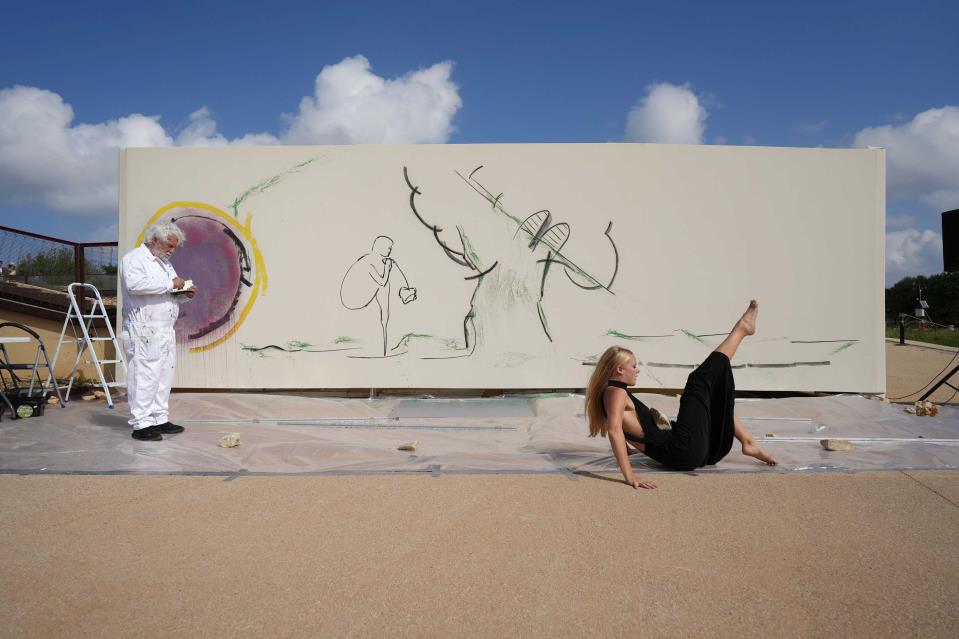
The artistic encounter was held between 11am and 2.30pm in front of the main wall of the impressive megalithic complex of Ġgantija, which was erected in three stages over several hundred years (c.3600-3200BC) by the community of farmers and shepherds who inhabited the small island of Gozo. The rituals of life and the cycles of the seasons seem to have been practised within these enclosures, while the sophisticated architectural achievements reveal that something truly exceptional was taking place on the Maltese islands more than 5,000 years ago.
There, under the bright Mediterranean sun, Gabarrón has brought together nine artists, mostly Maltese, and exponents of different artistic disciplines, with the aim of highlighting the importance of historical-artistic heritage, which more than ever needs the attention of our society and which is fundamental to understand where we come from and where we are going.
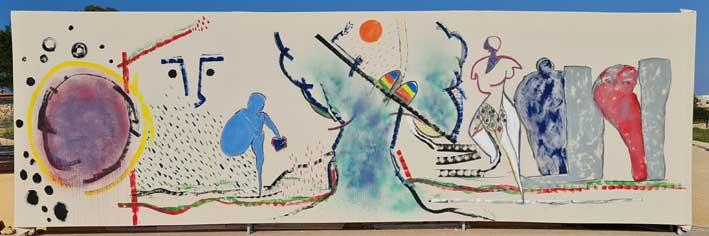
The work has been baptised with the name Landscapes. Traces and times. "Landscapes, for the multiple scenarios that can be seen from this special geographical point. Traces, those left by man, in this case for more than 5,000 years. Times, for the respect of time, first that of Mother Nature, then that of the people who erected these marvellous constructions, and now ours, the contemporary one that we enjoy and with which we compare ourselves. Everything has worked well, the artists have interacted, I discover new landscapes and I realize that I need time, a lot of time, my mind needs time to process, to think and keep a very open mind," said Gabarron at the end of his work.
The artistic encounter, organised by Heritage Malta, Spazju Kreattiv and the Gabarron Foundation, started with a few words from Russell Muscat, International Relations manager at Heritage Malta, the main public entity responsible for national heritage in Malta. "Ġgantija holds a special place in the collective memory of many people and has different meanings for all those who in one way or another passed through or came in contact with this space. It is an architectural jewel and a testament to sophistication, especially considering that it was built more than 5,000 years ago. The material evidence found at this site and in adjacent areas is a testament to the inhabitants and their practices. The more we study and research these people, the more we understand how close they were to our contemporary daily life. The need to represent the different members of the community and their animals."
Gabarron then began to sketch his first strokes in greens, at the same time that the poet and writer Francesco Grech read an unpublished poem, composed as of today, with all the meaning he needed to communicate to the rest of the artists and attendees, one part in Maltese and one part in English, which spoke of the beauty of these landscapes, at the same time of his need to know what happened in Ġgantija, what these ancestors of his wanted to transmit to us, but above all, he moved on to an essay on the responsibility of the current generations, on what we are going to leave to our generation and to those to come, talking about that important and enigmatic trace.
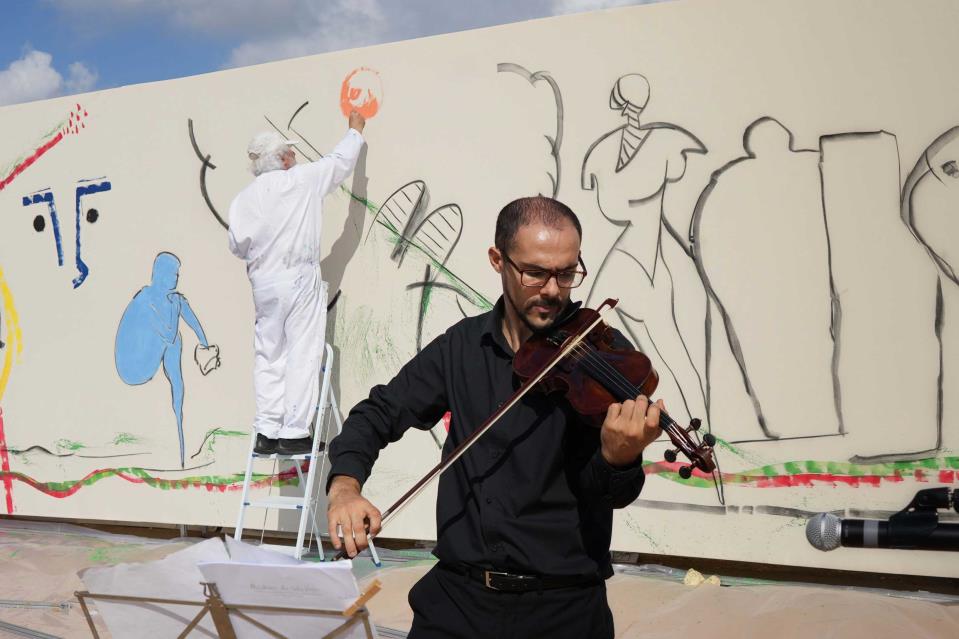
The improvised music of the electronic creator Charlon Calleja, who dialogued harmoniously with the monument and with Gabarron who continued to capture on that canvas of 3m x 9m the architectural plan of the temples, until the violinist Pierre Louis Attard from the Gozo Visual and Performing Arts School, presented his sophisticated and beautiful contemporary discourse.
A great surprise for the audience was when suddenly, the avant-garde dance of Julia Lundberg conquered the spaces of the canvas, proposing a proposal, through five stones that she moved, wrapped with her body and carried from one end to the other of the stage integrated into the landscape of the archaeological park.
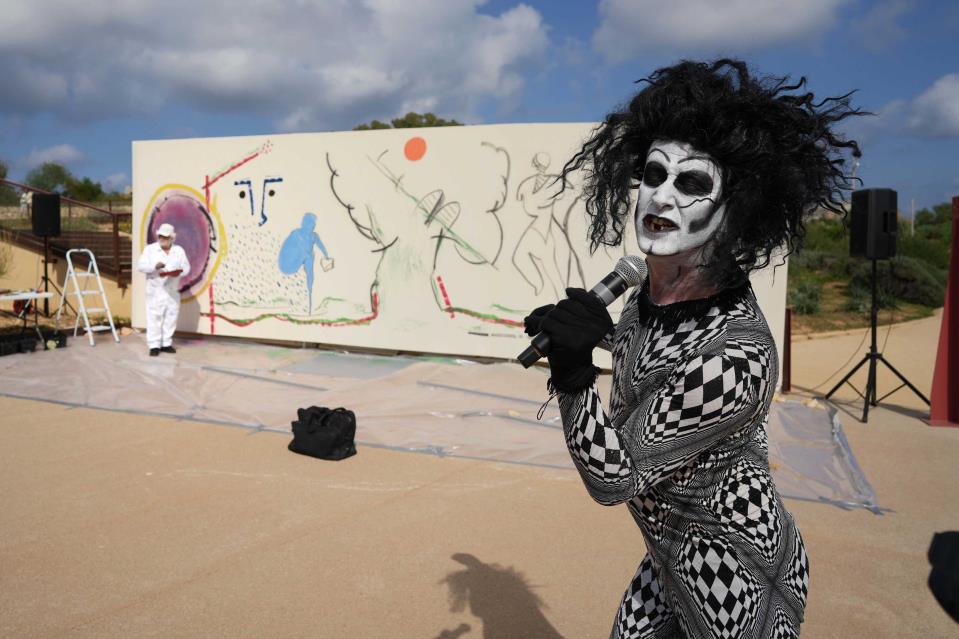
Jonathan Orchard, dressed as a harlequin and made up as an ancestral character, sang, danced and masterfully expressed "his fears about the lightness of a part of our society, which did not know where it was going to take us", commented the writer Albert Marshall of the Arts Council Malta.
Maribel Bajada's contemporary dance depicted magical beings such as fairies and deities who were the protagonists of ceremonies performed for thousands of years in Ġgantija. All this was captured by the cameras of Lithuanian Karolis Vitonis and Spaniard Jordi Serqueda.
This fifth edition of Ámbito, held in the city of Xagħra was curated by Rupert Cefai, chairman of Fondazzjoni Kreattività, who expressed his satisfaction and joy "for the powerful momentum that took place, for the dialogue between all the participating artists and for the pure and free creation in a natural setting of enormous historical and artistic richness".