Reviewing Charles Xuereb's Decolonising the Maltese Mind isn't easy. For at least three reasons.
First. Dr Xuereb's vision is imbued with the French intellectual tradition, and in the Maltese context this is (unconsciously) understood as taking a stand in what should be a closed chapter but was instead kept in a state of historical cryopreservation by the British. But if one puts this prejudice aside, it becomes evident that this book's thesis is decidedly anti-colonial. Had things in 1802 gone differently, the author suggests, there would be no colonial past to contend with, as the Maltese would have established self-government much earlier, and consequently would now be facing less reluctance and disinclination to "graduate" as a modern European nation-state.
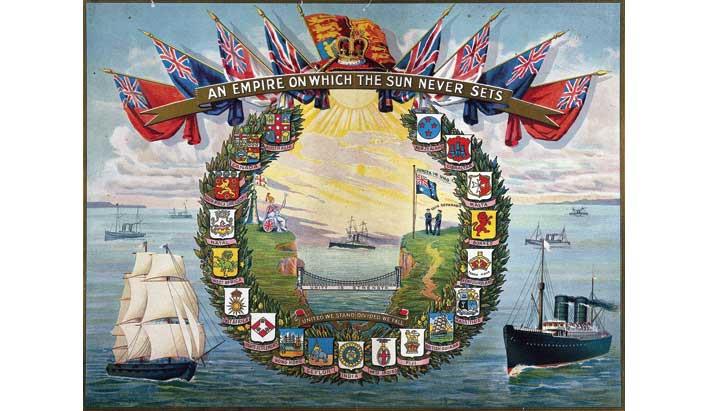
One might agree or disagree, but that's hardly the point. The point is that the book's underlying structure isn't dictated by some France versus Britain agenda. It's actually structured on the author's obviously substantial reading and understanding of French political theory and philosophy of history. This is where this book can get tricky for the Maltese mind - conditioned as this mind is by British colonial narratives. However, Dr Xuereb's approach is undoubtedly correct, not because of any partisanship in the old Anglo-French rivalry that outlived its colonial usefulness, but because it's based on sound theoretical foundations - that happen to be mostly French. And contemporary France is a modern European nation-state, whereas contemporary UK is - uniquely - a post-modern, post-imperial medieval state struggling with its European vocation (Brexit and all that) and not a single nation, but a sui generis union of four (possibly five) nations.
Second. British imperialism sincerely wanted all the peoples of the Empire to embrace Britishness: Indians, Kenyans, Nigerians, Maltese... But it equally wanted all the peoples of the British Isles to embrace Britishness, rendering "Britishness" problematic also for the English themselves, or at least for those among them who don't belong to the "imperial elite". These - the "imperial elite" - are the real target of Dr Xuereb's book... the same elite who "colonised" first the British Isles and then, thanks to the English navy, a quarter of the world.
Third. Dr Xuereb's book seeks to achieve two goals at once. One, to remind us that the sun has actually set on the British Empire (Hong Kong was the last act); two, to discuss nationalism.
Now this is a high-risk subject, particularly when analysing a tiny nation like ours. And obnoxious onlookers might even sneer at and ridicule efforts at analysing it. We're not like the Latvians, say, who upon gaining independence from what had been the Soviet-Russian Empire made it a point to reverse the process of russification they had been subjected to for two centuries. Latvia even recognised - politically, bureaucratically, and culturally - the distinct nationality of less than 200 of its citizens who belong to the minuscule Livonian nation.
Dr Xuereb's nationalism is clearly not ethnic - it's not of the "blood and soil" type. The nationalism that oozes out of Dr Xuereb's book is civic nationalism - one that grows out of belonging to a democratic state where everyone partakes of the same rights.
The irony is that British imperialism aspired to instil that kind of civic nationalism in all the peoples of the Empire. But it was British civic nationalism, and it was expressed in official symbols of Britishness - the official symbols abounding in Malta that Dr Xuereb complains about (and rightly so) in his book.
His basic argument is that it's high time we replaced British civic nationalism with Maltese civic nationalism.
Dr Xuereb's logic is unassailable. Malta is an independent country, a sovereign Member State of the European Union. Why shouldn't Malta - like other EU Member States - have its own national civic nationalism? With its own (Maltese) official symbols occupying the public space?
He articulates his argument through a complex and difficult procedure. He analyses the Maltese as any normal European would analyse their own country - an approach which isn't typical for the Maltese. Consider those Maltese history-writers who compare Malta to other countries, for instance by saying, "Just like in this or that town in Country X you had this or that phenomenon, so it was in Malta". Which is history-writing not for the Maltese themselves but for foreigners. Dr Xuereb himself isn't completely alien to this approach, as he still feels the need to describe, for instance, certain Maltese traditional food, as if his Maltese readers don't already know it. It seems to me that his analysis of Malta through "Maltese European" (as opposed to "Maltese colonial") eyes is more intuitive than consciously philosophical. This notwithstanding, his intuition - that Maltese history has to be for the Maltese themselves - shines through in his book, and in it lies the book's powerful message.
It's an unambiguous invitation to accept that we live on islands that belong to us. Not in the free-for-all sense (as a matter of fact, I'm not saying, "It belongs to all of us".) Rather, in a more literal and mature sense. Malta - as a polity - belongs to us. Next year, we'll be celebrating the 60th anniversary of our independence. It's high time we embrace the fact that the country belongs to us. That we have a duty toward ourselves and future generations to cherish our traditions (including our language) and our past, to nurture and foster them, as we feel our way in the contemporary world.
Dr Xuereb is arguing that as a nation we should respect our homeland (the land and the home) and to expect that the political expression of it (the State) respects and values us.
He sees the reification of this abstract thought in monuments and other official symbols that no longer celebrate our homeland's foreign owners of the past, but ourselves - the true owners of our homeland, and the true owners of ourselves. He's prodding us to take our rightful place among the family of independent, sovereign nations. We might be small, militarily insignificant and politically just featherweights, but we're a nation-state. No longer a colony.
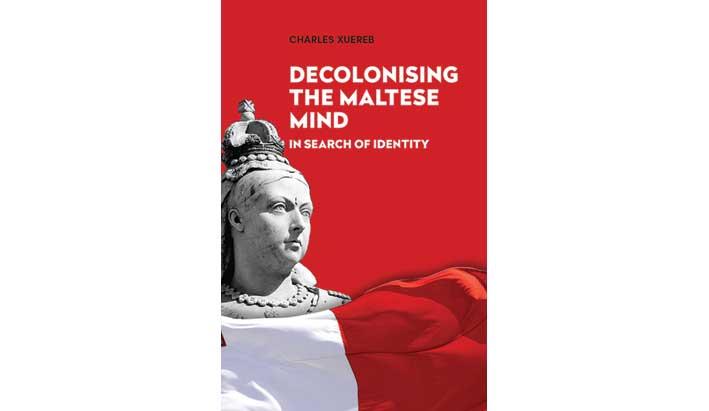
The book is aptly called Decolonising the Maltese Mind. It's an important goal - but an abstract one. This is why it's difficult not just to review this book, but also to convey its core message. My only hope is that we collectively recognise that abstract wealth and health are as important as their concrete counterparts.
Needless to say, the individualistically-minded might see all of this as airy-fairy. Thing is, it is airy-fairy, but it's the kind of airy-fairy stuff shared by all developed European nations.