"This book tells so much of what has not been available in so many descriptions of life in Malta in the past. It was not written for the public as can be deduced from its sincerity. It records true incidents and happenings for Jerome de Piro's children and grandchildren, and now thankfully it is put together and preserved from diaries and memoranda of the past. The book offers many previously unrecorded glimpses and personal reminiscences, as well as sincerely intimate records of incidences, often entertaining and indeed mostly interesting and previously unavailable. Here we have some of Malta's lesser known tales now brought out of the islands' past to be preserved thankfully for posterity."
Thus runs the blurb of this book.
In Malta Stories... Baron De Piro endears himself to his readers with glimpses of his life and the diverse personalities, great and small, who crossed his path. He describes a civilised way of life and there is a star studded cast throughout the book. He must have been a darling of a
man.
Here are a few excerpts from the book which are bound to entice you to pick up a copy and read it from cover to cover.
* * *
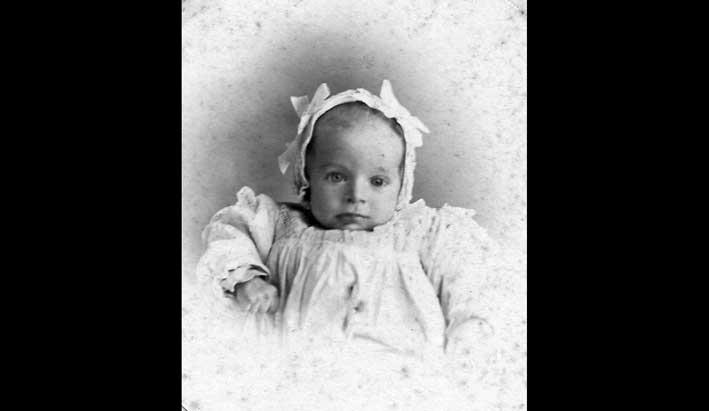
"I was born on a Sunday afternoon. It was the 12th of July 1914. My arrival at my parents' house in the village of Attard must have been very welcome for, upon me, as I would later be told, the establishment of three entailed estates depended, clearly putting my family in a better financial position. Attending my mother was a much respected doctor who was also a family friend whom I can just remember. His name was Edgar Henry Ferro. In most cases the family ritual was pulse and gold-pocket watch, thermometer and an ocular examination of the tongue. Whatever the diagnosis the remedy for malaise almost invariably was bed and starvation. On this occasion Dr Ferro was at our home for an event.
A small crowd gathered in the quiet street outside the house in Attard chatting and awaiting the news. My father's sister and inseparable friend Theresa, who was married to my mother's brother Marquis Apap Bologna was in attendance, and it was she who broke the news to those waiting inside and outside our house that mother was well and, "It's a boy!"
I was cast into a family that was, at that time not particularly well off. Yes, there were expectations from my father's unmarried uncle Giuseppinu the 6th Baron of Budach. Even in those days the very rich families were well known and included the Apaps of Villa Rosa, the Francias, the Cassar Torreggianis, the Chapelles and of course the 'Cisk' family the Sciclunas. This however was still a time when aristocracy meant privilege and authority and this in our case was hardly lacking. I do not want to give the impression that we were not comfortably off or that we lacked anything, but we were certainly not in business. Money and its liquidity and disposability were never very free. Houses and indeed near palaces were not lacking and these were mostly chock-full of paraphernalia and objects d'art of varying quality. Lands, territories and estates were strewn all over the island and indeed Gozo spread out with lands belonging either to my mother's or my father's family.
We lived in four houses which we occupied according to the season. Valletta was the winter residence. Attard was the spring residence at first at Birzebbuga and later at St Paul's Bay was where we spent the hot summer months with great liberties as I always heard them say -"stiff collars and cuffs can be dispensed with." There were even certain times of the day when one could go out without a jacket. I never remember my father at table in his shirt sleeves, no matter the tropical heat in July and August.
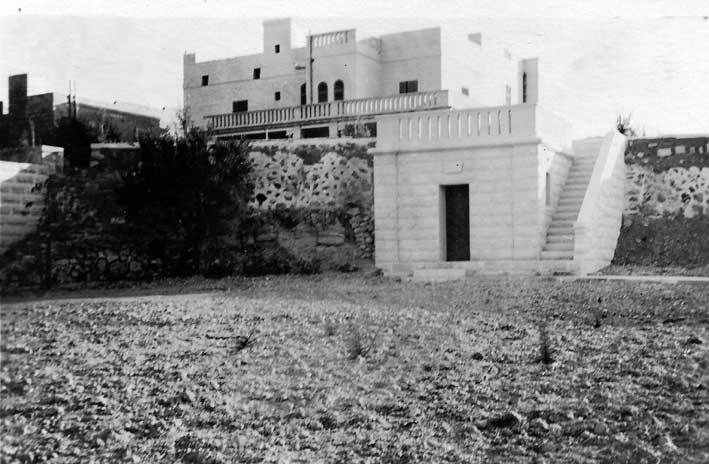
Florence was the autumn house, and here one was supposed to charge up again that exhilaration which was spent in those exhausting hours of heat and Sirocco, especially at night when this was accompanied by some very determined and tormenting mosquitoes. It must be remembered that there was no way of getting rid of them, excepting by the strategic and lightning approach of a lit tallow candle which burnt the unfortunate insect. All this was not exactly inducive of sleep, and when one burnt perhaps twenty or thirty of these, the odd one would commence its dive bombing once more.
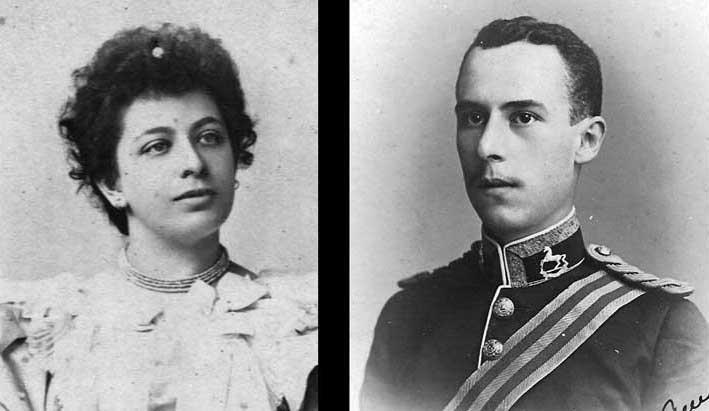
My paternal side of the family were the Barons of Budach whose full surname was de Piro d'Amico Inguanez, whose ancestors were, ever since the Great Siege of 1565, interlaced with many of the historic events of the island.
My mother's side with the names of Apap and Sceberras Bologna were the Counts della Catena and Marquises of Gnien-is-Sultan. The family trees stretch far into the past and into medieval times to remind us that we were the poor co-lateral side of both Spanish and Sicilian ranking gentry. This image of my family was very rarely discussed and, as a boy I was always given the impression of my being a normal person who had to mind his Ps and Qs.
* * *

"I started to take notice of life outside our family circle when I was quite young. I was regularly, most mornings taken to the railway station at Attard. I mention this as Malta boasted a railway which ran on an odd seven mile stretch between Valletta and Rabat, smoked itself and everyone on it under a tunnel for those who resided in Notabile, which was the terminus station in the valley between Notabile and Mtarfa. These stations vied with each other in growing trees and flowers, and indeed could be listed among the most attractive of gardens in Malta. I was carried to the local station every morning by a domestic servant who was the daughter of a family from Attard known by the nickname Ta'Kejlazz. Her name was Ċenza. She was a good-looking and healthy country woman in her middle twenties with no superfluous fripperies to qualify her as a nanny, but endowed with all those motherly instincts of goodness and care and love with a sincerity that transcended every other consideration. Sharp basic instincts concerning infancy endowed her as a treasure of care and protection.
I loved Ċenza with an intimacy which was only comparable to her concern for me, and when she was not present physically life was only bearable because I knew I would be back in her arms with mine round her neck and so my cup could be filled to capacity. Many years later she would be present at my wedding, making that dizzy day truly complete.
It must have taken me just over a thousand days to notice my existence, for from this tender age I can only recollect a handful of incidents. I remember sitting on a green garden bench and Ċenza making a sign with her hand bringing three fingers into perspective and telling me that that was what I was. I must have been three years old and the year was 1917. I remember the excitement of seeing an enormous living monster breathing and puffing steam and smoke with a rattle that shook the earth we stood on, as well as the bench which Ċenza pinned me to during this performance. I was given to understand that the monster was friendly because of his festive whistle to announce a happy arrival. I just lived for these moments, and the repetition of that clang and rhythmic rattle. Should I be ashamed to say that I have hardly grown out of it today?
I was always tucked into bed by six o'clock, and refusing to sleep without Ċenza's stories of saints, angels or a venture into the world of Bertoldu, it-tifel tal-Margolfa. I became aware of a great deal of commotion in the house one evening as mother was very present and running up and down all over the place arranging bedrooms, placing flowers and making everything look pleasant for an imminent welcome. As time progressed, I was neither directed to bed nor told any stories as everyone was busy. Then finally it was explained to me that not only Mona who was at school with the Dorothean nuns was my sister, but that I also had two elder sisters.
My father was not there; in fact I do not think that I remember him before this event. I was bathed, combed and dressed like a little Lord Fauntleroy and told to behave and not get dirty and that I could stay up with my mother and Ċenza to meet my two sisters for the very first time. They were coming from very, very far away. "How far? I asked. "Very, very far," came the answer.
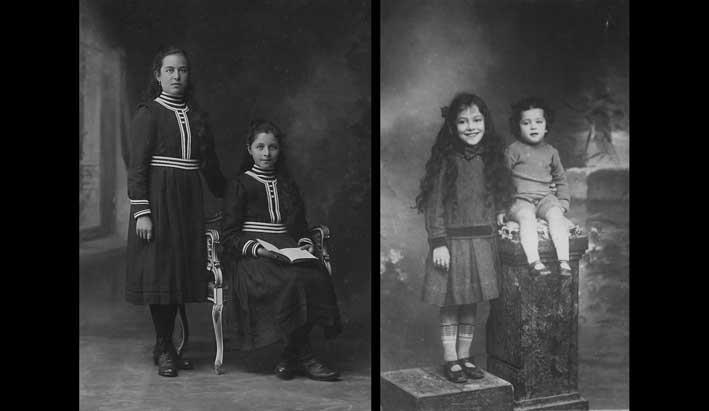
I must have dozed off, but I do remember being woken up by knocking on the front door and then hearing the snorting of a horse and the cab driver shouting "Oqgħod hemm!" My father then entered the house with two girls aged ten and twelve years older than me: they were my elder sisters Marie and Cecilia whom I was meeting for the first time.
This introductory episode was of some significance for I can safely say that it was the prelude to starting to know and learn about who I was, where I was, and what I was. My eyes really opened to a world of existing things and would slowly tell me about institutions of which I formed part. With a whole decade between me and my elder sisters I looked upon them as seniors in size. I took to my new-found sisters at once and we seemed to get on without difficulty. I liked their shape, their faces and their mannerisms. They in their turn must have been thoroughly amused by me as one who is naturally attracted to a pet.
I did look upon my father with awe and wonder. I sometimes ventured, with the greatest care and precaution to peep into his wardrobe and admire his clothes with mystery and fright. His boots invariably suggested a mythical and forbidding sight which invariably concluded the bedroom expedition in fright and fear, as these unfriendly objects froze my backbone, and there emanated from my throat a scream, and cry to put the whole household in a state of panic. Ċenza's lift from that insecure floor and her reassuring arms soon brought peace and security back again.
* * *
Most copies of this book have been sold. About 10 copies are available in hardbound which can only be bought from the publisher Delicon Books Facebook page at Euros 40. Paperback copies can be bought from BDL Books, San Gwann, bdlbooks.com at Euros 30 and Delicon Books.