Around two months ago or so, I received a message from Stephen Saliba, telling me that he got hold of this large space for some weeks and that he is working on these quite large artworks. He invited me to go have a look and to have a chat about these works. Of course, I was immediately very curious though it still took me a while to find the time to go, but oh if it was worth the while!
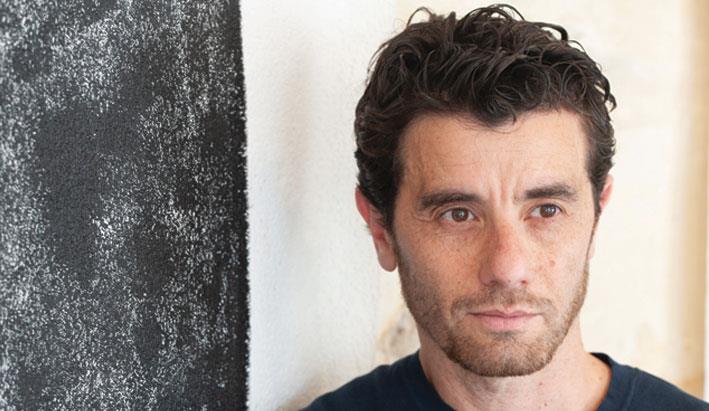
The space is fantastic and it is perfect for an art gallery - a real pity that it is not. The artworks fit in it immaculately, and of course, they do, since they were practically made to measure for the place, as Saliba took the space to use it as a workshop. But the feeling was not that of entering a messy workshop, but that of stepping into an exhibition space (including a 'bar' for the wine!). After discussing some of the works, I pointed out that everything is basically ready for an exhibition and that there should be an exhibition. Stephen insisted that he had not thought about it as such, as he was aiming only at peacefully creating these large works. Five minutes later, we were both sitting excitedly on the Exhibition-Train, and here we are.
But let's rewind back to how I got to know Stephen Saliba. I met his works for the first time around a year ago at a collective exhibition at Art by the Seaside in Senglea. I was immediately struck by one of his pieces. Instagram immediately brought us together. In no time, he was part of a collective exhibition that I was curating, at BOCO Boutique Hotel in Cospicua. Funny how it actually happened. I had just decided that the theme for the collective was going to be A Midsummer's Red Dream and the first thing I see when I open my eyes the following morning (and yes I check Instagram for my morning art dose before my coffee dose), is a photo of a red huge fly, posted by Stephen, which of course made me contact him immediately to be part of the collective. Later on last year, he was one of the invited artists to take part in another collective exhibition that I was curating, at San Anton Palace, in aid of the Malta Community Chest Fund, titled But I see Beauty.
I find it terribly irritating how such a strong artist keeps on holding back and how he needs a push and a kick to believe more in himself. He is incredibly versatile, in painting, sculpture and in various media, very experimental and bold, and definitely doesn't look for the commercial aspect of art. The freedom in his art is so strong, that it is almost intimidating. Maybe this comes from the fact that his background is not specifically art, so there is that certain lack of restraint and more freedom of expression and experimentation.
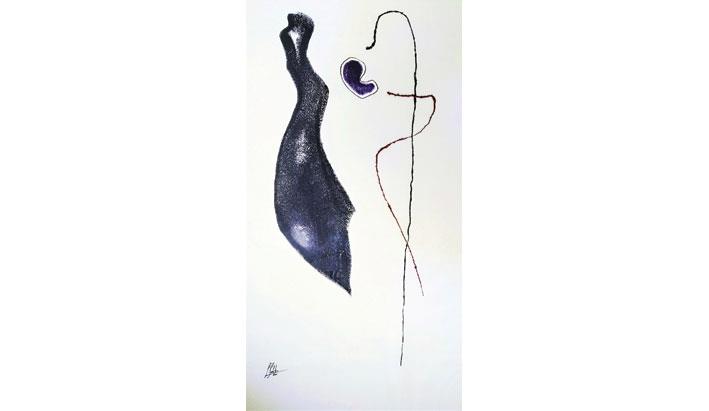
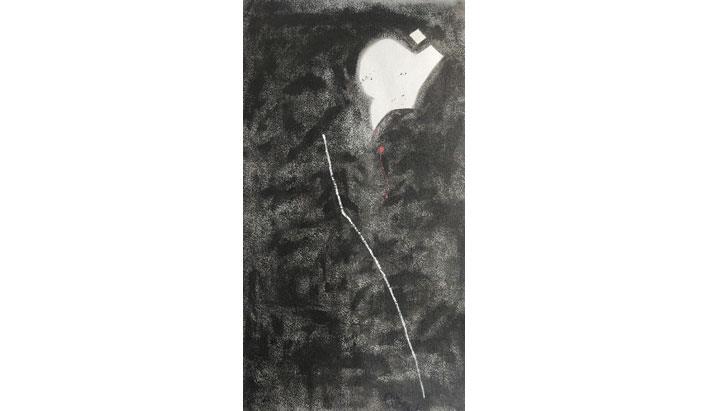
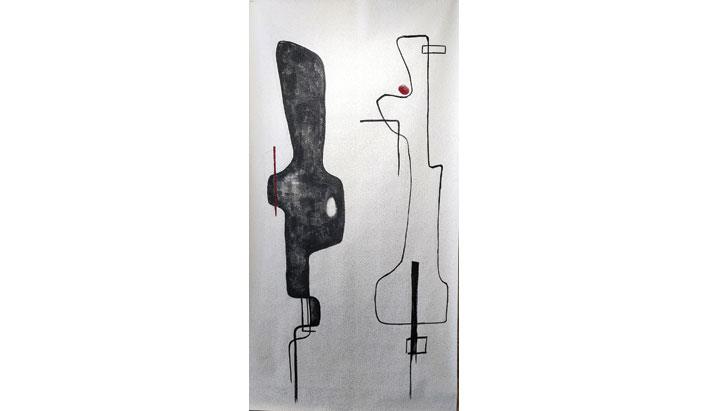
I had the pleasure to visit his studio/gallery last year, and I remember seeing two works from this series of works. I recall myself staring and not even knowing how to react. They were just so different and unexpected.
This time round I decided to do a little Q&A with the artist, to get more of a general feel of this body of works, so complex in its simplicity.
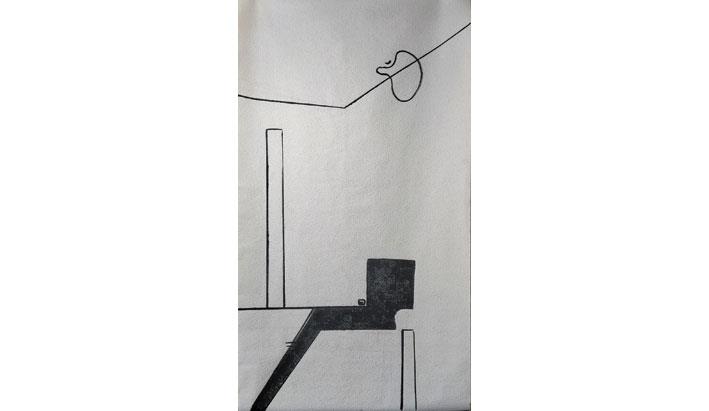
As you can see from the images surrounding this text, the artworks are incredibly minimalistic and abstract and so my first question is, how does the process of thought start for these works?
SS: The process starts with sketching freely without having too much thought or consciousness. It's either a relaxing state or an expressive/emotional moment of pure impulse or expression. It's therapy for the mind and soul without expecting anything fruitful. It's freedom without having any obligation to produce anything special. Following this, the sketches will need to be sifted through, and the potential ones chosen for further development. Some elements will be elaborated further while others simplified or even totally removed.
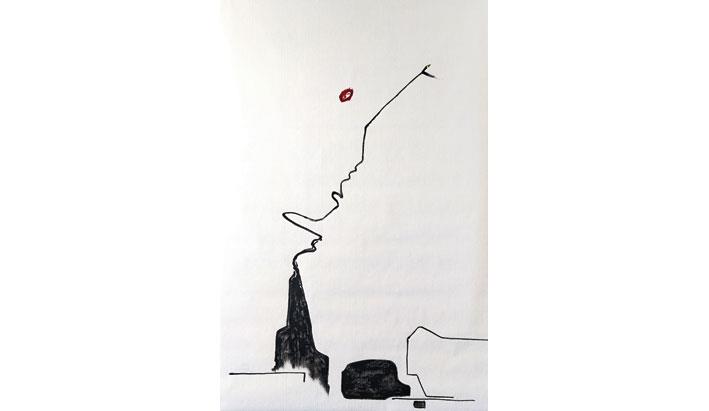
Next question, how to deconstruct these works and sketches into minimalistic lines and shapes?
SS: Deconstruction is usually based on choosing the right forms that contribute positively to the final composition. The elements chosen to make up the final work need to have enough interest intrinsically without attracting too much attention. The success of the painting is the combination of simple shapes rather than the individual shapes themselves. Using few colours and leaving lots of void in between also helps in retaining the minimalist effect.
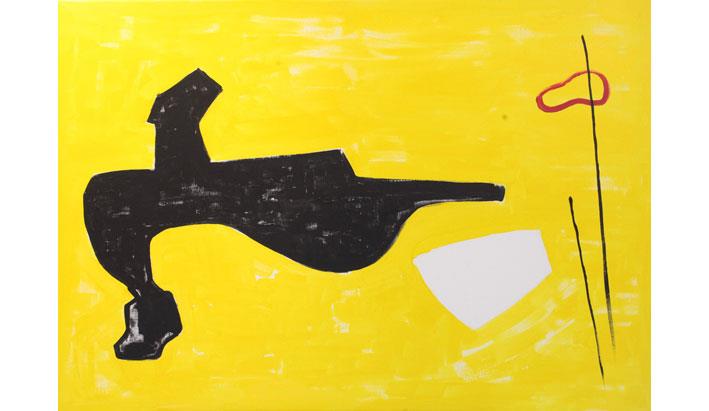
And a question that permeates many artists, is how to know when to stop (especially when the final compositions are so minimal and abstract?
SS: It's not easy to decide when it is enough - and it's a common risk that can compromise and ruin the whole painting. The technique does not leave much margin for error since the texture and the pristine whiteness of the underneath material are retained and not covered. The paintings need a lot of reflection afterward to ensure that everything is balanced and that every element has a contributing value to the final result.
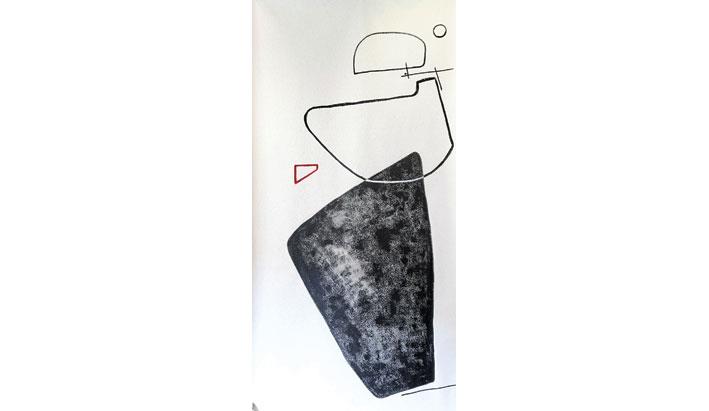
How come the inspiration from Miro and (one could say Pasmore)
SS: Miro was first introduced to me by my art mentor Maestro Pawlu Grech, at a young age. Only when I saw them in real life however did they strike a powerful chord inside me.
Their simplicity, and childlike forms had an instant impact and they resonated with my character - jovial, unassuming yet impulsive and direct. When I then saw the works by Pasmore I somehow saw a similar approach. This is combined with the concept of Zen art which is known for its elegant simplicity, embodied in the many paintings that consist of black ink on white paper or silk using a few brushstrokes. All these feed into my work to different extents and are amalgamated with my mood of the moment. The works are the result of inspiration combined with passion and the impulsivity and instinctive creation of the moment.
The artist urges that there is nothing to explain in each of these works and that the impact should be instantaneous. It either strikes you or not - there should be nothing in between. Also to note is that these works are a continuation of a series of paintings that Saliba had exhibited in Brussels some years ago.
Stephen Saliba was mentored by Mro Pawlu Grech and trained in clay and Raku firings under the tutelage of ceramist George Muscat. Stephen is also known for a number of environmental installations venturing outside the confines of art galleries with installations and sculptures placed in scenic surroundings, meant to draw attention to environmental issues. His most notable one is The Passage of Time.
The exhibition is on from the 13th till the 26th of May, and is held at 119, Valley Road, Msida. For opening hours and updates, follow on Facebook: FREEDOM IN SIMPLICITY