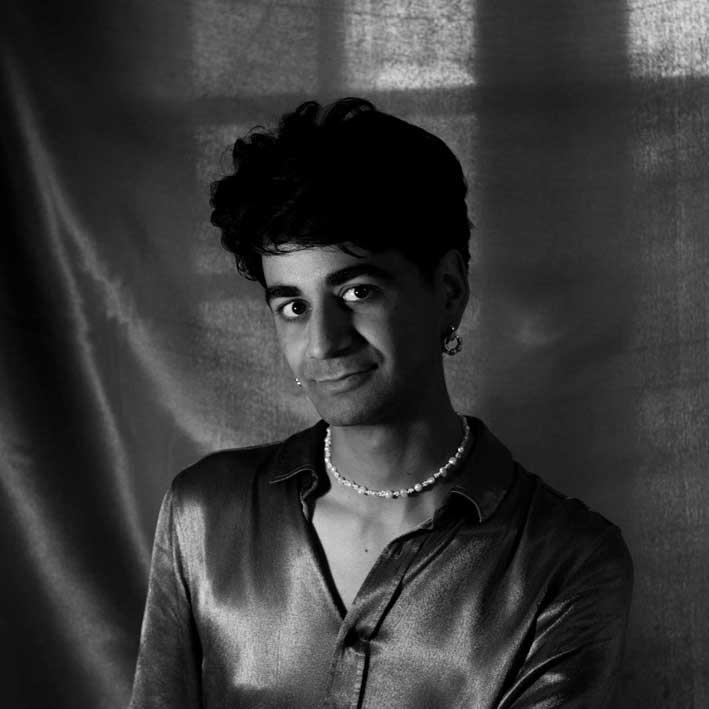
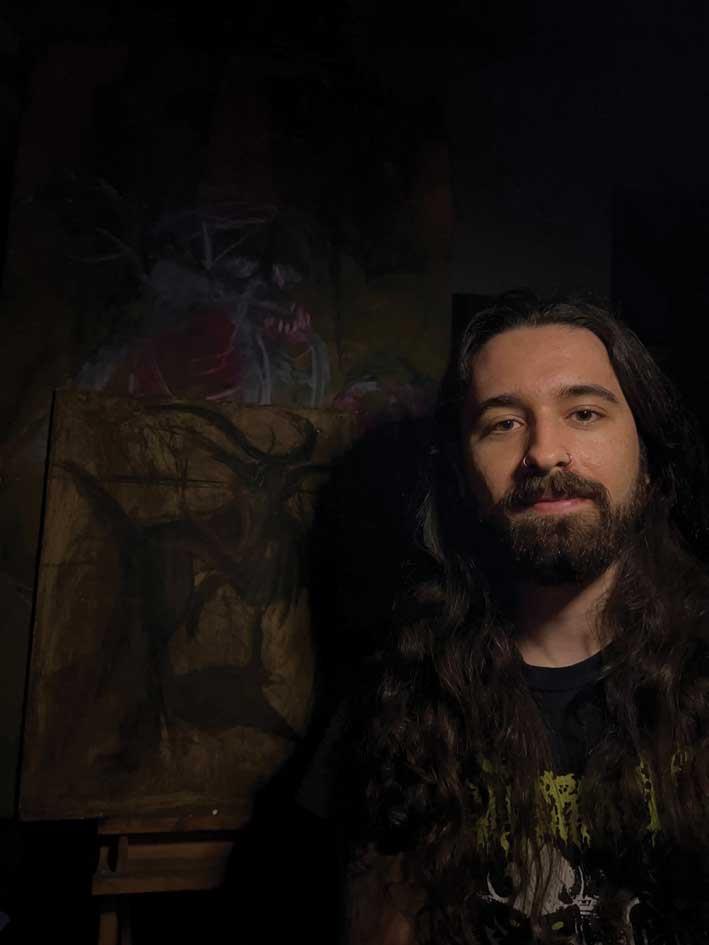
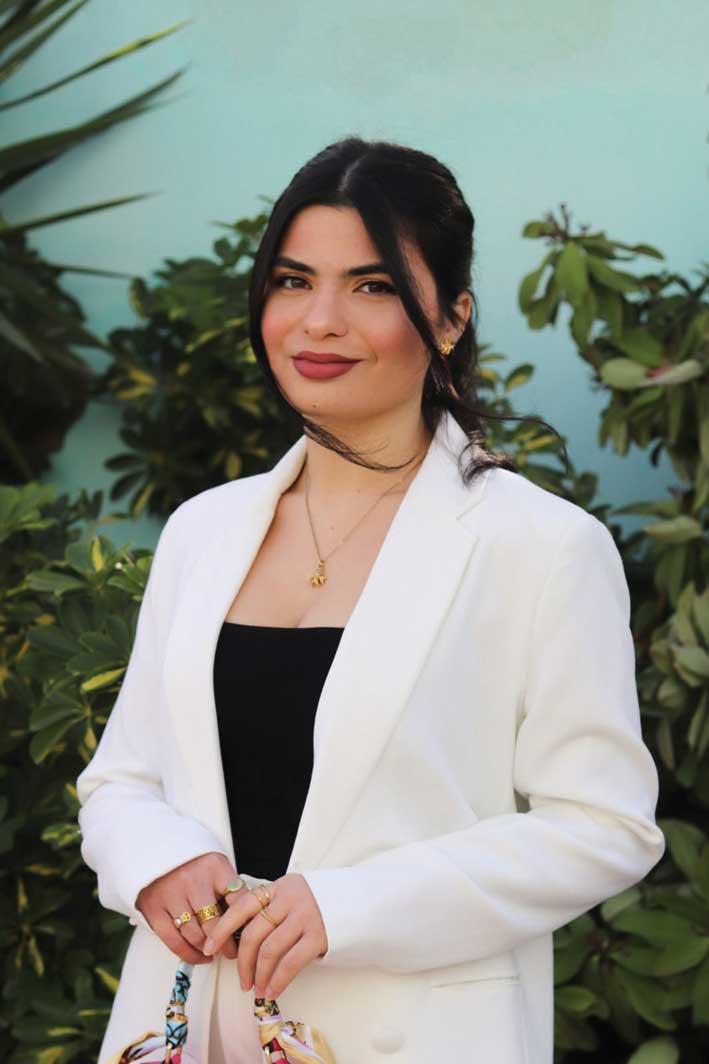
It's time for another collective exhibition at il-Kamra ta' Fuq. This time round, it's the turn of four very young artists who will be presenting their final projects for their MA in Teaching and Learning (Art), under the supervision of their lecturers. The exhibition is titled Up/Root and the participating artists are Stefan Spiteri, Shania Camenzuli, Andrew Inguanez and Daniel Mifsud.
We are thrilled at il-Kamra ta' Fuq, to have such talented young artists as part of our eclectic exhibition programme, where apart from very established artists, we are always on the lookout to scout and showcase up-and-coming amazing talent.
The artists have worked on their personal projects separately, however, they managed to find a common thread to have a cohesive exhibition revolving around a theme that binds all their works together.
Quoting from the exhibition synopsis, "To Up/Root" means to pull up by the roots or to displace someone or something from a place or traditional habitat. The four artists are utilising introspective methods of working, which are not dissimilar to the process of uprooting. Consequently, this process is helping the four artists reveal and uncover elements that are otherwise hidden and concealed."
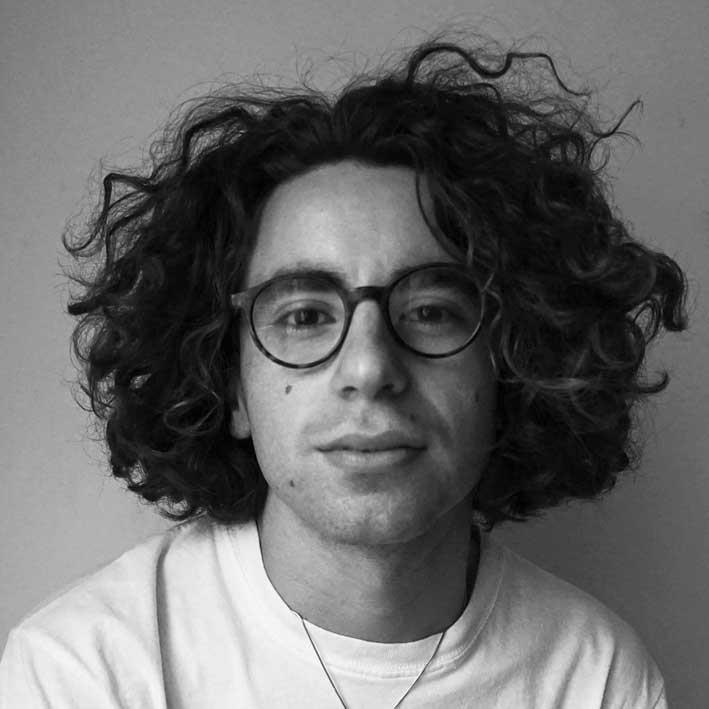
Spiteri, even though still very young, doesn't need much introduction. He has already exhibited extensively in numerous collective exhibitions, including one at our own Kamra ta' Fuq, last year, in the collective, titled thread. His first solo was held back in 2021, titled On the nature of painting, held at the Valletta Contemporary. His creative process addresses space, memory and time, exploring these themes through a continuous layering of meaning, material and gesture. This is encapsulated in the body of works that he is presenting in this collective. His series is called Trace Fossils and it is exploring indirect evidence of the life of ancient plants or animals, where only marks remain - the bracing of space by a vanished body, where the actual absence is the proof of the lived life.
The artworks are built in layers and strata of different plains within the "landscape" or semi-abstract vegetation. The works are imbued with trompe l'oeil or optical illusions. This is achieved by Spiteri, with the use of a layer of beeswax which creates an "elevated" transparent layer and his artworks remind of works executed on glass. Spiteri's works show a surreal paracosm divided into 21 artworks in two particular palettes. Part of the works are executed very boldly in vibrant yellow/green and seem to emit a certain heat from within, while a more subdued and dreamy palette can be observed in his blue and purple ones. In many cases, the photos don't do justice, and in this case, it is more so, as the optical illusion is lost and can only be experienced when literally poking one's nose into the artworks. These works boggle the mind.
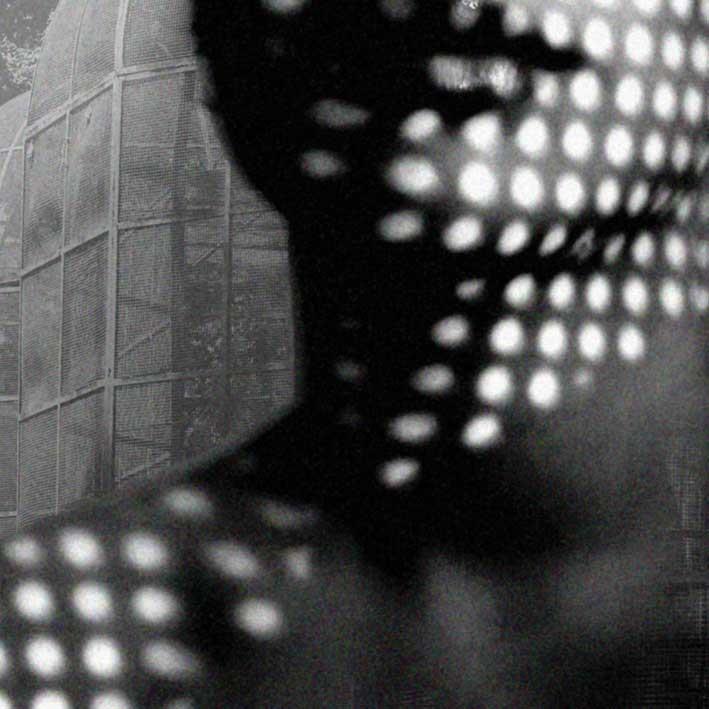
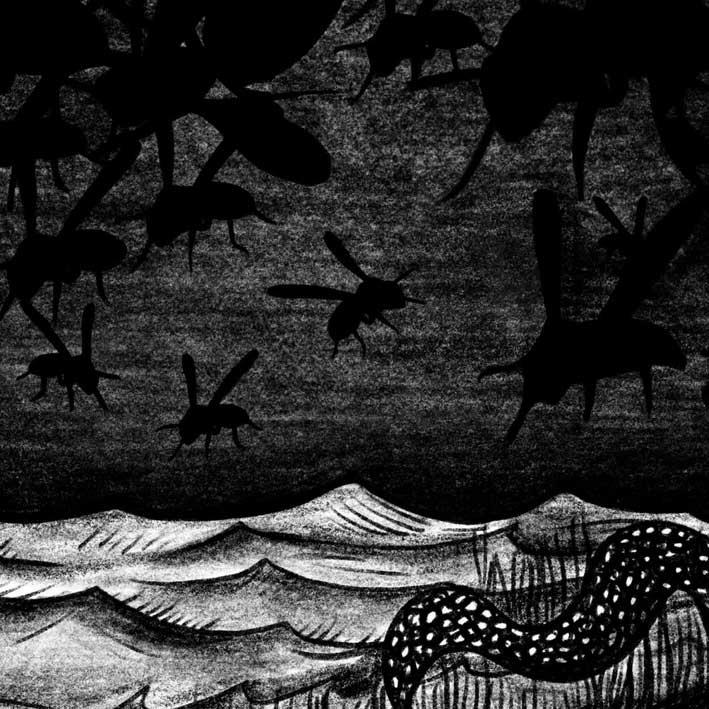
Camenzuli's series of works Hive is exploring the unpredictable environmental changes and how our way of living is affecting our surroundings. The primary thought revolves around the drastic increase in numbers of the Vespa Orientalis or more commonly known as the most hated Oriental Hornet. Her series comprises three particular artworks, mostly particular in their execution or "manufacturing" if you like. The first work is a hand-bound Concertina Fold Book - digitally created and immaculately hand-bound into this amazing hexagonal book, which when opened up, comes to almost 4 metres of art. The work is called Devastation and shows snippets of narrative executed in a style in-between noir comics and the acclaimed TV series Stranger Things. A feat in execution and a feat in deciding how to display it. But I feel we found the best possible way to present this in a way where the viewer can discover all the intricate work that it conceals. Another digital work is Hive, which shows multiple clusters of holes creating sort of hives. The work is printed on textile and meticulously cut by Camenzuli. We decided to hang this in a different way than intended and you'll have to visit the exhibition to see what we did. Her last work is Invasion, which shows a typology artwork made up of 12 small photographs all showing part of a female bust, evincing a shadow similar to the cluster of holes featured in the Hive. The background behind the female figure is always different and narrates a story, which again as focal protagonists in this typological study are the hornets and the environmental concerns.
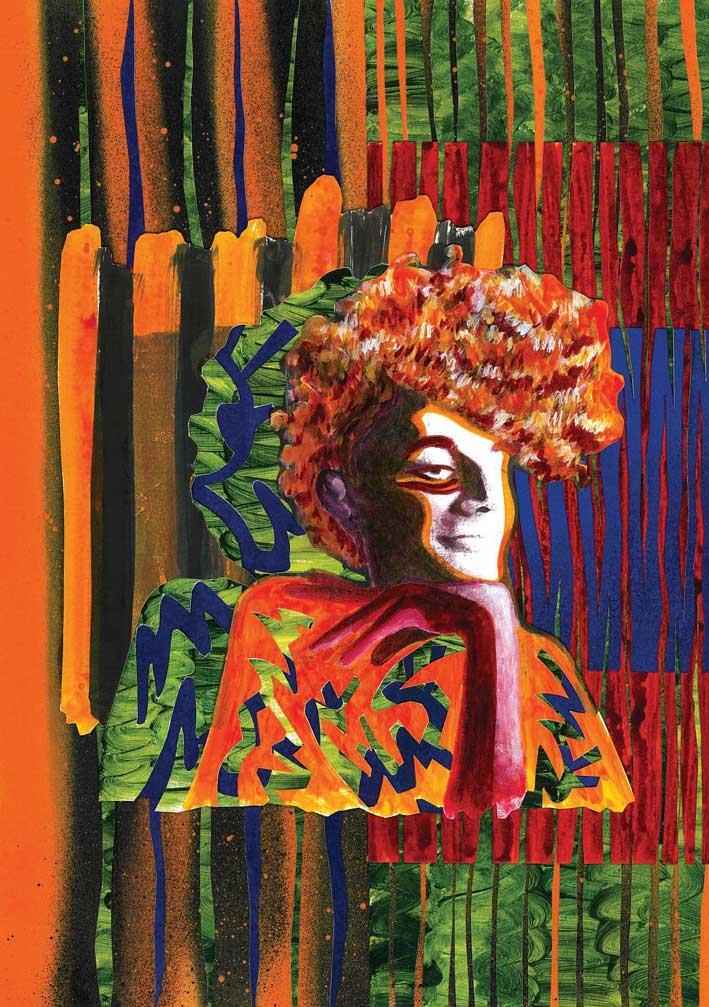
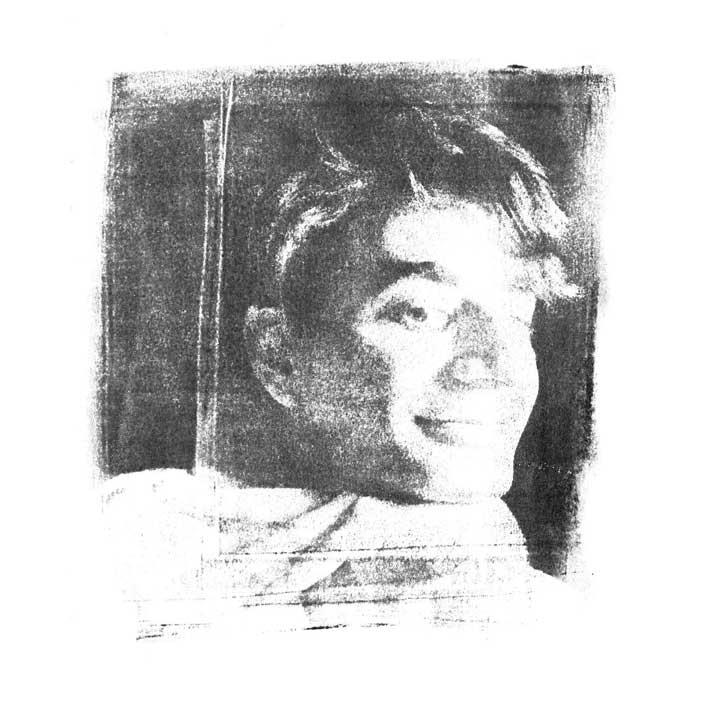
The series Honesty with wilder gaze is an auto-biographical self-portraiture project by Inguanez. The project "serves as an instrument to reach self-liberation from heteronormative expectations, related to sexuality, gender identity and self-expression". The project is divided into "four phases" and for each stage, the artist is using a different medium to convey his message. The first work titled Before self-esteem is executed as an etching, showing a glimpse of a shy face peeking at the world, half hidden behind a generous fringe. The narrative moves on to a duo of profile photos showing the artist from two different angles. The next step is a first intervention on the photos, through image transfer on gel-plated printing and acrylic, which result in another pair of profile photos titled Warholian Print #4 and #5. The last step shows further intervention on the original photos, now titled Liberated, executed in analogue collage, gel plate print, acrylic paint, acrylic ink, spray paint and Indian ink on paper which give life to two extremely vibrant and colourful images, which also portray a selfie of the character of the artist. The self-transformation within the artworks brings to mind the works of British artist Mitchell Moreno and his ongoing project Body copy, where he constantly transforms himself in the most fluid of ways, in a constant search of self-expression and gender identity.
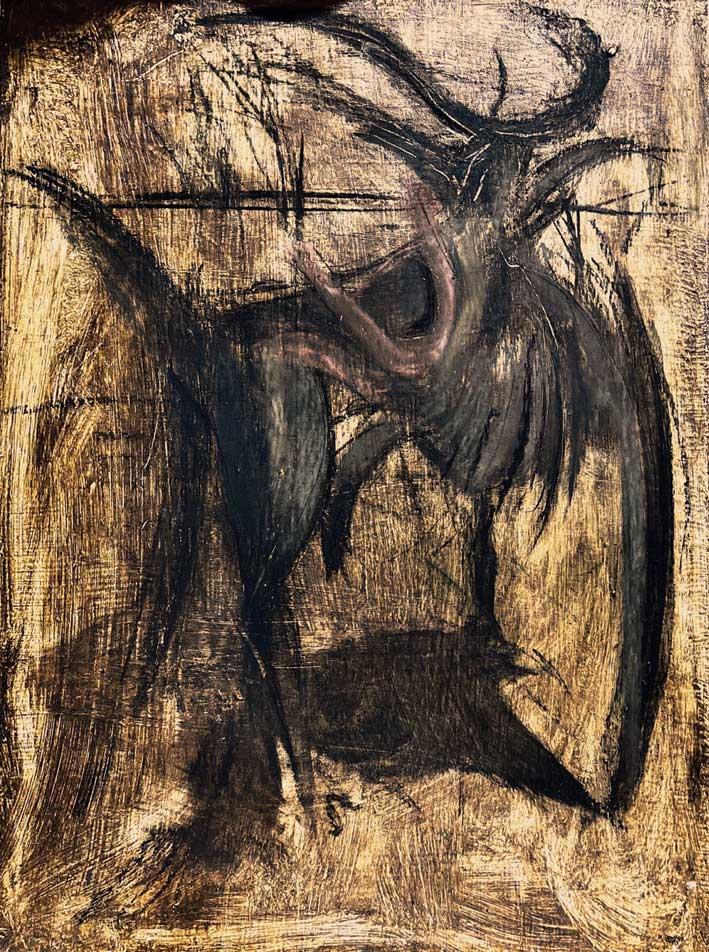
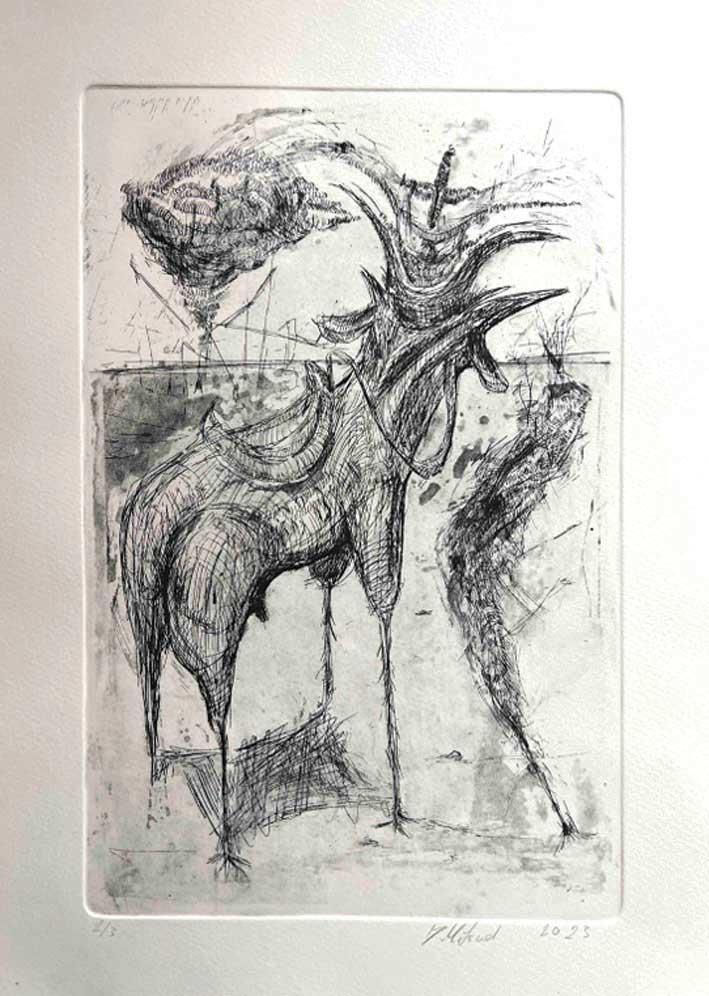
Mifsud plays around with reality and its distorted and manipulated counterpart in his series Derealisation. His inspiration comes "from the depths of the human psyche and he embodies thoughts and emotions through his drawings". His works merge abstraction and reality which bring together this surrealistic atmosphere which at times becomes even unsettling for the viewer. His works vary from charcoal and oils on board and paper, along with two very interesting etchings. His works are untitled as Mifsud prefers to leave the viewer in total freedom of interpretation and so invites the viewers to connect with their own innate thoughts, emotions and experiences through his works. His expressive marks and gestures, grotesque and fleeting curves remind me of some of the works from the ongoing Notes from the Anthropocene series by Mario Abela. However, Mifsud's works verge more on the rawness aspect and the crudeness, both in the execution and also the very limited palette used, made up of black, brown and ochre, which is most evident in his two works executed on rough-edged board. On the other hand, his etchings portray a freshness and quickness in the use of lines which along with their surreal narrative are reminiscent of some etchings by Salvador Dali.
And to conclude, "whether the four artists are contemplating the surrounding environment or their identities or psychological states, dual elements such as 'inside/outside', 'under/over', 'reality/fiction' are all common roots that connect the works together", all amalgamated to unveil hidden truths and ignite conversations.
Needless to say, we are eagerly awaiting to see what's next for these four extremely talented artists and I am selfishly hoping to work with each of them in the very near future and maybe curate their first or next solo.
The exhibition is on until 9 July, at il-Kamra ta' Fuq, in Mqabba.
For more information about the full project by Andrew Inguanez visit https://www.behance.net/gallery/173613393/Honesty-With-Wilder-Gaze and for updates follow their Facebook page.