It happened 50 years ago, and few are aware of the events that led to that fateful day. The information in this article comes from my personal documents.
In July 1965 the British Council Representative in Malta wrote to the Books Department of B.C. in London: "Need to establish a County Library Service. Minister of Education has finally agreed (after 12 months)."
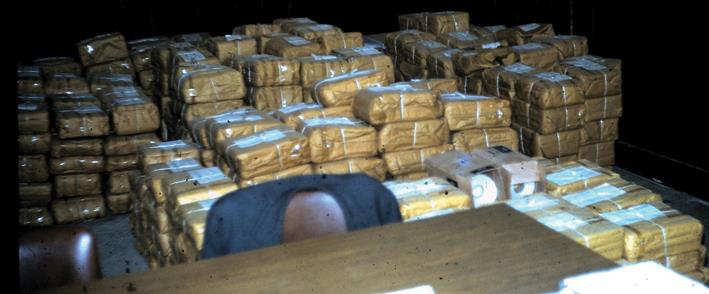
The first stone had been laid but the reply was that Malta was not on the list of countries entitled to receive aid under the Public Library Development Scheme. It took another two years for steps to be taken to add Malta to the list, accompanied by a warning that available funds were being reduced.
Malta was advised to apply for a technical advisor on libraries. This was approved and John Smith arrived in 1967. He was aghast and said at the time that "the general shortage of library books in schools is appalling". He outlined the setting up of the UNESCO recommendation of a Schools Library Service. (Actually set up in February 1976 and closed down in November 2016).
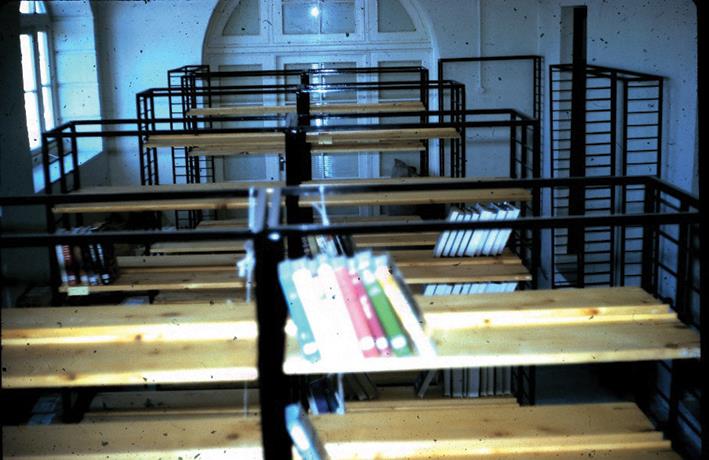
1968 saw various reports and recommendations on the setting up of a nationwide library service. One striking point was made by Melvin Hughes, a new arrival on the scene, "the problem of English language teaching will only be solved when the children have something to read in English". This marked the start of tens of thousands of books from the Ranfurly Library Service, initially transported by the Royal Air Force and distributed to schools by the De La Salle brothers at the Teachers Training College.
He was a frequent visitor at the Training College where I would soon be serving as its first full-time librarian. This brings us to 1969 which is best summed-up by the words "dragging feet" in Roamer's column of 11 January 1970. A building to house the new library could not be found although some attempts were made to find premises in the Valletta area.
By the end of 1970 the post of librarian in charge of the Lending Library was created but little else happened. This resulted in the British Council reminding the Malta Government to send "a letter asking the B.C. for assistance ... otherwise the whole scheme is in jeopardy".
The request was forwarded on 20 January 1971 and the scheme progressed slowly. The British Council approached two UK librarians for the post of Library adviser for Malta for three years. John Bristow was appointed and accepted on 1 September 1971.
By the time Bristow arrived, Malta had a change of government. New people, new ideas! The prime minister came up with the idea that the funds provided by Britain could be "invested and the interest used to cover postal charges incurred in borrowing books from some unspecified source in Britain". It took months and months to persuade him that such a scheme would be more costly than a public library system.
The first thing Bristow did on arrival in Malta was to ask for Joe Boffa. Apparently the B.C. had suggested my name and we started working to draw up a report on a survey of libraries in Malta. In reporting back to B.C. his first comment was "the library situation is much worse than I anticipated". He thought £54,000 would be needed to cover the first four to five years of the plan. Adding a Schools Library Scheme to the Public Library Development plan would be helpful.
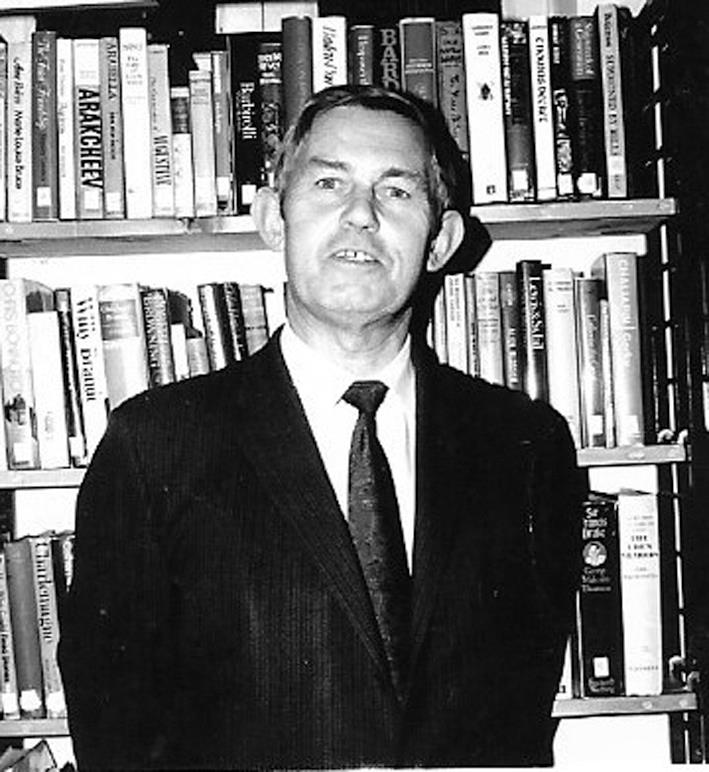
1972 was a year of questions and occasional surprises. Bristow's report remained undisclosed to the public, and I suspect that I might possess the sole copy. The Malta Government was said to be in default of payment of a loan by the Overseas Development Administration. By the middle of the year, most of the issues, with the exception of the premises, had been resolved. The letter from Agatha Barbara, the Minister of Education, dated 31 July 1972, to the British Council said it all. The letter sets out what the Maltese Government will provide and asks for a capital contribution of £64,870 as an outright donation.
An agreement was consequently reached, allocating £60,000 for books and the remaining balance for staff training. This donation depended on "the question of training ... particularly so far as Bristow's replacement is concerned". Bristow now started preparing to order thousands of books. Using Library suppliers from Britain meant that each book came with three catalogue cards (this obviously was the time before computer software was available for libraries).
The year came to an end as Bristow was told that the only available building was the former CID building in Floriana. The Minister of Education agreed to select two teachers for further training as librarians and provide furniture for the new library. Bristow designed a metal structure and work was done at the Malta Drydocks. The shelves were manufactured at the Education Department Workshop in Valletta and the fitting done at the Naxxar Technical Institute.
Work commenced in all sectors with Bristow issuing monthly reports from January 1973 until the end of his three-year term. The building available had no internal communication between floors and this was partially solved by moving a metal spiral staircase from Verdala Barracks and knocking down the floor of a tiny room. The promise of a book hoist never materialised.
As the months flew by the question of training two professional librarians was brought up again. The courses for overseas students in Britain commenced in September, yet by the end of that month in 1973, progress remained stagnant. A call for applications for male members of the teaching staff was finally issued on 18 October 1973 with a closing date of 25 October. The selection board met immediately after and the result was passed to the British Council on 29 October - Joe Boffa was selected out of 21 applicants. The second person would be selected the following year.
Then came the news that it was not possible to arrange immediate commencement of the pre-course requirement at the North London Polytechnic because of student unrest. 21 November was the date of departure. In the meantime I was transferred to the Public Libraries Department to work with the Library advisor.
Power cuts caused by lack of coal were the order of the day in 1973 Britain which together with the bombing campaign caused a lot of concern. Living in a basement flat for two years with a toddler wasn't much fun either. However, I must confess that the British Council was extremely supportive in all matters.
The finishing touches on the library building were being made and 16 February 1974 was unilaterally decided upon by the Minister of Education for the official opening.
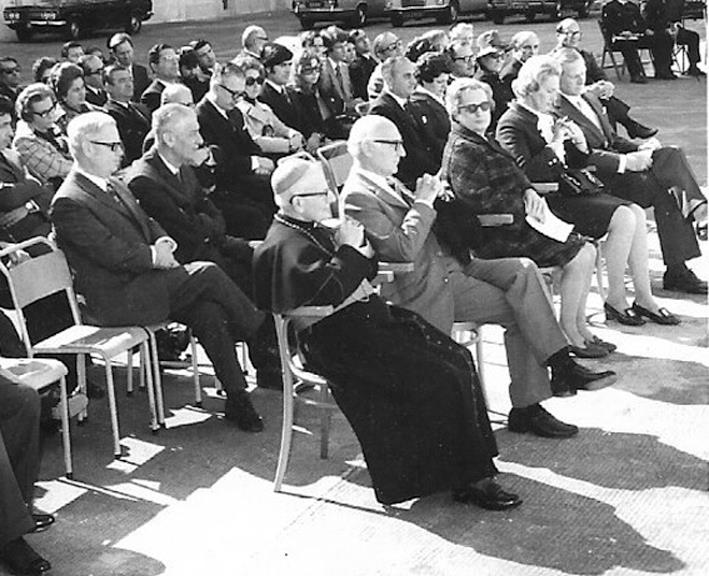
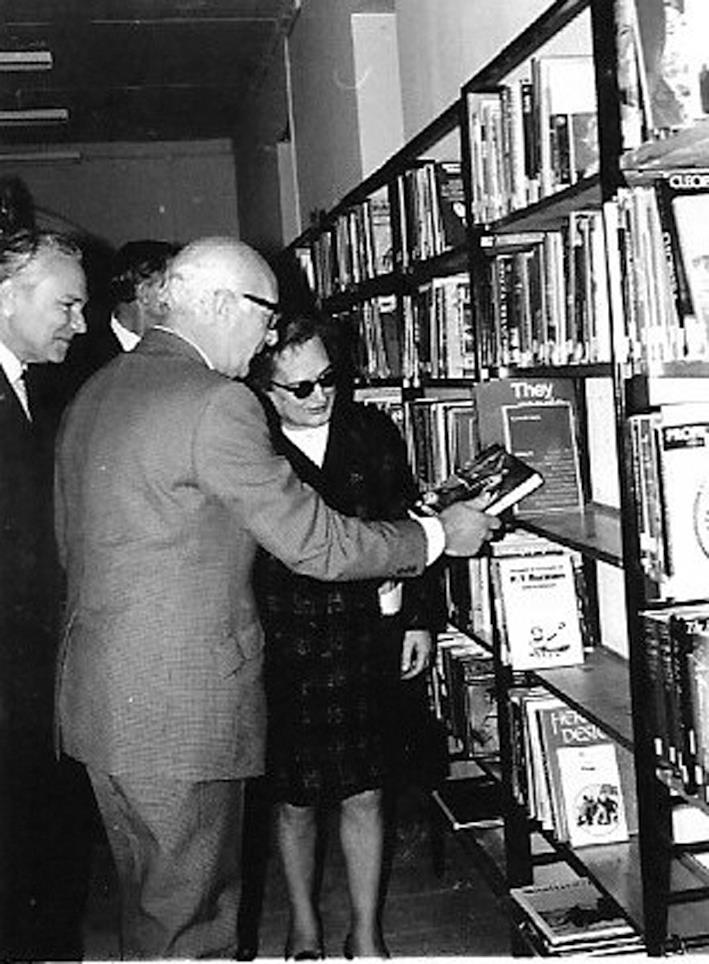
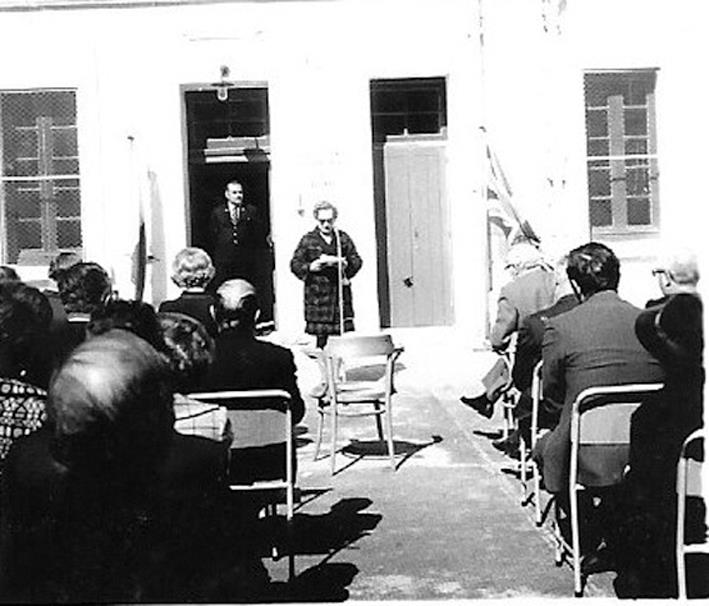
In front of a selected gathering assembled in the courtyard at the Police Headquarters, the British High Commissioner, the British Council Representative, followed by the Minister of Education outlined the events that led to the culmination of this venture. The building was blessed by Archbishop Michael Gonzi and the first book was borrowed by Sir Anthony Mamo as Governor-General of Malta.
The press provided extensive coverage of the event and the project kicked off to a promising start as a book-starved public found a treasure trove of material. To put this in context, it's worth noting that while book loans from Valletta totalled 80,000 in the last 12 months, during the initial 12 months from Beltissebh, the figure surged to half a million. The original plan had estimated 200,000 loans per annum and a staff of 12 were deemed enough. This turned out to be a significant issue that I had to solve.
I will end by saying that by the time I was replaced the number of staff had increased to 48. That, however, is another story.