Winter horse-racing
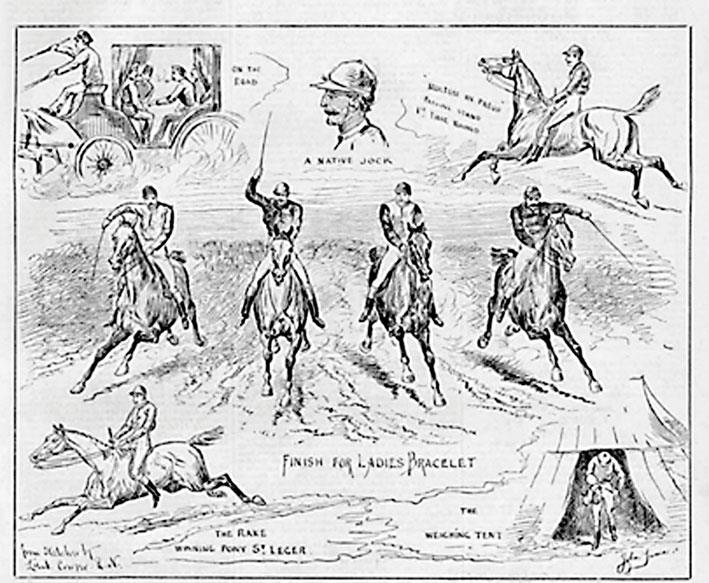
Horse-racing has been a popular sport with the British since early Victorian times and due to the mild winter in Malta winter race meetings were regularly organised. One horse race meeting is illustrated in a print in The Illustrated Sporting & Dramatic News from 1882. The illustration shows sketches of a native jock, Multum in Parvo passing stand first time round, finish for ladies' bracelet, the Rake winning pony St Leger and the weighing tent.
Polo in Malta
The Badminton Magazine of November 1901 carried a feature titled, Polo in Malta by the Hon. Mrs. R. Boyle, where she describes the ever-increasing popularity of the game in Malta.
In 1901, Malta was one of the British stations where polo was brought within the reach of practically all members of the forces. In Britain, polo was a game for the rich only, but in Malta neither the cost of ponies nor their keep was prohibitive to the young officer of slender means.
This was a boon that was thoroughly appreciated by the officers of the Army and Navy. At the time, there were few naval stations, other than Malta which possessed a polo ground. In Malta, the sailors took full advantage of this opportunity.
Apart from a flourishing "pony club" which, for a moderate monthly subscription provided ponies for the encouragement of young players and those who, due to their short stay in Malta, found it hardly worthwhile to get a string of their own.
They always managed to put in one, if not two, good teams for the tournament, although severely handicapped by the fact that admirals had been known to prefer the welfare of the Service to the possibility of some young officers gaining a place on the role of polo fame by winning the tournament. They would have rather preferred to send the ship containing the best players on the side to sea on the eve of the most important match.
Due to the constant increase in the popularity of the game in Malta, ponies in Malta were inexpensive and also because of the raising of the value of the stakes in the local race meetings. For instance, in 1896, owners were content to start their ponies for stakes the value of £25, (the price of a raw unbroken pony straight from Tunis). In 1901, there was a winning stake of £100, the price of the pony had more than doubled.
The great advantage of the game in Malta was that it could be enjoyed the whole year round, except for the few weeks in winter when the game was stopped by rain. This meant that the ponies never lacked exercise which was considered as an advantage to keep the horses ready and fit, not only for the sport but also if called for battle.
In 1933, the Malta Polo Club organised events for the Royal Naval Polo Association. The stables were situated at Marsa (St Andrew's stables). H. Moore as the trainer of racing and polo ponies.
Mounted infantry
Another important role for horses during the British presence in Malta is described in The Navy & Army Illustrated of 13 December 1902 under the title, Mounted Infantry in Malta. A 1902 print shows the Malta Field Day, canteen, horse baths and company parade.
The illustrations in the feature give a fair idea of the work done by the mounted infantry situated at Għajn Tuffieħa. The terrain on which the men and horses had to manoeuvre was purposely rough. The feature also expounds on the life of the men picked from the various regiments that made up a mounted infantry company.
It was not at all milk and honey, but, on the contrary, horses and men were very much engaged most of the day, even during the hottest months. Each company went through a course of training lasting for a period of about three months, during which a very large amount of work was executed.
The company of mounted infantry, No. 13 in 1902 was drawn from the four Regular battalions:
- West Kent Regiment
- Royal Warwickshire Regiment
- Kong's Own Regiment
- The Lancashire Fusiliers
At the time Malta was under the command of Governor, General Lord Grenfell, G.C.B who had a high reputation for keeping the local garrison in an efficient state.
Go-cart picnics
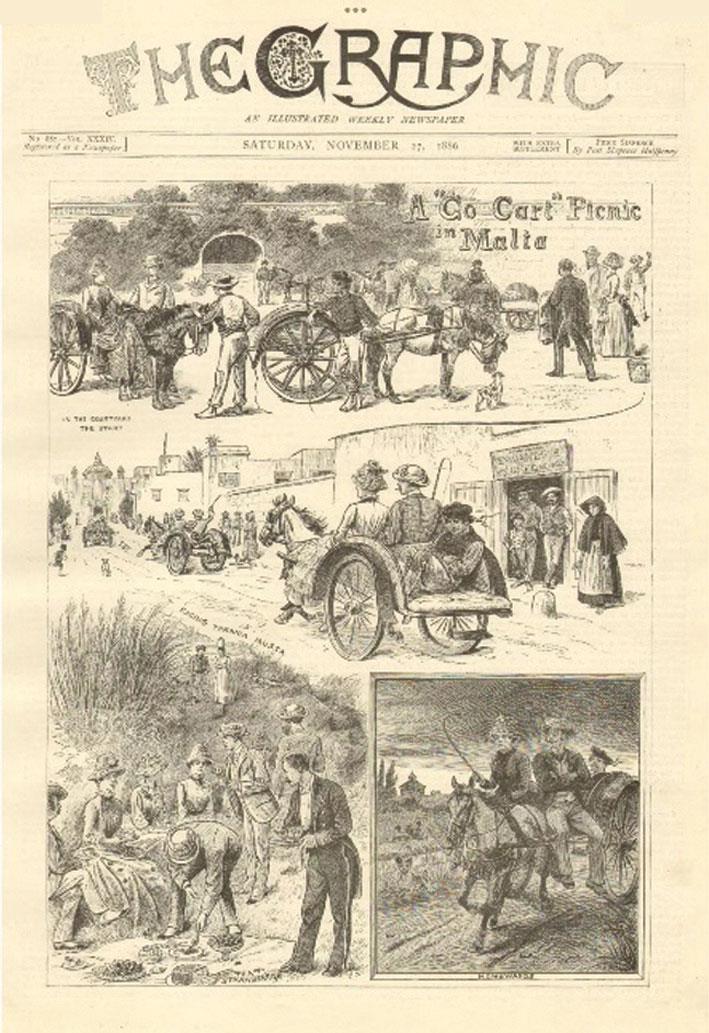
Among the British families present in Malta, Go-cart picnics provided a relaxing way to enjoy a whole day outing.
Water Polo
The name of the water polo sport is derived from an earlier form of the game in which players rode painted barrels with wooden horse heads and struck the ball with paddles. The Illustrated Sporting & Dramatic News carried a print in 1881, showing a typical water polo game with participants dressed in carnival costumes, off the Għar id-Dud promenade close to the Fortizza, as crowds watch from the railings.
Horse shows
Another important event the British took full advantage of was horse shows. On 14 April 1914 a horse show was held at Marsa. The events of the second day of the horse show carried prizes for the following:
- Best Bona-Fide carrozin pony
- Best Donkey
- Mules
- Best Turned Out Go-cart with or without springs for donkeys
- Best Turned Out Maltese country cart
- Best Turned Out licensed carrozin
- Best Turned Out Go-cart with springs for ponies
- Best Turned Out Go-cart without springs for ponies
- Best Turned out Go-cart with or without springs for mules
- Best European Pony
- Best Mediterranean Pony
- Ladies Driving competition
- Best Charger in Review Order (ridden by officers)
- Best Poly Pony Jumping competition
Special prizes were presented by the Royal Society for Prevention of Cruelty to Animals (RSPCA) Malta, for working horses, mules and donkeys showing the best care and condition. These animals were to be bona fide property of working people.
Special RSPCA prizes were presented to animals from Casal Curmi (now Qormi), Birchircara (now Birkirkara) and Ħamrun.