Alfred Buttigieg is a well-known figure in the literature and theatrical scene. However, this exhibition showcases a different side of Alfred - equally creative and artistic, but in an entirely new medium. Buttigieg has penned numerous plays, including Ir-Rewwixta tal-qassisin, which premiered at the Manoel Theatre in 1986, Mela hawn xi manikomju and L-Interrogazzjoni, which won the National Book Prize for Drama in 2022. He is also the author of Dik il-Qtajra, banned when published in the 1970s. After a long career in education, Buttigieg retired in 2020 and took up a ceramics course at the Malta Society of Art under Nadyanne Mangion's tutelage. And here we are, witnessing his new venture.
I first met Alfred about a year ago when he invited me to his home to view the small sculptures he hoped to exhibit. I was uncertain of what to expect, but I was immediately intrigued by the group of figures before me. These sculptures, contorted into impossible positions and finished with bright or shiny glazes, captivated me. Our lengthy conversation about his new artistic journey revealed Alfred's genuine enjoyment in creating these pieces. Each sculpture has a little story, despite their anonymous, blank faces.
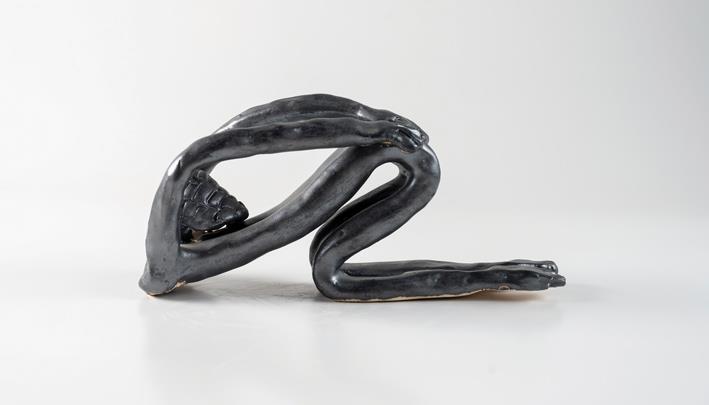
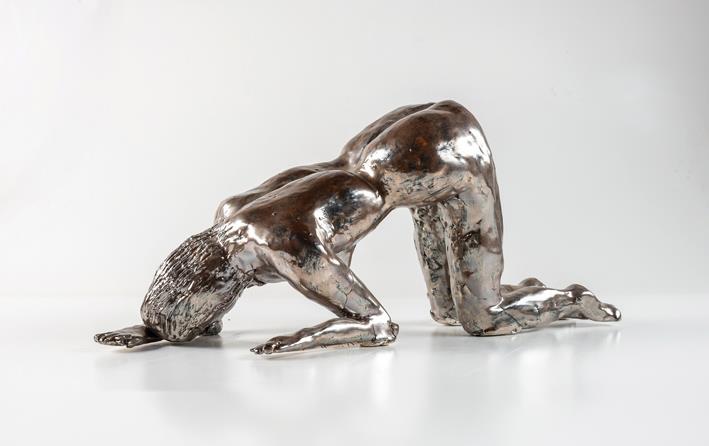
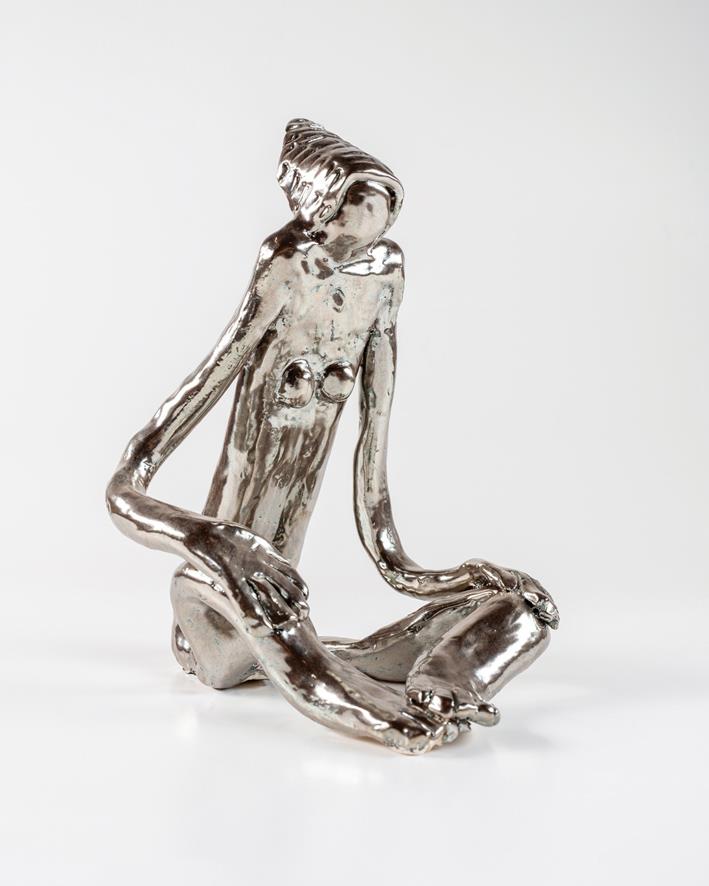
The works are all oozing sensuality, which can be observed either in the contorted positions of the figures or in the exaggerated breasts and phalluses. These sculptures are executed in a raw style, capturing a sense of speed, as if each piece was started and finished in the same fleeting moment it takes to strike a pose. The lack of detailed facial expressions is noticeable, with the mood and emotions of the figures conveyed instead through their astonishing bodily contortions, elongated limbs, and torsos, as well as the shapes and positioning of their heads and bodies. Buttigieg's background in theatre may have subconsciously influenced the taut expressiveness evident in each disconcerting twist of limb and torso.
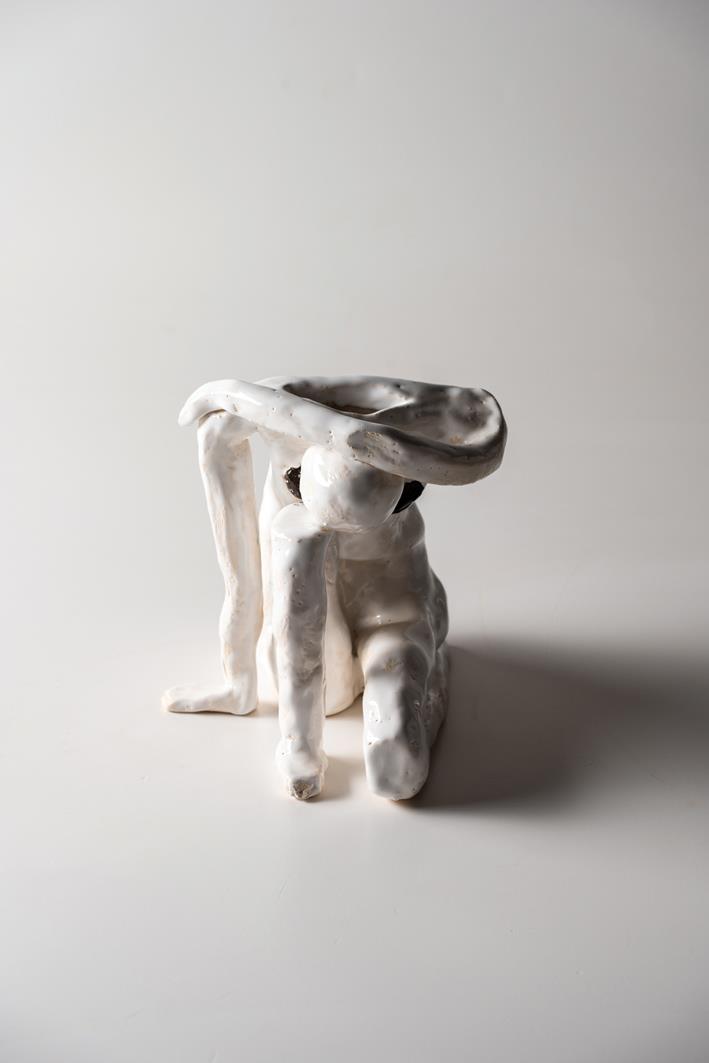
Some of the works suggest various facets of the human condition, while others evoke mythological figures such as Atlas or Sisyphus. For instance, in the piece titled Atlas bearing the weight of the missing world, a figure is depicted bent down on one knee, with one arm raised and resting on its bent head, mimicking the posture of someone burdened by a heavy weight. However, instead of the expected world on its shoulders, there is a hole in the back of the figure, perhaps symbolising a void within, representing the absence of something significant in one's life.
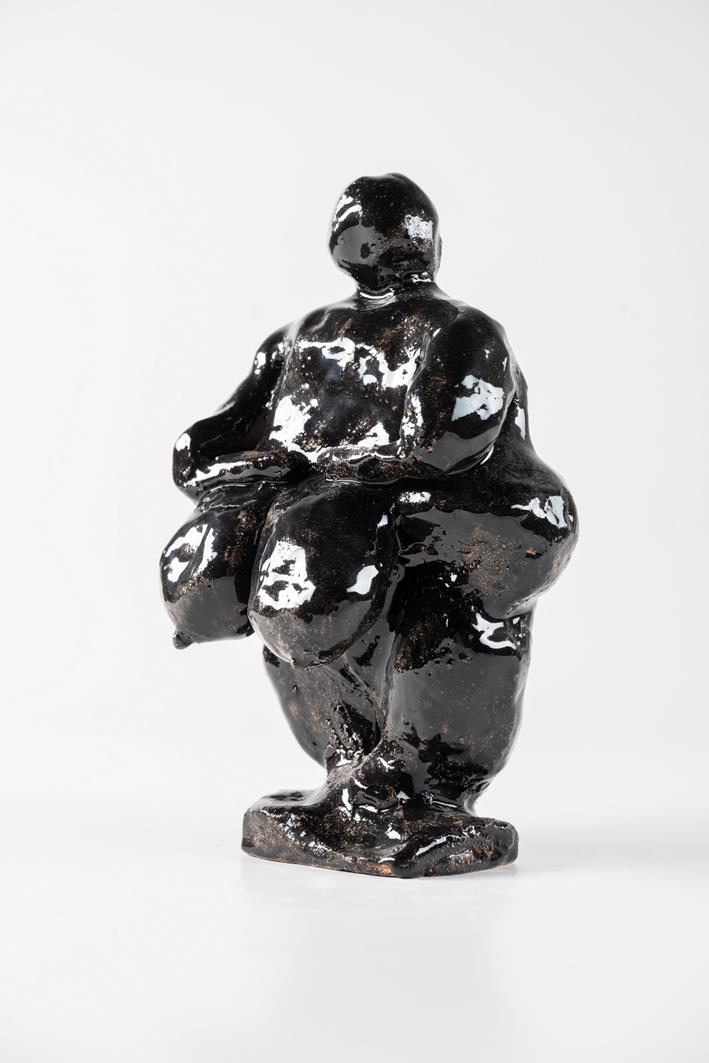
Additionally, some pieces evoke a surreal experience akin to a Hall of Mirrors, with their extreme figure deformations and impossible contortions. Examples include Contortionist in grey, Nude in grey, The Yogi and Slender figure with bowed head, all from a series executed in a grey matt glaze. Another series in the exhibition features works with imposing corpulence, reminiscent of Maltese prehistoric renditions of the body. These evoke both the serene imperturbability of divine beings and a placid enjoyment of fleshly existence - perhaps inspired by the prehistoric temples of Hal Tarxien and The Hypogeum, situated so close to the artist's residence.
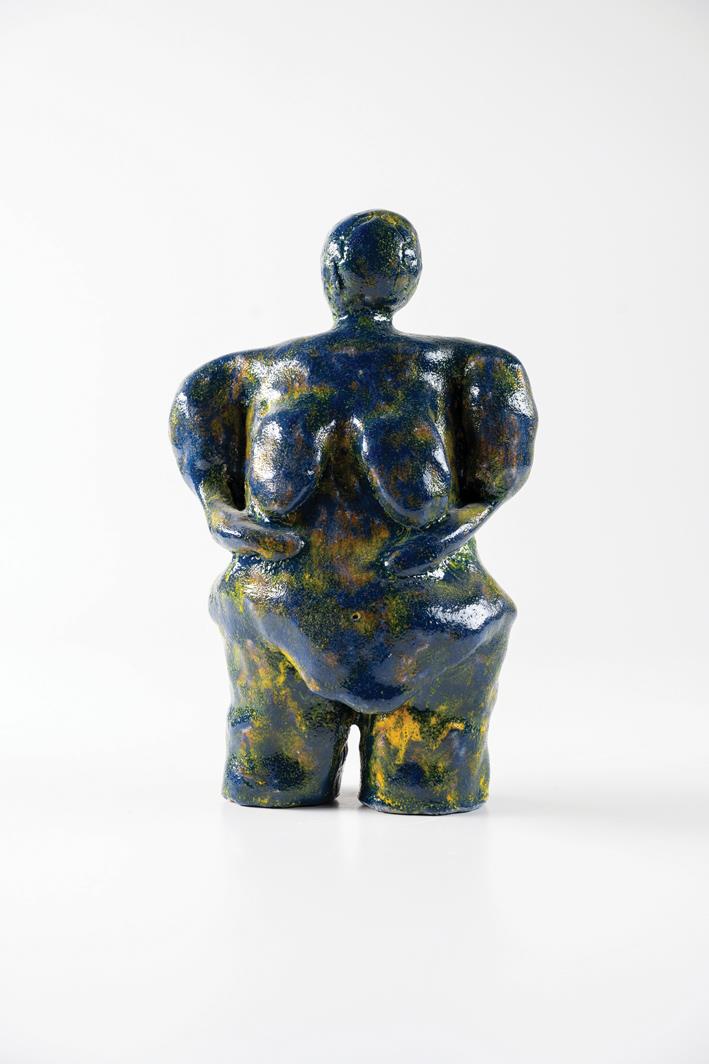
The influence of the iconic prehistoric Maltese Fat Lady is particularly evident in pieces with amplified breasts, such as Standing fat lady in blue, Lady with raised arm and Large bellied woman. The latter is executed in an abstract, contained splash of colour, featuring heavy stocky legs, similar to the standing blue fat lady - traits not typically seen in the prehistoric version. Woman with large breasts features such prominent breasts that it appears as though they start protruding from the waist.
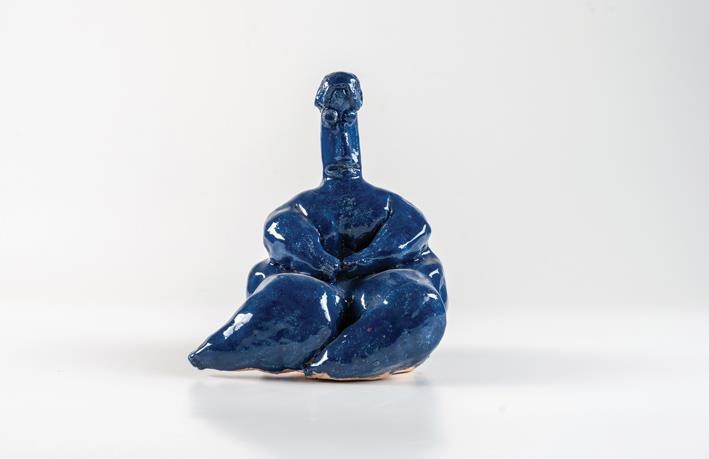
Buttigieg also created his own version of the Maltese Sleeping Lady, titled Sleeping lady in pink. Perhaps the most controversial piece in this series is Fat lady in blue. While it retains the seated pose with a thigh reclining to the right, reminiscent of the prehistoric Maltese lady, it diverges significantly in other aspects. Instead of the expected large breasts, the figure has an unexpectedly elongated neck, exaggerated and almost caricature-like facial features, and a bob-style "hairpiece" that when seen together, gives the impression of a phallus.
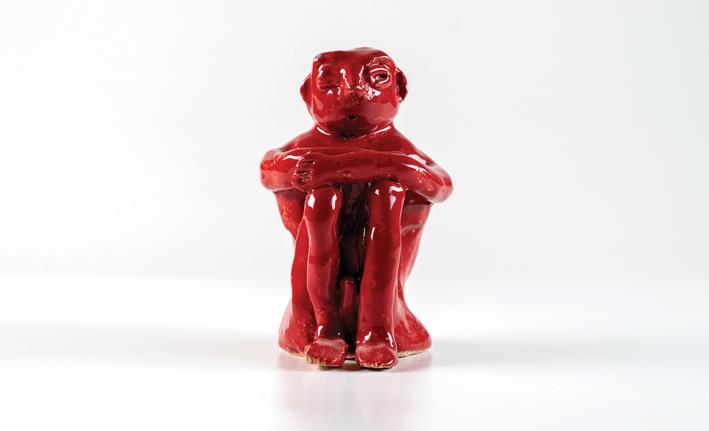
Speaking of the phallus, another artwork, Crimson fiend with phallus, prominently features the male organ. Though nearly hidden, it is unmistakably present.
Other works reflect a more serious nature or mood, as one can observe in Lost in thought, The prisoner, Whistler's mother with long arms, Whistler's sister (yes both titles in homage to the work Arrangement in grey and Black no. 1 (known as Whistler's mother) by James McNeill Whistler), Praying nude and Despair in grey.
Lately, we have seen so much about gymnastics and incredible acrobatics during the Olympics, and in Figures unbound, we also have our fair share of such positions and contortions in some of the featured sculptures, like Acrobat, Upside down acrobat and Flexibility.
Girl with long torso and Sitting nude are the latest works from the series and are more realistic in their style, and even more detailed, executed in an immaculate glossy white glaze.
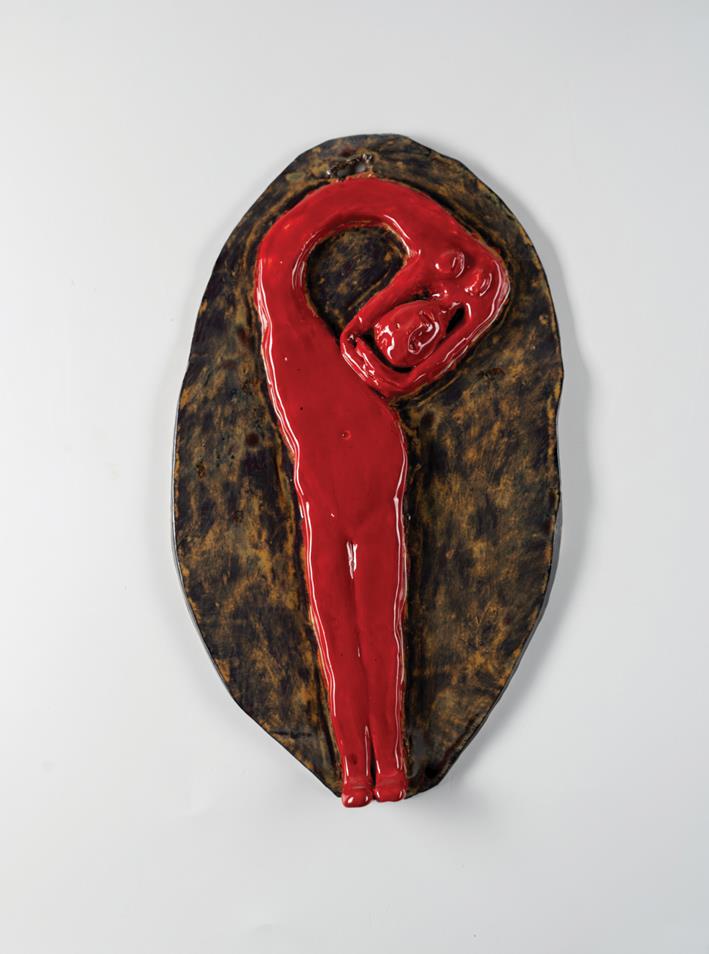
One of the works is a hanging sculpture, a bas-relief titled Twisted woman in red. This piece features a ceramic oval containing a twisted red figure. The work evokes the mandorla of glory - mandorla, the Italian word for almond - which is commonly featured and sculpted on Romanesque church facades, typically situated within the tympanum just above the main entrance. These mandorle often enclose a saintly figure, frequently Christ, in an oval shape symbolising divine presence, heaven and light. This could be Buttigieg's metaphor for glorifying the human figure in all its diversity. By highlighting that the human body comes in so many sizes and features, Buttigieg seems to be celebrating the unique and special nature of each individual.
Buttigieg's ability to convey deep emotional states and existential themes through bodily forms rather than facial expressions creates a powerful and thought-provoking experience for viewers. The contrast between the realistic and expressionist styles invites a diverse exploration of the human figure, revealing its potential for both strength and vulnerability. The exhibition thus becomes a profound commentary on the complexities of human existence, articulated through the unique and dynamic language of the body.
The exhibition is being held at il-Kamra ta' Fuq in Mqabba until 1 September. For more information visit il-Kamra ta' Fuq on social media.
Photos: Andre Gialanze