As a child I played with Raymond Pitré (1940-2024) as my family and his lived close to each other. In those days children played outside as it was so safe. Dun Karm Psaila who lived in Lower Victoria Terrace, occasionally honoured us with his presence and we would rush to kiss his hand, never realizing he was a distinguished poet, and later national poet.
I never saw Ray again, after those years, and each of us went on our separate life journey.
When I returned from Mauritius I found out through the media that Ray had become a leading artist and is now considered to be one of Malta's influential figures. His name came to the fore when he died recently and sadly, a little before the unveiling of his final masterpiece Figure in Rods on the grounds of MICAS, in the Ospizio in Floriana, which itself was inaugurated in October last year.
As to Ray, "the common and recurring thread across all his work is his constant interrogation of the human experience and the inevitability of personal trauma and death."
A considerable crowd of personalities, art lovers and many artists gathered in the grounds of MICAS that evening, a couple of weeks ago. For me it was a most pleasant experience as I was able to catch up with Ray's art but also with other artists whom I had not seen for many years, one of them being Raphael Vella who was our first art critic when The Malta Independent was launched in the early 90s. He is now Professor at the Faculty of Education, University of Malta and very active in the world of art.
There were four speakers that evening: Dr Owen Bonnici, Minister for National Heritage, the Arts and Local government; Phyllis Muscat, Chair of MICAS, Edith Devaney, Artistic Director of MICAS and Giorgina Portelli, a Board Member of MICAS and Chair of the MICAS Education Committee.
Speeches were thankfully short though significant.
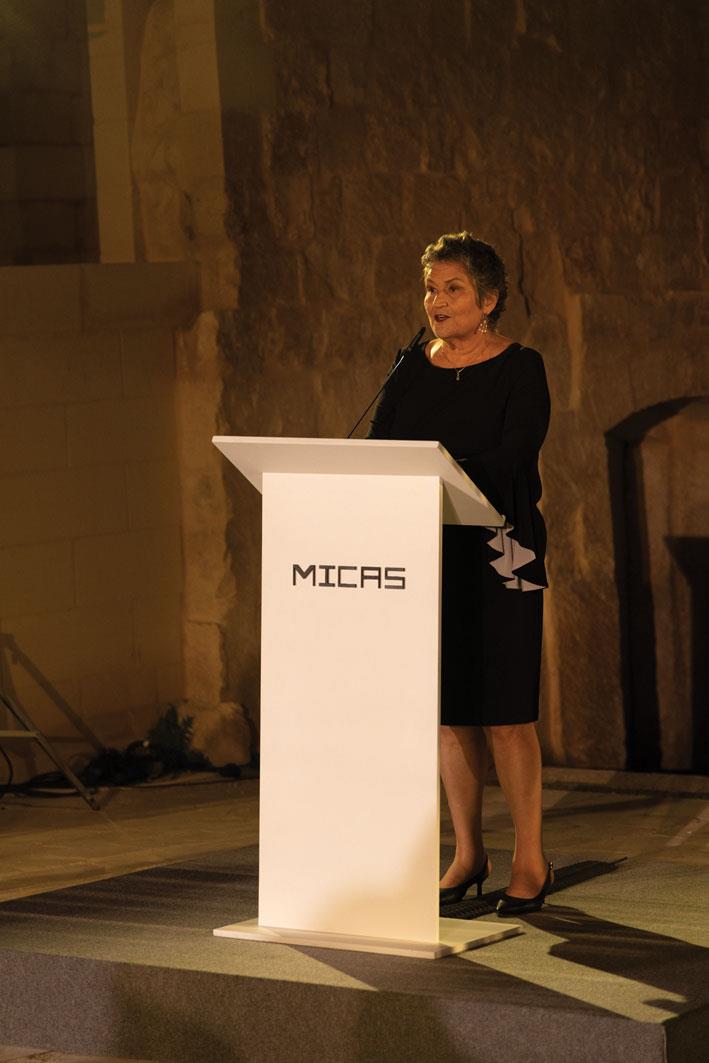
Firstly, Phyllis Muscat, the Chair of MICAS, took the floor and spoke about the pride MICAS felt in having Figure in Rods as part of its permanent collection. She mentioned how this new acquisition now sits alongside works by international heavyweights like Ugo Rondinone, Cristina Iglesias, and Conrad Shawcross, enriching the museum's cultural offering. But what I found most moving was her comment about the connection between the museum and the local community. She recalled the overwhelming response to MICAS's recent Open Weekend, where over 2,500 visitors attended despite the bad weather. "This level of public engagement reinforces our commitment to making contemporary art accessible to all," she said. That really resonated with me - MICAS isn't just a place for the elite; it's a space for everyone to engage with and appreciate contemporary art."
What stood out to me was also Phyllis's excitement about the launch of the new schools' program at MICAS in January, which she felt was "made even more meaningful by the presence of Pitré's Figure in Rods as a catalyst for dialogue about creativity and contemporary artistic practice". It seems the program will offer the perfect interaction between art and education, where young people would not only be able to learn about art but also be inspired to create their own. I thought it was such a smart initiative, and wondered how it will shape the next generation of Maltese artists.
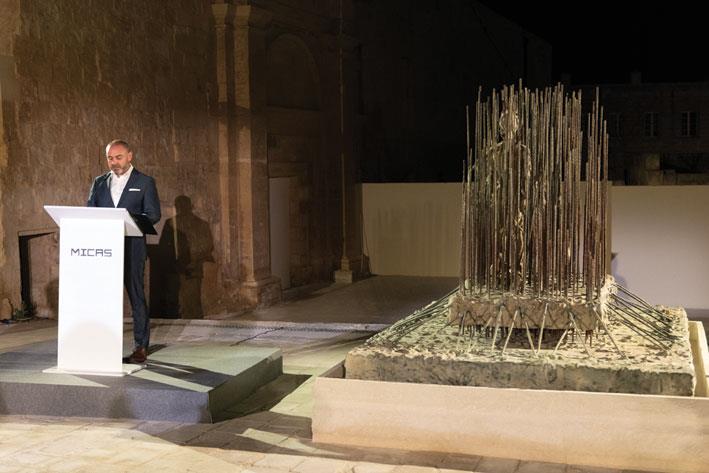
Minister Owen Bonnici also took the stage, and his words resonated with me deeply. "We stand at a significant moment in Malta's cultural journey," he said, acknowledging how important this moment was not only for Pitré's legacy but for the future of Maltese contemporary art. I could sense his passion when he spoke of the lack of recognition that Maltese artists like Pitré have received internationally. "For too long, exceptional Maltese artists have produced work of international calibre while remaining relatively unknown beyond our shores," the Minister remarked. He emphasized that MICAS's mission is to change that, to elevate the country's artists and ensure their voices are heard on the world stage.
He also highlighted how Figure in Rods embodied Pitré's ability to transform local materials into art that spoke to universal themes - "art deeply rooted in Maltese experience while resonating with global audiences". I could see how this piece was not just a local triumph but one that had the power to spark international conversations about contemporary art. The Minister ended his speech by calling the work a "clear signal of Malta's contemporary cultural ambitions." I thought that was the perfect encapsulation of the night - a statement not just about Pitré, but about where Malta is heading culturally.
It was clear to me that MICAS isn't just about showcasing art but about preserving the journey of the artists themselves.
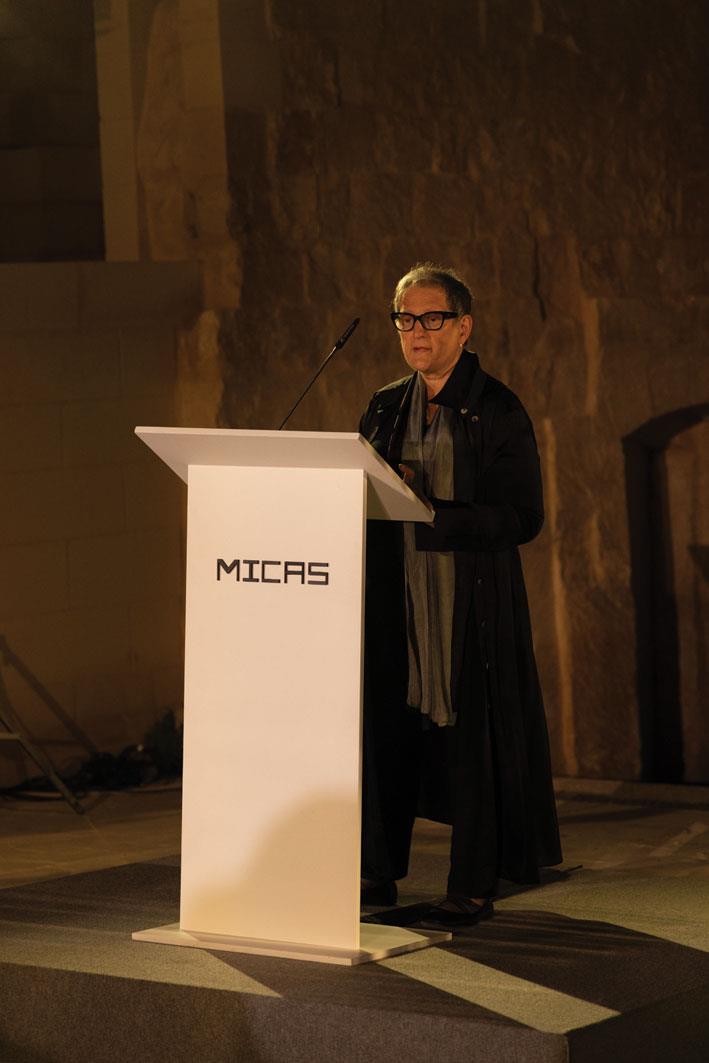
Giorgina Portelli also made an important point about the importance of Figure in Rods as a piece that bridges the local and the global. She noted that Pitré's work, serves as a testament not only to his own genius but also to Malta's growing role in the international art scene. I found her closing words particularly poignant: "While we feel Ray's absence - his energetic creativity and singular sense of humour - this evening, we celebrate his enduring legacy through this powerful work, which will continue to engage visitors for generations to come." I couldn't help but feel that this work would indeed live on, sparking conversations long after the unveiling.
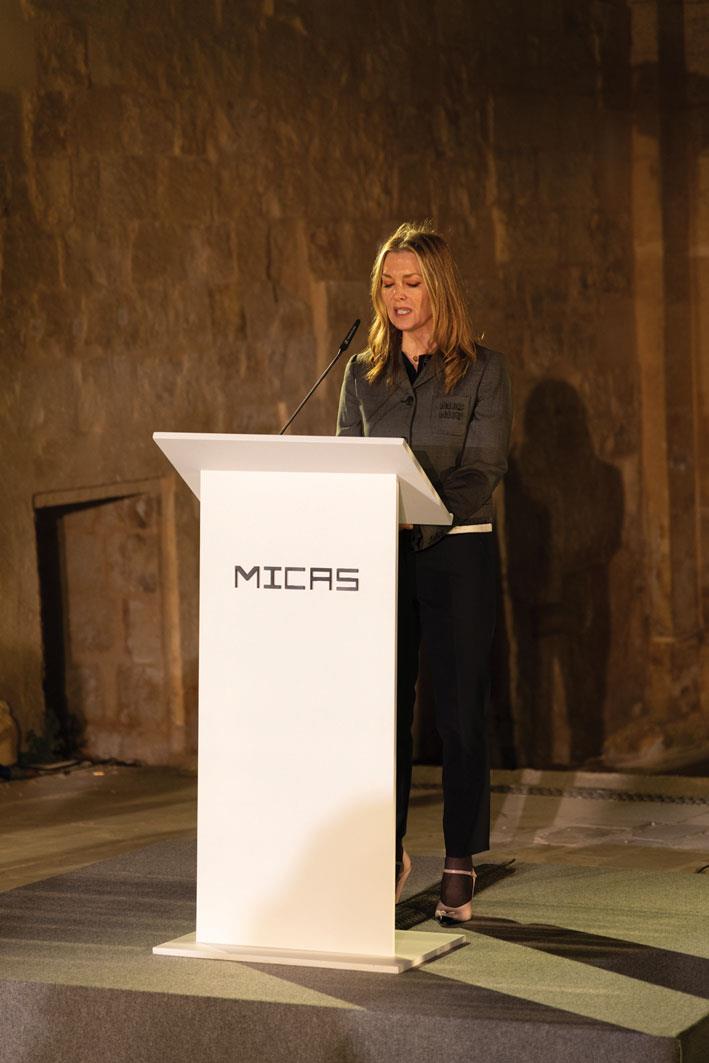
Edith Devaney, Artistic Director, wrapped up the evening with a speech that highlighted the importance of contextualizing and studying artists' work. She spoke about the exhibition on the fourth floor, curated by Joseph Paul Cassar, which will offer a deeper examination of Pitré's work: "Such focused explorations are essential in enriching the public's understanding of contemporary art". I found that insight fascinating - the museum's work isn't simply about showing art, but about encouraging a deeper, more intellectual engagement with it.
As the speeches concluded, I found myself reflecting on the night as a whole. The inauguration of Figure in Rods was far more than just the unveiling of a sculpture - it was a moment of cultural significance, a celebration of a great artist, and a declaration of Malta's artistic ambitions.
Speeches over, we then went to the fourth floor to look and further discuss more of Pitré's work over a drink... or two.
I left the museum feeling inspired, knowing that Pitré's legacy would continue to inspire and engage people for years to come. It was a privilege to be part of such a meaningful event.
[email protected]