How did you finish up in Malta?
Tired of the cold German weather and disheartened by the less-than-positive prospects that Rome and Italy offered for future generations, my wife and I decided, in 2018, to take a chance on Malta. It seemed to us that a country experiencing such strong growth, with such an important history and culture, decisively oriented towards the future, featuring an extraordinary climate and high-quality schools, could be the perfect fit for us. Most importantly, we believed it could be the ideal place to raise our daughter safely while providing her with significant opportunities for the future. To this day, I believe it was the right choice.
Tell us something about your family
I come from a very prominent family that has written significant pages in the history of southern Italy, particularly in Puglia. Unfortunately, I wasn't able to fully enjoy this legacy, as I lost both my father and mother, in different ways, when I was just 24 years old. Life, however, has compensated me by giving me the opportunity to build a family that I couldn't have imagined even in my wildest dreams. My wife is a one-of-a-kind woman, and our daughter... in Italy, we say, "Every beetle is beautiful to its mother". I don't want to be the exception, so I must confirm that, to me, our daughter is absolutely wonderful.
What about your life in the theatre?
I feel very fortunate. I started working in theatre at a very young age. By the age of 24, I had already worked and studied with Lorenzo Salveti, Mario Moretti, Rossana Patrizia Siclari, Raffaella Azim and Giorgio Albertazzi. After a forced hiatus between the ages of 24 and 27, due to losses in my family, I had the opportunity to debut as a producer. Happily my debut was an immediate success with the play The Lonesome West by two-time Academy Award winner Martin McDonagh, which won us the Flaiano Prize for Best Direction of a Contemporary Play in Italy.
Following that, from 2003 to 2015, I had the chance to play monumental lead roles in Italy's most prestigious theatres, under extraordinary directors. I starred in The Trial by Kafka, The Day of the Owl by Sciascia, Giovanni Episcopo by D'Annunzio, Mastro Don Gesualdo by Verga, The Brothers Karamazov by Dostoevsky, The Artful Widow by Goldoni and Phaedra's Love by Sarah Kane.

Theatre has given me so much. Working with exceptional directors such as Academy Award winner Lina Wertmüller, the award-winning Daniela Ardini (who will direct me for the fifth time with Novecento), the extraordinary Marinella Anaclerio, and the visionary Andrea Battistini, among others, has filled my theatrical life with emotions and joy. Of course, there have also been challenges and hardships that helped me grow as both a person and a professional.
The birth of my daughter in 2015 led me to step away from the stage by choice. I gave up touring to be a father. Starting again now, 10 years later, feels like awakening that child who was banging on the door, eager to run and play again.
I missed the theatre so much that I almost avoided going altogether. And when I did go, if I saw a great show... I would cry. Theatre is my primary passion.
What inspired you to pursue a career in acting?
At the age of 19, when I first stepped onto a stage, it was the stage itself that gave me an emotion I had never experienced before, making me feel free. What gave me a sense of responsibility and made me truly understand the significance of this profession was Enzo Samaritani, the last of the living minstrels and a representative of Italian poetry around the world. However, this is a story that deserves far more lines, and I will save it for another time.
Are there any actors in your family?
None. Actually, my father was a lawyer. He hoped I would follow in his footsteps. In the end, though, he was happy to see that my path wasn't just a whim to rebel against him. He was my fiercest critic...
Were you involved in any school plays or drama clubs as a child?
The only school play I was involved in as a child was when I was seven years old. I played a tree, completely covered in green carpeting. I was even unrecognisable to my parents, who told me I had done an excellent job as the tree on the right side of the stage... but I was actually the one on the left. Maybe that's why it took almost 12 years before I approached a stage again.
What was the first show or film you remember seeing that made an impact on you?
There are so many shows or films I could mention. Certainly, Orson Welles with Citizen Kane and the story behind this film, along with the meticulous work of Gabriele Lavia, whom I came to know well, in his plays like After the Rehearsal by Bergman or The Miser by Molière, left a profound mark on my way of seeing cinema and theatre.
What do you think you would be doing if you weren't acting?
Even though I often enjoy joking and introducing myself to people meeting me for the first time as a professional hitman... and believe me, I can be convincing, if I weren't an actor, I would have liked to become an itinerant chef, travelling and discovering the world, stopping only where places demand that I dedicate more time to them, to drink them in and immerse myself in their essence.
What were the challenges you faced at the start of your career?
The one with myself. The one with the approval my father gave me on his deathbed. The one of having to face a choice that truly mattered. And it could only become meaningful through sacrifices. I can now say that every sacrifice was a blessing.
Do you have any mentors who guided you when you first started acting?
Two mentors have been fundamental to me: Enzo Samaritani, the last living minstrel and a representative of Italian poetry in the world, and one of the great leading actresses of Italian theatre, Raffaella Azim.
Enzo helped me prepare for the entrance exam at the Silvio D'Amico Academy of Dramatic Arts and made me realize how unprepared I was at 22 years old and how much I needed to study, not to become great (for that, you never stop studying), but to avoid being just ordinary.
The night after the show, over dinner, Raffaella, having erased my Romeo from the stage in her role as Juliet, said to me... "Darling, if you want to become a good actor, you must act alongside great actors". She was right.
I find solace in the fact that many actors, far more experienced than me, struggled with her presence on stage, and having worked with her twice since then, I no longer found her daunting. On the contrary, whenever she entered a scene with me, I knew it would be a great scene because with her, thanks to her, it could never be insignificant.
What do you remember most about your first acting job?
The Short Stories by Chekhov, directed by Mario Moretti. I played the young lover... and I was so fond of the actress to whom I had to propose on stage. Alas, I proposed to her on stage, but I never had the courage to ask her out offstage.
How do you stay grounded amid the fast-paced world of acting?
Just don't take yourself too seriously, and it's not so much about wanting to play like when you were a child, but having the humility and the desire to stay curious and eager to learn, just like when you were a kid.
Describe a challenging role you played
K. in Il Processo by Kafka, Giovanni Episcopo in the eponymous work by D'Annunzio and Alesa Karamazov in The Brothers Karamazov by Dostoevsky were, by far, the three most challenging characters I have ever portrayed. I have a strong physical presence, while these roles required a much weaker physicality, and especially with K., a strong reactivity and combative spirit. Working to diminish my physicality throughout the rehearsal period and the performances was incredibly demanding. However, this effort made these characters unforgettable experiences for me.
What is one thing people would be surprised to know about your journey?
That I lived for a year pretending to have a speech articulation problem. I am of Apulian origin, and unfortunately, I used to pronounce open "e"s and "o"s when speaking. When I was 20 years old, Mario Moretti told me that I would never be able to become an actor with this flaw, which was a shame because he saw potential in me. He gave me exercises that forced me to position my tongue and lips in an unnatural way, with the hope that one day I might naturally pronounce the vowels correctly.
I decided I couldn't wait indefinitely to solve the problem. So, I incorporated the exercises into my daily life. I started speaking while moving my mouth in the way required by the exercises at all times of the day. I remember a television actor I worked with in theatre, Alessio Di Clemente, who once told me, "You could be good, too bad you have this mouth articulation issue. Oh, but it's not your fault. You must have been born like this". In reality, the issue was the constant exercise I was doing everywhere, all the time.
After a year, I achieved the desired result, and no one ever called me differently abled or corrected my vowel pronunciation again.
Do you have any stories, funny or otherwise, which you can share with us?
Oh, I have so many stories! I remember back in 2009 when we were set to open the Venice Biennale with La Vedova Scaltra by Goldoni, directed by the great Lina Wertmüller. I played the Italian knight, who ultimately wins the widow's hand, and Francesco Feletti played the Spanish knight trying to woo her.
In the middle of rehearsals, we got so hungry... I mean, really hungry. Now, Lina was wonderful but also extremely, and rightly, demanding. Rehearsals started early in the morning and went on nonstop. Francesco approached me with an outrageous proposal: to sneak out for 30 minutes to go to... McDonald's. The catch was, we couldn't afford to waste time changing out of our costumes.
So, imagine this: two 18th century knights strolling into McDonald's in Pistoia (where we were rehearsing) at lunchtime. We definitely felt a bit... observed.
Feletti is now a hugely successful theatre producer in Italy. I hope that soon he becomes the greatest of all. He's a truly wonderful person. We shamelessly lied to Lina about that brief absence... but she understood. She had too much experience to be fooled. She loved us anyway.
How do you balance work and personal life as an actor?
The 10 years away from the stage have turned me into a well-rounded cultural operator. I also own a web company and work as a producer and distributor in both cinema and theatre. The issue is that this makes me an absolutely competent and serious person in the eyes of clients and colleagues. However, my being an actor - and therefore often a bit of a slacker with friends and family - makes me appear unreliable in my personal and emotional sphere. My loved ones never know whether I'm telling the truth or spinning a story. It's pointless to explain to them that the professional quirk of an actor is precisely to be genuine. To them, an actor is a storyteller by default, and so I am one as a matter of principle. I'm condemned to constantly prove to my loved ones that what I say is true. I admit, I probably deserve it a little.
Do you use any particular acting method or technique?
I use an approach that combines various techniques and methods without being tied to any one in particular. I studied Stanislavski's method and its derivatives, like Strasberg's method, but I wouldn't call myself a purist. I integrate elements from different schools depending on the character and the needs of the project. For me, every role requires a unique approach. Sometimes the work is more physical, drawing from Jacques Lecoq's methods, while other times it's more analytical, delving into emotions and personal memory. I like to think that my method is fluid, adaptable, and constantly evolving, just like the craft of acting itself.
Do you also produce films?
I produced only one film in Italy in 2008: Falene, directed by A. A. Maldonado, with editing by Gabriella Cristiani, who won an Oscar for editing Bertolucci's The Last Emperor. The film enjoyed significant success at festivals. However, I paid the price for my inexperience in the distribution sector. That experience led me to become a distributor as well. To date, I have distributed nearly 150 works in cinemas, becoming a point of reference for emerging directors and producers, but not only. I've also managed to distribute works featuring names like Al Pacino, Peter Zelenka and Mimmo Paladino. Now, I'm preparing to return to production with an exciting project on Renzo Rossellini, a comedy, and a horror film that I hope to shoot here in Malta.
Can you tell us something about 'Novecento'
I always feel a certain hesitation when talking about shows that have yet to premiere. All I can say is that the story is so beautiful, emotional and captivating that it has been performed on stage for almost 30 years, and our Academy Award-winning director Giuseppe Tornatore turned it into one of his most remarkable films, The Legend of 1900, featuring an extraordinary performance by Tim Roth. It is undoubtedly an extraordinary tale. If we do our job well, it won't be difficult to move you and hopefully make that evening at the theatre a memorable one to carry with you.
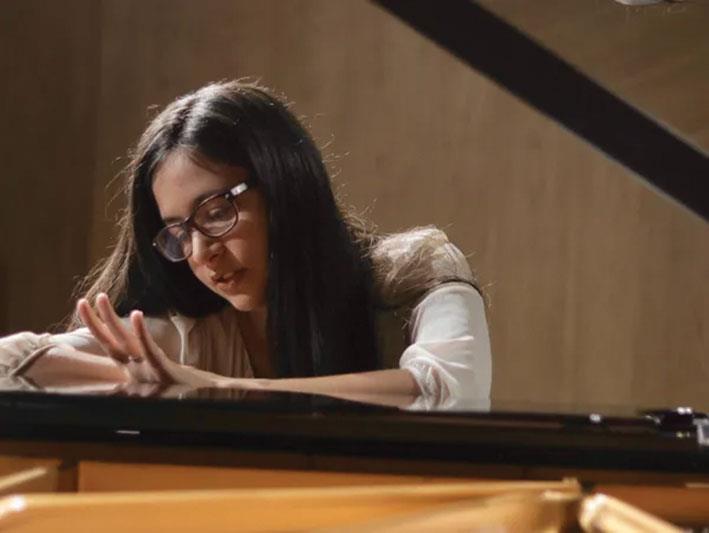
Novecento is directed by Daniela Ardini. Giovanni Costantino is in the lead role and will be accompanied on the piano by Alessia Bonnici. The sets for the production are designed by Giorgio Panni, celebrated for his signature contributions in theatre sculpture.
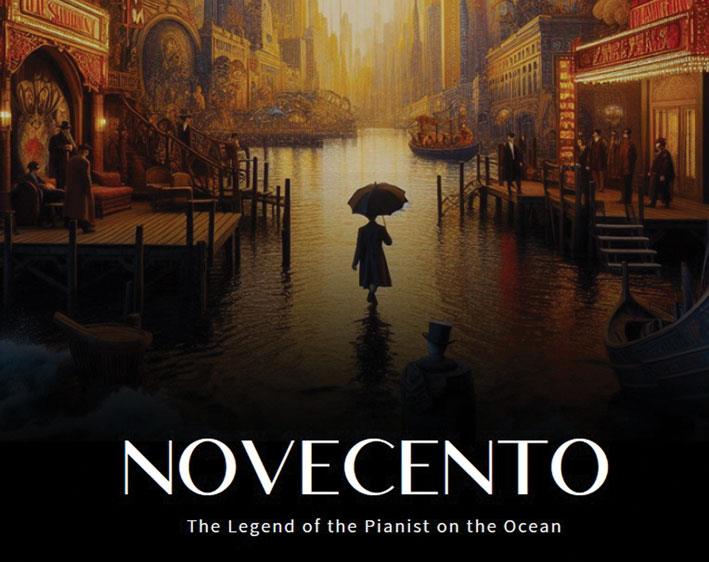
The performances on Saturday, 22 February at 8pm and Sunday, 23 February at 5.30pm will be in Italian with subtitles in English and Maltese. Tickets from Teatru Manoel booking office.
