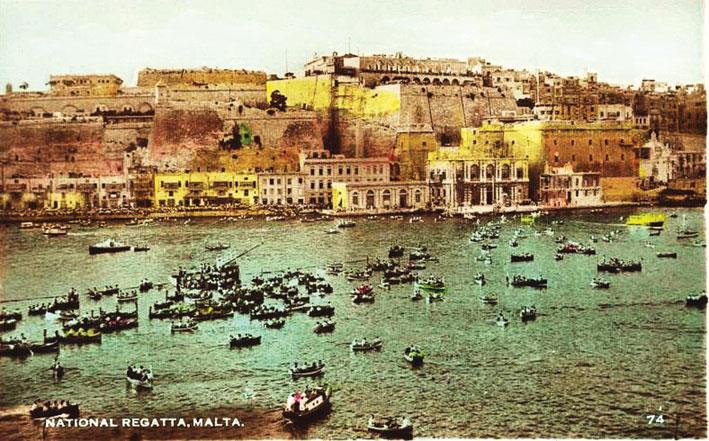
The regatta was successfully revived in 1951, marking a joyous occasion for thousands of spectators packed along the racecourse. The event featured seven exciting races fiercely contested by crews from Birgu, Marsa, and Senglea, who participated in all categories. Bormla, Kalkara, Raħal il-Ġdid (new district), and Marsamxetto entered only one or two races each, largely due to the loss of boats during the war.
Throughout the 1950s and 60s, the regatta became a highlight of the summer season. Following the awarding of flags and silver cups to winning crews often presented by the British governor or a government minister, spectators remained engaged with other traditional festivities. After the regatta, many spectators stayed aboard their boats to watch the Greasy Pole (Il-Ġostra) - a contest where competitors tried to climb a sloping, greased pole on a barge near the Customs House to retrieve a flag. Others crossed by ferry to Senglea Marina to attend the procession of the statue of Our Lady of Nativity, affectionately known by locals as Il-Bambina.
Until 1954, the regatta was organised on an individual boat basis, with no district declared overall winners regardless of how many flags a locality won.
In 1955, the Aggregate Shield was introduced, marking a significant change in how the regatta was scored and celebrated. During a meeting chaired by the customs collector and attended by the Regatta Association delegates from the six districts, a points system was agreed upon. Points were awarded only to the top three finishers in each race, and the district accumulating the highest total was declared the overall winner.
The points distribution per category was as follows:
|
Boat Category
|
Points for 1st
|
Points for 2nd
|
Points 3rd
|
|
Frejgatini (Fishing Boats)
|
12
|
8
|
4
|
|
Midalji (Fancy Boats)
|
20
|
12
|
6
|
|
Dgħajjes ta' bi Tnejn (Two-Oared Pass Boats)
|
20
|
12
|
6
|
|
Kajjikki Tal-Kopp (Caiques)
|
12
|
8
|
4
|
|
Dgħajjes ta' Bl-Erbgħa (Four-Oared Pass Boats)
|
24
|
16
|
8
|
Among all participating boats, only the pass boats are subject to a weight requirement. Both two-and four-oared pass boats must weigh exactly 171.44 kilograms. Boats falling below this weight are compensated with sandbags. Following the pass boat races, the first three finishers are lifted by a crane to verify compliance with the weight regulations.
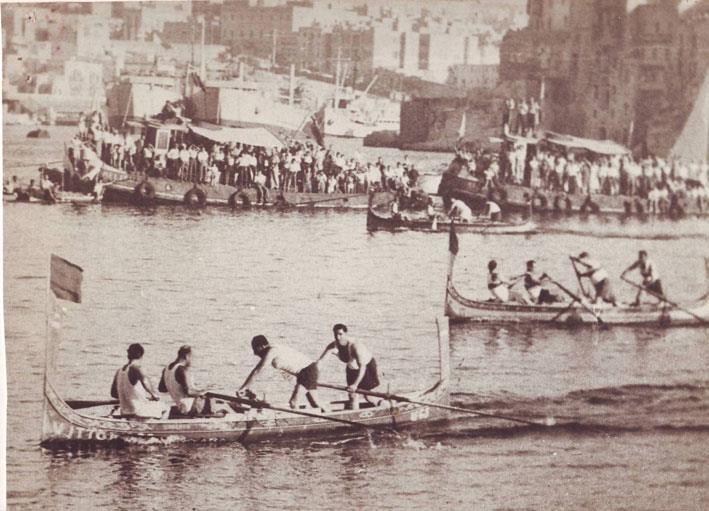
In the traditional Maltese Regatta, each of the participating rowing clubs is identified by their traditional colours. These colours include red, white, and blue for Birżebbuġa; light blue for Cospicua; green for Kalkara; red and blue for Marsa; yellow for Marsamxett; red and yellow for Senglea; red for Vittoriosa, and orange and white for Siggiewi.
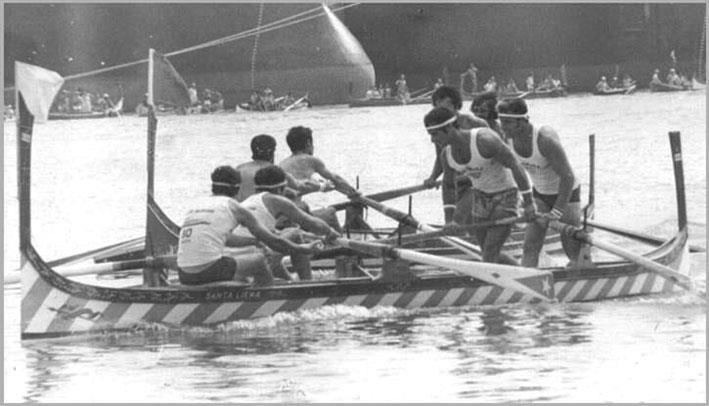
Following the devastation of World War II, the majority of the traditional boat categories returned to the National Regatta with the notable exceptions of the fancy caiques (Kajjikki t-Twal) and fishing boats (Ferilli), both of which were largely destroyed during the conflict. The only fishing boats to survive enemy bombing were those from Senglea (Fort St Michael and il-Kaħla), safely stored in a warehouse beneath the bastions at Senglea Point. These two historic racing fishing boats, built in 1921/22 specifically for regatta competition during the peak of Senglea and Marsamxetto rivalry, represented the final remnants of this category.
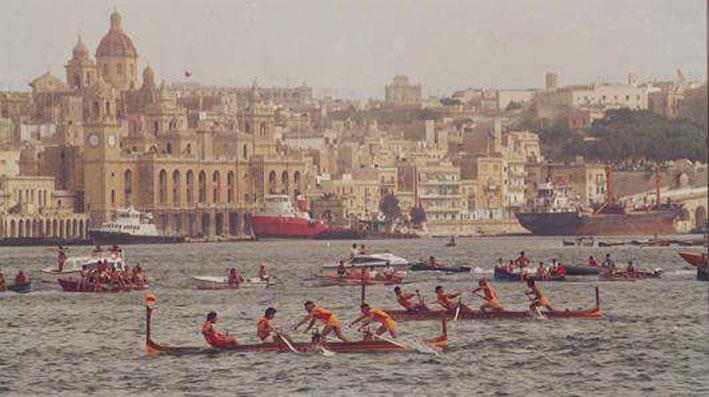
As a result, the fishing boat (Ferilli) race was not held in 1951. However, from 1952 to 1957, the Customs Collector, aiming to revive this traditional race, reintroduced it, with only the Senglea district participating. Due to the lack of suitable boats and diminished interest fromother districts (later known as clubs), this race was discontinued after 1957.
In 1958, Bormla, renowned for its pre-war regatta achievements was officially registered as an organised district and participated fully in all National Regatta races.
Between 1957 and 2001, the National Regatta consistently featured five traditional boat races:
- Midalji (Fancy Boats, 7.32 metres)
- Frejgatini (Fishing Boats, 3.35 metres)
- Dgħajjes tal-Pass ta' bi Tnejn (Two-Oared Pass Boats, 6.096 metres)
- Kajjikki (Caiques, 3.96 metres)
- Dgħajjes ta' bl-Erbgħa (Four-Oared Pass Boats, 6.096 metres)
In mid-1958, Malta experienced a political crisis triggered by disputes over the Dockyard's downsizing. The Maltese Labour Party resigned from government, heightening tensions with the British authorities. This crisis had a direct impact on the 1959 National Regatta: as part of a national protest, all regatta clubs boycotted the event where the British governor traditionally presented flags and trophies to winners.
To counterbalance this, the Labour Party organised a separate boat race at St Julian's, inviting all clubs to participate. However, the event was abandoned amid violent clashes between Labour supporters and the police. Meanwhile, the official National Regatta went ahead in Grand Harbour but with drastically reduced participation only Kalkara boats competed.
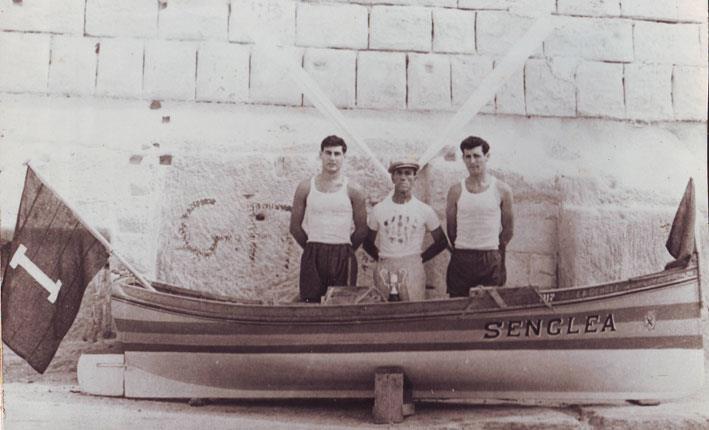
The boycott continued into 1960 and 1961, with limited participation by boats from Senglea, Marsa, and Kalkara in the official regatta. The St Julian's race was not held due to fears of further police confrontations.
In 1962, the Labour Party lifted the boycott. The National Regatta regained its popularity and competitiveness, with clubs from Birgu, Bormla, Kalkara, Marsa, and Senglea fielding their best crews. These teams continued to draw their rowers primarily from the remaining barklori (traditional local boatmen) in each locality.
By 1969, a group of Valletta enthusiasts convened at Marsamxetto to revive the Marsamxett/Valletta district. Their goal was to restore the district's former glory and pre-war regatta successes. Consequently, Marsamxett/Valletta was officially registered as a participant club that year.
During the 1970s, as many seasoned barklori retired due to age, districts began selecting crews from local enthusiasts rather than experienced boatmen. This tradition aimed to curb overly parochial attitudes and foster community spirit during competition. Historically, from the earliest boat races in the Grand Harbour (circa 1625-1630) through to the Tal-Vitorja race of 1822, crews were exclusively local boatmen and fishermen. This practice largely continued until the late 1960s.
Newcomers learned rowing techniques under the tutelage of veteran boatmen and enhanced their physical fitness through rigorous gym training. Over time, many of these young rowers honed their skills and earned places in their district crews, contributing to the winning of flags and trophies.
By the mid-1970s, all regatta clubs boasted crews capable of competing for and winning the coveted Aggregate Shield.
The National Regatta continued to be held annually on 8 September in the afternoon, following the traditional course of approximately 1,040 metres from Ras Ħanżir to the old Customs House. The race length varied slightly at times but remained a consistent and cherished fixture.
Between the mid-1970s and early 1980s, participation expanded to include two additional clubs: Birżebbuġa (1974-1976) and Marsaxlokk (1978 and 1980).
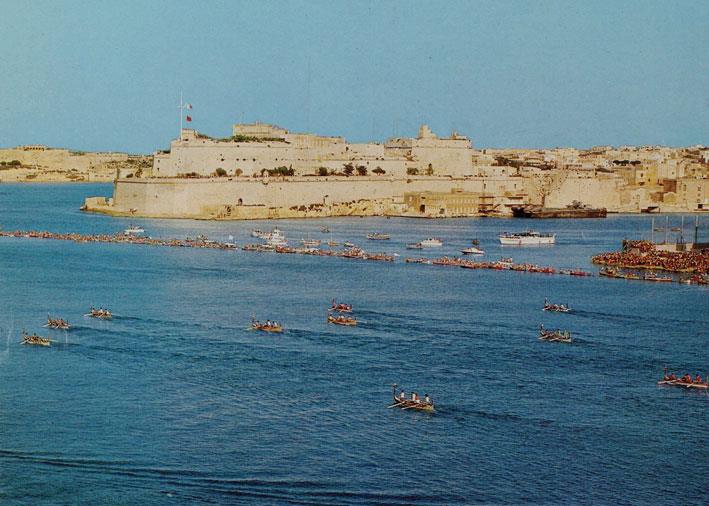
The golden years of the National Regatta: The Freedom National Regatta and the youth boat races
Throughout every edition, the regatta was contested with great sportsmanship, strength, and competitive spirit. Unlike in earlier decades, the 1970s and 80s saw a notable improvement in respect and friendship among rival crews, while the event itself remained a vibrant display of local pride and rowing excellence.
The National Regatta in Malta evolved into an annual sporting spectacle, drawing intense interest and passion from the public. New records were set, old ones broken, and fierce rivalries between the traditional participating districts continued to be on full display with every race - be it in the Pass Boats, Frejgatini, or Kajjikki categories. It was a time when the communities surrounding Malta's two principal ports grew deeply enthusiastic about the races, even petitioning the Malta Rowing Association (Għaqda Regatta u Qdif Ieħor) to organize additional regattas in the Grand Harbour.
In 1977, a new one-oar race was introduced into the National Regatta. However, since no points were awarded for it, it did not contribute to the Aggregate Shield standings.
At the time, all rowers were local residents registered with their respective clubs. Each athlete signed a binding agreement with their club's representative, typically for a period of three to five years - a standard practice among all competing districts. This system not only encouraged young, local talent to join their hometown clubs but also ensured that each club could field strong crews for both main boat categories. Naturally, the best rowers were selected to compete for flags and points in the bid to win the prestigious Aggregate Shield.
Unlike earlier editions, when rowers were tied to a specific category, the competitive climate of the 1970s and beyond saw rowers participating in multiple events. Often, four to six rowers from each club would compete in two or even three races. For example, the crew starting in the Regatta Fancy Boats (Dgħajjes tal-Midalji) race might also appear in the final Four-Oared Pass Boat (Ta' Bl-Erbgħa) event, with some rowers even competing in the Two-Oared Pass Boats (Ta' bi Tnejn).
On March 31, 1979, as part of the celebrations marking the end of British rule, the Maltese Government organized a commemorative boat race: The Freedom Regatta (Jum il-Ħelsien). Held at night in Dockyard Creek, from the old Customs House to the historic 1629 Knights' Macina, this race quickly captured the imagination of the local population. Though all crews strive to win a flag in this regatta, it's widely known that most rowers still consider winning the Palju in the National Regatta (tal-Vitorja) the ultimate personal and club achievement.
Originally conceived to promote young talent and create a pipeline for future competitors, the Freedom Regatta took a competitive turn in 1985 when the Regatta Association introduced an Aggregate Shield for the event. This shift led many clubs to replace amateur rowers with experienced professionals in hopes of claiming the new trophy - a move that, unfortunately, drove many promising amateurs away from the sport.
Over time, the Freedom Regatta became highly competitive, with rivalries creating tense atmospheres during races. Held annually in Dockyard Creek over a 1,140-metre course, the event had to be relocated in 1998 when the creek was handed over to a private consortium to be developed into a modern yacht marina. From then on, the races were held on the traditional National Regatta course, running from Ras Ħanżir (Marsa) to the Old Customs House - a 1,076-metre course, extended to 1,124 metres in 2002.
Between 1980 and 1984, women rowers also made history by participating in the Frejgatini races, marking the first time that female athletes competed in this prestigious sporting event.
In the early 1990s, the extension of the Lascaris Quay to accommodate cruise liners reduced the available width of the racing course. This change forced the Regatta Association to limit participation to a single boat per district in each category, down from the usual two. The decision, while necessary, caused considerable upheaval. Many rowers found themselves without a seat and had to wait for future opportunities or seek places in other clubs.
To prevent the loss of young talent, the Regatta Association, in collaboration with the Ministry of Culture and Sports, began adding youth categories to the National Regatta. Events for competitors under 21 and under 23 were introduced and increased in each edition. These youth events not only gave young athletes the chance to compete but also made them visible to clubs willing to recruit and invest in promising talent.
Rowers who managed to win any of the three category flags found themselves in strong positions, often staying with their clubs or being offered incentives to join rival teams in the pursuit of the Aggregate Shields.
By the 1990s, regatta enthusiasts pushed for more races beyond the traditional five events held in the Grand Harbour. However, the format and rules of the National Regatta remain strictly governed by legislation. In August 1975, the Malta Government Gazette published an official set of regulations for the September regatta. Many of these rules, especially those outlining boat specifications are still in effect today, with only minor updates to technical elements such as overtaking distances.
The Regatta Association introduced traditional boat races for youths to be held during the summer months under various age categories, ranging from 18 to 23 years. Initially, these races were organised near the local clubs, but they were later moved to the Grand Harbour. The course began from beneath the Lower Barrakka Gardens ( known as taħt iż-Żiemel) and ended in the inner part of Rinella Bay.
In 2002, the National Regattas consisted of ten races, divided into two categories: five for adults (mainly professional rowers) competing for the Aggregate Shield, and five for youth amateurs under 23 or 25 years of age classified as the 'B' category.
There were years when even older rowers participated in this category. Over time, the youth section evolved into a mixed group, regardless of age. As previously mentioned, the first four traditional boat races were gradually introduced into the regatta and were considered individual events. Eventually, with the addition of a fifth traditional race, the Regatta Association introduced a new shield, similar to the 'Open' category, to be awarded based on a points system. From then on, the National Regatta expanded to ten races divided into two categories: the 'Open' and the 'B' category.
This first parts of this article was published on 29 June and 6 July. The last article will be published on 13 July