Aldo Micallef-Grimaud stands as one of Malta's most influential modern painters, celebrated for his ability to blend technical mastery with emotional depth. His artistic journey, shaped by a rigorous education and a commitment to preserving Malta's cultural identity, left an indelible mark on the island's art scene. His work, spanning portraiture, landscapes, religious art, and even graphic design, reflects a profound dedication to capturing the essence of his subjects and the spirit of his homeland.
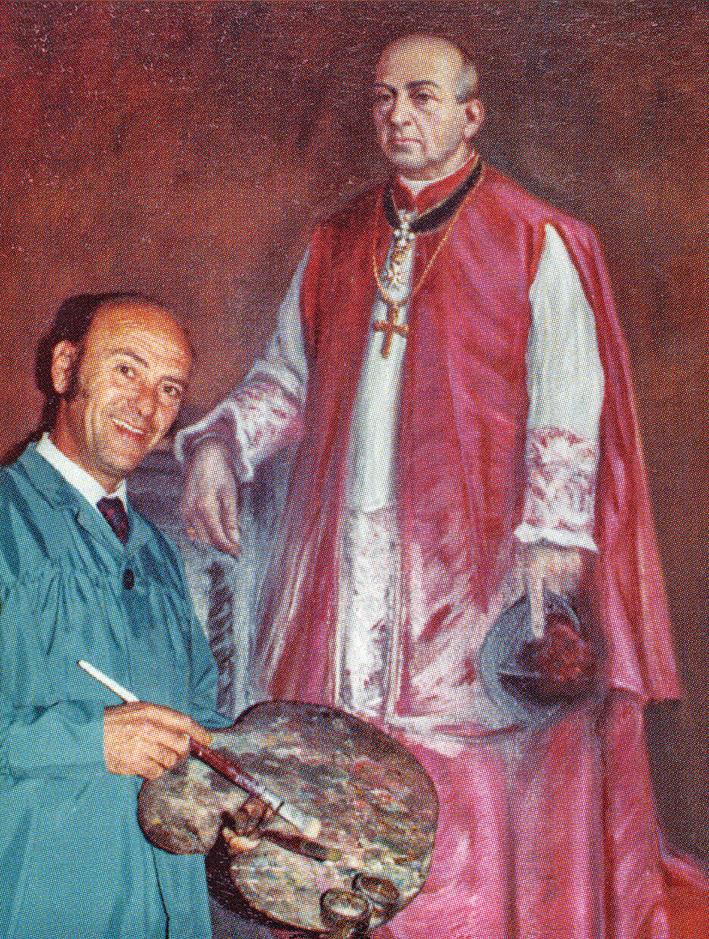
Aldo painting the portrait of Mons. Ignazju Panzavecchia
Significance of artistic education
Micallef-Grimaud's artistic education laid the foundation for his remarkable career. Admitted to the Malta Government School of Art at the age of 11, he trained under prominent Maltese artists such as Vincent Apap, Robert Caruana Dingli and Edward Caruana Dingli. This early exposure to academic traditions instilled in him a strong sense of discipline and technical precision. His studies extended to modelling and rigorous drawing and painting providing him with a comprehensive understanding of artistic techniques and cultural heritage. Under the British colony, in 1947, Aldo spent six months when he also joined the life art course at the Education Vocation Centre in Heliopolis, Cairo in Egypt. This allowed him to study the nude figure from life, a rare opportunity that expanded his artistic repertoire and deepened his technical expertise.
This rigorous training equipped Micallef-Grimaud with the skills to excel in various mediums, including oil, pastel, watercolour and sculpture. It also fostered his ability to blend traditional academic values with innovative techniques, enabling him to develop a distinctive style that balanced realism with impressionistic touches. His education not only shaped his technical mastery but also influenced his approach to capturing the emotional and cultural essence of his subjects, making his work timeless and deeply connected to Malta's artistic heritage.
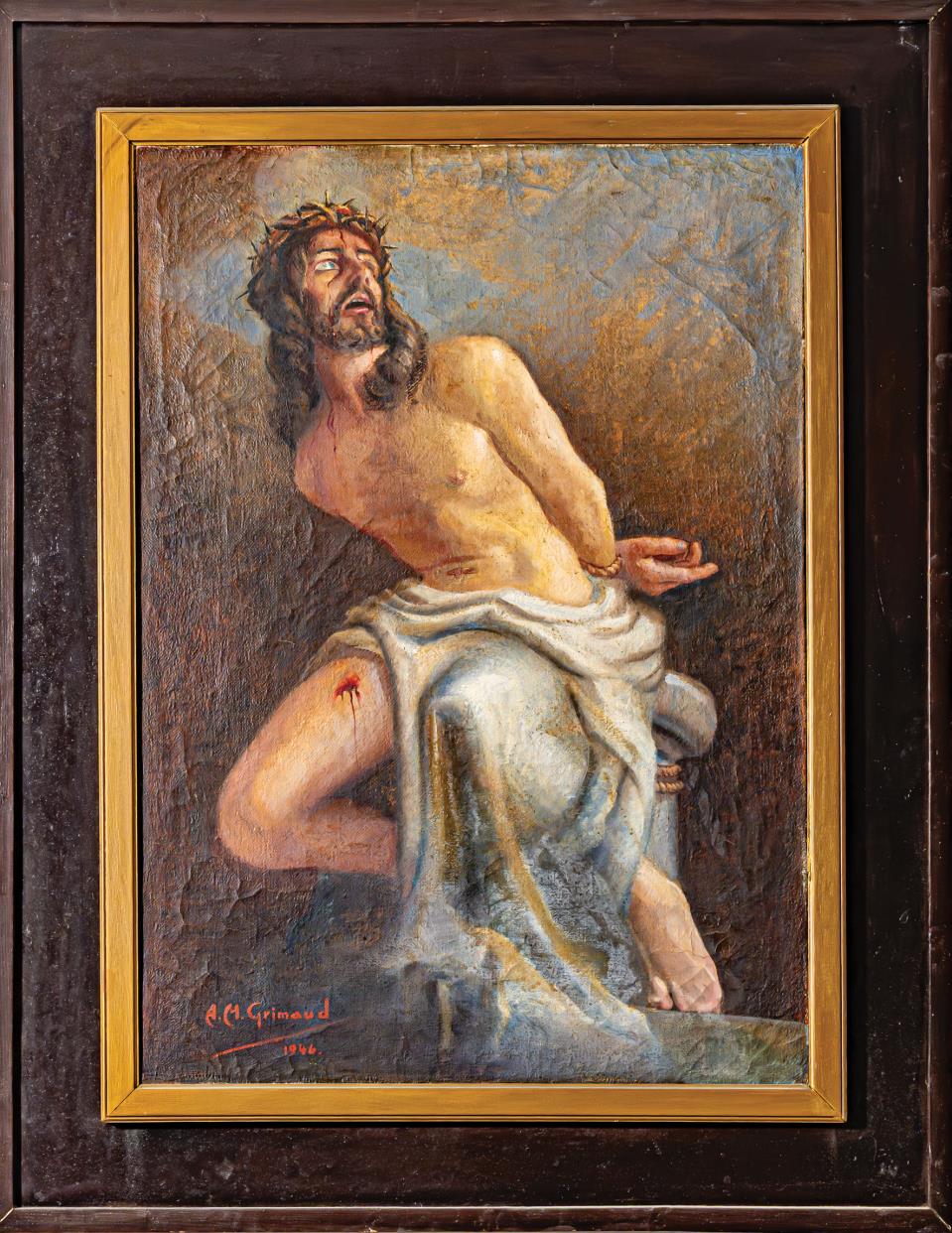
‘Flaggellation’, oil on canvas, 1946. Photo: P. Balzia/Heritage Malta
Portraiture: A window to the soul
Micallef-Grimaud's portraits are a testament to his ability to capture the psychological essence of his subjects. Whether depicting prominent figures like Sir Maurice Henry Dorman, well known clerics like Mons. Ignazju Panzavecchia, national poet, Dun Karm or everyday individuals, his works transcend mere likeness to reveal the emotional and social realities of his sitters. His synthesis of Romanticism and Social Realism allowed him to explore universal human emotions while grounding his subjects in their historical and cultural contexts.
His self-portraits, created at various stages of his life, offer a unique insight into his artistic evolution and personal identity. From his early oil self-portrait at the age of 15 to his later works in pastel and watercolour, these pieces reflect his mastery of light, shadow and form. They also reveal his introspective nature and his ability to convey psychological depth through subtle details and expressive brushwork.
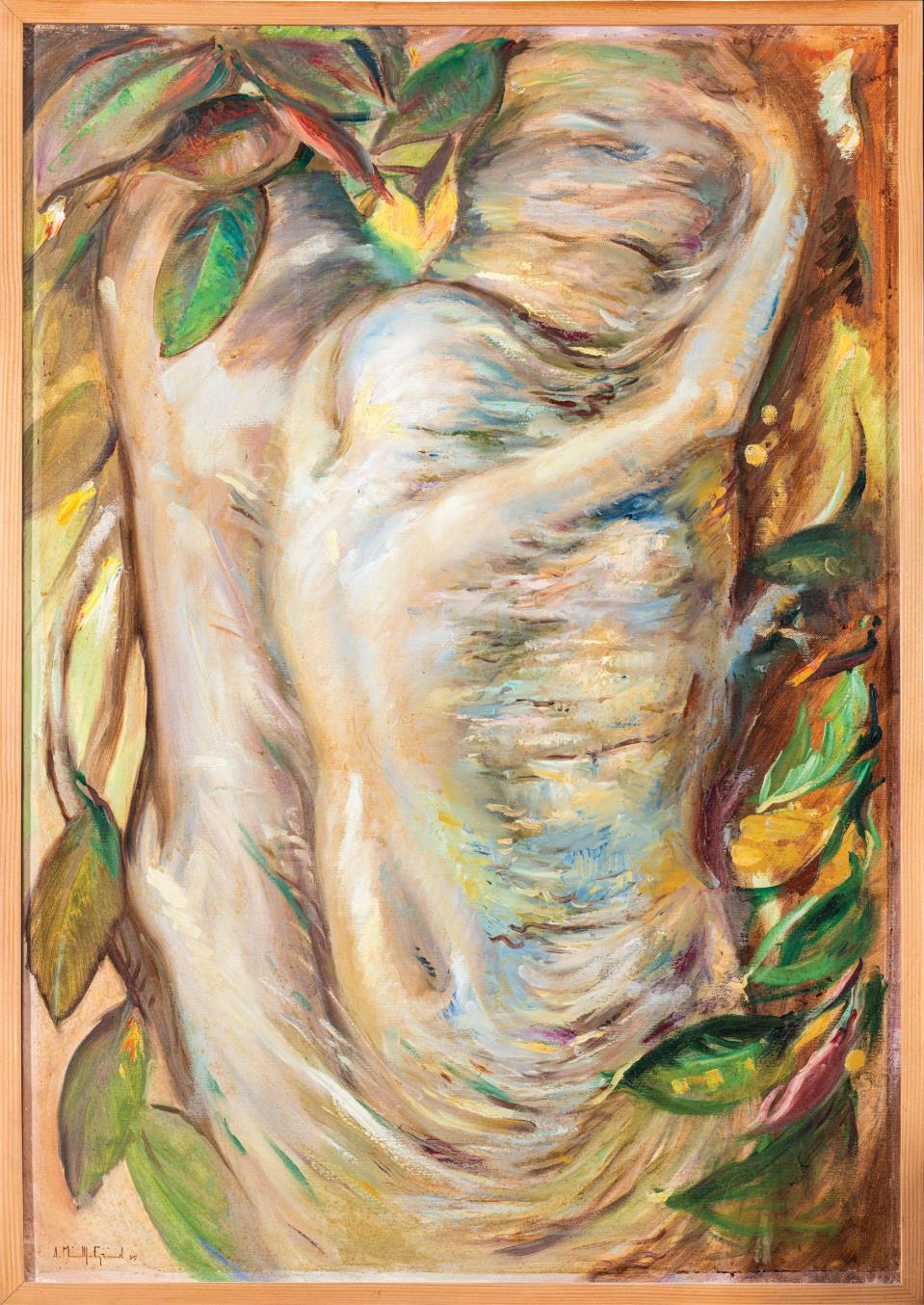
‘Arbre Enchanté;, oil on canvas, 1995. Photo: P. Balzia/Heritage Malta
Landscapes: A painterly archive
Micallef-Grimaud's landscapes, painted mostly during his en plein air painting sessions, immortalised Malta's rural charm and vernacular architecture. Works like Il-Fawwara and Wied is-Sewda showcase his ability to balance academic precision with impressionistic touches, capturing the interplay of light, texture and atmosphere. These paintings serve as a visual archive of Malta's natural heritage, preserving the island's identity during a time of rapid modernisation.
His landscapes often feature iconic Maltese landmarks, such as chapels, terraced fields, and coastal views, rendered with a keen eye for detail and a deep appreciation for the island's unique geography. Through his expressive brushwork and harmonious colour palettes, Micallef-Grimaud conveyed the timeless beauty of Malta's countryside and urban spaces, celebrating the island's cultural and historical legacy.
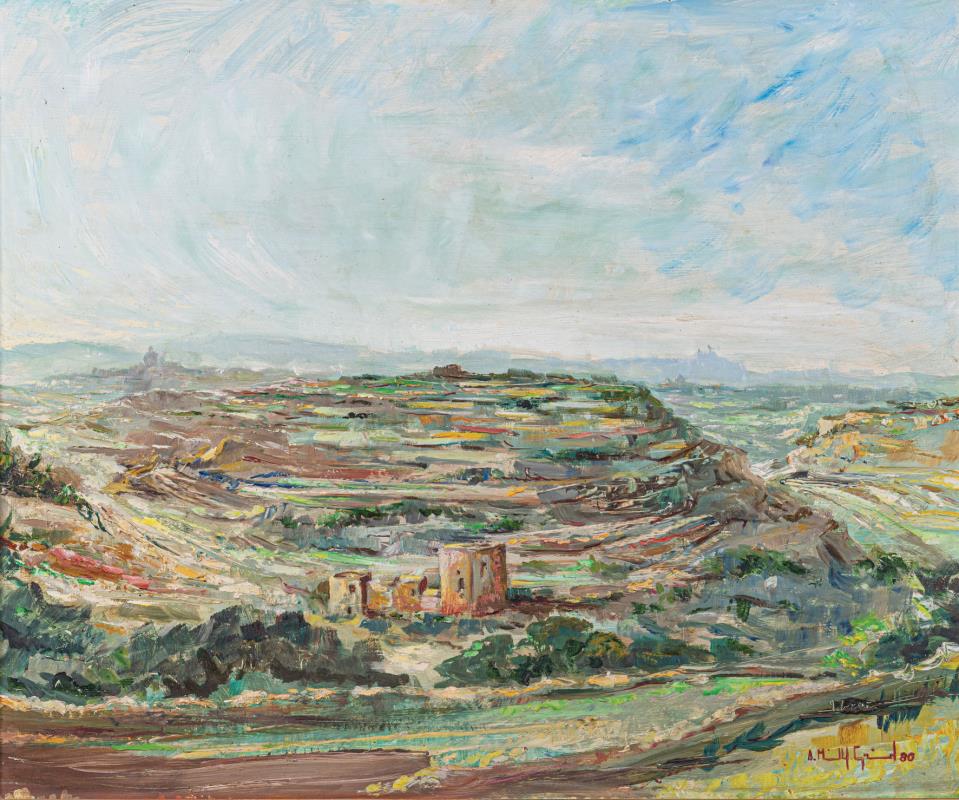
‘Il-Fawwara’, oil on canvas, 1980. Photo: P. Balzia/Heritage Malta
Religious art and symbolism
Micallef-Grimaud's religious works, such as The Saintly Message (The Annunciation) and Kristu, reflect his ability to blend traditional iconography with modernist aesthetics. His exploration of spiritual themes and symbolic imagery added depth to Malta's ecclesiastical art, making his contributions both innovative and timeless.
His religious paintings often feature dramatic chiaroscuro effects and vibrant colour schemes, creating a sense of divine presence and emotional intensity. Works like four spandrels found at St Augustine's Parish Church in Valletta and The Flagellation of Christ demonstrate his ability to convey theological narratives with both technical precision and artistic sensitivity. These pieces not only serve as devotional images but also invite viewers to engage with the spiritual and emotional dimensions of faith.
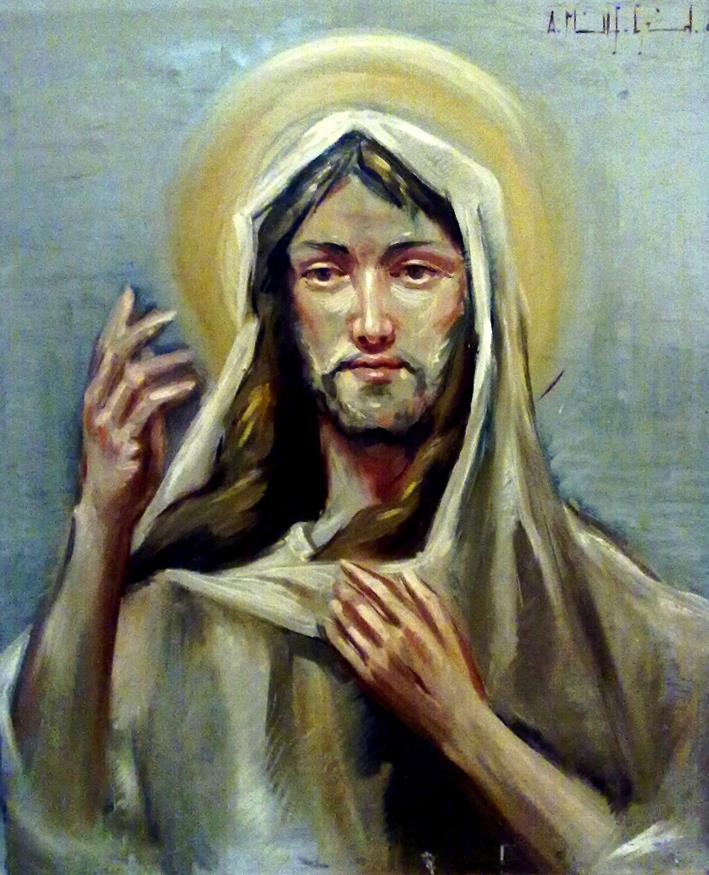
‘Kristu’, oil on canvas.
Surrealism and psychological depth
In works like Arbre Enchanté, Micallef-Grimaud ventured into surrealism, exploring themes of transformation and interconnectedness. This painting, along with its sculptural counterpart, demonstrates his ability to merge imagination with technical skill, creating art that resonates on both emotional and intellectual levels.
Arbre Enchanté represents a significant departure from his earlier works, showcasing his willingness to experiment with form and concept. The painting's fusion of human and natural elements reflects a deep engagement with themes of identity, growth and unity with nature. Its dynamic brushwork and vibrant colour palette evoke a sense of movement and vitality, inviting viewers to interpret its symbolic and psychological layers.
Graphic design and carnival masks
Beyond his canvases, Micallef-Grimaud was also a skilled graphic designer, creating stamps, posters and carnival masks that enriched Malta's visual culture. His designs for the Malta National Lottery and his award-winning carnival masks demonstrate his versatility and creativity, blending traditional motifs with innovative concepts.
His grotesque masks, created for the Malta Carnival, are particularly noteworthy for their satirical and allegorical themes. These masks, often exaggerated and symbolic, reflect his ability to critique societal norms and human behaviour through visual art. They also highlight his playful and imaginative approach to design, adding a unique dimension to his artistic legacy.
In 1953, Micallef-Grimaud participated in a competition for the design and embellishment of the fountain situated before the entrance to King's Gate, now known as City Gate (Putirjal). His design, submitted under the nom de plume Mythologist, placed second to that of Vincent Apap.
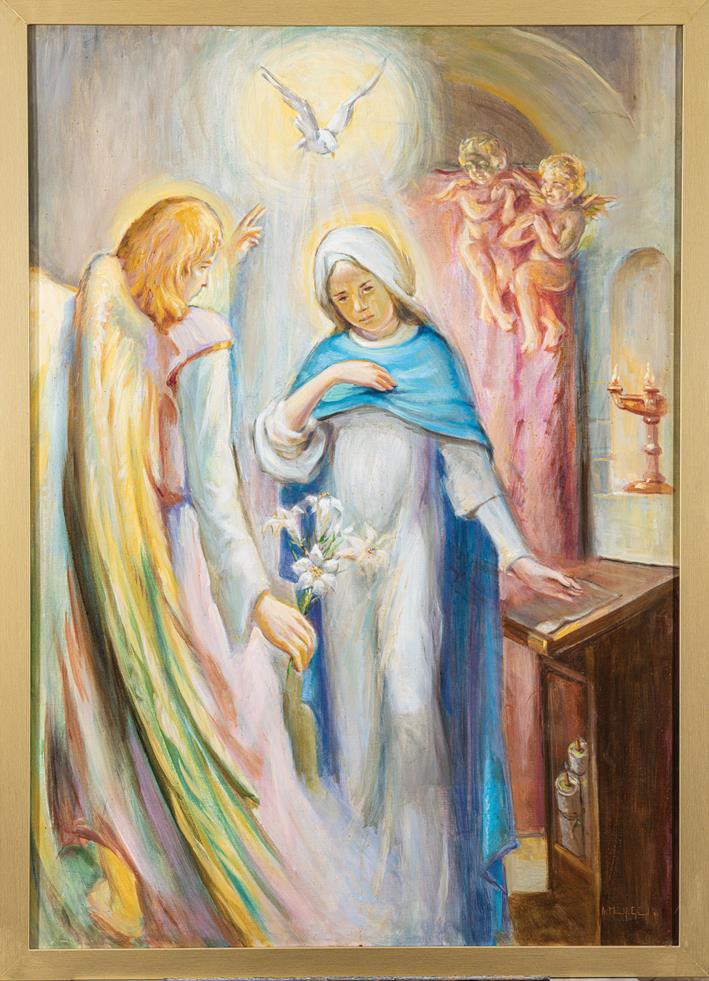
‘The Saintly Message’, oil on canvas, undated. Photo: P. Balzia/Heritage Malta
Legacy and influence
Micallef-Grimaud's influence extended beyond his artistic creations. He inspired countless young artists to see art-making as a civic responsibility, emphasising empathy and technical excellence. His generosity in lending works to educational initiatives and his active participation in exhibitions ensured that his art reached diverse audiences, fostering a deeper appreciation for Maltese culture and heritage. For some time, Aldo also was invited as a guest lecturer at the university of Malta.
His work remains a celebration of the human spirit and Maltese identity. His ability to dignify the overlooked and complicate the familiar ensures that his legacy endures as a living resource, inspiring future generations to see with sympathy and remember with care.
Conclusion
Aldo Micallef-Grimaud ranks among Malta's most compelling modern painters, not only because of the finesse with which he handled brush and pigment, but because every stroke seems fuelled by an ethic of care. His portraits, whether of public figures or anonymous villagers, never settle for mere physiognomic likeness. Instead, they probe for the tremor of feeling beneath the skin, the small gestures that betray hope, fatigue, humour or resolve. That capacity to distil the psychological life of his sitters owes much to a consciously adopted synthesis of Romanticism and Social Realism: The Romantic belief that art can unveil inner truths, and the Realist conviction that those truths are inescapably embedded in social circumstance.
If portraiture forms the backbone of Micallef-Grimaud's reputation, his landscapes and townscapes reveal a complementary, but equally incisive, facet of his vision. Painted with a lighter, almost lyrical touch, these scenes capture the tessellated geometry of limestone farmhouses and chapels, the richly terraced fields, and the incandescent Mediterranean sky.
In a significant development, Heritage Malta has published a book authored by Louis Laganà, with the collaboration of Aldo's daughter, Nadine Micallef-Grimaud. This, to mark the centenary from Aldo Micallef-Grimaud's birth. The book features a chapter by Nadine, offering a heartfelt exploration of her father's artistic journey and her own connection to his legacy. This publication coincides with an exhibition of Micallef-Grimaud's works, running from 5 September to the end of the month at the new gallery in Muża, Malta's National-Community Art Museum. The exhibition promises to be a profound celebration of his artistic contributions, providing an opportunity for audiences to engage with his work in a fresh and immersive setting.
Ultimately, the legacy Micallef-Grimaud bequeathed is twofold. At the level of form, he demonstrated how Romantic sensitivity and Social Realist commitment can converge in a visually arresting language that remains accessible to broad audiences. At the level of content, he carved out a visual chronicle of Malta's people and landscapes at a pivotal historical juncture, offering future generations a richly textured mirror in which to study themselves. His canvases, whether portraying the weathered face of a quarry worker or the lilting contour of a terraced hillside, ask us to slow down, to look closely, and to recognise the quiet profundity of everyday existence. That invitation to see with sympathy and to remember with care ensures that his work will endure not simply as cultural heritage but as a living resource, continually renewing our understanding of what it means to be human and, more specifically, Maltese.