'George Sammut:Unfinished Business'
Edited by Austin Sammut
Publisher: Midsea Books/2024
Pages: 308 pages
In an age where commentary often vanishes as quickly as it appears, George Sammut: Unfinished Business offers a rare and resonant echo of a voice that once shaped public discourse. The popular column Roamer, first published in The Sunday Times of Malta in February 1955, was penned by a writer whose observations helped define the national conversation. It was an open secret that the person behind it was George Sammut - until his death in 1984. Others followed: John Manduca, John Micallef... but that's another story. However, Mabel retained the name Roamer.
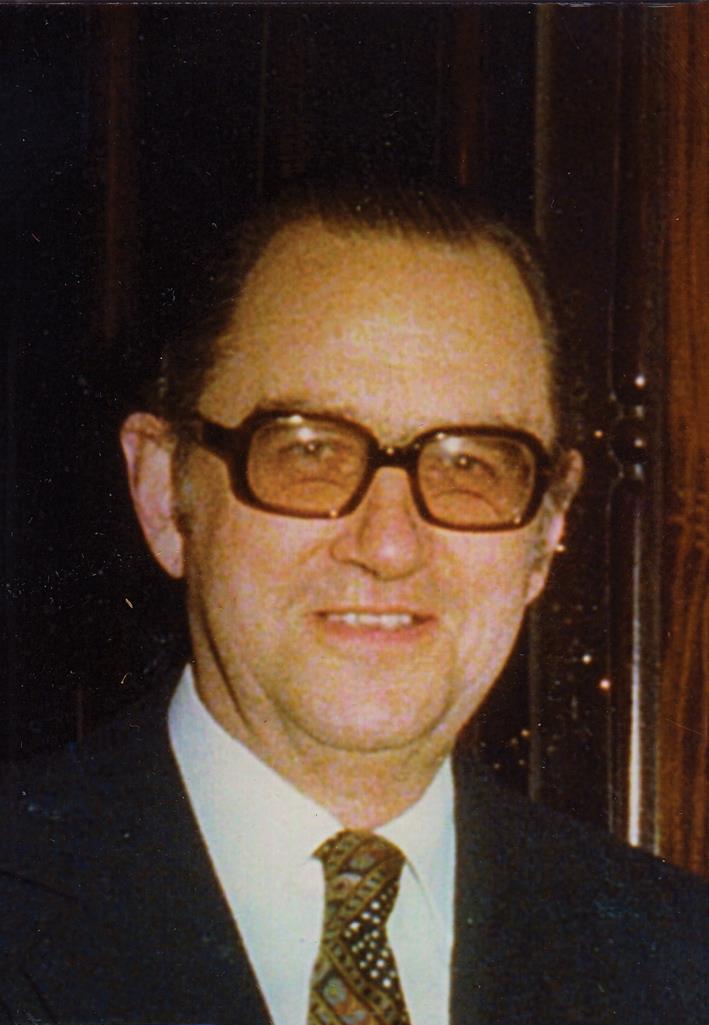
George Sammut

George with Mabel Strickland, Captain J.E. Agius and Lord Astor of Hever, President Commonweath Press Union, at the U.K’s atomic station, at Calder Hall, Northumberland (1957)
I can say with certainty that George Sammut wrote his mind but that throughout his 27 years of journalism with The Times of Malta he never insulted anyone or make them feel as if 'they are not enough.' That was left to others later on, less ethical who depended on creating sensation to be read.
His wife Lola, writes in the Introduction: "I think I can say that George made a great impact on Maltese journalism. He changed the character of a Maltese newspaper by introducing historical and literary articles as well as inspiring and interesting letter pages; his Roamer's column became compulsory and exciting reading for many....
George was a controversial journalist and his strength lay in printing the truth but never failing to admit if he was wrong. His standing by his principles upset many - both friends and enemies."
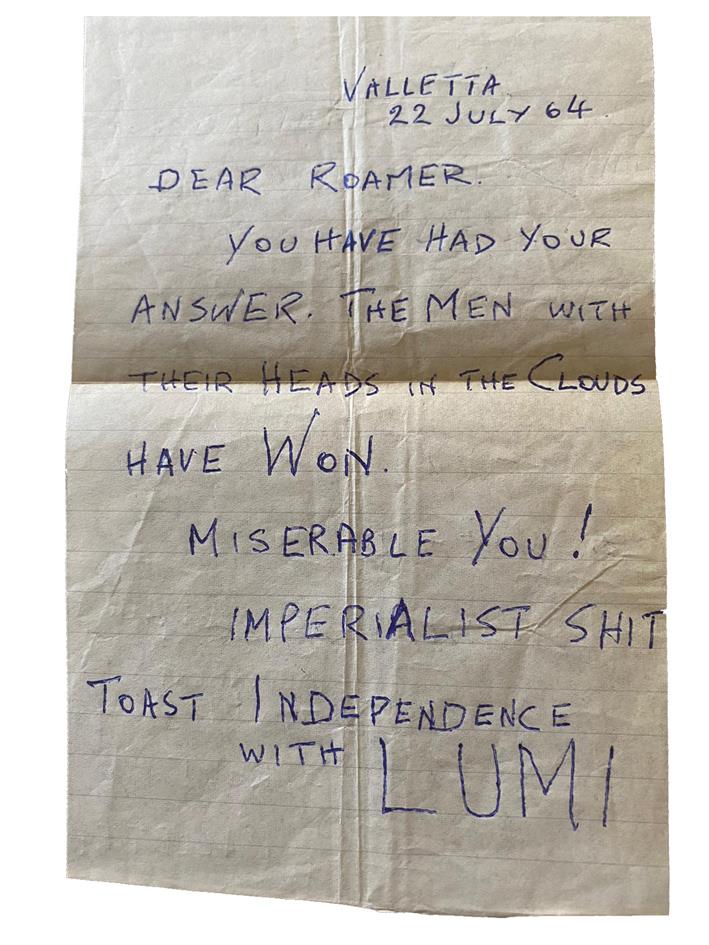
An anonymous letter to ‘Roamer’ regarding Malta’s Independence.
Before I go on I would like to advise you to read the book in an orderly fashion. I am an 'untidy' reader and like to browse before anything else. The preliminary pages are full of interest and there is much to learn from them. They set the scene as it were.
There is the Foreword by the editor and George's eldest son Austin: lawyer, journalist, broadcaster followed by the Preface by the late Peter Nichols, a close friend of the Sammut family, and Rome correspondent for The Times (London). He was also an expert on Vatican affairs who describes George as 'A Gentle Person with a Strong Personality'.
A second Preface is written by Lawrence Grech, a former editor of The Sunday Times of Malta who joined the Times as a cub reporter 'when he was not yet 16, in December 1963' and who worked closely with George and considered him his mentor.
The Introduction is by George's wife Lola. Who knew him better than her?
Whether dissecting politics, poking at absurdities of everyday life, Sammut wrote with clarity and conviction that made readers pause, laugh, and think. His columns - sharp, humane, and often prescient - reflected the era in which he was writing.
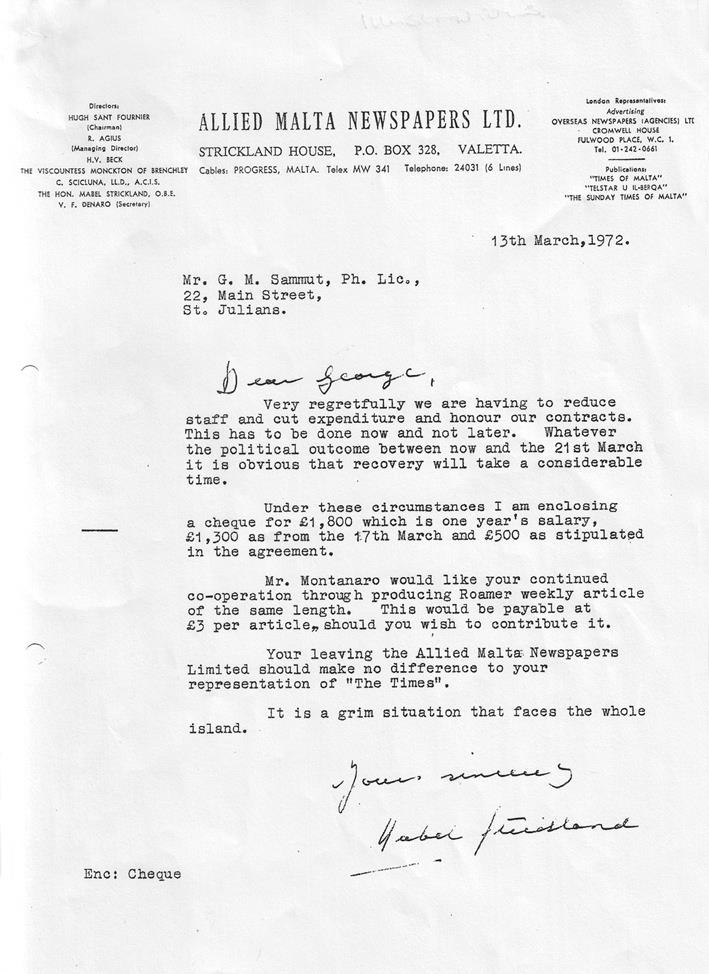
Mable Strickland’s letter dismissing Sammut, abruptly cutting short his 26-year journalistic career.
This posthumous collection of memoirs and reflections, lovingly edited by his son, revives the voice of "Roamer."
The volume gathers fragments of a manuscript left untouched since George's untimely death, offering a vivid portrait of a journalist who wielded his pen with both elegance and edge.
The book traces his recollections up to 1965, providing a behind-the-scenes look at his 27-year career at The Times. It's a story of professional triumphs, editorial clashes, and a deep love for the craft of writing. Sammut's prose -precise, unpretentious, and quietly evocative - is often wry, occasionally melancholic, and always deeply human. There's a rhythm to his writing that suggests a man who knew how to listen - to the world, to his readers, and to his own conscience.
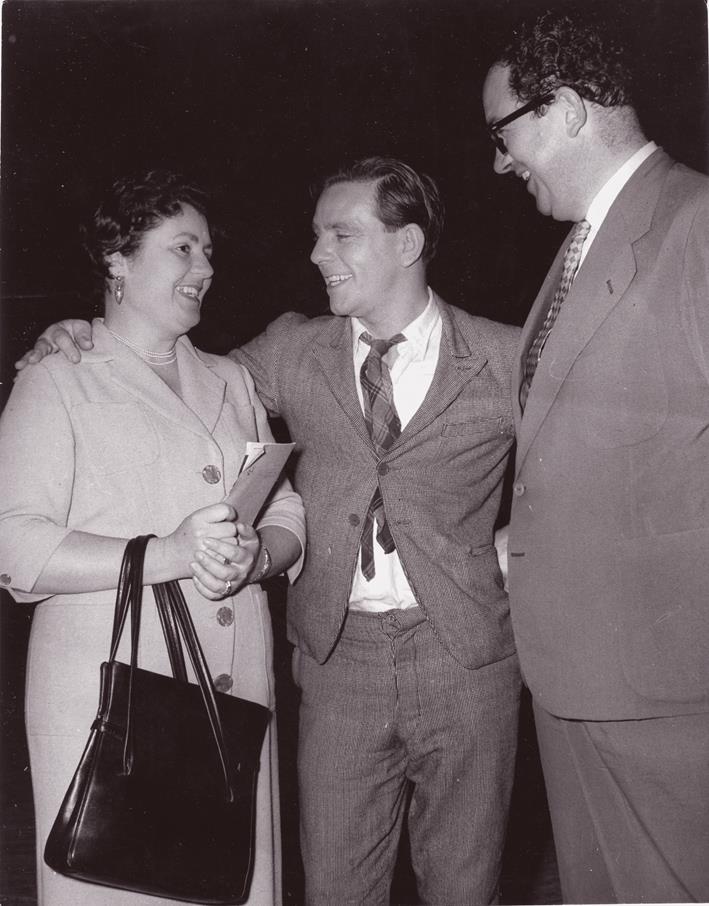
Lola and George with Norman Wisdom
Spanning a Malta in transition - from colonial residue to independent identity - his reflections offer a rare insider's view of the press during a politically charged era. His dismissal in 1972, "on the flagrant excuse of redundancy" by Mabel Strickland herself, adds a layer of poignancy: a journalist silenced just as his voice had become indispensable. "Losing his job was an unexpected and shattering blow for George, which he bore with dignity but from which he never recovered," Mrs Sammut writes in the Introduction. He was only 52 when this happened.
The book is not just about one man's career - it's about the fragility of truth-telling in a small but complex society.
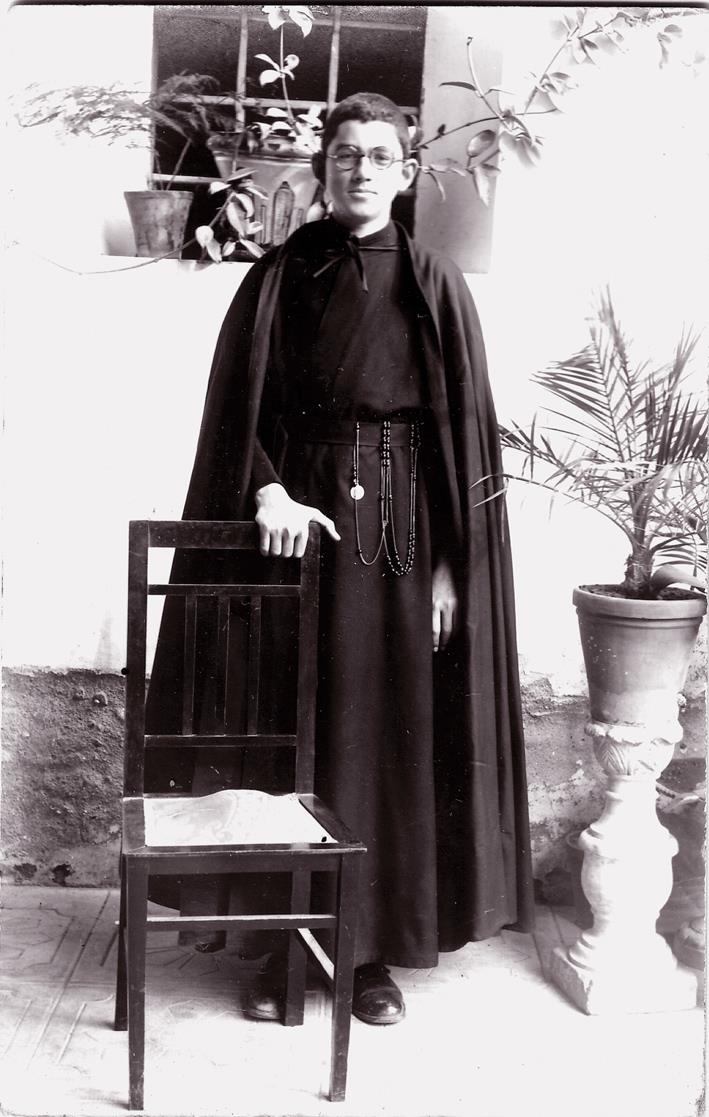
George as a Jesuit novice at the age of 16 in 1935 in Italy to study for the Jesuit novitiate

Editor Austin Sammut
Austin Sammut's role as editor is both filial and literary. He doesn't merely compile his father's work - he curates it with reverence and restraint. Publishing the manuscript as it was left in 1984, unfinished and unpolished, preserves the authenticity of George Sammut's voice. Austin's Foreword and his Epilogue carry the weight of both pride and grief - a son giving his father the final word he was denied.
Unfinished Business is aptly titled. It speaks not only to the incomplete manuscript but to the broader idea that some lives - and some voices - are never truly finished. For readers who remember Roamer's Column, this book is a homecoming. For those discovering him anew, it's an invitation to engage with a writer who understood Malta not just as a place, but as a story still being written.
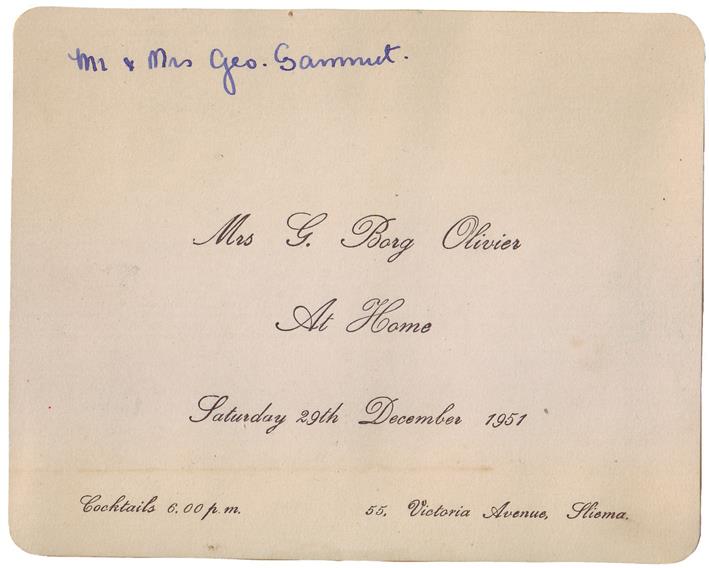
The visuals - letters, clippings, invitations, cuttings and personal fragments - do more than illustrate; they testify.
Reproduced at the back of the book is the 48-page Special Issue of March 28, 1966, commemorating the 400th anniversary of Valletta's foundation, "George's opus magnum", with contributions by experts such as Stewart Perowne, Lt. Col. A. Samut-Tagliaferro, Chev. Dr. Edward Sammut, Dr. Paul Cassar, Prof. Chev. Joseph Galea, J. Cassar Pullicino, and other well known names. I was unable to read any of it - the print is far too small. Looking at the adverts naturally made me feel nostalgic (I feel nostalgic most of the time these days. Old age they tell me.); there are adverts for businesses, some of which I remember and many of which no longer exist: Sapienza Bookshop, Shensa House, du Maurier ('in the distinguished red box'), Pip Stores in Sliema, Ronson lighters, Witney blankets - my mother swore by them "pure wool" and bought them both for our beds at school and at home.
For me it is a pity that a few of Roamer's more pungent columns were not reproduced as an appendix. I enjoyed Appendix A: Interviews with Ministers and Ambassadors 1966. It makes for fascinating reading.
This book reminds us that journalism is not just about reporting facts, but about preserving memory, challenging power, and sometimes paying the price for doing so. In reviving his father's voice, Austin Sammut has given Malta not just a book, but a legacy restored.
It is most definitely 'a good read'.