What happens when a photographer known for capturing the world turns towards the act of transforming it? Marking the first exhibition dedicated to Stuart Franklin's painting and drawing practice, Characters in search of an author reveals a visual language concerned not only with what is seen, but with the connections formed between human experience, landscape, and memory.
Franklin (b. 1956) bridges a distinguished career as an acclaimed international photographer with an active, expanding practice as a fine artist. He studied drawing and painting at Oxford Polytechnic and the Sir John Cass School of Art before earning a BA in photography at the West Surrey College of Art and Design. His subsequent geography doctorate at the University of Oxford continues to inform his focus on landscape, environment, and visual encounter. Additionally, he held a professorship in Norway and remains an affiliate professor at the University of Malta.
Over a career spanning four decades, his work has developed within, and contributed to, major international photographic networks - one example being his association with Magnum Photos, where he served as president for a number of years. This sustained presence is reflected in numerous awards and senior positions, as well as in the wide circulation of his work: held in national collections, exhibited internationally, and also publishing 13 books to date.
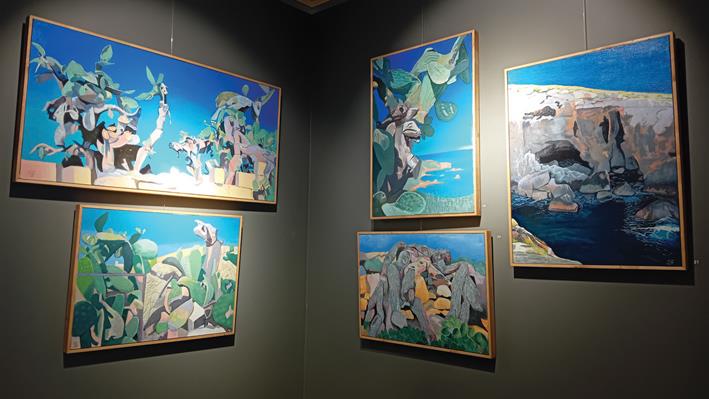
While internationally recognised for his photographic practice, Franklin has in recent years returned to the disciplines of drawing and painting that shaped his early artistic training. Although few individual paintings have previously been exhibited in Valletta and London, Characters in search of an author, curated by Lara Bugeja at the Malta Postal Museum and Arts Hub, marks the first exhibition dedicated to his oil paintings and etchings produced over the past decade in his studio in Gozo. From a body of approximately 70 to 80 works created during this period, the exhibition presents a focused selection centred on landscapes, figures within landscapes, and reflections on memory.
An individual room brings together three of Franklin's books alongside 10 etchings produced by printer Peter Bennett and printmaker Marta González, each accompanied by a small number of hand-drawn pencil additions by Franklin. While Ambiguity revisited: Communicating with pictures (2020), Narcissus (2013), and The Documentary impulse (2016) each explore distinct subjects - from the relationship between photography and truth, to self-representation, ambiguity in art, landscape and memory - their presentation here establishes a conceptual framework through which the rest of the exhibition can be read. The restrained visual language of art itself, characterised by limited colour and an emphasis on texture and surface, reflects Franklin's broader interest in the processes through which images acquire meaning, inviting attention not only to what is represented but to how meaning is produced and interpreted.
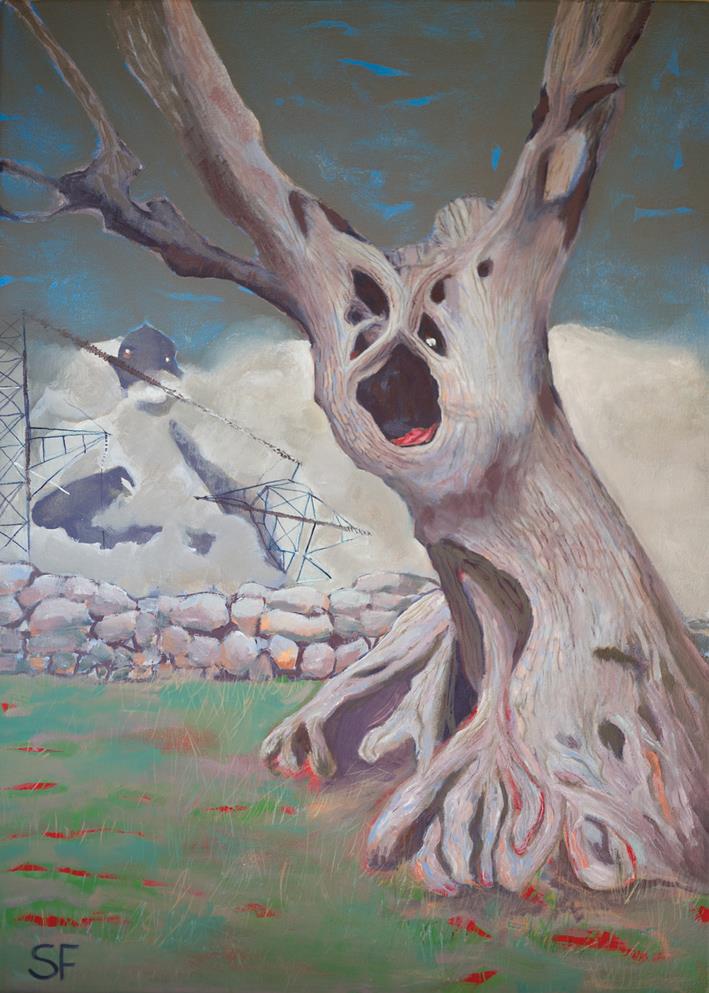
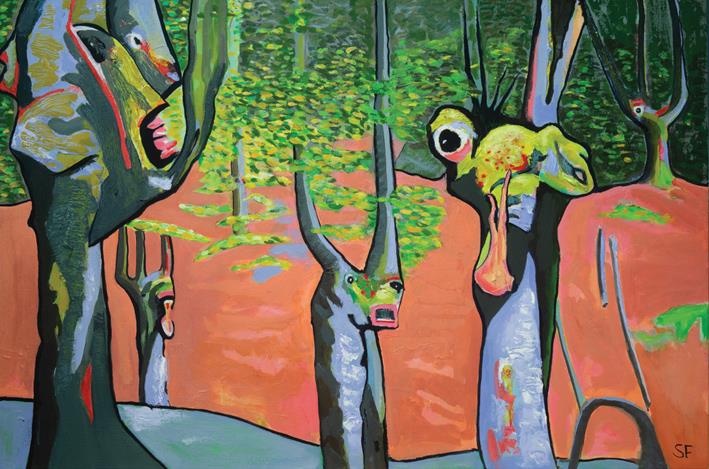
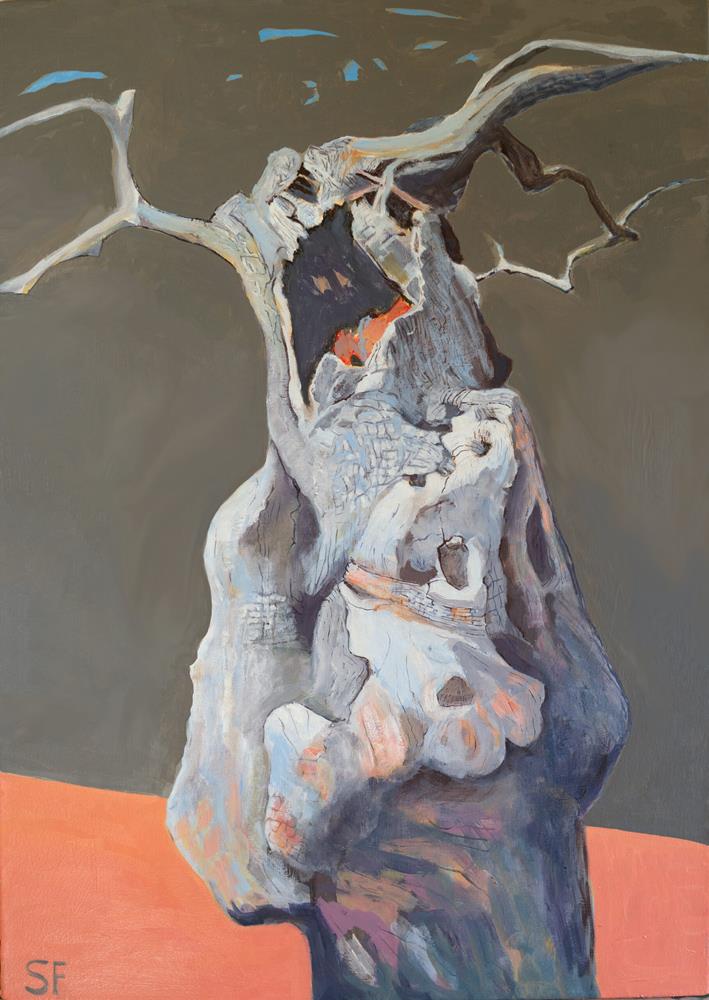
These concerns extend into Franklin's paintings, where landscapes and figures are no longer approached solely as observed subjects, but as spaces through which memory, expression, and subjectivity are explored. Works such as La Jana and Screaming tree, both based on photographs taken by Franklin, reveal how the act of painting transforms observation into something more ambiguous. This is further evident in paintings such as Family love, where natural forms appear to possess a sense of character and agency. This personification of landscape reflects both a contemporary awareness and a deeper history of art, with Franklin tracing this impulse back to figures such as Andrea Mantegna and Henry Moore.
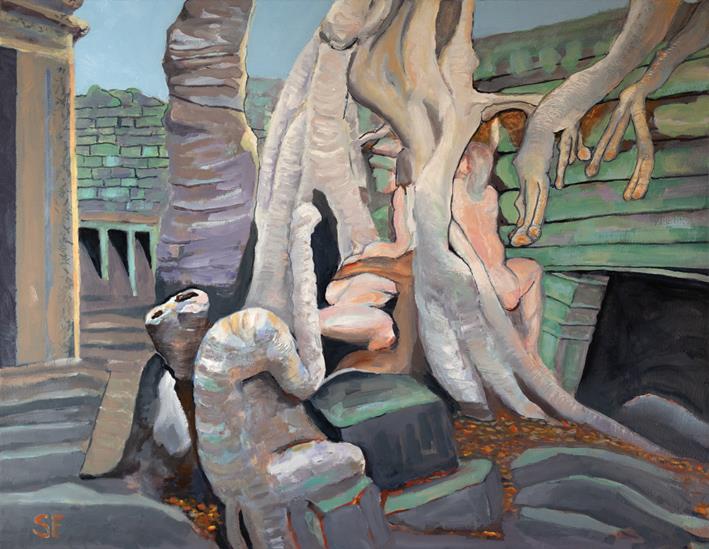
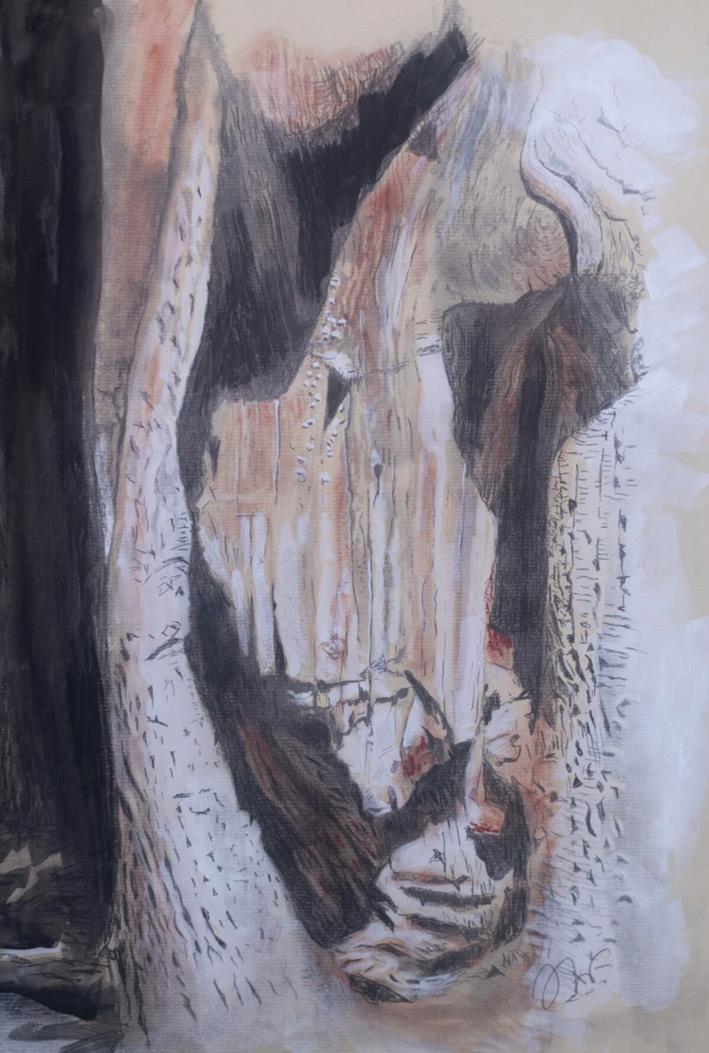
Familiar places acquire an uncanny quality, moving beyond documentation towards a more subjective engagement with memory. This is particularly evident in The Last Judgement (after Rubens), which emerged from a series of studies made in Cambodia. While looking at the roots of trees at Angkor Wat, Franklin recalled the falling figures in Rubens's The Last Judgement, transforming this remembered image into a reflection on the forms of the natural landscape.
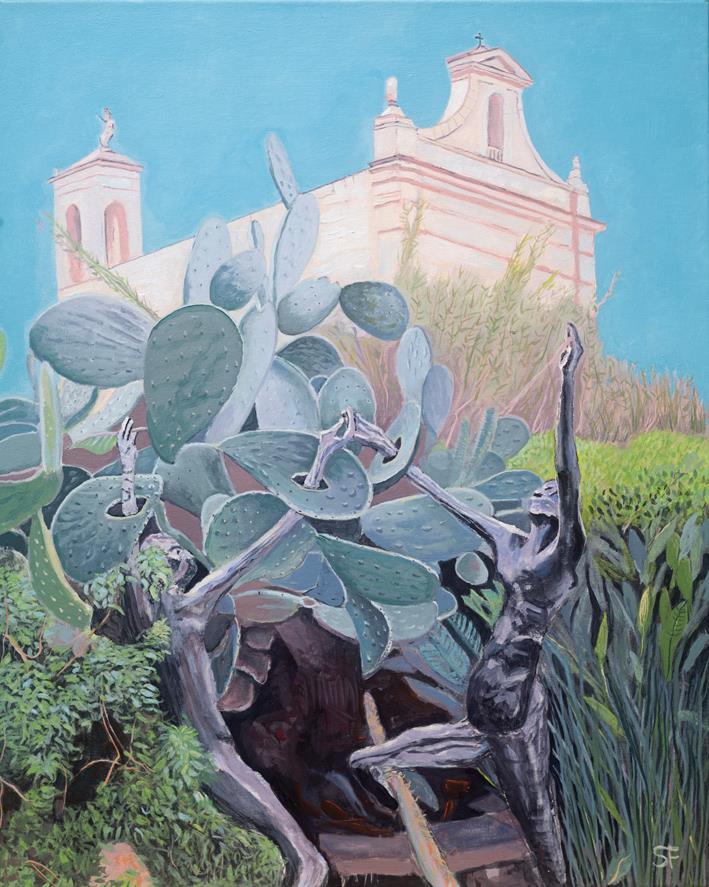
Similarly, Disenfranchised revolution, developed from studies of stunted beech trees in northern Spain, reflects Franklin's attraction to the expressive potential of natural forms, as he explains: "I was drawn to the shapes, the forms in the stunted trees, once used for charcoal-making."
Beyond their conceptual concerns, Franklin's paintings are distinguished by his approach to colour and the ways in which it shapes both atmosphere and form. His influences are varied, as he notes: "I have been influenced by many painters: Cézanne, who created perspective with colour. The bold, Mediterranean colours of Nicolas de Staël, the vivid colours of the post impressionists: Pierre Bonnard, Matisse for example." These influences become increasingly evident in his more recent paintings, where a compelling flatness emerges through bold tones and distinct blocks of form.
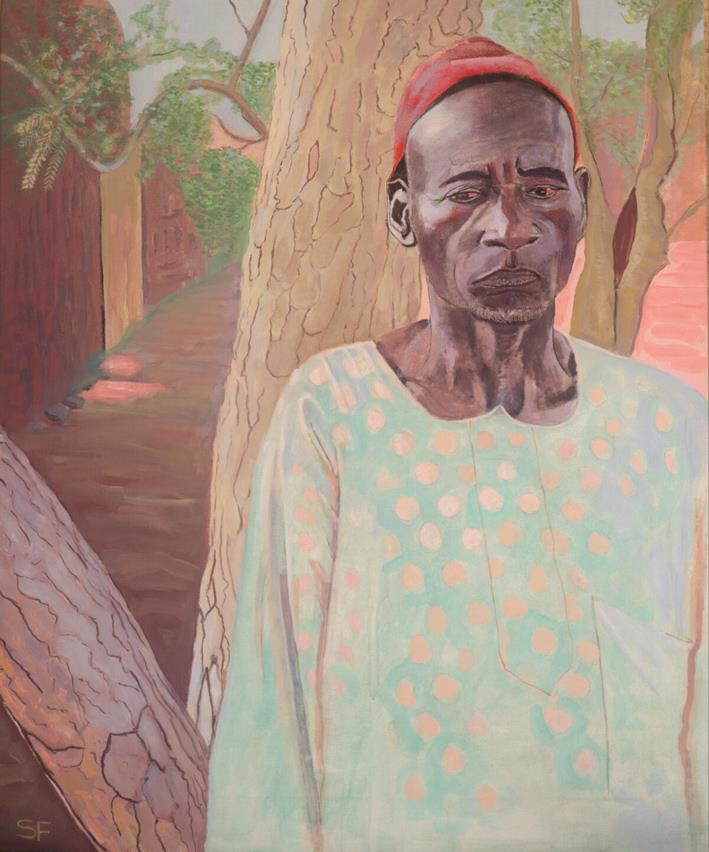
Depth is not entirely abandoned, but instead is created through the relationship between colour, form, and surface handling.
Marking a milestone in Franklin's artistic career, this exhibition signals a renewed recognition of his practice beyond the field for which he is internationally known. Painting and drawing offers a more immediate and tactile outlet for him, as he explains: "Painting allows for considerably more human connection, subjectivity, and personal expression: in colour, form, drawing, design, mark-making." For Franklin, this is not a passing shift, but has become an essential part of his daily life: "I think about painting or I paint or draw every day. Long may that continue!"
'Characters in search of an author' is open to the public until 29 July at the Malta Postal Museum and Arts Hub