In a world increasingly defined by unpredictability, A Few Rules for Predicting the Future looks ahead not with apprehension, but with curiosity and awe. This exhibition opens a space where imagination and inquiry coexist, where the boundaries between art, philosophy, and possibility dissolve into something fluid and alive. It proposes that the future is not a distant horizon waiting to arrive, but a terrain that we shape through the simple yet radical act of imagining.
Drawing inspiration from the writings of celebrated Afrofuturist author Octavia E. Butler, the exhibition unfolds as a meditation on transformation and the human capacity for adaptation. Butler's voice, visionary and precise, reminds us that time itself is elastic, and that change is the only constant thread connecting past, present, and what lies beyond. Her essay A Few Rules for Predicting the Future, written 25 years ago, feels uncannily resonant today, a quiet guide for navigating a world in flux, where the line between what is real and what is possible grows ever thinner.
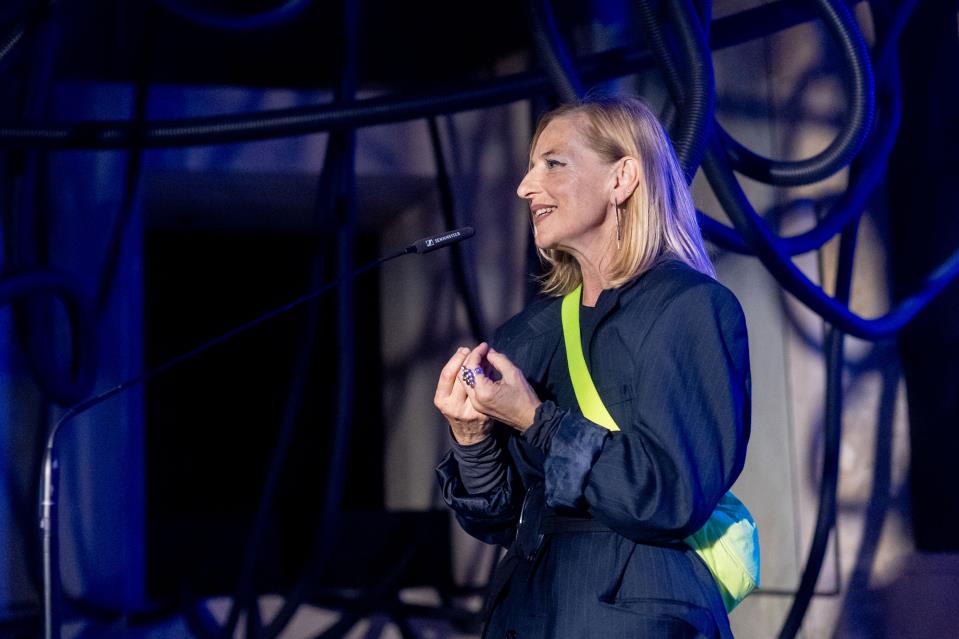
For curator Maren Richter, Butler's thought provided both a compass and a challenge. "The only lasting truth is change," Butler wrote. "It resonates deeply," the curator says, "in a time when social, ecological, and political systems are all in flux, as we face it right now." Guided by this principle, the exhibition doesn't seek to predict what comes next, but to explore how we might live and think amid uncertainty.
The result is a collective exhibition with international artists from around the world that unfolds like a constellation of perspectives. Each artwork occupies the threshold between what has ended and what is yet to emerge. Together they create a terrain of reflection and renewal, inviting visitors to pause, to reconsider the assumptions of progress, and to sense how imagination might serve as both refuge and catalyst.
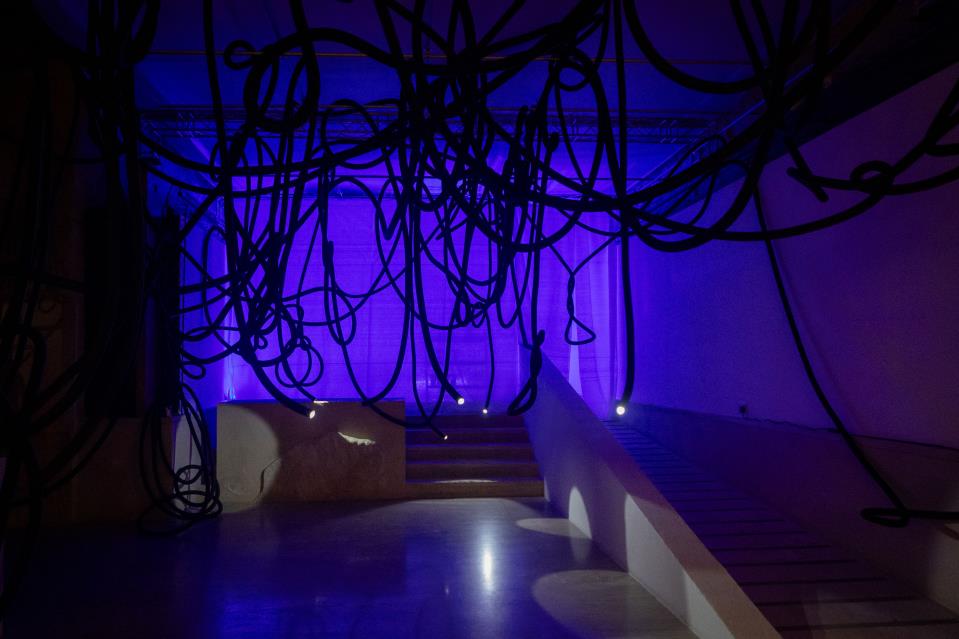
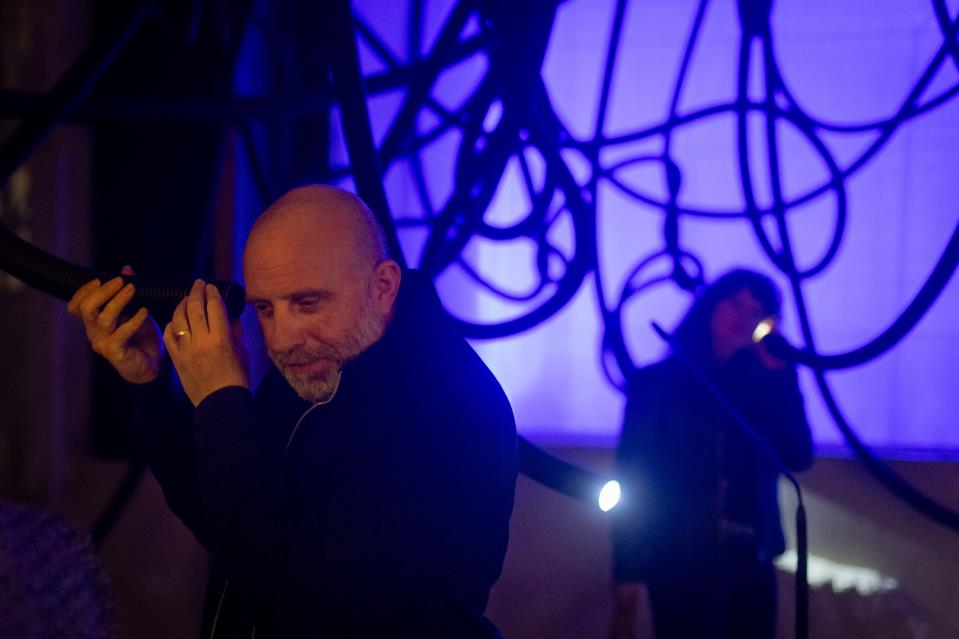
Stepping into the exhibition is like entering a realm suspended between dream and experiment. Light and sound ripple through the space, activating it with an almost breathing rhythm. Sculptures seem to waver between material and idea, video works replay fragments that feel part memory, part prophecy, and installations pulse with a sense of continuous becoming. The design itself mirrors the fluidity of Butler's ideas, suggesting that perhaps the future isn't somewhere ahead, but all around us, quietly unfolding in every present moment.
Richter describes the exhibition as a "rehearsal", a place for ideas and emotions to be tested and reshaped. To her, the notion of rehearsal implies openness rather than finality, a willingness to keep trying. "If something is still in rehearsal," she explains, "then it can always be recalibrated, readjusted." The exhibition adopts this ethos, presenting itself not as a finished statement, but as a living inquiry; one that asks its audience to imagine, to practise, to co-create.
Among the works on view are interactive pieces that use game structures as a form of engagement and critique. These projects turn the act of play into a way of seeing more clearly. "By abstracting real-world systems, games allow us to perceive those systems with new eyes," says Richter. "They can reveal biases, challenge norms, and uncover the invisible rules that shape our everyday lives." In this sense, the games here are not escapes from reality, but tools of encounter. They invite visitors to participate, to test choices, and to feel the consequences within a constructed world that echoes our own. "The games featured here don't offer escapism," Richter notes. "They offer encounters."
Throughout the exhibition, this notion of encounter remains central. Each piece, whether immersive or intimate, calls on the viewer to respond; not passively, but emotionally and imaginatively. "This exhibition doesn't claim to offer definitive answers," Richter reflects, "but it hopes to create new questions that can emerge."
Those questions ripple outward long after leaving the gallery. A Few Rules for Predicting the Future invites us to consider uncertainty not as a void to be feared, but as a field rich with possibility. It reminds us that change, though unsettling, is also creative. "If there's one takeaway," Richter says, "I hope it's the sense that uncertainty isn't something to fear, it's a space of possibility."
In this vision, art becomes both compass and catalyst, guiding us toward futures that are inclusive, fluid, and profoundly human. The exhibition is not something to be observed at a distance, but an experience to be lived; a reminder that the future begins the moment we dare to imagine it.
A Few Rules for Predicting the Future is exhibited at Spazju A until Sunday, 10 May. This project is commissioned by Spazju Kreattiv and supported by the Embassy of the Netherlands in Malta and Federal Ministry of Housing, Arts, Culture, Media and Sport, Republic of Austria.
The artists taking part are Firas Shehadeh / Palestine; Gabi Dao / Canada; Nyamakop / South Africa; Ponks Collective / Malta; Simona Andrioletti / Italy and Sophia Bulgakova / Ukraine.
Grammar of Urgencies in collaboration with Agung Kurniawan / Indonesia, Almagul Menlibayeva / Kazakhstan, Behzad Khosravi Noori / Iran, Pakistan, Berhanu Ashagrie Deribew / Ethiopia, Hatem Bourial / Tunisia, transparadiso (Paul Rajakovics, Barbara Holub) / Austria, Yara Mekawei / Egypt and Klaus Schafler / Austria.
For more information visit www.spazjukreattiv.org
Photos: Elisa von Brockdorff.