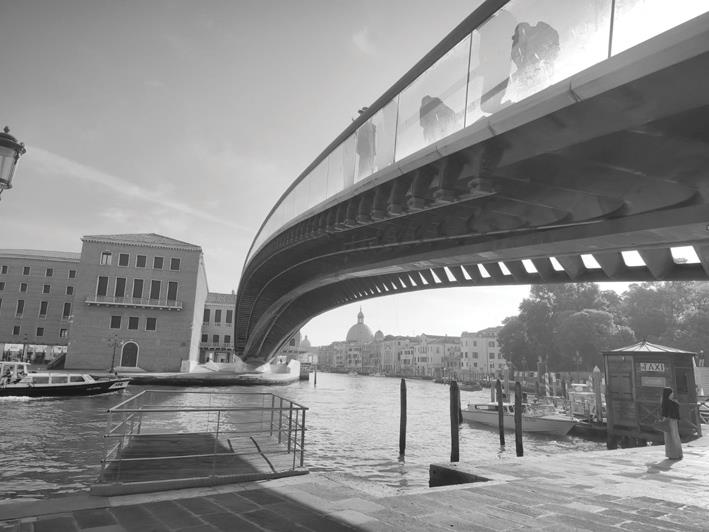
 The sharp piercing mewing sound of sea gulls. Add to it, the sight of boats cutting through the canals. And the very smell of the canals: salty, sometimes faintly stagnant scent of brackish waters. This very salinity, with the whole sensory experience, stayed with me as last week I made my way through the narrow, winding streets of Venice. More labyrinthic than google map navigation can handle, often leading to sudden water edges. Brimming with excitement, I walked towards the Giardini and Arsenale for the preview launch event on the 8th May and the opening of the Malta Pavillion on the same day.
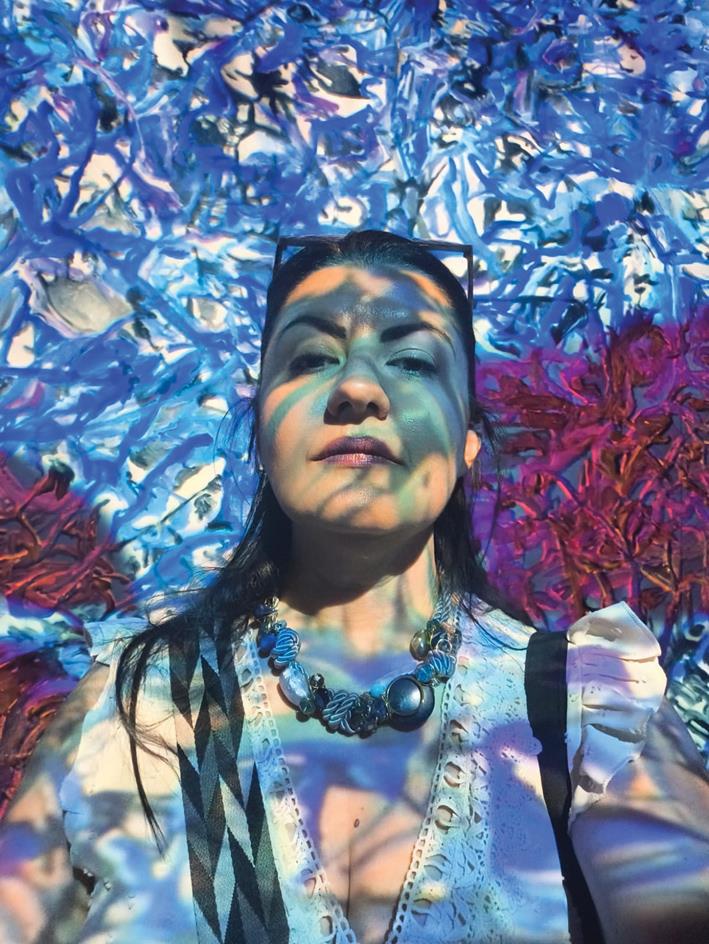
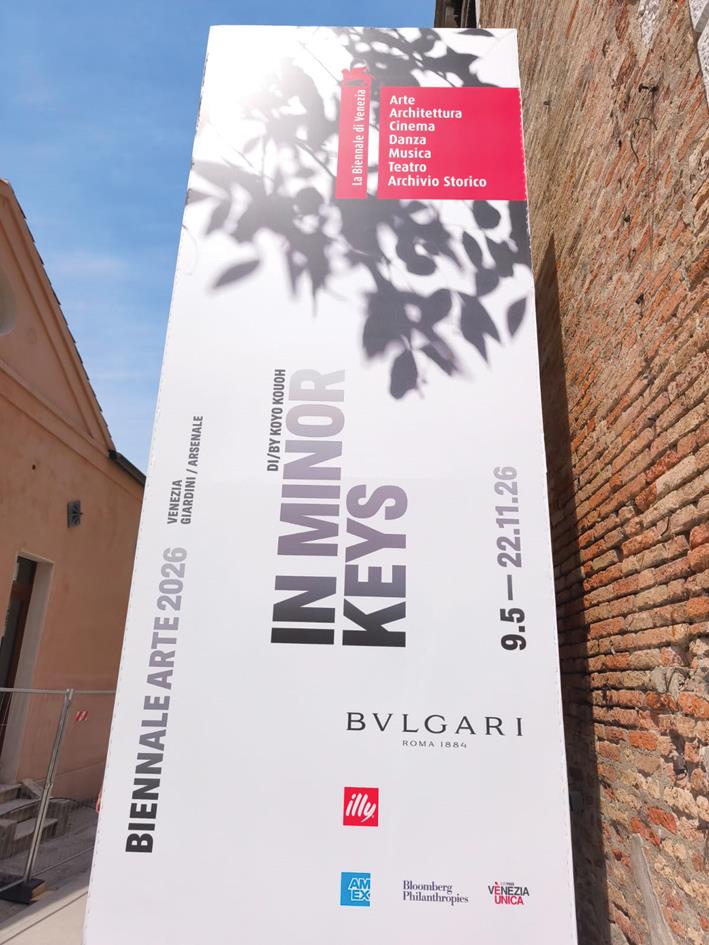
Founded in 1895, the Venice Biennale has always been a stage for the visual. And yet, in 2026, it also claims to listen. Titled In Minor Keys, the central exhibition suggests a shift in key; to listen and be attuned to what is happening in the world. This edition was shaped by the late Koyo Kouoh, whose curatorial vision still lingers on. Appointed in 2024 as the first African woman to lead the exhibition, Kouoh conceived In Minor Keys as a sonic reflection to the world as it is.

At the heart of the Venice Biennale lies its familiar structure: a curated main exhibition and a constellation of national pavilions. Officially, the 61st International Art Exhibition takes place across the Giardini and the Arsenale, with each nation composing its own response and its own voice.

Walking through the pavilions alongside a dear friend and colleague, Prof. Trevor Borg, added another layer of resonance to the experience. Trevor, one of Malta's leading contemporary artists, represented Malta at the 58th Venice Biennale and regards the Biennale as one of the most significant events on the international contemporary art calendar. Bringing together artists from across the globe within a city already immersed in centuries of artistic and cultural history, the Biennale becomes far more than an exhibition; it becomes a living space of encounter, dialogue, and critical reflection.
Together, we shared reactions while reading not only the artworks, but also the atmospheres surrounding them: the pauses between installations, the echoes of footsteps reverberating through space, the way bodies gather, linger, or disperse, and the subtle choreography of looking itself. Reflecting on his own experience of representing Malta at the Biennale, Trevor described it as "an intense, exceptional, and deeply rewarding experience." He spoke of the responsibility and prestige that participation carries, describing the Biennale as a significant milestone in any artist's career.
As in previous editions, the Biennale is already generating debate far beyond the exhibition spaces themselves, reaffirming the enduring power of art to engage critically with the realities of our time. It also reopens longstanding sociological debates surrounding the role of art within society: art as protest, art as self-expression, and the enduring tension between politically engaged practice and the notion of "art for art's sake." The Biennale, perhaps more than ever, becomes a space where these competing understandings of art collide, overlap, and are continuously renegotiated.
Sound In Minor Keys, is not merely auditory. It is social. It is political. It is the murmur of contemporary events happening across the world and reverberating through the Biennale itself. This is precisely what I find most compelling as an arts sociologist, particularly through the lenses of multisensory ethnography and women's studies. Art is never detached from the structures of power, gender, memory, and embodiment that shape collective realities.
Last week, that sound became impossible to ignore. It emerged through protests and acts of resistance, both literal and symbolic. The atmosphere was charged with political urgency and opposition. Some countries chose to close their pavilions in protest, transforming the Biennale into a site not only of artistic expression, but also of its absence, yet loaded with meaning.

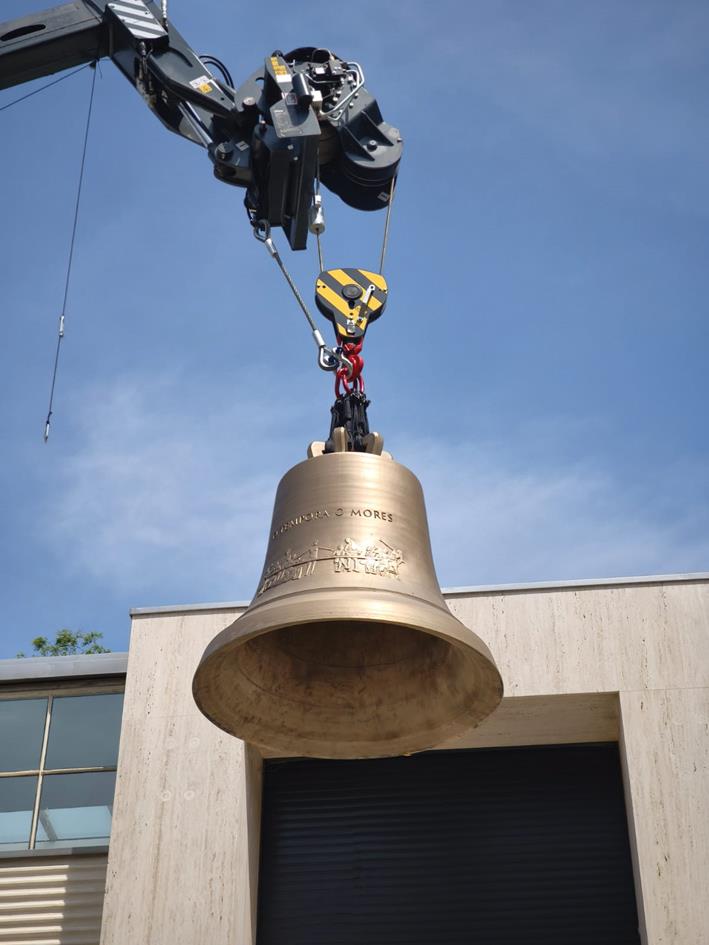
Across several pavilions, the female body repeatedly returned as a spectacle. Austria's naked speedboat riders, the image of a naked woman suspended upside down inside a bell, the Danish pavilion's porn performers discussing declining sperm counts, Richard Prince's appropriated Girlfriends images from vintage biker magazines, and even Femen's topless protests alongside Pussy Riot. Why do women have to be naked to gather attention?
I find little fascination in the continued reliance on the female nude as a mechanism for attracting visibility or provoking reaction. For centuries, museums have displayed women's bodies as sites of consumption and voyeurism. At this stage, I cannot help but question why women still, so often have to use their bodies to command attention or presence within artistic spaces.
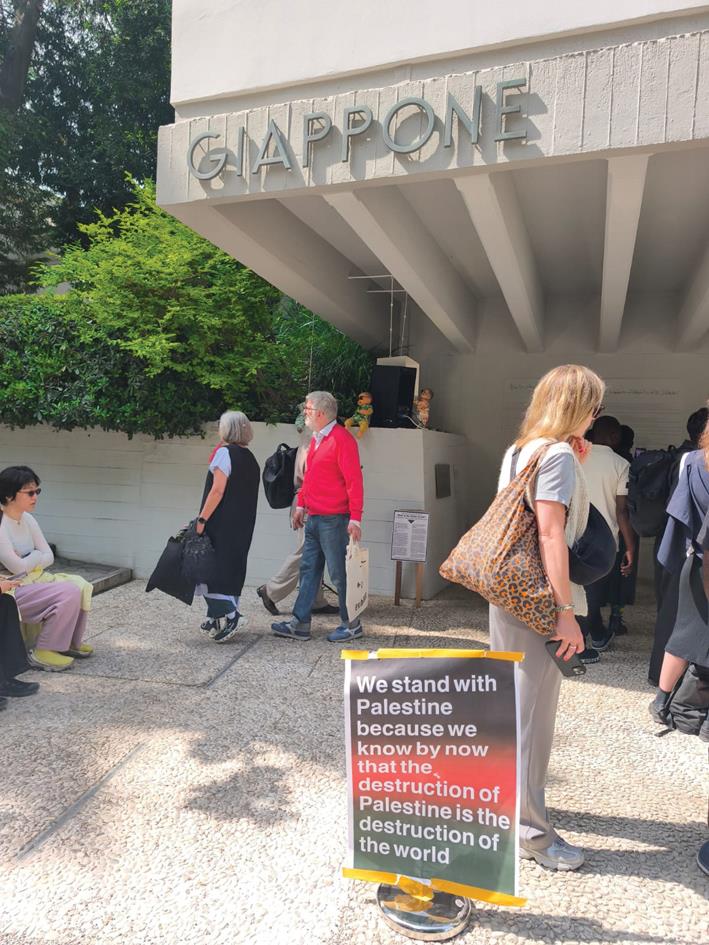
Interestingly, visitors to the Japanese Pavilion are invited into an act of care: to look after baby dolls while going through pavilions in strollers. As participants move through a series of interactions, such as feeding or changing a nappy, they are met with another layer of engagement. Each doll generates a short "oracular" poem, linked to its assigned birthday. These dates are not arbitrary. They correspond to historically significant moments connected to minority communities in Japan and beyond. In this way, intimate gestures of care are folded into broader historical narratives, where tenderness and responsibility become entangled with memory, recognition, and overlooked histories. Yet on the 8th May, these babies had a louder cry; that of protest. The pavilion was closed off as a sign of protest, leaving these babies parked in stillness.
Protest was amplified when just nine days before the opening, the entire five-member international jury resigned. The decision followed controversy surrounding the jury's reported intention to exclude artists representing countries whose leaders face accusations of crimes against humanity from award consideration. The episode further intensified ongoing debates surrounding politics, ethics, representation, and the role of cultural institutions within contemporary global conflicts.
Within this climate, the Malta pavilion feels deeply connected to the emotional and social realities within and beyond the Biennale itself. In the afternoon, Trevor Borg and I made our way to the Malta Pavilion for the launch of No Need to Sparkle: Experiments in Love and Revolution, presented by Adrian M M Abela, Charlie Cauchi, and Raphael Vella, and curated by Margherita Pulè. The pavilion immediately immersed us in a space charged with political tension, sensory contrast, and reflections on protest, resistance, and collective memory.
Guided by the philosophy of fluidity in truths, it deals with the degree of uncertainty in the world we are experiencing, where nothing is fixed or predicted. A very postmodern approach to make sense of the current g/local ambiguity and tension. The Malta pavilion resists the certainty of dominant political rhetoric and the polarised extremes that shape our present moment. It becomes both a call to attention and an act of resistance, opening up space for reflection, nuance, and shared uncertainty rather than fixed positions.
The project draws from Malta's own histories of protest, resistance, and collective action. It reflects on what happens when people gather, when voices rise, and when societies reach moments of fracture and unrest. The works move across installation, film, chocolate sculpture, and animation, creating a space that feels at once intimate and politically charged. Raphael Vella's Praying for a Revolution That Will Never Come unfolds as two-channel animation tracing scenes from a century of protest in Malta. Moving across different historical moments of unrest, resistance, and public demonstration, the work reflects on the recurring desire for social and political transformation, while simultaneously confronting the frustrations, repetitions, and unresolved tensions that often accompany collective struggle.
Inside the Malta pavilion, the experience becomes deeply sensory. The smell of chocolate lingers through the space as chocolate squares are shared during the launch, offering moments of warmth, familiarity, and a certain dolce vita Mediterranean sensibility. Yet this sweetness sits against a sharper atmosphere shaped by protest, and the uneasy dichotomy between dependence and independence that runs through the works themselves. The contrast is striking.
The pavilion also reflects Malta's growing confidence within international contemporary art discourse. As emphasised during the opening speech by Dr Luke Dalli, Executive Chairperson of Arts Council Malta, the project forms part of a broader commitment towards strengthening Malta's international cultural presence while creating new opportunities for artistic dialogue, experimentation, and exchange.
What emerges is a pavilion that is emotionally layered, politically aware, and critically engaged with the present moment. It was especially meaningful to be there supporting Maltese colleagues and friends within the arts communities and sharing this important moment with them. Congratulations to Margherita Pulè, the artists, and Arts Council Malta on a powerful and thought-provoking pavilion!
Indeed, the Venice Biennale has never been insulated from the world beyond it. This year is no exception. Quoting from the foreword by Pietrangelo Buttafuoco in the Biennale guidebook: "As the world cries out and voices are distorted in the din - to the point of all meaning being obscured - there remains only one way to communicate: by creating a listening zone tuned in to a lower frequency. More intimate, welcoming, human, but no less charismatic."
Yet the questions that remain, in the salty air and the high-pitched seagulls noises, are not only about listening. To whom do we listen? Which voices are heard, and which are muted? How are they layered, juxtaposed, and entangled within this space of heightened attention? And ultimately, who holds the authority to shape that voice, to decide what enters the "listening zone," and what remains outside it?
Perhaps this is precisely where the force of the 2026 Venice Biennale resides. Its significance lies not solely in visual spectacle, but in the sounds of conversations, frictions, and political resonances it generates beyond the walls of the pavilions themselves.