In the history of Maltese modern art, few figures of the second half of the 20th century occupy as radical and inventive a position as Gabriel Caruana (1929-2018). A ceramist-sculptor who consistently challenged academic conventions, Caruana developed a personal visual language that redefined the possibilities of modern art within the local context. Throughout his career, he rejected academic formulas in favour of experimentation, spontaneity and an uncompromising search for artistic freedom. His achievement lay not merely in producing innovative works, but in creating an artistic vocabulary through which Malta could articulate its own identity within the wider international discourse of modernism.
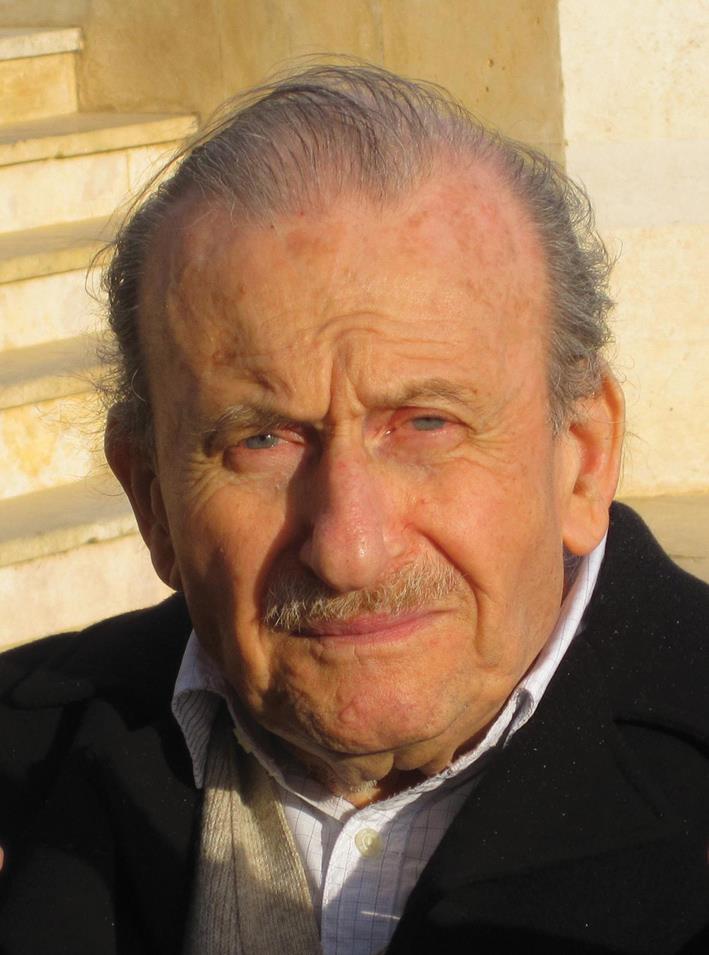
Caruana's early life already foreshadowed his departure from academic conventions. In 1940, at the age of 11, he began training as an electrician and worked as an apprentice at the Marsa Power Plant until the end of the war. These formative years in electricity proved deeply revelatory. Caruana came to understand electricity as an invisible force: unseen to the eye, yet capable of producing a powerful physical shock. This belief in unseen forces would later become central to his artistic philosophy, leading him towards a language rooted in intuition, subconscious experience and symbolic expression.
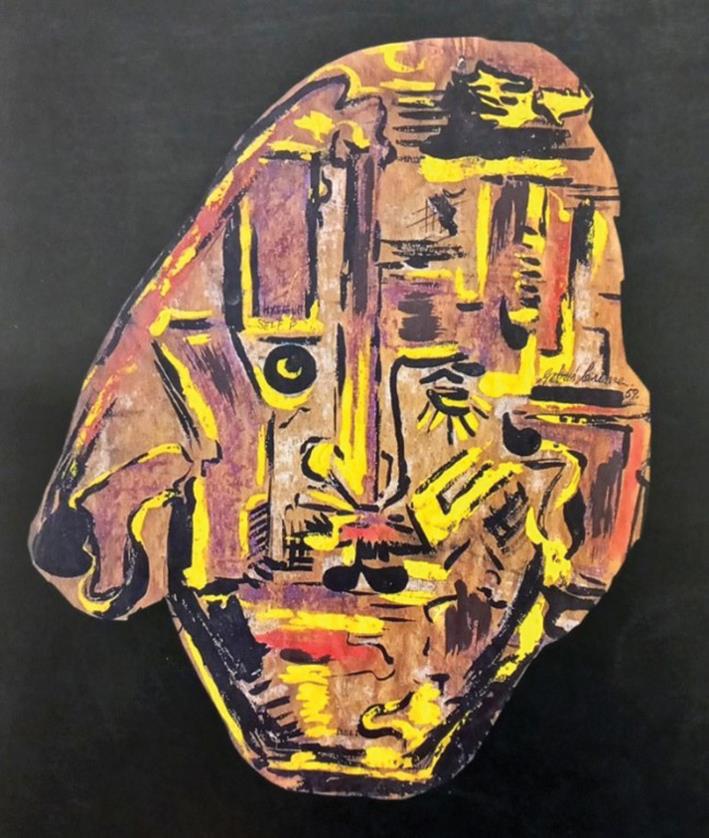
Rather than following the conservative academic art promoted by the Malta School of Art, Caruana embarked on a radical alternative path. Working across ceramics, sculpture, metal, wood, concrete and found objects, he became one of the founders of a new mentality in Maltese sculpture. The intellectual stimuli and confrontation with other artists in a more international environment, particularly his friendship with Victor Pasmore, expanded his artistic horizons. Yet these influences never diluted his individuality. Instead, they helped him refine an artistic language that remained unmistakably his own and consistently rebellious against convention.
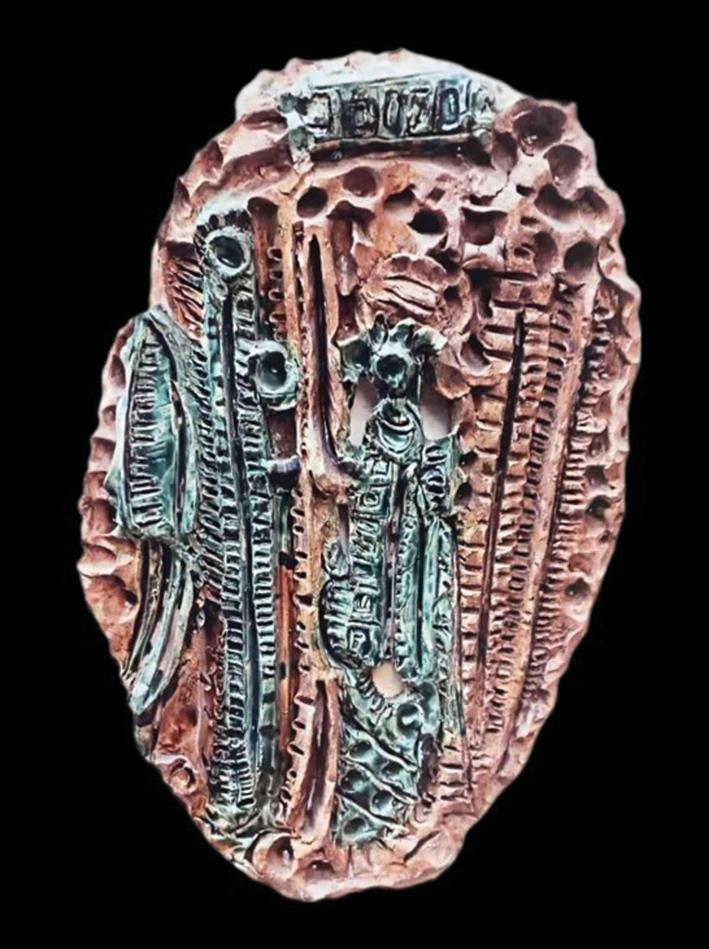
Although Caruana repeatedly rejected association with any particular artistic movement, his work demonstrates a profound affinity with Surrealism. He regarded his work as a personal "handwriting", an expression of inner necessity. His creative process was governed not by rational planning or aesthetic formulas, but by subconscious impulses and intuitive discovery. For this reason, Caruana's artistic journey can be understood through the surrealist path he inadvertently followed. His oeuvre embodies a surrealist quintessence particularly close to the legacy of Catalan artist Joan Miró.
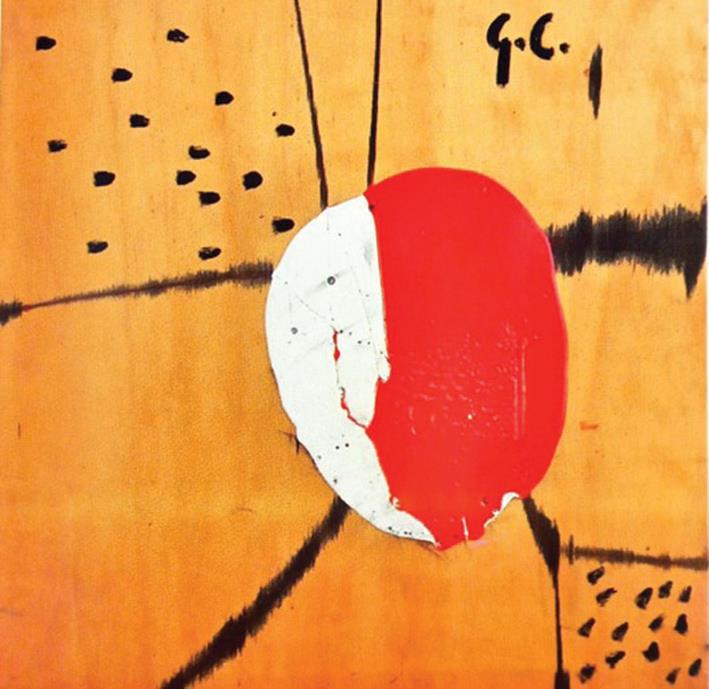
Miró developed a visual language based on recurring symbols - such as woman, bird, star - biomorphic forms and dreamlike associations, allowing unconscious impulses to guide the formation of his compositions. Caruana instinctively adopted a comparable approach. His ceramics and sculptures are populated by recurring motifs - flowers, vegetal forms, birds, mushrooms, worm-like figures and other organic shapes - which form the basis of a highly personal visual vocabulary. The affinity between the two artists becomes particularly evident when comparing Miró's Black and Red series etchings with Caruana's Crazy Carnival, where the spontaneous interplay of signs, biomorphic forms and symbolic fragments reveal a similar transformation of subconscious impulses into a poetic visual language. Both artists draw upon their personal repertoire of image-symbols that function as a visual language which, like poetry, is understood through analogy rather than literal interpretation. These image-symbols do not represent the external world but embody private meanings that give visual form to the individual consciousness from which they emerge.
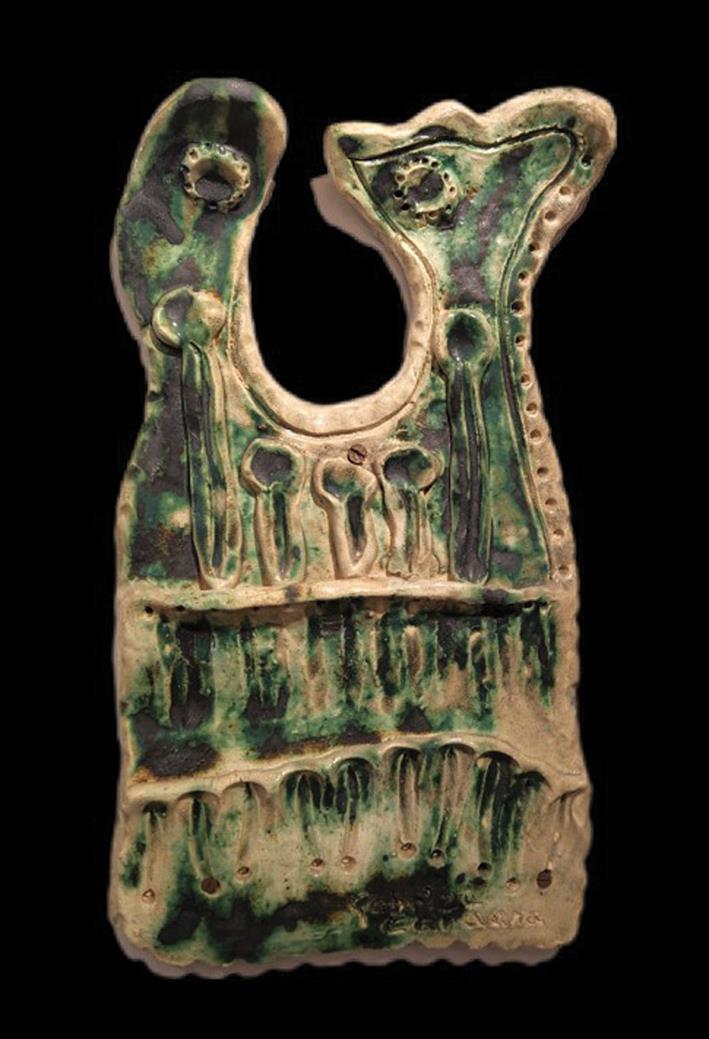
In this sense, Caruana's work reflects the surrealist principle of accessing deeper layers of consciousness. While artists such as André Breton and André Masson deliberately explored automatic techniques, Caruana arrived at comparable results instinctively. His freedom from predetermined rules allowed images to surface naturally, producing works animated by unconscious energy and spontaneity. Chance became an essential collaborator. Working directly with clay rather than relying on the potter's wheel, he embraced the unpredictable behaviour of the material. The transformation of soft clay through fire mirrored his own openness to accident, discovery and aesthetic transformation. Colour was similarly applied with an intuitive freedom, often appearing to emerge organically rather than through calculated design. Thus, he developed his own automatism technique naturally, through the "naivety" of his mind, and this would remain his fundamental technique throughout his long artistic career.
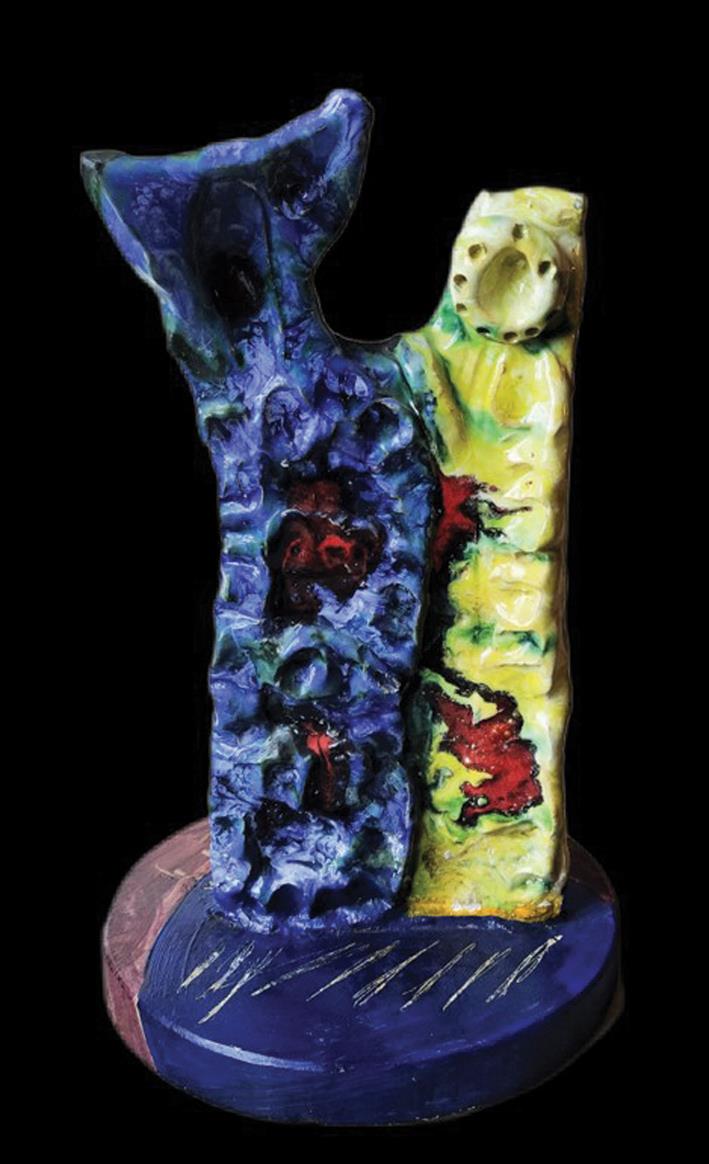
This liberated approach enabled Caruana to accomplish something unprecedented in Maltese art. Ceramics, traditionally regarded as craft, became sculpture of profound artistic ambition. Like Italian Argentinian sculptor Lucio Fontana, he transformed clay into an expressive medium capable of competing with painting and sculpture on equal terms. Earth, water and fire were fused into tactile constellations of visual poetry that elevated ceramics beyond utility entering the realm of ceramics-as-sculpture.
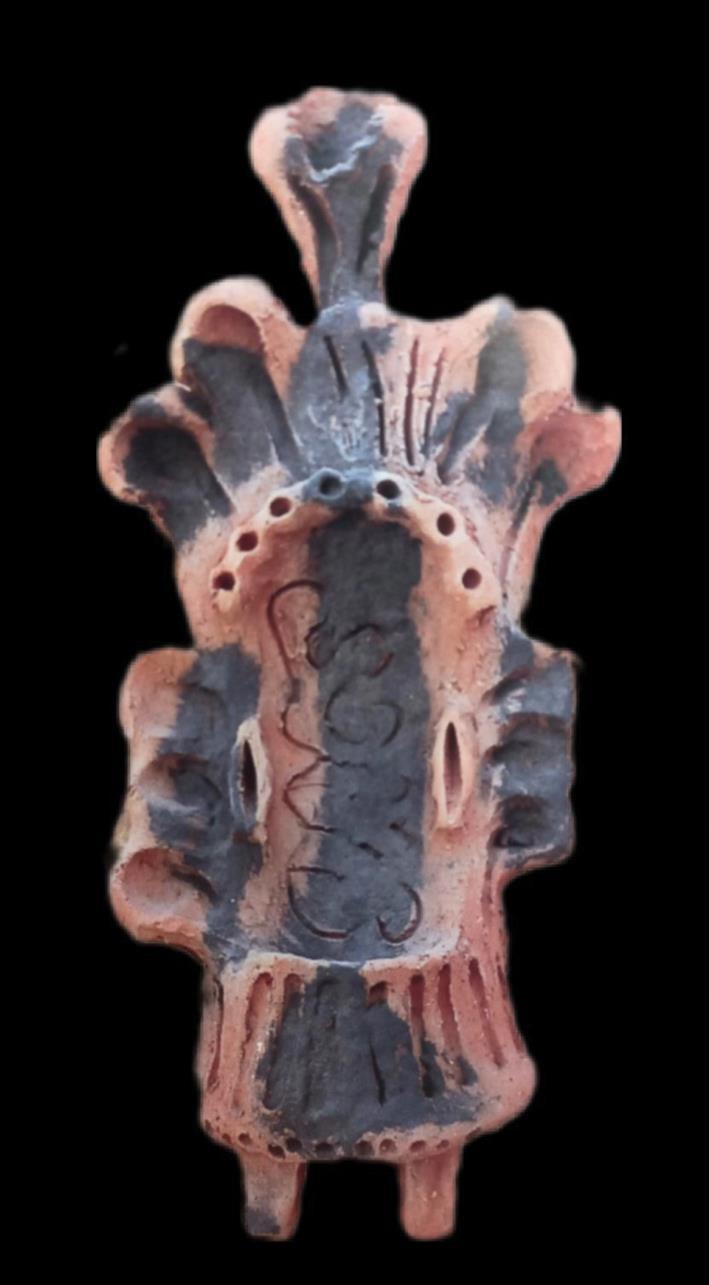
Caruana's greatest achievement, however, lay not merely in mastering the medium of ceramics, but in forging a visual language through which Malta could fully participate in the international project of modernism. The years following Independence in 1964 brought both optimism and uncertainty as Malta searched for a renewed cultural identity. Caruana responded to this challenge by creating a modern artistic vocabulary rooted unmistakably in the island's own cultural landscape. He appropriated his Maltese prehistoric heritage and folk-art expressions into a visual language that was both deeply Maltese and uncompromisingly modern, ultimately inventing a language that would express his origins and be authentically his own original self-standing formal invention. Through this synthesis, he thus demonstrated that modernism did not require the rejection of local identity but could emerge precisely from its reinterpretation.
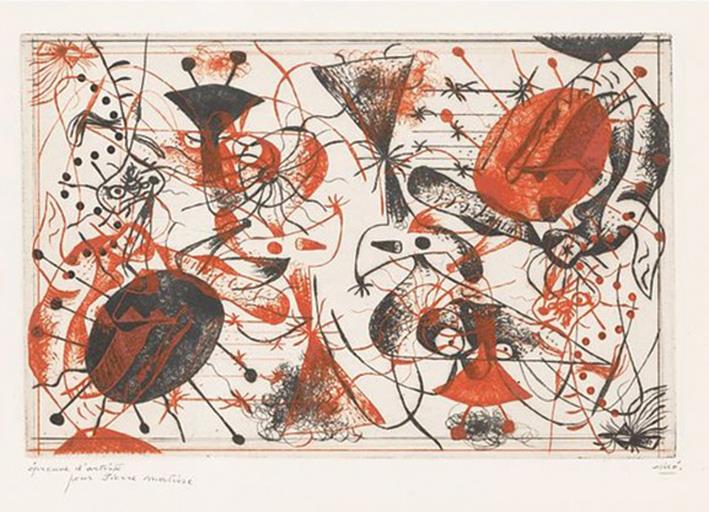
Caruana engaged with both the ancestral and folkloristic dimensions of Maltese culture, shaping a distinctive visual language through an arbitrary creation of freely invented forms that sought to capture the essence of the island's identity. Everything around him became part of this visual vocabulary. The Neolithic temples, the village festa, Carnival, Baroque churches, limestone, the sea and the distinctive Mediterranean light all entered his work. These were never treated as picturesque subjects. Instead, they were absorbed into his subconscious and re-emerged as recurring symbols that formed a personal iconography.
Among Caruana's richest sources of inspiration was Malta's prehistoric heritage. He regarded the anonymous artists who carved the spirals of the Ħal Saflieni Hypogeum as one of history's greatest artists, recognising in prehistoric ornament not merely decoration but a universal language of symbols. The spirals, perforations and circular motifs that recur throughout his ceramics and sculptures became his own aesthetic alphabet. Manipulating clay directly with his hands, he inscribed these ancient signs into the material itself, transforming prehistoric imagery into a contemporary artistic language.
Equally important was Malta's folkloristic tradition. Village festas, Carnival celebrations, fireworks, papier-mâché decorations and the theatrical energy of popular rituals became essential elements of his artistic vocabulary. Having designed Carnival floats for many years, Caruana absorbed their colour, movement and communal spirit into his mature work. What might have been considered popular entertainment was appropriated and transformed into a sophisticated modern language.
Throughout his career, Caruana remained faithful to two inseparable ideals: the pursuit of a genuinely modern artistic language and the search for an authentic Maltese identity. He did not simply depict Malta's prehistoric heritage or folklore. He transformed them into a surrealist visual language that expressed the island's emotional and psychological reality. Like an author employing the Joycean stream-of-consciousness technique to reveal the inner world of a character, Caruana enables the viewer to enter the consciousness of Malta itself. His works reveal not only his personal imagination but the collective consciousness of an entire island. Through his extraordinary synthesis of prehistory, folklore, religion, carnival and Mediterranean experience, Caruana thus forged one of the most original visual languages in Maltese modern art, securing his place as one of the pioneers of avant-garde idioms within the Maltese context.
Rowna Baldacchino is a Maltese art historian and cultural critic with postgraduate specialisation in art history, literature, and translation, focusing on modern and contemporary art in Malta